






I can always find room in my EE toolbox for one more…

Designed my first RF diplexer in 1993 on a VAX minicomputer. Tens of millions of my plug-in filters ended up in cable HFC amplifiers and fiber nodes.
Now I’m giving the tool away: VektorFIL, free and open source. Butterworth to elliptic, coupled resonators, diplexers. Real synthesis, live schematic.
github.com/ibelinp/vektorfil


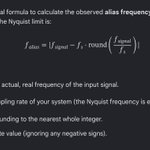
I was bitten by an Alias this morning. Not sure if it's poisonous or not. Nasty and fast moving. #rfengineering #RFDesign

Doing a little "Armchair Engineering" with the Digilent AD3. Using the built in Eye Patten tool to measure the jitter on the relaxation oscillator I made for my inverter project.


I needed a not-so-precise oscillator for an inverter project and started to reach for a 555 IC when I decided to go a little simpler. I vaguely remember learning about this circuit in college, but I think we blasted pass to focus on crystal base oscillators for precision timing.


An amazing invention, but Uda really should get more recognition for the idea. Maybe that explains why he is not smiling in the photo. Yagi held the patent (1,860,123 issued in 1932) and later sold it to RCA.


One of the best tutorials on the Smith Chart I have ever come across. Interactive visuals that help you better understand the core concepts. Thanks to @DanielBogdanoff for posting about it first. Check it out.
arenaphysica.com/publication…

Very nice tool when you are short on space for that low band dipole. Check it out, #hamradio

If you're squeezed for space — small yard, apartment balcony — shortened/loaded dipoles let you get on the bands anyway. Built a browser-based tool to play with the trade-offs — coil position, Q, efficiency, Beta-Match, matching bandwidth — based on a great piece in #FUNKAMATEUR 9/26 (DL1JWD).
calc.ok1cdj.com/short-dipole…
#hamradio #antennadesign #hamradio #antenna


For the folks that want to learn more about the 6BN6 tube used as a mixer, Grayson Evans (KJ7UM) has a great blog post here: kj7um.wordpress.com/2020/12/…


After fixing this little mechanical monster, I will never complain again about SMT parts being too small.


