

Building a better world. Learning, leadership & AI 📚🌍🎨
Joined June 2007
- Tweets1.9K
- Following1.3K
- Followers3K
- Likes494







Pinned Tweet
Dario's post sent me back to first principles.
So I made myself a cheat sheet. Where I sit on the AI debate, as of August 2026:


1/2 Thanks Gavin for an especially thoughtful exchange. I don't usually spend much time on social media but I wanted to engage here because it really brings out the heart of an important conversation.
First, on regulation, I think that “either concentrate it in the hands of a chosen few companies and politicians via regulation or distribute it widely” is a false choice. I know that there’s a sort of Silicon Valley shorthand where regulation = regulatory capture = concentration of power, but I’ve always found this to be an overly simplified picture of the world. Many people outside this bubble think of regulation as something that constrains corporate power and benefits ordinary people. I don’t necessarily agree with that perspective either, rather I think it’s complicated and really depends on what the “regulation” consists of. But in particular I think that those in the “regulation = regulatory capture = concentration of power” frame often underrate the decentralizing power of objective and fair institutional processes. A crude analogy is that the formal court system can sometimes feel stuffy and elitist, but it does a much better job of defending the rights of vulnerable individuals than the alternative, mob justice. At their best, institutions can vest power in ideas rather than people, and thereby decentralize that power.
This is why Anthropic has always made its policy proposals very carefully. We try very hard to make proposals that disadvantage (slow down) frontier AI companies while *advantaging* smaller competitors. California’s SB53 (which we supported), and even the much-maligned SB 1047 (which we were ambivalent on), completely exempt any company below a certain amount of revenue or model training costs from being covered at all (it was $500M for SB 53, lower for 1047 but we objected to that). More recently the testing process we’ve advocated for at CAISI and the White House involves more rigorous tests for frontier models than off-frontier models — something that differentially advantages challengers. Similarly, the “Pacing the Frontier” letter envisions (or at least Anthropic’s preferred implementation of it envisions) modulating the pace of the very best models while not constraining those who are catching up. This hurts the business interests of the frontier labs and helps challengers, including open-weights!
Overall my view is that AI is *structurally* a technology that tends to concentrate power, for reasons that have nothing to do with regulation (more to do with the extreme implications of the scaling laws). Open-weights do help some with this but are nowhere near a sufficient solution because they simply shift the concentration somewhat to those with the most compute and chips (which are roughly the frontier labs plus maybe hardware providers). By contrast I think the right “rules of the road” can simultaneously (a) address AI’s cyber/bio/alignment risks, (b) institutionally constrain the power of the frontier AI companies, and (c) leave room for open-weights models while also addressing the specific risks that they bring.
BTW I do not think that the events of the last few months have “failed to result in [my] preferred regulatory path”. The approach that the Trump administration is reported to be taking — pre-deployment testing for frontier models, and also testing of open-weights models when they get closer to the frontier — is one that I am very supportive of, though of course I have to see the details to be sure. I am also supportive of Demis Hassabis’ ideas around a FINRA-like entity. This contrasts with six months ago when most of the industry was still pushing for preemption of all state regulation and no apparent federal approach either.





Julia F. Alexander retweeted

What does it take to turn #AI into real-world impact?
New insights from the @wef’s MINDS programme highlight what’s working, and why. #wef26
weforum.org/stories/2026/01/…


⏩ Honored to have been invited to the @QatarEconForum this year. While I’m not in Doha, I’m following key conversations -- on innovation, emerging tech, and the leadership role the Middle East & Africa will play in our future.

The countdown is nearly over — the @QatarEconForum kicks off tomorrow. Get ready for bold ideas, sharp insights, and game-changing conversations broadcast live from Doha — where the world’s top minds in business, policy, and tech converge.
📺 bloom.bg/436zDOx
Julia F. Alexander retweeted
Introducing: The 10 Breakthrough Technologies of 2025.
Every year, we look for technologies poised to have a real impact on the world. We can’t see the future, but we expect these ten breakthroughs to affect our world in a big way, for decades to come. trib.al/nFEfKSG

Julia F. Alexander retweeted
Recent research shows 76% of employees believe #AI will create entirely new #skills that don’t yet exist. #Reskilling for human-AI #collaboration will help ensure employees develop these skills, creating a #future-ready workforce.
#WEF25
weforum.org/stories/2025/01/…

Julia F. Alexander retweeted

It’s #StemDay! Today we celebrate the innovators, creators, and problem-solvers who are working hard in science, technology, engineering, and mathematics to move us all forward.
Julia F. Alexander retweeted

This year's #FortuneMPW featured its first-ever book library!📚
Attendees enjoyed a great selection of titles from @WmMorrowBooks, @harperbooks, and @HarperOneBooks. trib.al/wnS6gSH


Julia F. Alexander retweeted

We're thrilled to highlight @mimkyiv Women's Leadership Panel today, moderated by #Thinkers50 Member @RuthGotian, featuring @chicagobulls ED Adrienne Scherenzel, @ExecOnlineInc's @JuliaAlexander, @ABorderLife, and @NationalMentoringDay CEO @ChelseyBaker.
zoom.us/j/93037329017?pwd=A4…

Julia F. Alexander retweeted

The world is coming together this week at UNHQ in New York to advance solutions for a better future for all.
We take you behind the scenes of all the #UNGA action with this @UN_News_Centre podcast mini-series.
🎧 Take a listen to the first episode: news.un.org/en/audio/2024/09…

Julia F. Alexander retweeted
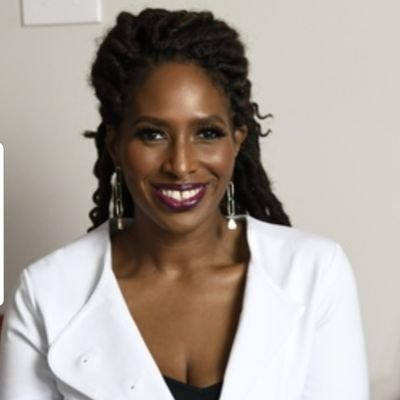
Excited and thrilled to be a @FortuneMPW Ambassador along with these amazing women

Fortune is thrilled to launch our inaugural MPW Ambassador program at this year's #FortuneMPW Summit.🎉
20 of the community's most impassioned members will help shape our path forward by giving feedback, serving as hosts, and fostering community. prn.to/3YuE1q0
Julia F. Alexander retweeted
Delighted to include ‘Riding the Waves of Culture’ by Trompenaars and Hampden-Turner in our esteemed #Thinkers50 2024 Management Classics Booklist. Dive into the depths of cross-cultural management and gain a competitive edge in today's diverse landscape. thinkers50.com/booklists/#ma…

Julia F. Alexander retweeted
Executives expect 40% of their workforce to need #reskilling within 3 years because of #AI and automation. Education can help #WEF24 weforum.org/agenda/2024/01/t…

🚀 Look forward to speaking this week in NY on building an #AI-empowered workforce -- and how businesses can use learning and development to accelerate digital transformation. With colleagues from @Cisco @Mastercard @DukeFuqua and more.
