

Software Architect • AI Systems that Work • Productivity tools | Chess • Father on the journey🙏✨
Florida, USA
Joined January 2010
- Tweets1.2K
- Following257
- Followers404
- Likes2.5K




Nice little weekend project, isn’t it? :)
codemastersintl.com

On ignorance ...
Over the last three years, one thing has hit me again and again. The people who lose to AI are rarely the ones who never heard of it. They're the ones who judged it by the old rules.
I've seen it up close. Owners who hesitated on AI data extraction three years ago because the old process still worked. Investors who wanted a classic task management system instead of an AI-driven, flow-oriented approach. Company owners perfecting the look of a text box while their next users were agents that never see a screen. Web agencies locked into the tools and methods they've always used.
None of these people were stupid. They were comfortable. The shift felt optional right up until it wasn't. By the time they realized it, the opportunity was gone. Or worse, the business was close to the point of no return.
The question isn't whether AI will change your industry. It's whether you'll move while it's still your choice.
AI did not put slop in your codebase. It changed how fast you can produce it. That's a throughput problem, not a provenance problem .. if your review process only held because writing code was slow then you are cooked ... :)
My latest weekend project. From Shokz OpenDots 2 buds in hand to a fully working macOS app in 20 hours.
Tools used heavily:
- rpiv-pi.com + the pi.dev coding agent as the primary workforce, on top of z.ai GLM 5.3 high
- anthropic.com Fable/Opus 4.8 models for reverse engineering and brainstorming in between rpiv-pi's /wf build … /code-review
Sergii Guslystyi retweeted

Thanks for creating such a contribution. Using this system, and even understanding it, has introduced me to another way to work and think about engineering. On a daily basis I am still diving in to parts of the skills or agents to understand and master the methodology. TY!
Sergii Guslystyi retweeted

I’m significantly older than you. I started coding in the late 60s. My current strategy is to not read any of the code written by my agents. That’s the only way I can take advantage of their productivity. What I do instead is to surround the agents with extreme constraints. Unit tests, gherkin tests, QA procedures, quality metrics, mutation testing, test coverage, and a plethora of others. In the end, I have very high confidence in the code they produce because they’ve had to run the gauntlet of all of my constraints and tests.
Correct code isn't aligned code.
It compiles, tests pass, and it still doesn't fit your codebase's patterns. rpiv-pi closes that gap for the Pi coding agent: contract-carrying skill pipelines, deterministic gates, human design reviews
3 months in: 500+ stars, 20 contributors and 52 PRs in total.
Thank you to everyone building with me ♥️
github.com/juicesharp/rpiv-m…


Made a reference playlist. Every track tests something: soundstage, sub-bass, transients, treble air. But it’s sequenced so it just flows, dusk to dawn. Great for testing headphones or IEM or just listening late.
Negative Space: Reference Class 🎧 #audiophile #hifi #testtracks
music.amazon.com/user-playli…

Congrats to the z.ai team! The The GLM model family is only OSS, that is well-rounded and suited for almost any task and any kind of workload you may have. In this specific release, the team has addressed the only weakness - an early context pressure. Thank you guys.

Intelligence should be open, accessible, and ready to build with, empowering every developer, everywhere.
GLM-5.2 is now available to all GLM Coding Plan users, including Lite, Pro, Max, and Team plans.
docs.z.ai/devpack/latest-mod…
As our new flagship model, GLM-5.2 delivers powerful coding capabilities, usable 1M-context support, and continued strengths in long-horizon tasks.
API and Chatbot services will launch next week. The model will also be officially open-sourced next week under the MIT License.
The future of AI is open, and it belongs to the people.

Sergii Guslystyi retweeted

LLMs do not teach people to think critically. Colleges do.

Hot take: Universities charge $300,000 for a degree that teaches you skills any LLM can do for free. At some point we need to have an honest conversation about whether higher education is the greatest individuals misallocation of capital in recent history.
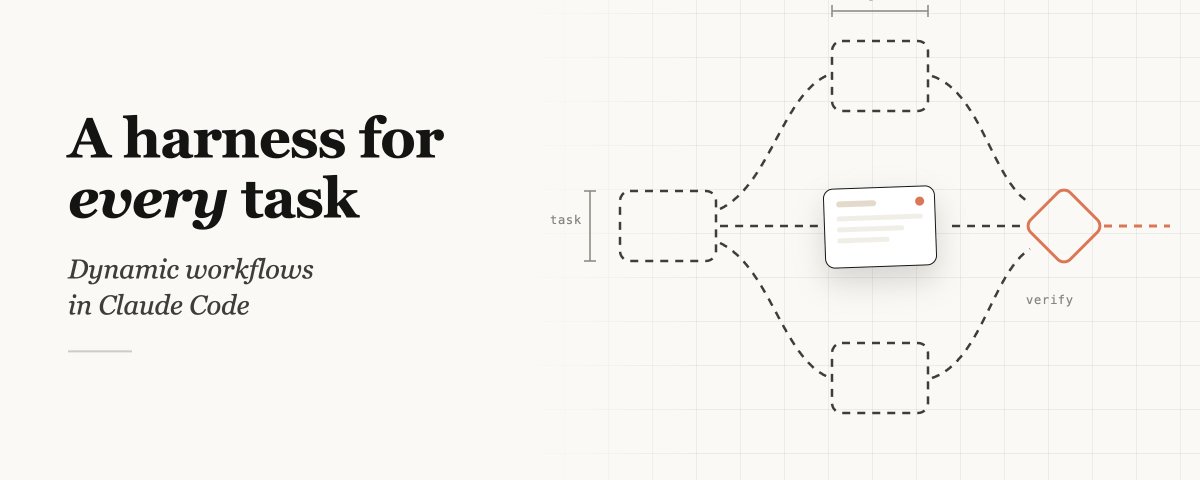
Working on a much more powerful (and useful), way more transparent version for the pi.dev coding agent. Eventually you’ll be able to generate your workflow based on skills, scripts, and integrations based on prompts, including contracts among stages. You should be able to reuse the flows, customize them for your needs: have steps that connect your harness to external systems, and the ability to access your data the way you want, use deterministic logic in place and use the models you wish in each components. The only good idea in Anthropic’s version is dynamic generation. I don’t see any reason to generate Python under the hood and have a runtime based on subagents only, without the ability to bend that flow for your needs or use skills as the steps. Anthropic’s version is half-baked and very limited, as it doesn’t let you build a real harness that you’re in control of.
Look preview of rpiv-workflow package on my github:
github.com/juicesharp/rpiv-m…



7th to the table rpiv-pi.com. The article answers why SDD and I know exactly the answer on Pi + SDD = ? … we will see some benefits quite soon.


This anthropic's representative post shows the limits of their current approach in prompting. That's exactly why "wrapper builders" have good odds.
The highest-leverage primitive in agentic engineering isn't a smarter model. It's the structured pause - the ability to ask before committing. A post-hoc "I picked X because Y" is exhaust (still helpful pattern), a postmortem journal of decisions the model already made in one forward pass. By the time you read it, X is already an import, a schema, a public type. And no matter how detailed the spec, ambiguities exist. I learned that the hard way.
The reason labs can't quietly absorb this layer is structural. Every autonomous coding eval scores the model on completing without asking, so asking is a leaderboard loss. But that's the symptom. The deeper structure: a forward pass is just generation... It can't pause itself. Deterministic control flow (pauses, gates, checkpoints) lives outside it ... reliability comes from architecture, not instruction.
The harness has the opposite gradient. The user is the eval and the driver, not the benchmark. The harness can enforce pauses because pauses are control flow, not sampled tokens.
An opinionated metaflow (like mine rpiv-pi.com, @dexhorthy's CodeLayer/HL, the many other flows enthusiasts built on top of the models) is uncompressible into a general purpose API. Not because the model can't learn workflow shapes, but because workflows are control flow around the model.
This is a product competition on even ground. Not a model eating a layer.


Skills are prompts. Prompts are noisy. We can't tell from the inside whether a skill change actually helped or just felt different.
So we run A/Bs. Wrote up the recipe: parallel arms, locked answers, blinded LLM judges, per-cell aggregation.
rpiv-pi.com/blog/how-we-test…

There are too many skills on the market that help shape/collect requirements, and very few that ask grounded questions. Even fewer do it well. This part is critical for existing codebases.
Yesterday I tried to make one even better, so I ran an A/B over a SAGE-based /discover variant. Baseline /discover came out firmly ahead. The deciding factor was scope discipline: /discover keeps the FRD on the ask you actually made, instead of quietly drifting into adjacent work.
/discover is one of the best interview skills I've ever seen, and it naturally fits as an optional entry point to a research/design pipeline.
rpiv-pi.com/blog/discover-vs…

Sergii Guslystyi retweeted

这个配合 pi-coding-agent 很好用 rpiv-pi.com/