

San Diego, California
Joined September 2017
- Tweets205
- Following481
- Followers277
- Likes1.1K






Pinned Tweet
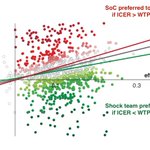
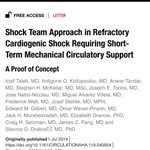
Excited to have our SHOCK TEAM paper published in @CircAHA, thanks to the extraordinary multidisciplinary team @UofUHealth, #AHAFunded & #NIHFunded. Eagerly anticipating more contributions to the field! @taraloujones @aloboMD @nataliemwall @jadzdanaf @MikeYin19 @StavrosDrakos

The multidisciplinary Shock Team approach for the treatment of refractory cardiogenic shock decreased in-hospital and 30-day all-cause mortality ow.ly/euZU50uQZNw | #AHAJournals @JoeTonnaMD @StavrosDrakos @Joseph_Taleb @UofUHealth

🫀 Who said myocardial recovery only matters if the LVAD comes out?
📊 In our STS-INTERMACS study (n=9,518), higher on-support LVEF was linked to better survival & fewer HF-related events. sciencedirect.com/science/ar…
📢 #HFSA2026 & simultaneous @JCardFail publication!
🔮 If reverse remodeling matters without explantation, can we predict who will achieve it?
Enter RecoverHeart!
sciencedirect.com/science/ar…
Our validated calculator predicts significant reverse remodeling after LVAD implantation, with potential value beyond explant candidacy.
Unloading is a physiologic result, not a device label.
In our @JACCJournals @ELSOOrg CS on VA ECMO analysis, higher 24h PAD tracked with ↑ mortality.
sciencedirect.com/science/ar…
Did we unload—or just add a device?
@JoeTonnaMD @StavrosDrakos @UCSDCardFellows @UCSDCardiology
🫀 Recovery after LVAD support isn’t just a lucky accident.
RecoverHeart is a validated step toward identifying recovery potential before implantation — and bringing bridge-to-recovery directly into the advanced HF conversation. @StavrosDrakos
#CardioTwitter #HeartFailure

Hot Off the Press! 'RecoverHeart' - a multicenter, externally validated calculator that predicts individualized 1-yr reverse remodeling after #LVAD implantation to guide BTR vs transplant choices. #MyocardialRecovery #HeartFailure #LVAD #JHLT @StavrosDrakos
🔗: jhltonline.org/article/S1053…
Joseph Taleb retweeted

Excited to share our @CircHF review on a recovery-focused approach to #CS care.
We synthesize current & emerging strategies with cardiac & end-organ recovery being explicit therapeutic targets.
@StavrosDrakos @Joseph_Taleb @rana_hamouche @EleniTseliou2 @UofUCV @DukeCardFellows

Survival from #CardiogenicShock is not the same as recovery
New framework reframes shock care around 4 overlapping phases:
➡️ Salvage
➡️Optimization
➡️Stabilization
➡️De-escalation
With myocardial & end-organ recovery as explicit therapeutic targets
ahajournals.org/doi/abs/10.1…

Glad to see our review on a recovery-focused approach to #cardiogenicshock featured by @CircHF.
Moving beyond rescue toward recovery & native heart survival.
Great work led by @CPKyriakopoulos with @StavrosDrakos @UCSDCardFellows @UCSDCardiology
📌Featured in the @CircHF Cardiogenic Shock Issue:
Recovery-focused CS framework outlines evidence & emerging strategies to maximize recovery of heart & organs
📝Article by @StavrosDrakos @Joseph_Taleb
@CPKyriakopoulos
🔗ahajournals.org/doi/full/10.…
@UofUHealth @UofUCV

Joseph Taleb retweeted

Hi all,
The Lp(a) HORIZON trial has released topline data and, quite shockingly, missed its primary endpoint.
In other words, lowering Lp(a) in patients with prior MI, stroke or peripheral arterial disease, who were otherwise very well treated for LDL-C, blood pressure, diabetes and other risk factors, did not reduce the primary cardiovascular endpoint.
We obviously need to see the full data before making firm conclusions, and I don’t want to speculate too much without the details.
But this is a big enough result that it is worth summarizing what we know, what we don’t know, and what this may mean for our patients after 20+ years of trying to test the “Lp(a) hypothesis.”
What we know:
1-There are hundreds if not thousands of genetic, epidemiologic and Mendelian-randomization studies showing that elevated Lp(a) is associated with MI, stroke, peripheral arterial disease and aortic stenosis. That body of evidence is very strong.
2-However, much of those data come from community-based populations, often before the era of intensive LDL-C lowering and modern secondary prevention.
3-There has been much less information about how much residual risk Lp(a) carries in someone who has already had an event and is then treated very aggressively.
4-HORIZON may have had some of the best-treated patients of any recent cardiovascular outcomes trial.
Baseline LDL-C was about 65 mg/dL, a measured LDL-C contains the cholesterol carried on Lp(a), so in reality, 15-20 points lower.
5-In patients with very high Lp(a), if you correct LDL-C for Lp(a)-cholesterol, the actual LDL-C carried by LDL particles may have been closer to 45–50 mg/dL, perhaps even lower in some patients.
6-This raises a very basic question:
Can you still demonstrate a major incremental benefit from lowering another apoB-containing particle when the underlying LDL burden has already been driven this low?
What we don’t know:
1-What was the actual corrected LDL-C in these patients? I think it would be extremely informative to directly measure Lp(a)-C and calculate corrected LDL-C. This may tell us a lot about the biological setting in which pelacarsen was being tested.
2- What was the OxPL status? Our prior work has suggested that much of the pro-inflammatory biology associated with Lp(a) is related to its enrichment in oxidized phospholipids. Did OxPL fall? Did patients with higher OxPL derive more benefit? Was Lp(a) concentration actually identifying the patients with the most pathogenic particles?
3- Did we measure the right component of Lp(a) for trial inclusion? We generally measure molar particle concentration. But is molar concentration itself the main driver of risk, or is it partly a surrogate for what the particle carries? Cholesterol? Triglycerides? Oxidized phospholipids? Other proteins? Could two patients with the same Lp(a) concentration have very different Lp(a)-mediated risk? I think this question deserves much more attention.
3- Were the genetic data telling us exactly what we thought they were telling us? The genetic data are extremely compelling, but genetics reflect lifelong exposure. A clinical trial treats patients late in life, often after decades of arterial injury and after an event has already occurred. Those are not necessarily the same experiment. Could there also be some unrecognized biology linked to the LPA locus that we have not completely accounted for? That possibility should at least be considered.
3- Does very low LDL-C modify the Lp(a) risk relationship? Maybe Lp(a) is particularly important when LDL-C is higher, but its contribution becomes smaller once LDL-C is driven to very low levels. Again, we need the data.
4- Does aspirin or other antiplatelet therapy reduce part of the risk associated with Lp(a)? Lp(a) has potentially important prothrombotic effects. Almost everyone in a trial like HORIZON is receiving contemporary antiplatelet therapy. Could that blunt one component of the risk associated with Lp(a)?
5- Why are these patients still having events? This may be one of the most interesting questions of all. These are patients with LDL-C around 65 mg/dL, and perhaps corrected LDL-C substantially lower, yet cardiovascular events continue to occur. What is driving that residual risk? Inflammation? Thrombosis? Plaque burden that is already too advanced? Other lipoprotein characteristics? Something we are not measuring?
6- Do we need to re-examine some basic assumptions about atherosclerosis? We have spent decades focusing heavily on the quantity of circulating lipoproteins. But perhaps lipoproteins are relatively benign until they undergo biological modification in the artery wall. Oxidation may be one of those key modifications. For some patients, the answer may be to remove more particles from the circulation. For others, perhaps the better approach is to prevent their oxidation or block the downstream biological effects of oxidized lipids. The recent difficulties with anti-inflammatory approaches, including IL-6 inhibition, make these mechanistic questions even more interesting.
7- Was there something specific about pelacarsen, the degree or timing of Lp(a) lowering, advanced disease, trial duration, background therapy or patient selection that mitigated a potential benefit? We simply don’t know yet. That is why the detailed results will be so important.
What does this mean for patients today?
If you have already had an MI, stroke or PAD, the immediate lesson is very clear:
1- Get all of your established risk factors treated aggressively.
2- Get LDL-C/apoB very low.
3- Control blood pressure.
4- Control diabetes.
5- Don’t smoke.
6- Use appropriate antiplatelet and other guideline-directed therapies.
HORIZON shows us what modern secondary prevention should look like.
If you have elevated Lp(a) but have never had an event, the genetic and epidemiologic data still suggest increased lifetime risk.
Until the other 4 outcome trials read out, I would continue to treat every modifiable risk factor aggressively.
We should wait for those trials before drawing broad conclusions about the entire field.
I think the story of Lp(a) therapy is beginning, not ending.
We also need to show tremendous respect and gratitude to the patients who participated in HORIZON and to the investigators and companies that invested enormous resources to actually test the Lp(a) hypothesis, to the ultimate benefit to peole with elevated Lp(a) to best guide how to manage risk.
More to come as we go forward.
A pretty special moment presenting our work on OxPL and native heart survival in #CardiogenicShock at #ESC2026. Proud of this fruitful collaboration between @UCSDCardiology and @UUcvsl. Grateful to my mentors @Lpa_Doc and @StavrosDrakos for their continued support and guidance.


Proud to share our multicenter study in @TheJHLT on the RecoverHeart Calculator, estimating individualized recovery probability in LVAD patients.
Grateful to @StavrosDrakos and all collaborators for advancing this work.
jhltonline.org/article/S1053…
@UCSDCardiology @UCSDCardFellows
Joseph Taleb retweeted

1/.
Utah Cardiac Recovery Symposium #UCARS26, Feb 5-6, 2026!
Submit ABSTRACTS by Jan 11:
medicine.utah.edu/internal-m…
Opportunity to interact with leading experts and hundreds of clinicians and bench-to-bedside researchers from around the globe!
AGENDA:
medicine.utah.edu/internal-m…


Joseph Taleb retweeted
We have another advance today to translate @OxPL_apoB to research studies. Please see the CLIA validation of OxPL-apoB and OxPL-apo(a) jlr.org/article/S0022-2275(2… These assays will be useful in understanding results of the phase 3 Lp(a) trials and will complement @BostonHeartDX for clinical use. We hope to have OxPL-apo(a) also available for patient use in 2026.


Joseph Taleb retweeted

Happy Holidays from the @UCSDCardiology Fellowship family! Doesn’t get any better than this🫀

There’s beauty in seeing a path meet its destination. Some carry a depth shaped by origin and effort - you’re one of them.
Even in uneven soil, some flowers find the light.
Onward, with pride in all you’ve earned. @StavrosDrakos @CPKyriakopoulos @kon_sideris

June will be bittersweet after 7 incredible years at @UofUInternalMed @UofUCV @NEH_CVRTI, but elated to join @DukeCardFellows @DukeHeartCenter @DCRINews !
Grateful for my family, mentors, & friends, & especially @StavrosDrakos & @CarolineMilneMD. Excited for the journey ahead !


Joseph Taleb retweeted
Post fellowship recruitment happy hour (on the beach)! Life is good as a @UCSDCardiology fellow. Come join us!

Joseph Taleb retweeted

Congratulations @Lpa_Doc on receiving the Family Heart Foundation Pioneer Award! I cannot think of anyone more deserving! @FamilyHeartFdn @UCSDCardiology @UCSDCardFellows


Honored to contribute as a panelist in the #SCAI Shock Think Tank on the Economics of Shock. Thought-provoking discussions, great insights, and important gaps identified. Grateful to @JasonKatzMD @BalimSenmanMD @SocietyOfCCC @StavrosDrakos @UCSDCardFellows

Kicking off the @SocietyOfCCC and @SCAI Cardiogenic Shock Team Think Tank w/ diverse perspectives from diverse stakeholders!


Joseph Taleb retweeted

Proud to share our review on transthyretin amyloid cardiomyopathy! doi.org/10.1007/s40119-025-0…
We break down the current treatments, what’s in the pipeline, and what’s next.
@UreyTony @UCSDCardiology
Joseph Taleb retweeted

PROs provide valuable insight into pts health status, but can they be used to improve risk prediction in HF?
💡In this study, adding PROs to risk models improved ability to predict adverse events.
How does your HF program utilize PRO assessments?
🔗 bit.ly/3FjX9j6

Joseph Taleb retweeted

At last—our analysis predicting severe outcomes in ICI-myocarditis is out. With just ECG, LVEF, troponin, and clinical history, you can estimate risk at initial presentation. Grateful for the incredible mentorship @CardioOncology @DrJESalem .. true world-class investigators!

Excited to report this important collaboration which we hope helps us understand ICI-myocarditis better, published in #EHJ today! Along with the great @DrJESalem! @ehj_ed @JBauersachsMD #CardioOnc @UCSFCardiology @UCSFCancer
academic.oup.com/eurheartj/a…
