

Sport Performance Nutricionist in @Movistar_Team, CEO @BcnMana. Interested in exersice metabolism.
Lugo, Galicia
Joined October 2010
- Tweets3.5K
- Following773
- Followers1.4K
- Likes7.3K




Jose Antonio Lopez retweeted

📢 ¡Nuevo fichaje!
🇪🇸 Después de cinco temporadas como profesional, dos victorias en 2026 y su debut en una 'Grande', Iván Cobo dará con nosotros el salto al WorldTour.
💙 Un equipo que lleva viendo "toda la vida por la tele" y que, desde 2027, será su casa.
🔗 movistarteam.com/2026-09-25/…
#RodamosJuntos | @movistar_es
🤖 Made with AI


Jose Antonio Lopez retweeted

Today is World Cancer Research Day.
10 years ago, I proposed the Lactagenesis Hypothesis in cancer to try to explain the nearly 100-year-old mystery of the Warburg effect.
The manuscript was rejected 8 times and never even reached peer review. Several editors told me it was a “crazy idea.” Finally we found a 9th journal that gave us the opportunity…Today, it is approaching 1,000 citations and our group and others around the world, are beginning to experimentally validate key aspects of it.
Cancer research also needs to confront an uncomfortable reality: the scientific establishment has often been far more comfortable funding incremental research than truly disruptive ideas. Enormous resources have gone into established programs, while unconventional hypotheses have struggled to get a chance, even as patients continue to die…The old guard and establishment in cancer has resulted in decades behind of where we should be…
This has to change. We need to create much more room for bold, high-risk ideas. And today, donors and foundations are becoming critically important in making that possible.
The next major breakthrough in cancer may not come from doing more of the same. It may come from opening a door that everyone else kept closed…


Jose Antonio Lopez retweeted

Acute Sleep Deprivation Shifts Substrate Utilisation Toward Greater Fat Oxidation During Incremental Exercise in Recreationally Trained Adults bit.ly/4uYjxmX


Jose Antonio Lopez retweeted
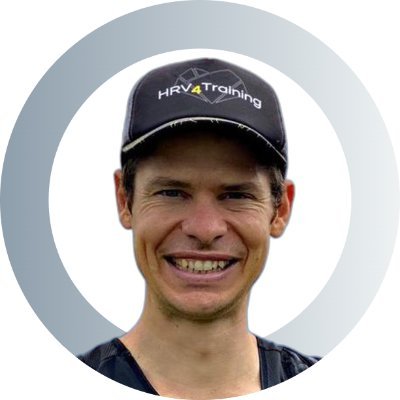
An interesting case study on Kristian Blummenfelt:
"The findings question the validity of the 2.5× basal metabolic rate ceiling, suggesting world-class athletes may sustain energy expenditure well beyond previously accepted physiological limits."
journals.physiology.org/doi/…

Jose Antonio Lopez retweeted
🇨🇭 #TourdeSuisse - Etapa 7
Ayer nos preguntabais que es el “M50” de @226ERS …
Hoy nuestro nutricionista, @JoseALopezDN , os lo explica 🤝🏼
@movistar_es | #RodamosJuntos
Jose Antonio Lopez retweeted

Adaptations to aerobic exercise training…🏃♀️
researchgate.net/publication…

Jose Antonio Lopez retweeted

📌M. Creatine not just for 🏋🏻♂️💪🏻 👀👇🧠

Creatine as a Therapeutic Target in Alzheimer's Disease sciencedirect.com/science/ar…
IMO the far bigger reason (versus muscle effects) to take creatine!

Jose Antonio Lopez retweeted

Simplifying Training Intensity Zones
Understanding Our Body's Signals
I asked @JohnHellemans to review my recent articles with an eye to making it even more simple for you.
While John knows the science inside-out, he’s always encouraged me to dial into how my body is feeling, rather than letting my gizmos make that decision for me.
One time, before an Olympic Distance Triathlon, he advised me to “leave my brain at home & ride the bike absolutely as fast as you can.” Unusually, I led off the bike and won my first Olympic Triathlon.
Training, and racing, by feel works.
In Picture 1, you’ll find a table prepared by John that lays out a Green-Yellow-Red approach.
What I like most about John’s table is the column “Overall Subjective Feeling” adjusts for athlete level, ability and fitness.
Specifically,
🟢Green - it feels comfortable and you can keep it up for a long time.
🟠Amber - somewhat uncomfortable and you can keep it up for 60-90 minutes.
🔴Red - uncomfortable, depending on fitness you can keep it up for 6-60 minutes.
The implications:
1⃣For New & Developing Athletes… if doesn’t feel comfortable and you can’t keep it up for a long time… then it isn’t Green Zone.
2⃣For Competitive & Elite Athletes… if it feels comfortable and you can keep it up for a long time… then it is Green Zone.
3⃣For ALL athletes, if your approach to endurance is breaking you down then it isn’t Green Zone training. See John’s Anabolic & Catabolic references below.
John’s advice on implementation works VERY well in practice.
When assessing your training ask yourself:
❓Am I enjoying my training?
❓Am I consistent?
❓Am I improving?
Keep these front of mind.
➡️If we strip the fun out of our programs then consistency will falter.
➡️If consistency falters then performance will plateau, or decline.
++
John’s Voice Continues…
I have been following the discussions on training intensity zones on the Endurance Essentials platform. At times it goes deep and scientific. It is interesting for athletes who are keen to measure stuff and want to know the what and why behind the zone classification.
This article is for the many athletes who just want to go out and train and enjoy it. For those athletes who want to bring some structure to their training without making it too scientific. It is for the athletes whose eyes glaze over when the words lactate, threshold, heart rate reserve, percentage heart rate, watts, aerobic and anaerobic are mentioned.
This article simplifies the training zones by focusing on the signals your body gives you when in the different zones. But it is also for the athletes who like the science and the numbers, so they can make sure that they are still in tune with their bodies.
The general consensus is that there are five zones, identified as Easy, Steady, Moderately Hard, Hard and Very Hard. This terminology is important as it immediately says something about how we perceive the five zones subjectively. We can simply score it from 1 (Easy) to 5 (Very Hard). Our default system is always to return to that terminology when training and racing, well before we look at the scientific numbers, rather than vice versa.
To help us with this we focus on the feedback our body gives us through our breathing (rate and depth), muscle (dis)comfort and an overall interpretation of ‘ease of movement’.
For breathing you will be somewhere on the spectrum between conversation pace (Easy, Zone 1) and panting (Very Hard, Zone 5) while the degree of muscle discomfort will add to the feedback and help you decide which zone you are in. (Picture 1)
Zone 1 and 2 are also called the green zones, Zone 3 the amber zone and Zone 4 and 5 the red zones.
🟢Green - So called because the pace in Zone 1 and 2 can be kept up for a long time without any recovery required. These are the safe zones, the anabolic zones, or health zones, as they strengthen the bodily systems immediately.
🔴Red - Zone 4 and 5 are the ‘catabolic’ zones, as the bodily systems are stressed and broken down before they recover and adapt during the recovery time. If not enough recovery (rest and nutrition) is allowed between sessions which contain a Zone 4 and/or 5 component, the body will gradually weaken and not get stronger. This is why, for even competitive athletes, not more than 10-20% of all training time should be spent in Zone 4 and 5, preferably spread through the week.
🟠Amber - Zone 3 is interesting as it can work positively (anabolic) when fresh and fully recovered but negatively (catabolic) if you are already tired. It is safest not to spend too much time in Zone 3. When doing Steady Zone (2) training over undulating terrain, it is easy to drift into Zone 3 at the uphill sections, so watch that. I always like to bring Zone 3 into a session which contains a Zone 4 and 5 component, to keep the athlete from overdoing Zone 4 and 5. Usually, this concerns up-tempo repetitions. An example is doing 1 km run repetitions: reps 1 and 4 are done at Z3, reps 2 and 5 at Z4 and reps 3 and 5 at Z4+. This principle can be applied to any endurance sport.
When you practice listening to your body, rather than relying on the numbers provided by heart rate, lactate or power readings, you will find that your confidence and enjoyment will increase.
By all means, use the gadgets if you like for feedback, but ensure you are in charge and not them.
During training, assess the zone first by feedback from your body, then check with heart rate, lactate, and/or power. You will find that the numbers will match your subjective perception. If not, most likely, the numbers are wrong…

Jose Antonio Lopez retweeted

If you want to lose FAT, eat
more PROTEIN.
Protein keeps you fuller longer &
it prevents you from bingeing on
junk food throughout the day.
Eat less…lose MUSCLE.
Eat less (but eat more protein)…
lose FAT.
Jose Antonio Lopez retweeted

We've been suggesting for some time that recovery should be individualised and periodized on an athlete by athlete basis.
Context is key here! Ask the right questions to help you decide when recovery might be required.
Take a look at this for an individualised approach to CWI – at Southport, England

Jose Antonio Lopez retweeted

People want to take Metformin for longevity... but it blunts gains in muscle mass with RT onlinelibrary.wiley.com/doi/… and peak VO2 with AT onlinelibrary.wiley.com/doi/…
VO2peak is a shockingly good predictor of health and it is related to reductions in risk 1/
Jose Antonio Lopez retweeted
📚 about vit C magnesium, vit A and Vit D 👀👇

🌿🌿Recommend these papers!
mdpi.com/2072-6643/13/2/615 mdpi.com/2072-6643/13/4/1136 mdpi.com/2072-6643/13/2/463 mdpi.com/2072-6643/13/5/1703 mdpi.com/2072-6643/14/7/1448 mdpi.com/2072-6643/14/4/827 mdpi.com/2072-6643/14/2/284
mdpi.com/2072-6643/14/7/1354 mdpi.com/2072-6643/14/9/1816 mdpi.com/2072-6643/14/13/266…

Jose Antonio Lopez retweeted

The potassium-glycogen interaction on force and excitability in mouse skeletal muscle: implications for fatigue.
physoc.onlinelibrary.wiley.c…

Jose Antonio Lopez retweeted

Effects of exercise training on inflammatory, neurotrophic and immunological markers and neurotransmitters in people with depression: A systematic review and meta-analysis
| #nice #review published in J Affect Disord. |
pubmed.ncbi.nlm.nih.gov/3670…
Jose Antonio Lopez retweeted

¿Preparas un maratón y comes lo mismo el día de descanso que el de series o tirada larga? @JoseALopezDN insiste en adecuar la nutrición durante las semanas del plan de entrenamiento a la carga de trabajo de cada día. academianutricionydietetica.…
Jose Antonio Lopez retweeted

Creatine helps your memory: 🧠a systematic review and meta-analysis of randomized controlled trials - PubMed pubmed.ncbi.nlm.nih.gov/3598…

Jose Antonio Lopez retweeted

How can carbohydrate metabolism be measured during exercise?
🍏🍌🍞🍝🍚🚴♀️🚴♂️⛹️⛹️♂️
New #openaccess review by @AndyJKing & I in @IJSNEMJournal
Hopefully a useful resource for people researching & reading about exercise metabolism 👩🔬📖
A summary🧵1/12
doi.org/10.1123/ijsnem.2022-…

Jose Antonio Lopez retweeted
This has been used in many studies during exercise to assess how much of sports drinks/gels are used as fuel during the exercise
doi.org/10.1152/japplphysiol…
9/12
