

I build and sell quantum computers. Details on linked website.
RF pseudo-null
Joined March 2019
- Tweets364
- Following750
- Followers288
- Likes7K


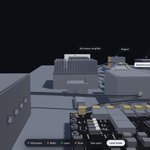
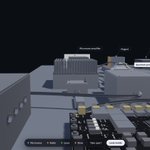
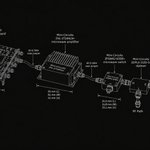


Six weeks ago, I published my blueprint for a desktop quantum computer.
Yesterday, someone offered to help build it!
They're a quantum research institution based in Canada who I had the pleasure of meeting for the first time in person at the Quantum x AI event in London yesterday after a few months of online correspondence.
They offered access to the synthetic diamond growth, ion implantation and characterisation facilities, and introductions to two PhD students who can help stitch the prototype to life in the lab.
It is extremely encouraging to finally see a path towards making this prototype real!
On Tuesday I attended a deeptech investors event at Kings Street Townhouse in Manchester hosted by @BullhoundC , where I met with a dozen angel investors and serial deeptech founders. Immediately after this, I made the drive down to London to attend the Quantum x AI event, and caught a few hours sleep in the car before it started the next morning. I then drove up to Cambridge for a quick event on the partnership of quantum companies between Britain and Finland, where I am currently.
Next up is a deeptech investors event at The Shard in London, and then the National Quantum Technologies Showcase on Friday. Looking forwards to meeting more amazing people in the space!
A Virginia School District Just Voted to Buy a 4-Qubit Diamond Computer for $684,000
On 24 September, Fairfax County Public Schools in Virginia voted 10-2 to approve $684,000 for a four-qubit diamond quantum computer from XeedQ, plus related support, for Skyview High School. Installation is planned for December, and students are due to start using it in spring 2027.
That's four qubits, paid for out of money set aside for developing instructional programmes at a new school. This one matters to me because the purchased machine is built the same basic way as ours. Their model is a single NV centre in diamond: one electron spin coupled to the nitrogen nucleus and nearby carbon nuclei.
Our first prototype takes the same approach; desktop scale, runs near room temperature, but our hardware BoM is only $100k, across 57 lines.
A note on the price before it gets quoted carelessly, the $684,000 covers hardware and related support. Another board member referred to an $834,000 purchase. There's no public breakdown of hardware versus services, so neither figure is a machine price, and this is an approved award, not a delivered machine.
The two no votes are actually really useful, too; the dissenting member asked for a five-year cost-of-ownership analysis and a clear curriculum, and asked why the district was buying its own equipment when George Mason University, nearby, was building shared quantum infrastructure.
Every buyer of a small quantum computer is going to ask some version of those questions:
- What does it cost to keep running for five years?
- What does a teacher actually do with it on a Tuesday morning?
- Why own one instead of renting time on someone else's?
Most of this industry can't answer the first one, because almost nobody publishes what their machines cost. We already have: every part, supplier and lead time is online.
The other two come down to whether the thing just works. XeedQ advertises automatic alignment and calibration, ready in under five minutes, with Qiskit and pulse-level control. Those are vendor claims for now, but they're the right bar.
So what do people get out of buying these machines?
One Canadian quantum research lab I spoke with bought a 9-qubit Novera machine for $900k in March 2026. The biggest advantage they described is teaching their students how to program low-level quantum hardware.
That's a real purpose, and it's one the people building the big machines have no interest in serving.
Four qubits was enough to close a purchase deal for over half a million dollars; this is the emerging market that we are targeting
We're looking for a cofounder to help build and sell real quantum computers. If that's you, reach out and start building whole computers!
Friends,
I'd like to thank the half-dozen of you who have already committed capital to this project's friends and family round.
It has been extremely motivating to see the eagerness with which you have volunteered to put your hard-earned money into supporting this venture. Your contributions have bought 2-3 months of time and supplies while we evaluate candidate cofounders, which is an essential first step towards raising our pre-seed round.
In the months and years to come you will each be rewarded handsomely for supporting this adventure in its earliest and most difficult days. We are a small team of believers whose vision fights to be born.
With my everlasting friendship and admiration,
Jonathan
Can you build a Quantum Computer in a Garage?
Honestly I don't know, but we're going to try anyway.
That's the plan for November. I had a second call today with a serious co-founder candidate and it went well; he agreed to do an in-person two-week sprint with me, I'm pushing for the second half of the month, starting the 16th.
My first reaction was that it would be hard to produce a result in two weeks (given how expensive the hardware is to build), but I remembered @paulg's advice that "if you cant build a rocket with no money, you can at least design one."
We can definitely design and simulate a computer in two weeks.
The output is a blueprint that says: this is how much it costs, this is the gate fidelity we expect to get, and this is how long it'll take to arrive. Nobody in this field publishes that first number.
Alongside the blueprint:
- a BOM, built out from the existing 57-line parts list
- a list of service providers
- a definite lab space
The machine is the same one as before: a single NV centre in diamond for our qubits, desktop scale, near room temperature, for about $100k in hardware.
thenewcomputers.com/mission
Jonathan Feasby retweeted

“No matter how isolated you are and how lonely you feel, if you do your work truly and conscientiously, unknown friends will come and seek you.”
- Carl Jung
Some photos from a stop in York today after my train home was diverted. 3rd photo is of The Shambles, a street whose overhanging houses have remained preserved since the 14th century.


This April I put $32k of savings into starting a quantum computing company.
Six months later that money's gone and I have a published blueprint for a 10-qubit machine, costed line by line: 57 parts, part numbers, suppliers, lead times, ~$100k hardware cost.
What I don't have is a technical co-founder.
The offer: 50% of the company, as an equal partner. No salary until the $500k lands; I'm not paying myself before then either.
What you'd be building: a 10-qubit quantum computer on NV centres, desktop scale, running near room temperature. Triple Peltiers get it to about -74°C for under $250, so there's no $300k cryostat. It ships calibrated and stays that way, so the buyer never calibrates or maintains anything.
I've done the blueprint, the costing and the suppliers, and I'm raising the money. Designs go in for the February 2027 fab run. What I don't have is someone who has built hardware with their hands at a quantum company, a semiconductor one, or anywhere the physics had to survive a fab line. I need someone who hates design by committee, isn't married to a modality, and wants to invent new physics.
Quantinuum's 98-qubit Helios paper had 186 authors. I want to do this with 5.
UK based, but I'd move for the right person. DMs open.
The parts list: docs.google.com/spreadsheets…
The mission: thenewcomputers.com/mission

Three co-founder calls today.
Two didn't go anywhere, but the third came with his own ideas for making our qubits less noisy.
Our first prototype is quantum computer made of diamond: 10 qubits, with the photonics moved on-chip. The live problem in that architecture is that the qubits don't behave very well, and a lot of that comes in through the control hardware (i.e. the classical electronics that control the colour centres)
He had specific ideas for improving that control hardware to bring the noise down. They were his own proposals, things he'd change in the hardware itself.
Which is amazing , because that is the exact gap in the team. I can cost the build, source components and raise the $500k, but having someone with the hands-on experience is the biggest blocker right now. Making the defects behave needs someone who has thought hard about precisely this problem, and he clearly had.
I didn't ask him to be my co-founder on the first call - I'll follow up in the next few days and propose we build it together.
Meanwhile the co-founder search goes on. I've sent about 100 LinkedIn requests to quantum hardware engineers today, and roughly 30 have accepted. Every one of those 30 now has a message from me with the idea and where we're up to, and some calls have started popping up on the calendar already.
The first co-founder conversation is a technical one; I'll send you the blueprint and the parts list, and we get into the control chain where the noise actually lives. If you build quantum hardware and would rather work on a machine you can put in a lab than on a roadmap, my DMs are open.
The full case, 2,673 words: thenewcomputers.com/mission


Yesterday I made my first direct co-founder ask, and the answer came back as a question: what do you actually add if you don't have a PhD?
More precisely: what value does a business-focused person bring if the design takes months, or years, of research before it works on bigger machines?
It's a fair question, so here is a straight answer.
I'm the systems integrator. I designed the full blueprint end to end, across cryo, optics, RF and readout, down to the CAD, the coax and the fibre attach, and published it. The parts list is public: 57 lines with part numbers, suppliers and lead times. A researcher we work with puts all-in hardware at about $100k, spares included.
Scaling is a hard research problem and it needs a physicist. But someone also has to cost the build, find the suppliers, chase the lead times, raise the £500k and get designs in for the February 2027 fab run. If nobody does that, the research stays a paper.
The industry treats quantum as a physics problem guarded by credentials. Quantinuum's 98-qubit Helios paper had 186 authors. I think the boring questions are where a small team wins. Deleting the -200°C requirement took roughly $300k off our prototype, because triple Peltiers get us to about -74°C for under $250. That came from asking what the parts cost, not from a new equation.
So if scaling takes years, my job is to make sure there's still a company when it's done: a low-qubit machine built and sold, suppliers lined up, and money to keep the physicist doing physics.
thenewcomputers.com/mission
Heretics Wanted!
We're looking for a technical co-founder to take on Google, IBM and Quantinuum directly.
We have one goal: build the whole quantum computer from scratch, like Jobs and Wozniak did for the Apple I and the Apple II.
Quantinuum's recent 98-qubit machine cited 186 unique authors. We are trying to do it with three.
I'll go first. I'm not from a quantum hardware background. What I have done is build the full system blueprint end to end down to the CAD, the coax and the fibre attach, and published the design online. The parts list is public: a researcher we work with puts all-in hardware at about $100k, spares included. That's what a small quantum computer BOM looks like, and nobody in this field will show you theirs.
It is our conviction that the mystique around the word 'quantum' has led to the usual business questions around component prices and supply chains being ignored. It is in these boring and unscientific questions that we will seek our edge.
A recent example of the method, from a researcher we work with: knocking roughly $300k off the prototype by deleting the requirement that it run at -200°C. We moved the computation and photonics on-chip, which allowed us to use off-the-shelf triple Peltiers to get to around -74°C. That's cold enough to run the circuits we need, and they cost less than $250.
The goal at Pathfinder Quantum Technologies is to build the world's leading quantum computers by solving the scaling problem. Our first machine is a small, low-qubit prototype we intend to sell at a profit. It's a stepping stone, and the thing that gets us to the machines that beat the incumbents.
Where we are:
- The director of a Canadian university quantum research centre has written to say they want to buy the first machine once it's ready.
- The build is costed line by line: 57 lines with part numbers, suppliers and lead times.
[docs.google.com/spreadsheets…]
- We're raising £500k, which covers the parts, the foundry work, the lab and three people for a three-month flat-out build. Designs go in for the next fab run in February 2027, and fab time isn't published.
Who I'm looking for:
You're hardware-first.
You have built things with your hands, at a quantum company or a semiconductor one or somewhere adjacent where the physics had to survive contact with a fab line. The team needs someone who is, because I'm not.
You're a heretic engineer who can't stand design by committee. In six months we will have a lab stocked with cheap components and a tiny team trying scrappy, unorthodox ways to drive up gate fidelity and drive down costs.
You aren't married to a modality. The best design is the one that works, whether it comes from solid-state, trapped-ion, or something entirely novel.
You want to invent new physics. We don't just want to rebuild the systems that came before us.
The offer: 50% of Pathfinder. Co-founder and equal partner, building the whole computer with me. No salary until the £500k lands; I'm not paying myself before then either.
Where: UK - I'd move for the right person.
If that's you, my DMs are open. The first conversation is technical: I send you the blueprint and the bill of materials, and you tell me what you'd improve.
The full case, in 2673 words: thenewcomputers.com/mission


hello @MartinShkreli I think you are wrong about quantum computers and would like to debate it with you.
Hello!
Am here releasing a blueprint for a complete 10-qubit desktop, expected to cost between $300k - 500k.
I need capital to build it - please reach out. Thank you for your attention to this matter.
thenewcomputers.com/blueprin…
