

Realist.
Finchampstead
Joined June 2011
- Tweets11.4K
- Following75
- Followers167
- Likes12.9K









Jonathan Goodchild retweeted

Elon Musk avait dit un truc qui m'avait marqué sur l'allocation de ressources. En substance : passé un certain niveau de richesse, l'argent n'est plus de la consommation, c'est de l'allocation de capital.
Cette phrase change tout.
L'économie, dans le fond, c'est juste un problème d'allocation. Tu as des ressources finies et des usages infinis. Qui décide où va quoi ?
Imagine une cour de récré. 100 enfants, des paquets de cartes Pokémon distribués au hasard. Tu laisses faire. Très vite, un ordre émerge. Les bons joueurs accumulent les cartes rares, les collectionneurs trient, les négociateurs trouvent des deals. Personne n'a planifié. Et pourtant chaque carte finit dans les mains de celui qui en tire le plus de valeur. Le système maximise le bonheur total de la cour. C'est ça, la main invisible.
Maintenant fais entrer la maîtresse. Elle trouve ça injuste. Léo a 50 cartes, Tom en a 3. Elle confisque, redistribue, impose l'égalité. Trois effets immédiats. Les bons joueurs arrêtent de jouer, à quoi bon. Les mauvais n'ont plus de raison de progresser, ils auront leur part. Les échanges s'effondrent. La cour est égale, et morte. Elle a maximisé l'égalité, elle a détruit le bonheur.
Le problème de la maîtresse, c'est qu'elle ne peut pas avoir l'information que la cour avait collectivement. C'est le problème du calcul économique de Mises, formulé en 1920. L'URSS a essayé de le résoudre pendant 70 ans avec le Gosplan. Résultat : pénuries, queues, effondrement. Pas parce que les Soviétiques étaient bêtes, parce que le problème est mathématiquement insoluble en mode centralisé.
Quand Musk a 200 milliards, il ne les consomme pas, il les alloue. SpaceX, Starlink, Neuralink, xAI. Chaque dollar est un pari sur le futur. Et lui a un track record. PayPal, Tesla, SpaceX. Il a démontré qu'il sait identifier des problèmes immenses et y allouer des ressources avec un rendement spectaculaire.
L'État aussi a un track record. Hôpitaux qui s'effondrent, éducation qui décline, dette qui explose, services publics qui se dégradent malgré des budgets en hausse constante. Le marché identifie les bons allocateurs, la politique identifie les bons communicants.
Le profit n'est pas une finalité, c'est un signal. Il dit : tu as alloué des ressources rares vers un usage que les gens valorisent suffisamment pour payer. Plus le profit est gros, plus la création de valeur est grande. Quand Starlink est rentable, ça veut dire que des millions de gens dans des zones rurales ont enfin internet. Quand un ministère est en déficit, ça veut dire qu'il consomme plus qu'il ne produit. L'un crée, l'autre détruit, et on appelle ça redistribution.
Dans nos sociétés il y a deux catégories d'acteurs. Les entrepreneurs et les bureaucrates. L'entrepreneur prend un risque personnel pour identifier un problème, mobiliser des ressources, créer une solution. S'il se trompe il perd. S'il a raison, ses clients gagnent, ses employés gagnent, ses fournisseurs gagnent, l'État collecte des impôts. Il est la cellule de base du progrès humain.
Le bureaucrate ne prend aucun risque personnel. Son salaire est garanti. Au mieux il maintient une rente existante. Au pire il la détruit par excès de réglementation, mauvaise allocation forcée, incitations perverses qui découragent ceux qui produisent. Mais dans aucun cas il ne crée.
Regarde les 50 dernières années. iPhone, internet civil, SpaceX, Tesla, Google, Amazon, Stripe, mRNA, ChatGPT. Toutes des inventions privées, portées par des entrepreneurs, financées par du capital risque. Pas un seul ministère n'a inventé quoi que ce soit qui ait changé ta vie au quotidien.
La France est devenue le laboratoire mondial de la dérive bureaucratique. 57% du PIB en dépenses publiques, record absolu. Une administration tentaculaire, une fiscalité qui pénalise la création de richesse. Résultat : décrochage face aux États-Unis, à l'Allemagne, à la Suisse. Fuite des cerveaux. Désindustrialisation. Dette qui explose.
Et le pire c'est que la mauvaise allocation s'auto-renforce. Plus l'État prélève, moins les entrepreneurs créent. Moins ils créent, moins il y a de base fiscale. Plus l'État s'endette et taxe. Boucle de rétroaction négative parfaite. La maîtresse pense qu'elle aide, et chaque année la cour produit moins.
Dans nos sociétés, ce sont les entrepreneurs, toujours, qui font avancer la civilisation. Les bureaucrates au mieux maintiennent une rente, au pire la détruisent. Aucune société n'a jamais progressé en taxant ses créateurs pour subventionner ses gestionnaires.
La question n'est jamais qui a combien. C'est qui alloue le mieux la prochaine unité de ressource pour maximiser le futur de l'humanité. La réponse depuis 200 ans n'a jamais changé. Ce ne sont pas les fonctionnaires.
Jonathan Goodchild retweeted

The UK's two equivalent problems are,
1/ won't let the private sector build homes and offices in South England.
2/ won't let the public sector raise taxes and build infrastructure in North England.
.
Being in the EU solved neither problem. Leaving the EU solved neither problem.
Jonathan Goodchild retweeted

Affluenza: Britain gives itself the obligations of a rich country with the means of an increasingly poor one

Today I found out that Ofgem is spending £287 million – paid for by household electricity bills – to dismantle 10 pylons in Snowdonia & bury the cables.
That's more than twice the annual budget of *all* national parks in Britain (which have budgets of £135m pa). Rather than burying pylons, we could spend that money far more effectively to protect nature, while reducing energy bills.
Alternatively, about 3000 people live in the area. With the same budget, you could give every single one of them £100k, or pay for 3 years' worth of free school meals for every primary school kid in Wales.
Source: ofgem.gov.uk/sites/default/f…


Jonathan Goodchild retweeted

We want the unstated and self-policing social norms culturally and historically specific to print-era European Christian peoples, but we’re also going to propagate post-literacy, deprecate Christianity, and encourage mass immigration
What could possibly go wrong
Jonathan Goodchild retweeted

I can't believe this needs to be explained but:
1. The US is not going to attack Denmark.
2. The bluster from Trump is to give encouragement to Greenlanders for a vote of independence, and a warning to Denmark not to ignore the results of such a vote.
3. Once the vote for independence happens, Greenland will need an alternative means of economic support because the economy is not self-sustaining.
4. Then they will enter into something like a "compact of free association" with the US that will involve economic support and strategic cooperation.
5. Denmark knows this, and their bellicosity is designed to discourage the Greenlanders from voting for self-determination.
6. Most other informed people also know this, and are spouting off in bad faith.
Jonathan Goodchild retweeted

🎯 Mamdani's "warmth of collectivism" line, naive or ominous or both, is becoming a teachable moment. It would be nice if people would learn about the bitter realities of socialism this way instead of the hard way of living through it.

Capitalism requires an extraordinary amount of cooperation. It depends on trust, shared norms, voluntary coordination, and people choosing to work together across firms, communities, and borders. Markets function because individuals are embedded in social relationships, not because they act alone.
Collectivism, as it is implemented, relies on coercion. Coordination is enforced through centralized authority rather than secured through consent coercion.
Community emerges from voluntary association, reciprocity, and mutual responsibility. It is a precondition for a functioning market economy.
Jonathan Goodchild retweeted

There was a line from Zohran Mamdani’s inaugural address yesterday that took my breath away. He said he intended to replace “the frigidity of rugged individualism with the warmth of collectivism.” Collectivism in its various forms is responsible for the deaths of at least one hundred million people in the last century. Socialist and Communist forms of government around the world today—Venezuela, Cuba, North Korea, etc.—are disastrous. Catholic social teaching has consistently condemned socialism and has embraced the market economy, which people like Mayor Mamdani caricature as “rugged individualism.” In fact, it is the economic system that is based upon the rights, freedom, and dignity of the human person. For God’s sake, spare me the “warmth of collectivism.”
Jonathan Goodchild retweeted

I’m originally from India, where Mamdani traces his roots. In many ways, he and his family remind me of India’s post Independence elite who embraced socialism and imposed Soviet style five year plans inside a democracy.
The elites were anglicized and well educated, and did very well for themselves. The rest of the country did not. The damage was profound, and in many cases unforgivable. That collectivist experiment is one reason India still trails China, which acknowledged the failure of that model more than a decade earlier.
I was born in socialist India. A foreign-exchange crisis forced the country to open its economy. My world changed almost overnight, and I discovered freedom, choice, and rugged individualism, things I’ll always choose over "warm collectivism," with its shortages, hunger, and poverty.
So imagine the unease of watching this destructive and failed ideology resurface in the heart of American, and global, capitalism: New York City. This will not end well.

Jonathan Goodchild retweeted
The "warmth of collectivism" is to freeze while those with heated dachas tell you how noble your sacrifice is.

Jonathan Goodchild retweeted

Please don’t stop paying attention to this, it is the worse atrocity towards our eco system this century

Having depleted fish stocks in its own coastal waters in the early 2000s, Chinese fishing boats are now destroying fishing stock all across the world.
The destruction in South America by the Chinese fishing vessels is unimaginable.
China now accounted for over 80 percent of fishing in the waters off Argentina, Ecuador, and Peru.
China is ranked as the world’s worst nation in a IUU fishing index. Its fleet, by far the largest in the world, is regularly implicated in overfishing, targeting of endangered shark species, illegal intrusion of jurisdiction, false licensing and catch documentation, and forced labour. @RealTonySLee @MiddleOfMayhem @TheAndersPaul @DrewPavlou
Jonathan Goodchild retweeted
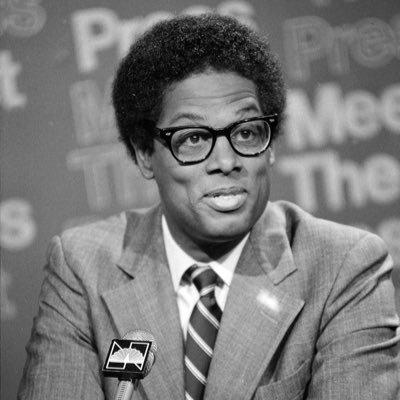
“Activism is a way for useless people to feel important, even if the consequences of their activism are counterproductive for those they claim to be helping and damaging to the fabric of society as a whole.”
— Thomas Sowell
Jonathan Goodchild retweeted

“The philosopher Bertrand Russell saw it coming. In a 1943 essay titled The Superior Virtue of the Oppressed, he warned of a growing tendency to see victimhood not just as a reason for sympathy, but as a badge of moral superiority. Since then, the trend has only accelerated.”
[Link below.]

Jonathan Goodchild retweeted

Net Zero and renewables in a pre-war world
We are told we are entering a pre-war world. But as the great historian Paul Kennedy shows in The Rise and Fall of the Great Powers, long periods of peace allow elites to forget that military power ultimately rests on material foundations.
80 years without peer-to-peer conflict, turbocharged by the post-Cold War peace dividend, have hollowed out industrial thinking in Westminster and our media. As well as finding the money and the political will needed for deterrence, we urgently need to re-materialise policymaker thinking that has drifted away from the realities of war over the last 30+ years. There's lots of talk about money and disinformation, but very little discussion about domestic energy and industrial capacity. This is something the US National Security Strategy gets, but it is missing from debates in Europe and the UK.
Between 1815 and 1914, the last era of extended great-power peace in Europe, leading states increasingly mistook finance, diplomacy, and international arrangements such as the Concert of Europe for strength.
There were early warnings that these mechanisms masked underlying shifts in hard power. Austria’s defeats in 1859 and 1866, and France’s defeat in 1870, demonstrated that fiscal solvency and paper wealth could not compensate for weaker industrial bases, slower mobilisation, and inferior productive force.
As Kennedy makes clear, finance is merely a claim on future production. Credit, borrowing, and financial systems only function if anchored in real productive capacity.
And as we have seen in Ukraine, if a country at war lacks the factories, energy, materials, and skilled labour to honour that claim, it becomes dependent on third-parties to provide it with matériel. But if that external capacity or political will falters, your strategic position collapses very quickly. You are forced to negotiate under unfavourable terms.
When large-scale peer-to-peer conflict finally returned in 1914, diplomacy and institutions fell away almost immediately overnight. What ultimately mattered was the ability to sustain production at scale. And that means you needs LOTS of dense and reliable supplies of energy.
This brings us back to today. Unfortunately, Net Zero and a low density energy system built on intermittency are accelerating the hollowing out of Britain’s industrial base. If we are serious about deterrence in a pre-war world, Clean Power 2030 and Net Zero are not merely unrealistic. They are fundamentally incompatible with serious war preparedness on scale comparable to the 1930s.



Jonathan Goodchild retweeted

The least appreciated part of freedom of speech is that freedom of speech allows people to show you who they really are. It's under-appreciated because the results can sometimes be unpleasant, but it's knowledge we need to have. It is how we come to the Adulthood of the Human Mind.
Jonathan Goodchild retweeted

Also relevant: the bigger the state gets as a proportion of GDP, the more reliant you are on the private sector to fund it (and the less you have to draw on).
A bigger state needs a healthy & dynamic private sector more than a small state does.

Jonathan Goodchild retweeted

Most charity is fundamentally driven by hubris, by the belief that you know how capital should be allocated better than markets do.
The vast majority of improvements to the human condition have come through profitable investment, not charity. The market is not a mind, but it is an emergent information processing system that far surpasses any individual person or committee. It does this evolutionarily: companies that don’t produce adequate value fail, and investors who allocate capital to such companies will control a smaller share of total capital in the future.
Charity does not have a similar feedback mechanism. It doesn’t work because it doesn’t have to work. There are rarely consequences for failure, or even clear criteria for what would constitute failure.
Paradoxically, the best way to improve the world is usually to intelligently and cooperatively pursue your own interests, at every scale of organization from the familial to the corporate to the national. Yes, sometimes people make money by harming others. But that creates an interest in stopping them. On average and over time, an ecosystem of self-interested producers will outperform any kind of benevolent central planning.
This is the key post-rationalist insight: most progress is generated at levels of organization that are above us and only dimly legible to us. Our role is not to sit atop the world and re-engineer it from our current set of imperfect first principles. It is to participate in a process greater than ourselves.

This is the most jaw-dropping 4 minutes and 21 seconds you will watch this year.
Nicole Shanahan — ex-wife of Google co-founder Sergey Brin, former running mate of RFK Jr., and someone who personally signed nine-figure philanthropy checks — just went full whistleblower on the entire Silicon Valley “tech wife mafia” and how they were used.
Her exact words (full clip attached):
“I don’t think many of the tech mafia wives realize… they were used to set the groundwork for what Klaus Schwab calls The Great Reset.
Their money especially was being conscripted through a network of NGO advisors, Hollywood, Davos, and their own companies.
A really small group of people… completely blind to how their groundwork is being used to enable these Great Reset policies.”
Then she turns the knife inward:
“These women find their meaning through philanthropic work. I really believed I was helping Black communities and indigenous communities rise up.
But now the problems have gotten worse. Crime worse. Mental health worse. The whole model is broken.
At the end of the day they always go: ‘But climate change.’
Social justice + climate change — it gets progressive women 100% of the time.”
She even says many now believe the biggest “climate change issues” are actually geoengineering issues.
This isn’t some random podcast bro.
This is a woman who lived in the mansions, sat on the boards, flew private to Davos parties… and is now saying:
“We were the useful idiots.”
Watch the full unedited 4:21 below. Sound on.