John (@John55139) header
John (@John55139) profile picture
Joined June 2020
Photo by John (@John55139)Photo by John (@John55139)Photo by John (@John55139)Photo by John (@John55139)Photo by John (@John55139)Photo by John (@John55139)
A new molecule kills prostate cancer cells — and it worked even on tumors that had stopped responding to standard treatment. Researchers at the University of Michigan's Rogel Cancer Center built the molecule to go after the androgen receptor, the protein that drives most prostate cancers, and a helper protein called p300 that switches on the genes tumors need to grow. Instead of blocking each protein separately, the molecule joins the two in an unnatural position that traps both of them in an inactive state. The team calls these molecules DALTACs, and in cancer cells, three-dimensional organoids grown from human cells and mice, they killed tumor cells far more effectively than using the two blockers side by side, while largely sparing normal cells. According to the researchers, the optimized version is about 1,000 times more potent in tumor cells than combining separate drugs against the same two proteins. In mice, it produced lasting responses, including in tumors that had already become resistant to standard therapy. That matters because advanced prostate cancer often stops responding to hormone treatment, and it was also designed to be absorbed when swallowed, which is a key step toward a pill. That said, everything so far comes from lab dishes and animals, and the molecule hasn't been tested in a single human patient yet. Also, two of the senior scientists co-founded the company that has licensed the technology. The team says it is now working to pick a drug candidate that is ready for human clinical trials. source: Luo, J., Yang, J., Tien, J. C.-Y., Wang, M., Das, S., Wang, X., ... Chinnaiyan, A. M. (2026). Domain-alteration chimeras rewire oncogenic complexes in prostate cancer. Nature.
2
28
1
117
4,525
An experimental therapeutic cancer vaccine has achieved a major breakthrough, reducing the risk of death by 41% in patients facing an aggressive blood cancer. Results from the global Phase 3 REGAL clinical trial show that an immunotherapy called galinpepimut-S extends median survival to 24 months in patients with relapsed acute myeloid leukemia, compared to 14.7 months for those receiving standard follow-up care. That represents more than nine extra months of life for high-risk patients who achieved a second remission after chemotherapy but could not undergo a stem-cell transplant. Rather than preventing illness before it starts, this vaccine trains the body to fight existing cancer. It uses synthetic protein fragments modeled after Wilms Tumor-1, a protein heavily produced by leukemia cells, to guide immune cells toward lingering cancer cells that often survive initial treatment and trigger relapse. The treatment was well tolerated, causing mostly mild soreness or redness at the injection site. Because it is an off-the-shelf vaccine rather than a custom-built therapy, it can be produced in advance and given quickly, with plans underway to submit the data to the U.S. Food and Drug Administration in early 2027. Article sources: ​1. SELLAS Life Sciences Group, Inc. Clinical Trial Announcement (November 17, 2026) – Phase 3 REGAL Trial (NCT04229979) ​2. Memorial Sloan Kettering Cancer Center News Release (November 17, 2026) – Investigational peptide vaccine demonstrates survival benefit in people with acute myeloid leukemia
3
26
92
2,665
Wow a vaccine for leukaemia! Incredible!
A first of its kind vaccine for acute myeloid leukemia, a deadly blood cancer, succeeded in a Phase 3 clinical trial, drugmaker Sellas Life Sciences and Memorial Sloan Kettering Cancer Center announced. wapo.st/4t6oIRy
138
1,534
39
10,296
393,851
A dental treatment can stop cavities without drilling or injections. Scientists are studying a simple liquid called silver diamine fluoride (SDF) that can stop tooth decay without the need for conventional drilling or anesthesia. The treatment is applied directly to a cavity with a small brush and takes only seconds. A 2025 randomized clinical trial involving 665 children found that approximately 80% of treated cavities became inactive after a brief application. How does it work? Silver helps kill cavity-causing bacteria, while fluoride strengthens weakened tooth structure and helps prevent further decay. Another major U.S. clinical trial found that 54% of cavities treated with SDF stopped progressing, compared with 21% in the placebo group. This approach could be particularly helpful for young children who find traditional dental procedures difficult. However, there is an important catch: SDF does not rebuild missing tooth structure or fill a cavity. Instead, it helps stop the decay. Treated areas typically turn dark or black, and some teeth may still need fillings or other dental treatment. The research highlights an interesting development in dentistry: sometimes, stopping tooth decay may be possible without immediately reaching for the dental drill.
6
48
4
139
4,032
John retweeted
The breakthrough was a short course of neoadjuvant botensilimab (Fc-enhanced anti-CTLA-4) plus balstilimab (anti-PD-1) from the phase 2 UNICORN trial. In dMMR colon cancer, 13 of 14 patients (93%) had a complete pathological response with no detectable cancer at surgery. In the typically resistant pMMR group, 29% achieved the same.
3
5
1
35
2,785
BREAKING: A new cancer treatment left 13 out of 14 colon cancer patients with no detectable cancer remaining at surgery. Even in a separate group whose tumors usually resist immunotherapy, the treatment completely cleared detectable cancer in 29% of patients.
34
342
33
4,267
190,983
🦷 WHAT IF YOUR BODY COULD GROW A NEW TOOTH AFTER LOSING ONE? Imagine replacing missing teeth without implants, dentures or artificial replacements. Japanese scientists are investigating a treatment that could one day make this possible. The secret lies in a protein called USAG-1, which normally acts as a brake on tooth development. Researchers developed an experimental antibody called TRG035 to block this protein and potentially activate the growth of new teeth. In animal studies involving mice and ferrets, the treatment produced encouraging results, including the development of new teeth. Human testing began in Japan in 2024. The first clinical trial has now been completed, primarily to assess safety. However, scientists have not yet demonstrated that the treatment can regrow missing teeth in humans. It is still experimental, but the possibility of naturally growing replacement teeth could transform the future of dentistry. Scientific source: Murashima-Suginami, A., et al. (2021). Anti-USAG-1 therapy for tooth regeneration through enhanced BMP signaling. Science Advances, 7(7), eabf1798.
21
102
6
365
7,560
A Pancreatic Cancer Vaccine Activated the Immune System in 89 Out of 90 Patients What if a vaccine could teach the immune system to recognize one of the deadliest cancers? Researchers tested an experimental vaccine called ELI-002 7P in 144 patients with pancreatic cancer who had already undergone surgery and treatment. The vaccine targets seven common KRAS mutations that help cancer cells survive. The results were remarkable: 89 out of 90 evaluable vaccinated patients developed stronger T-cell responses against these cancer-related mutations. These immune cells are responsible for recognizing and attacking abnormal cells. But there is an important twist. Despite the powerful immune response, the Phase 2 trial did not meet its main goal of significantly delaying cancer recurrence across all participants. Researchers are now investigating which patients may benefit most. It is an encouraging step toward personalized cancer vaccines, but much more research is needed before this approach can be considered an effective treatment. Source:
Nature Medicine. (2026). Lymph node-targeted, mKRAS-specific amphiphile vaccine in pancreatic cancer: The randomized phase 2 AMPLIFY-7P trial. Nature Medicine.
8
36
4
143
8,251
🚨 INCREDIBLE: Elon Musk says Neuralink's next product, Blindsight, will let people who are COMPLETELY BLIND, even from birth, see. A camera captures the world around you and sends it straight to the brain's visual cortex, skipping the damaged eyes entirely. Musk says it's "ready from an engineering standpoint" and now waits only on regulatory approval. Rockets, electric cars, satellite internet, and now possibly sight for the blind. FDA, don't sit on this one!
255
1,380
70
5,557
85,809
A liquid painted onto teeth in just seconds halted tooth decay in a large US trial. The liquid is silver diamine fluoride. A dentist applies it to a decayed tooth with a tiny sponge, and the whole process takes only a few seconds. The silver works against the bacteria that cause decay, while the fluoride strengthens the remaining tooth structure. The trial was led by the University of Michigan and New York University, with study sites in Michigan, New York, and Iowa. Researchers treated 830 children under the age of 6 who had severe tooth decay. With applications every six months, the treatment stopped the decay in more than half of the affected teeth. This matters because drilling and filling very small teeth often requires sedation or even general anesthesia, and many families cannot access that kind of care at all. Lead researcher Margherita Fontana says the treatment is both highly effective and safe, even for children as young as 1. There is one drawback that parents will notice: the treated area turns permanently black. The FDA has already cleared the liquid for treating tooth sensitivity, and the researchers say these results support approving it for stopping cavities as well. [Fontana M, Moursi A, Gonzalez-Cabezas C, et al. Efficacy of silver diamine fluoride on young children with severe early childhood caries: a randomized clinical trial. JAMA Pediatrics. 2026. DOI: 10.1001/jamapediatrics.2026.2567]
39
188
11
1,436
134,023
🚨: A new "super-drug" reverses memory loss by removing Alzheimer's plague, an astonishing breakthrough!
17
104
2
894
30,583
READY NOW You might never need a dental implant again. The drug that tells your body to grow a third set of teeth has officially passed its first human safety test with zero side effects. It works by blocking the protein that stops your "backup" teeth from forming. Not anymore. We are officially entering the age of biological dentistry. Shared for informational purposes only. Source: Toregem BioPharma
53
560
29
1,689
58,053
📌📌 Un estudio de laboratorio encontró que el extracto de orégano eliminó hasta el 80% de las células de melanoma en 48 horas, y dejó vivas las células sanas a su lado. Inunda las células cancerosas con estrés oxidativo hasta que estallan, mientras que las células sanas se encogen de hombros ante la misma dosis. Esa selectividad es lo que la quimioterapia lucha por igualar. El orégano inunda las células cancerosas con estrés oxidativo, destruyendo sus mitocondrias y su ADN. Cuando la vía normal de muerte celular falla, se hinchan y estallan en su lugar. Eso es la necroptosis. Las células sanas se encogen de hombros ante la misma dosis. Las células cancerosas, ya bajo mayor tensión, no pueden. Ese es el hallazgo real de un estudio de 2020 en la revista Foods sobre células de melanoma humano y de ratón. PMID 33080917
19
761
16
1,882
40,260
This is literally unbelievable… An 80-year-old with severe Alzheimer’s just REGAINED her memory, emotions, ability to speak, ability to walk, AND bladder control after ONE psilocybin dose. No Alzheimer’s drug has EVER done anything remotely close to this.
442
6,905
338
20,150
938,607
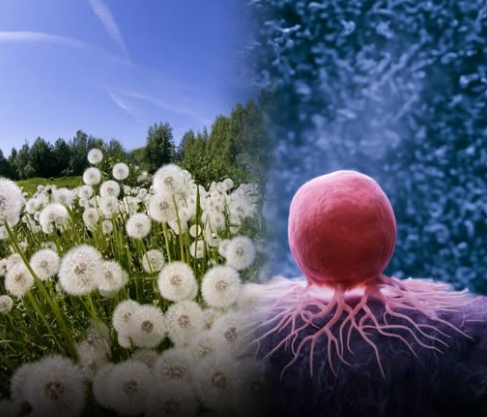
Hey @grok Have researchers found that in laboratory testing dandelion root can kill up to 95% of cancer cells in two days? 🔹Yes or No🔹
87
929
30
4,774
679,863
A new vaccine against pancreatic cancer, one of the deadliest cancers, prompted an immune response in 99% of the patients whose responses could be measured. Most pancreatic cancers are driven by mutations in the KRAS gene. The vaccine, called camupepimut and developed by Elicio Therapeutics, is designed to train the immune system's T cells to recognize seven of the most common KRAS mutations. In a phase 2 trial led by Mayo Clinic oncologist Ben George, 144 patients who had already completed surgery and chemotherapy were randomly assigned to receive the vaccine or to be observed without it. Among the 90 vaccinated patients who could be evaluated, 89 developed T cells that targeted mutated KRAS. In more than 80% of them, the response was over nine times stronger than at baseline. Patients with the strongest immune responses tended to remain cancer-free for longer. A larger phase 3 trial is planned, and it may include booster doses and combinations with other drugs. [George B, Singh H, Devoe CE, et al. Lymph node-targeted, mKRAS-specific amphiphile vaccine in pancreatic cancer: the randomized phase 2 AMPLIFY-7P trial. Nature Medicine. 2026. DOI: 10.1038/s41591-026-04734-7]
25
174
12
1,050
70,515
🧬 A New Pancreatic Cancer Vaccine Activated the Immune System in Nearly 99% of Patients What if the immune system could be trained to recognize one of the deadliest cancers? Scientists have developed an experimental vaccine called camupepimut that teaches immune cells to recognize specific genetic mutations linked to pancreatic cancer. In a phase 2 clinical trial involving 144 patients, the results caught researchers' attention. Among 90 vaccinated patients whose immune responses could be measured, 89 (98.9%) developed stronger T-cell responses against cancer-related KRAS mutations. These immune cells are important because they can recognize and attack abnormal cells. Researchers also observed that patients with stronger immune responses tended to remain cancer-free for longer. But there is an important detail: the vaccine has not yet been proven to prevent cancer from returning or extend survival. The trial did not show a statistically significant improvement in disease-free survival across the entire group. A larger Phase 3 trial is needed. Still, teaching the immune system to recognize cancer-related mutations in almost every patient is an encouraging step toward new pancreatic cancer treatments. Source:
Lymph node-targeted, mKRAS-specific amphiphile vaccine in pancreatic cancer: The randomized phase 2 AMPLIFY-7P trial. (2026). Nature Medicine.
5
54
6
199
4,828