

Stroke Dir @UChicago_Neuro | Former @BrainWavesAudio Prod. (RIP) | @GreenJournal Dep. Ed. | @SVINJournal Digital Strat. Team | #FOAM | Jimdominals @onepeloton
Chicago, IL
Joined November 2018
- Tweets1.6K
- Following1K
- Followers2.5K
- Likes5.1K





Pinned Tweet
Like Winter in Chicago 🥶 the October CASPR update has arrived! 🎃
✴️45% to goal!🪅
Top enrolling sites:
🥇Colorado: 211!
🥈Yale: 128!
🥉Grady: 67!
Way to go! Special thanks to @SetarehOmranMD @NeeharikaThott1 @DineshJillella @aboulnourh for such success with enrollments!! 👏🏼

Jim Siegler, MD, FAHA retweeted

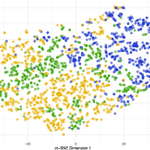
Excited to share our article below. We apply a causal random forest machine learning model to the CASPR registry of patients with cryptogenic stroke to evaluate heterogeneity in anticoagulation treatment effect. @JimSiegler @neurologyyale onlinelibrary.wiley.com/doi/…

Friendly reminder to my colleagues in JACKSON, MISSISSIPPI, I'll be heading your way soon to discuss the shift in secondary prevention for STROKE.
We welcome you to join us for a dinner + discussion regarding the effectiveness and implementation of novel FACTOR XI inhibitors.
⏰ When? Oct 27, 2026 7pm-9pm
👩🍳Where? Eastover Room at Char, Jackson, MS
🙏Compensation? $500 for participation (+ dinner)
Event is sponsored by @neurology_live and @HCPLiveNews. 👏👏

Evidence that AI won’t replace us 👇🏼
Generative, evidence-based AI still requires CLINICIAN SCIENTISTS to produce original research to provide high quality syntheses of information.
Thank you @OpenEvidence @NEJM! @ShadiYaghi2 @RichaSharmaMD

Historically, we have attempted to "personalize medicine" by translating evidence re: POPULATION benefit of a treatment in clinical trials to benefit across SUBGROUPS (age, sex, race, etc).
The future of precision medicine relies on unbiased classification of patient PHENOTYPES.
5/ The full manuscript can be found online @ANAneurology journal ACTN here: onlinelibrary.wiley.com/doi/…
6/ Amazing work by the CASPR team!! 👏 @LinebackCM @ShadiYaghi2 @aboulnourh @MahanShahrivari @NguyenThanhMD @samialkasab @RichaSharmaMD @OanaDumitrascu5 @Marypenckofer @CooperNeuroRes @UCLANeurology @UChicago_Neuro @NeurologyYale @EmoryStroke & many others!
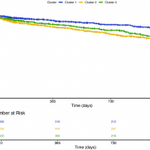
The latest CASPR manuscript is in press! @Marypenckofer led this analysis evaluating disparities in stroke recurrence among Medicaid/pending/no insurance as compared to Private/VA beneficiaries, with more pronounced disparities among:
🚩 Men
🚩 The young
🚩 Mild deficits

Jim Brorson @UChicago_Neuro and many other unsung heroes of the CASPR collab!
Manuscript available soon at:
pubmed.ncbi.nlm.nih.gov/4267…

Been saying it for years...statin in the water supply.
For healthy, elderly adults, atorvastatin reduces cardiac event risk! STAREE trial @NEJM nejm.org/doi/full/10.1056/NE…
NNT 200 @ 1yr
🟢 Men benefit more than women
🟢 Benefit despite (1) "normal" BP and (2) "good" LDL 👇

The "silent killer", hypertension.
✅ #1 risk factor for stroke in the US
✅ Recognition of HTN led to 🔻 in stroke by half in the 20th century
✅ Should ALWAYS be something you discuss with your patient, whether you're a chiropractor, podiatrist, or cardiologist
❤️

Hypertension remains a major public health challenge in the United States, affecting more than 120 million adults with low rates of control, and is a central strategic priority of the American Heart Association as a leading, preventable driver of cardiovascular morbidity and mortality.
This science advisory presents the American Heart Association Blood Pressure Control Logic Model as a unifying framework to coordinate and scale multi-sector efforts to improve blood pressure control across health care and community settings.
Sustained improvements in blood pressure control and reductions in cardiovascular events require ongoing multi-sector collaboration, rigorous evaluation, and adaptation of the Logic Model to diverse organizations and communities.
📷 The American Heart Association blood pressure control logic model
professional.heart.org/en/sc…


Jim Siegler, MD, FAHA retweeted

- ESUS 2.0 carries a lower recurrence risk (~1%)
- Incomplete diagnostic evaluation after ESUS is associated with increased recurrence
- If you find cancer or athero as a potential mechanism in ESUS, recurrence risk is increased
ahajournals.org/doi/10.1161/…
ahajournals.org/doi/10.1161/…

Current LDL lowering therapy paradigms are “biologically backward”. Waiting for a clinical event while silent athero accumulates over years before intervention results in heightened individual and population risk.
Cost effectiveness analyses are needed to confirm.

Editorial at #ESCCongress on #VESALIUSCV: waiting for a heart attack or stroke before intensifying LDL-lowering is biologically backwards — that event marks prevention's failure, not its starting point. The best way to prevent the last ... ahajrnls.org/4zNCM5e @DrMichaelShapir

Jim Siegler, MD, FAHA retweeted

Using an institutional registry, the investigators derived the MAD-MT score — a pragmatic tool that identifies DMVO patients most likely to benefit from EVT while minimizing risk, supporting future trial design. #stroke ahajournals.org/doi/full/10.…

ALT Graphic abstract in Chen, Lakhani, and Salim et al.