

Author, More Than Heaven (Wipf & Stock 2022). Klinean federal‑covenantal architect.
Atlanta, GA
Joined December 2012
- Tweets3.7K
- Following2.6K
- Followers1.8K
- Likes3.7K


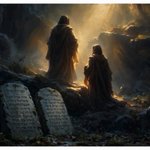





Romans 14:12 is quoted as if Paul had placed the believer in the dock: "So then each of us will give an account of himself to God." Read inside its own paragraph, the verse is doing household work. Two men in one congregation are condemning each other over food and festival days, and Paul removes the audit from their hands. "Who are you to judge the servant of another? To his own master he stands or falls" (v. 4). A servant answers to his own κύριος. The account belongs to the Master of the house, and for that reason it belongs to no one else at the table.
Λόγον δώσει — he will give an account — is a forensic term, and it carries condemnation in its nature. Everywhere the New Testament uses it, an account is rendered under live liability and the rendering exposes the renderer. The king settling accounts delivers the unforgiving servant to the jailers (Matt 18:23). The steward ordered to give an account of his stewardship is dismissed in the same sentence (Luke 16:2). Men give account for every careless word on the day of judgment (Matt 12:36); the ungodly give account to the Judge of the living and the dead (1 Pet 4:5). Scripture knows no softened version of this rendering. Nobody gives an account where nothing is owed.
The tribunal Paul names is real and universal. "We will all stand before the judgment seat of God" (v. 10) carries Isaiah 45:23 as its warrant — every knee bowing, every tongue confessing. Paul addresses the visible congregation at Rome, a mixed house, and the sentence stands over it in full rigor. Its edge falls on every man whose account is still his own.
The believer's account has been given. His Head rendered it. At the cross the charge was read aloud and the sentence executed; the account-giving happened there, once, with its condemnation intact — borne by the Account-Giver, exhausted on Him, receipted in τετέλεσται and the cancelled certificate of Colossians 2:14. No second rendering awaits the man in Christ, and Romans itself bars the door to one: "Who shall bring any charge against God's elect? It is God who justifies. Who is to condemn?" (8:33–34). At the assize he stands inside the confession Isaiah promised, his knee bowing in worship, and he sits where Paul seats the saints — judging the world, judging angels (1 Cor 6:2–3). On the bench with his King.
The man in Adam appears under the verse's full weight. His ledger is outstanding, his account unrendered, and the confession will be extracted from him at the end as a condemned man's last acknowledgment of the Lord he refused. Inside Romans 14, that man has a local address: the brother weighing servants at the table. Playing auditor over another man's servant is the habit of a man whose own account has never been settled. A man who knows his ledger was rendered by his Head leaves the auditing to the Master who owns the house.
That is the verse's pastoral force. The congregation can stop condemning its own members because the one real audit in the universe has already been held — at a cross, under a charge that no longer exists, against a Substitute who answered it in full.
#Romans14 #Romans #FederalHeadship #CovenantTheology
The objection runs like this: the believer is one person, spirit and body together — and the residence reading splits him, body living here, spirit in heaven. One man in two places is one man in pieces.
Scripture locates the person and never parcels him. "You have come to Mount Zion" (Heb 12:22) is spoken to whole persons, and the verb stands in the perfect tense — the coming is accomplished. "Our citizenship is in heaven" (Phil 3:20) registers the man himself, his name, his inheritance, his polity. God "raised us up and seated us with Him" (Eph 2:6) — the συν- compounds take the believer as their object, all of him that covenant counts, which is all of him there is. Paul had the vocabulary to say a part of the man had arrived. He predicates arrival of the man.
A person's covenantal location is fixed by his Head. The believer's body walks the lower register in mortality; the believer resides in the upper register in Christ. These are not two halves of a divided man. They are the two registers of the one creation, and the one man stands in both the way his Head appoints — personally above, bodily below, awaiting the body's transfer. What remains outstanding in Romans 8:23 is "the redemption of our body": the body follows the person at the resurrection. The last day does not assemble a man out of stored parts. It clothes a resident.
Colossians 3:3 says the life is "hidden with Christ in God." Hiddenness is a matter of sight. The life is veiled from the world's eyes and from the believer's own; its location is stated in the same breath — with Christ, in God. A veiled resident is a resident.
Pressed consistently, the objection dissolves more than it protects. The representative reading also locates the embodied man's standing in heaven while his body walks the earth; every reading of Ephesians 2 predicates a heavenly location of men still here in the flesh. If personal unity forbids the believer a heavenly location his body has not reached, the chapter itself is forbidden, and the objection has argued Ephesians off the page to save it.
The ligature between the registers is the Spirit — the Glory-Spirit who constitutes the city above indwelling the citizen below, the ἀρραβὼν of the inheritance, heaven's own life in the man as first installment of the whole. The believer is not stretched between two addresses. He is one person in one covenant, at home in Zion by his Head and by the Spirit who is already in him, his body the last of him to make a journey his person has already completed.
#Ephesians2 #Hebrews12 #FederalHeadship #CovenantTheology
Colossians 3 opens by addressing people who have already been moved: εἰ οὖν συνηγέρθητε τῷ Χριστῷ, τὰ ἄνω ζητεῖτε — if you were raised with Christ, seek the things above, οὗ ὁ Χριστός ἐστιν, where Christ is, seated at God's right hand. The imperative rests on an indicative of location. Paul does not tell travelers to aim at a country they hope to reach; he tells residents to live toward the seat they already occupy in their Head. τὰ ἄνω φρονεῖτε — set the mind on the things above — is a citizen's orientation, the settled attention of a man whose registry, inheritance, and King are all in one city, and whose body is temporarily elsewhere.
Verse 3 names the veil: ἀπεθάνετε γάρ, καὶ ἡ ζωὴ ὑμῶν κέκρυπται σὺν τῷ Χριστῷ ἐν τῷ θεῷ. You died, and your life is hidden with Christ in God. Hidden is a statement about visibility, never about reality or location. The life is in the safest address in the cosmos — with Christ, in God — and it is hidden because the register it belongs to is the upper one, while the eyes that would look for it stand in the lower. Sanctification is that hidden life pressing outward through a mortal body: νεκρώσατε τὰ μέλη τὰ ἐπὶ τῆς γῆς, put to death the members on the earth (3:5) — the old register's customs still wearing the limbs as their clothing. Paul follows with wardrobe language for a reason: ἀπεκδυσάμενοι τὸν παλαιὸν ἄνθρωπον, strip off the old man; ἐνδυσάμενοι τὸν νέον, put on the new (3:9–10). The resident is being redressed. Growth in holiness is the city's dress replacing the old world's, garment by garment, until what a man is in Zion and what he appears on earth are the same sight.
The assembly's worship lives in the same chapter and under the same veil: ὁ λόγος τοῦ Χριστοῦ ἐνοικείτω ἐν ὑμῖν πλουσίως — psalms, hymns, spiritual songs (3:16). The songs are the city's songs, sung by citizens in Adamic air, in mortal throats, over a table of bread and cup. Their forms belong to the lower register; the convocation they voice belongs to the upper. Worship does not rehearse a gathering scheduled for later. It is the gathering, convened early and under veil, with the veiling located entirely in the singers' bodies and not at all in their address.
Perseverance stands where Paul put the life: hidden with Christ in God. A life stored at that address is out of the Adamic world's reach — the accuser can harass the traveler; he cannot touch the treasury. The citizen endures as a man endures weather in a country he does not belong to, because his life is kept in the country he does. And verse 4 fixes what the end adds: ὅταν ὁ Χριστὸς φανερωθῇ, ἡ ζωὴ ὑμῶν, τότε καὶ ὑμεῖς σὺν αὐτῷ φανερωθήσεσθε ἐν δόξῃ. Christ appears, and the hidden are manifested with Him in glory. Φανερόω is unveiling vocabulary. The last day does not relocate the saints to Zion; it removes the veil from the Zion-life they have been living all along, and sanctification, worship, and perseverance are seen in the open as what they always were — one city's life, conducted for a season under cover.
#Colossians3 #Sanctification #FederalHeadship #CovenantTheology
Faithful readers have affirmed the believer's heavenly life from Ephesians 2 and Hebrews 12 for a long time. Vos held it as the eschatological character of the Christian existence. Ridderbos took the heavenly places as the church's real sphere of life. Owen treated the gathered church as in communion with the assembly above. Gaffin grounded the already in the resurrection — believers raised with Christ, their life a resurrection life now. Each holds the residence by a member: a tension, a sphere of existence, a communion, a participation.
A member held alone can always be re-described. Heavenly existence softens into heavenly orientation; communion with the assembly becomes contemplation of it; raised with Christ settles into represented by Christ. The reduction to representation is permanently available wherever the affirmation is strong and the place itself goes unsupplied. Soteriology without cosmology leaves the believer's address a manner of speaking.
Kline's architecture supplies the place. Heaven in his reading is the upper register of a two-register creation — the endoxated glory of God as the created heaven, a realm with the same creaturely concreteness as the earth beneath it. Mount Zion is an address in that register. The city of Hebrews 12 stands somewhere, the way Sinai stood somewhere; the letter's whole contrast between the touchable mountain and the untouchable city is a contrast of locations within one cosmos, the old administration's mountain below and the new covenant's city above.
Federal headship then carries the full distance. The Head is in the city, presiding over its assembly, and headship in Kline's frame is total — the member's covenant location follows the Head's without division or remainder. Representation is the ground of the residence; the architecture shows what the ground is made of. The representative is a King in a real capital, and the represented are citizens enrolled in it.
The Glory-Spirit closes the last gap between registry and life. The Spirit who constitutes the upper register — heaven is His endoxated glory — is the same Spirit who indwells the believer in the lower. The ἀρραβὼν of Ephesians 1:14 is an installment in kind: the register's own substance given below, so that the believer's present life is Zion's life under Adamic conditions, awaiting only the body's transfer to be Zion's life without remainder.
And the residence stands outside probation. The judgment that could review a citizen's standing has been rendered and exhausted in the Head; the Sabbath rest of the upper register is already entered (Heb 4). A seat under review would be a seat in a courtroom's waiting room. Kline's Zion has no waiting room — its residents are enrolled, seated, and at rest, and the final day manifests a citizenry it does not examine.
Assemble the members — two registers, the endoxated heaven, total headship, the one Glory-Spirit in both registers, judgment exhausted, Sabbath entered — and the believer's life in Zion is the plain description of his location. The other readers saw the resident, truly. The architecture draws the city he resides in, and once the city is on the page, his presence in it needs no boldness to affirm.
#Kline #Ephesians2 #Hebrews12 #FederalHeadship #CovenantTheology
Many Reformed and evangelical readers take Ephesians 2:5 and Hebrews 12 as the believer's representative presence in heaven — seated there because his federal Head is seated there, arrived at Zion because his Mediator stands there. In the Head, that is true. The texts assert more than representation carries.
Paul's verbs in Ephesians 2 are compounds with σύν, and they are done to the believer: God συνεζωοποίησεν him with Christ, συνήγειρεν him, συνεκάθισεν him in the heavenly places. Federal headship is the ground of the whole movement — nothing here transfers except in the Head. The movement itself is a transfer of persons. A verdict can be rendered for a man in his absence; Paul describes men raised and seated. The believer's register changed with his Head's, and his life is registered where his Head reigns.
Hebrews 12:22 speaks in the perfect tense: προσεληλύθατε, you have come to Mount Zion, to the city of the living God, the heavenly Jerusalem, to myriads of angels in festal gathering, to the assembly of the firstborn enrolled in heaven, to the spirits of the righteous made perfect, to Jesus the Mediator of a new covenant. The assembly is already constituted; the enrolment is already made. The church's gathered worship convenes inside that convocation. She has a city, and she is in it, while her body still stands in the Adamic world that Hebrews sets against Zion — the touchable mountain of the old administration, which the letter says she has not come to.
Citizenship states the same location from the registry side: ὑπάρχει, our πολίτευμα exists in heaven now (Phil 3:20). And Ephesians 2:19 retires the pilgrim word as the believer's identity — no longer strangers and sojourners, but συμπολῖται, fellow citizens with the saints and members of God's household. Peter's παρεπίδημοι names the body's itinerary through the Adamic order. It was never the believer's address.
The Holy Spirit is what makes the residence a life rather than a status. The ἀρραβὼν is a first installment of the same substance, the coming age paid down in kind. The Glory-Spirit who constitutes the upper register indwells the believer in the lower, and the life he lives below is upper-register life — Zion's own life, carried for now in a body heaven has not yet claimed.
The pilgrim note in the New Testament sounds at the body's level, and only there. The body still dies — mortality runs the course Adam's breach set for the race — and it reaches the believer with its sanction already exhausted in his Head. Scripture's word for his death is sleep (John 11:11), the vocabulary of a death whose judgment is gone; judgment language is reserved for the second death, which is never called sleep. What awaits the body is transfer, the redemption of the body (Rom 8:23). Ahead of the believer stands manifestation — the revealing of the sons of God — never residency. His seat is taken, his name is on the roll, his city has received him. The one part of him still traveling is the part that dies.
#Ephesians2 #Hebrews12 #FederalHeadship #CovenantTheology
The true vassal King never abdicated the holy war.
David stayed in Jerusalem, and the sword he would not carry came home: "The sword shall never depart from your house" (2 Sam 12:10). The greater Son went out — against Satan and the dominion of darkness — and His faithfulness marched Him straight to the Suzerain's sword: "Awake, O sword, against my shepherd, against the man who stands next to me, declares the LORD" (Zech 13:7).
He did not flee it. "Shall I not drink the cup the Father has given me?" (John 18:11). He stood where the sword fell until the sword was spent.
So His house hears the opposite sentence, forever. David evaded the sword, and it never left his house. Christ exhausted it, and it will never again enter His. The sanction the staying king could not escape, the going King finished — for everyone in His house.
Never.
#2Samuel #2Samuel12 #Zechariah13 #FederalHeadship #CovenantOfGrace #CovenantTheology
Why didn't David go to war?
Samuel never says. The narrator of 2 Samuel 11 gives no motive — no weariness, no boredom, no interior weather of any kind. The silence has sent the interpreters elsewhere, and where they go names their method.
The counselors find a midlife crisis: worlds conquered, limitations faced, lethargy setting in. The preachers find lust: a bored king, a rooftop, a warning to men with margin in their lives. The literary readers find irony — the king at home while his army is in the field, the seer who cannot see his own sin coming. The biographers find a tragic flaw in a great man. Every approach supplies what the narrator withheld, a psychology, and every approach centers the man.
The text centers the covenant.
David reigns inside the Mosaic administration as vassal king. The throne is the Suzerain's. The wars are the LORD's wars — the office Israel demanded in so many words: a king to "go out before us and fight our battles" (1 Sam 8:20). Abigail states the same office from below: "my lord fights the battles of the LORD" (1 Sam 25:28). The king himself stands under the book he administers — Torah copied, read all his days, heart not lifted above his brothers (Deut 17:18–20). His sword is the covenant's sword, carried on commission.
11:1 is the narrator locating the king against that commission: "At the time when kings go out to battle… David stayed at Jerusalem." The staying needs no motive to be an indictment. The vassal has vacated the office, and everything in the chapter follows the vacancy — the roof, the inquiry, the summons, and finally the war itself conscripted as the murder weapon, Uriah carrying his own death warrant to the general of the army he serves.
Uriah the Hittite is the chapter's witness. He will not go down to his house "while the ark and Israel and Judah dwell in booths" (11:11). The outsider keeps the war's consecration the anointed has dropped, and his fidelity stands in the record against the king — he dies, in Nathan's words, "with the sword of the sons of Ammon" (12:9), struck down by the very enemy sword his king was commissioned to wield in judgment.
Nathan's indictment never mentions desire. The charge is covenant breach: "You have despised the word of the LORD" (12:9). And the sentence is the old covenant's own sanction, measured to the instrument: "The sword shall never depart from your house" (12:10). Leviticus had written the sanction in advance — a sword "executing vengeance for the covenant" (Lev 26:25). The sword David turned against his own servant comes home and stays: Amnon falls by it, Absalom falls by it, the king who stayed in Jerusalem flees Jerusalem barefoot before his own son, and the succession of his house runs on blades for the rest of the book.
The vassal king is judged by the sword of his own commission, under the sanctions of the covenant he administered.
Chapter 7 stands over all of it, on its own stated terms: the rod for the man, permanence for the house. "I will discipline him with the rod of men… but my steadfast love will not depart from him, as I took it from Saul" (2 Sam 7:14–15). The rod is the Mosaic administration's, and it falls on David and his household without mitigation. The love that does not depart belongs to the Abrahamic oath in its royal administration. And Samuel binds the house's future in two sentences built on the same verb: the sword shall not depart from his house (12:10), and my steadfast love shall not depart from him (7:15) — "as I took it from Saul." Saul was prosecuted under the Mosaic stipulations and removed, house and kingship together. David stands under both non-departures at once: judged for generations by the sword that does not depart, held by the love that does not depart.
#2Samuel #2Samuel11 #2Samuel12 #MosaicCovenant #CovenantTheology
Preaching locates before it exhorts.
Too many interpret the already and the not yet as though the justified believer faces a coming judgment, as though his verdict waits at the end of the line. The line runs the other way. His judgment stands behind him, exhausted in his federal Head. Ahead of him stands manifestation: the revealing of the sons of God, the redemption of the body, the assize at which the saints judge the world with their King.
Paul fixes the believer's present location in one verb. God "raised us up with him and seated us with him in the heavenly places in Christ Jesus" (Eph 2:6). Seated — already, in the upper register, in the Head. The covenant of grace ran under the whole course of redemptive history and culminated in the New Covenant: a people enthroned with Christ while history still runs below.
Preach a man before a coming judgment and you preach him out of his address. Locate the congregation where God has seated it. Exhortation follows location.
#Ephesians2 #FederalHeadship #CovenantOfGrace #CovenantTheology

Calvin preached 1 Samuel 1 in Geneva — four sermons for the chapter. The first opens with Acts 13: God's government of His church in every age, Samuel raised as the hinge between the judges and the king, David set on the road to Christ. The frame is redemptive history, confessed in the sermon's first breath.
Then the sermons settle onto the feud. Peninnah provokes. Hannah weeps. Elkanah consoles. Calvin's heads follow the quarrel: prayers are void while hatred stands, reconcile before the gift reaches the altar, bear the insult, leave vengeance with God, the husband should have rebuked the arrogant wife with sterner words. Elkanah's real failure, in Calvin's telling, is that he never prayed for a child the way Isaac prayed for Rebekah.
The moralism is competent, text-adjacent, and entirely beside the chapter's point. First Samuel 1 announces its freight in its own repetitions: the LORD shut Hannah's womb — verses 5 and 6, the narrator's hand on the same fact twice. A priesthood ministers at Shiloh whose sons are already marked for judgment. A Levite's house stands divided between the fruitful wife and the barren one. The king Israel will demand in chapter 8 is already being prepared in chapter 1, and he arrives through the barren woman's prayer and vow, inside a covenant administration whose curse is about to fall on the house that runs its sanctuary.
None of that freight converts into counsel. It has to be located: where the text stands in the canon, what administration governs it, whose seed is being carried through a shut womb toward an anointing. Moralism skips the location and goes straight to the mirror. Every passage becomes the congregation's conduct. Every character becomes an example or a warning. The king disappears behind the etiquette.
Calvin is the exhibit because he is not careless. A lesser preacher moralizes from ignorance of the architecture. Calvin confessed the architecture in his first paragraph and moralized anyway. The shortcut is older than the modern church and stronger than a good man's intentions. It is the pulpit's default setting, in Geneva as in the present hour: scenery preached as substance, the congregation sent home with rules for its quarrels, and no king.
#1Samuel #Preaching #Moralism #CovenantTheology
Sinai has no mercy. The covenant of works has no mercy. The works principle dispenses blessing on obedience and curse on breach; it carries no third category, and it never has.
Lamentations 3:22–23 is a confession spoken where that curse finished falling. תָּמְנוּ is first person: "we are not consumed, for His compassions do not fail." The גֶּבֶר of 3:1 stands inside the executed sanction — Jerusalem burned, Sinai's judgment on the nation's tenure carried out to the letter. The mercy in his mouth is no product of Sinai. Sinai had spent everything it had, and everything it had was the curse.
God does not pardon. וְנַקֵּה לֹא יְנַקֶּה stands without exception (Ex 34:7): the guilty are never cleared by waiver, and no suzerain keeps a law court where a waiver could be pled. What God does, the creed states in priestly vocabulary: נֹשֵׂא עָוֹן — He bears iniquity. Iniquity is lifted from the sinner because it is carried by the Bearer, the federal Head on whom the Adamic sanction was exhausted. The prerogative of Exodus 33:19 — gracious to whom He will — appoints where the iniquity lands. It never declares the debt imaginary.
The proportions stand in the same creed: ḥesed kept for thousands (לָאֲלָפִים), iniquity visited to the third and the fourth. Jerusalem received the judgment clause in full measure. The thousands clause had not moved.
"The LORD is my portion (חֶלְקִי); therefore I hope in Him." The Levitical share — no soil, the LORD Himself as the allotment — confessed by a remnant standing in ash. The inheritance survived the fire because the inheritance was never the land. New every morning is its manna cadence: provision arriving daily in the suspended zone between a curse exhausted and a restoration still promised.
The NT believer reads this confession from the far side of the bearing, and location governs application. He never takes the גֶּבֶר's posture. No sanction is executing around him; his judgment was exhausted in his Head, and consumption is a category his covenant no longer contains. What crosses into the second canon is the doctrine: the same God, the same proportions, the same portion — the LORD Himself as the inheritance — administered now to heirs who appear at the final day on the bench with Christ, never before it.
#Lamentations #Lamentations3 #Exodus34 #GreatIsThyFaithfulness #Hesed #CanonAsCovenant #CovenantTheology
The third petition is usually read with the architecture left out.
Read devotionally, 'Your will be done' becomes resignation: the believer accepting what he cannot change. Read morally, it becomes aspiration: a world with more obedience in it. Both readings size the petition to the person praying it.
The words refuse the size. 'On earth as it is in heaven' names the two registers of God's creation. Heaven is the endoxated realm, where the will of God is the constitution of things and His glory is the order of the world. Earth is the register put at variance with its archetype by Adam's rebellion. The petition stands third in a program — the Name hallowed, the Kingdom come, and then the will done — because the will follows the Kingdom the way order follows a king's arrival.
The Son prayed this petition as a stipulation. At Gethsemane, 'Your will be done' (Matt 26:42) was the Pactum being executed in the flesh: the will of God done on earth, completely, once, by the Head. The church prays it from inside His answer, and the answer's final form is fire and a new earth (2 Pet 3:7, 13). An interpretation without the cosmic architecture has no place to put the fire, so it leaves the fire out — and a petition shorn of its answer becomes advice about attitude.
Restore the architecture and the petition recovers its scale: heaven's order, earth's variance, the Kingdom's coming, the Keeper's finished obedience, the new earth under the descended heaven. The third petition is creation-sized.
#Matthew6 #LordsPrayer #ThyWillBeDone #GlorySpirit #PactumSalutis #NewHeavensNewEarth #FederalEschatology #CovenantTheology
"Your will be done, on earth as it is in heaven" is neither a concession nor a pipe dream. A concession resigns the one who prays to an outcome he cannot see. A pipe dream longs for an outcome it cannot ground. The third petition stands on the architecture of the prayer itself: the Name, the Kingdom, and then the will — the covenant program in its order, prayed to the Father by the covenant people.
The load-bearing words are "as it is in heaven." Heaven is the upper register of God's creation, the endoxated realm where His will is the constitution of things and His glory is displayed as the order of the world. Earth is the lower register, put at variance with its archetype by Adam's rebellion. The petition is prayed in the days of the old earth, and its answer is a new earth: the Kingdom comes, and where the Kingdom comes the will of God is done on earth as it is in heaven. Man was made for precisely this — the image-bearer enacting heaven's order on earth — and in the petition the commission comes back as prayer, awaiting the earth that can bear its answer.
The petition has already been answered in the Head. God's will has been done on earth, completely, once: in the Son's obedience to the stipulations of the Pactum, prayed by the Son in Gethsemane as He went to fulfill them — "Your will be done" (Matt 26:42). The church prays the third petition from inside that answer, asking the Father to administer through the Spirit what the Son has merited: the life of the new creation already among the heirs in the old earth, until the Keeper brings the inheritance itself — new heavens and a new earth.
The answer comes by fire, and the fire is terminal. Peter sets the flood as the pattern: the world that then existed was deluged with water and perished (2 Pet 3:6). The present heavens and earth are stored up for fire (3:7), and the promise on the far side of the fire is not this earth renovated: "according to His promise we are looking for new heavens and a new earth, in which righteousness dwells" (3:13). The first heaven and the first earth pass away (Rev 21:1), and the New Jerusalem comes down out of heaven from God into the creation He makes new — "Behold, I am making all things new" (Rev 21:5). This earth is not conformed to heaven at the last. It is ended, and God gives the earth that bears His will the way heaven bears it: the dwelling of God with men, the endoxated heaven descended, Sabbath without remainder.
The will of God will be done on earth as it is in heaven — on the new earth, under the descended heaven, through the fire — because the Pactum stipulates it, and the Pactum has a Keeper who has already done the will of God in the flesh.
#Matthew6 #LordsPrayer #ThyWillBeDone #PactumSalutis #FederalHeadship #NewHeavensNewEarth #FederalEschatology #CovenantTheology
"Don't be like Jonah" is the quickest way to build a congregation of Jonahs.
Moralism's method is identification. The hearer is placed inside the prophet and handed the prophet's failure as a stipulation: stop running, stop sulking, obey the calling. The sermon becomes a mirror and an assignment, and the congregation goes home to work on being less like the man in the book.
The assignment manufactures its man. A hearer located in Jonah under obligation leaves in one of Jonah's two postures. He runs — from the commission, from the church, from the God whose demands he cannot meet. Or he stays and resents, seated east of the city, performing the duty and keeping accounts against the grace shown to people who did less and received the same. Resentment and flight are not the opposites of Jonah's religion. They are its two sacraments.
The canon never seats the hearer in the fish. The fish has an occupant whose descent is the type of the judgment the greater Jonah underwent once, in the heart of the earth, for the hearer. Located by the book itself, the congregation stands in the book's other companies: on the deck with the sailors, delivered by a judgment that fell on another and ending in sacrifice and vows; inside the city with the Ninevites, repenting at the preaching of the One greater than Jonah.
Preach the descent as accomplished and the book yields its own fruit — worship and repentance. Preach it as an assignment and it yields Jonah, in bulk, every week.
#Jonah #Preaching #Moralism #SignOfJonah #BookOfTheTwelve #LocationBeforeApplication #CovenantTheology
Nobody in the congregation is Jonah. Preaching this book starts there.
Sermon 1 — The Flight of the Prophet (Jonah 1:1–3; 2 Kings 14:25)
Thesis: Jonah's flight is Israel's apostasy in one man — the commissioned nation refusing its commission because it knows God's mercy better than it wants to.
I. The prophet of the expansion (2 Kings 14:25) — Jonah's border oracle; Jeroboam II evil, yet God saved Israel through him, seeing her bitter affliction (14:26–27); the expansion is respite mistaken for glory.
II. The commission (1:2) — Israel's vocation in miniature: the knowledge of God carried to the nations, and to Assyria's capital, the empire that will end his nation.
III. The flight (1:3) — Tarshish, the geographic opposite; "from the presence of the LORD" twice; he pays the fare — apostasy deliberate, orderly, funded.
IV. The reason seeded — doctrine, not panic; its grounds confessed in 4:2.
Location: the text addresses the commissioned community as a body — a people content to possess the light it was given to carry.
Sermon 2 — Cast into the Sea (Jonah 1:4–16)
Thesis: God pursues His fugitive with judgment, and the judgment that falls on the one becomes salvation for the ship.
I. The storm (1:4–6) — the LORD hurled the wind; the prophet sleeps while pagans pray; the captain's rebuke.
II. The lots and the confession (1:7–10) — the lot exposes him; his creed indicts his flight (1:9): the Maker of the sea cannot be fled by sea.
III. The sanction named (1:11–14) — "Cast me in"; the sailors row against it, showing the prophet more mercy than he will show Nineveh; their prayer fears innocent blood.
IV. The calm and the altar (1:15–16) — the sea ceases; sacrifices and vows: the mission's first converts are made through his judgment.
Location: the congregation stands on the deck — delivered by a judgment that fell on another, ending in worship.
Sermon 3 — The Belly of Sheol (Jonah 2)
Thesis: In the fish Jonah undergoes the death his flight deserved, and God raises him as the sign of the greater Jonah's death and resurrection.
I. The prayer from the pit (2:2–6) — the grave's geography: Sheol's belly, the deep, the weeds, the bars of the earth; "You cast me into the deep" (2:3) — the sanction read as God's act; prayer aimed at the temple from inside death.
II. The turn (2:6–7) — "You brought up my life from the pit": resurrection grammar; deliverance confessed as accomplished from within the fish.
III. The confession (2:8–9) — idol-clingers forsake their hope; "Salvation is of the LORD."
IV. The sign (2:10; Matt 12:40) — the fish obeys the word the prophet fled; three days and three nights, type and substance.
Location: no believer repeats the descent; death for those in Christ is the Adamic sanction exhausted in the Head and renamed sleep.
Sermon 4 — Five Words for Nineveh (Jonah 3)
Thesis: The raised prophet preaches the shortest of sermons, and the greatest of pagan cities repents — the lesser light shaming every greater one refused.
I. The second commission (3:1–2) — the word comes a second time; the message given, not devised.
II. The sermon (3:3–4) — five Hebrew words, no promise attached, the sanction announced full stop; repentance cannot be engineered by the preacher's art.
III. The repentance (3:5–9) — king to cattle in sackcloth; "Who knows?" (3:9): Nineveh repents on a possibility, Israel refused certainties.
IV. The respite (3:10) — God relents (Jer 18:7–10); deferral within the corpus, with Nahum standing ahead.
Location: repentance proportioned to light received — and the light here is the greater Jonah Himself.
Sermon 5 — The Prophet Outside the City (Jonah 4)
Thesis: Jonah's quarrel is with the creed itself — mercy as Israel's national possession, judgment for everyone else — and the book ends with God arguing with His prophet.
I. The creed as accusation (4:1–3) — mercy is the scandal; Exodus 34 quoted as a charge; he knew, therefore he fled; the death-wish (4:3).
II. The booth and the gourd (4:4–8) — "Do you have a good reason to be angry?" asked twice; the station east of the city, waiting for judgment; plant, worm, and wind appointed — the fish's verb (1:17) — schooling him in pity.
III. The argument (4:9–11) — pity measured by investment; 120,000 who cannot tell right hand from left, and also much cattle; God's question stands unanswered, the verdict left over Israel, the book's true addressee.
Location: the resentment named is the elder brother's, spoken from inside the covenant community to the covenant community.
Sermon 6 — The Second Panel and the Witnesses (Nahum 1:2–3; Matt 12:38–42)
Thesis: The Twelve close Nineveh's account under the creed's other half, and Jesus sets its men as witnesses against the generation that refused the greater Jonah.
I. Nahum (Nah 1:2–3) — the creed's other side: jealous, avenging, never clearing the guilty; the respite expires in relapse and the sanction falls in full.
II. The sign demanded (Matt 12:38–40) — the demand as unbelief; one sign given, the resurrection; this generation as Nineveh inverted.
III. The witnesses (Matt 12:41–42) — witness-condemnation on the Hebrews 11:7 pattern; the thrones belong to the saints in their Head (Dan 7:22; 1 Cor 6:2; Luke 22:29–30).
IV. The church's location — with the sailors and the Ninevites in repentance and worship now; at the last day, not before the bench.
#Jonah #SermonSeries #SignOfJonah #BookOfTheTwelve #Nineveh #Nahum #ExpositoryPreaching #CovenantTheology
In the Book of the Twelve, Jonah alone is a narrative about the prophet. The man is the oracle. Commissioned to Nineveh, he embodies the nation he serves: Israel, called out of the nations to carry the knowledge of God to the nations, in flight from her own commission. The flight is theological. Jonah states his reason in his own creed — he fled because he knew that God is "a gracious and compassionate God, slow to anger and abounding in lovingkindness" (Jonah 4:2), and he knew mercy would follow Nineveh's repentance. The book is an indictment of Israel written on the body of her prophet.
The descent is judicial. At the prophet's own word the sailors cast him into the sea, and the storm that hunted the fugitive stills over the ship. Judgment falls on the one, and the pagans who cast him out end the chapter sacrificing and making vows to Yahweh (Jonah 1:16). The fish is Sheol. Jonah's psalm prays from "the belly of Sheol," from waters and weeds and the pit (Jonah 2), a descent under the curse answered by a raising on the third day. Jesus fixes the canonical reading: "just as Jonah was three days and three nights in the belly of the sea monster, so will the Son of Man be three days and three nights in the heart of the earth" (Matt 12:40). The sign of Jonah is a death and a resurrection. The sermon Nineveh heard was preached by a prophet raised out of the deep.
Nineveh repented at five Hebrew words — "Yet forty days and Nineveh will be overthrown" (Jonah 3:4) — and the threatened judgment was stayed. The stay was respite. Within the same corpus, Nahum announces the sentence executed when the city returned to its bloodshed, and Nineveh fell under the sanction in full. The Twelve hold the two panels together: mercy on the repenting city, judgment on the relapsed one, the same decree in both.
Jesus assigns the Ninevites their eschatological office. "The men of Nineveh will stand up with this generation at the judgment, and will condemn it" (Matt 12:41). Their condemnation is a witness's condemnation — the condemnation of Hebrews 11:7, where Noah "condemned the world" through his faith. The city that repented at five words from a prophet raised out of the deep testifies against the generation that would not repent at the greater Jonah. The thrones at that judgment belong to the saints in their Head (Dan 7:22; 1 Cor 6:2). Nineveh's place is the witness stand. The men of Nineveh condemn that generation on one ground: they repented at the preaching of Jonah, and that generation would not repent at the preaching of the greater Jonah.
The book is misread when the believer is placed inside the prophet, Jonah preached as the mirror of every running, sulking saint. The fish is no pattern for backsliding. Its occupant's descent is the type of the judgment exhausted in the greater Jonah, and the reader's location in the book is on the deck with the worshipping sailors, inside the repenting city, and at the last day standing where Nineveh stands — among the witnesses. Jonah himself receives no recovery. The narrative closes on God's unanswered question to the prophet of Jeroboam's expansion (2 Kings 14:25), furious that mercy had reached the capital of the empire that would end his nation. Israel's resistance to her vocation is the apostasy the covenant lawsuits prosecute and the exile executes. In Matthew 12 the resistance stands full-grown: this generation refuses the greater Jonah risen from the deep, and receives Nineveh for its witness.
#Jonah #SignOfJonah #BookOfTheTwelve #Nineveh #JudicialTypology #FederalEschatology #CovenantTheology
"And do not lead us into temptation, but deliver us from evil" (Matt 6:13). Μὴ εἰσενέγκῃς ἡμᾶς εἰς πειρασμόν, ἀλλὰ ῥῦσαι ἡμᾶς ἀπὸ τοῦ πονηροῦ.
The petition's grammar concedes the arena to the Father's government. Entrance into the πειρασμός is His to order or withhold, and the record shows Him ordering it. He tested Abraham on Moriah. He led Israel through forty years of wilderness testing. He left Hezekiah alone to know what was in his heart. Supremely, the Spirit led the Son into the wilderness to be tempted by the devil, and Mark's verb is violent: the Spirit drove Him out. In every case God appoints the proving, and the seducing voice inside the arena belongs to another. Probation is the covenant of works' instrument, and the Father administered it to the last Adam as He had to the first.
Under the new covenant the pattern changes its address. Satan demands to sift Peter, and the sifting runs under the Head's intercession. The devil throws the believers at Smyrna into prison, and the risen Christ announces the term beforehand: ten days. Paul's thorn is a messenger of Satan, given — the passive is divine. The tempter tempts, the accuser accuses, the Father meters: "God is faithful, who will not allow you to be tempted beyond what you are able" (1 Cor 10:13). The believer enters trials as a son whose probation stands discharged in his Head.
The petition is prayed from that location. The disciple asks the Father who governs the testing ground to spare him the ground his Head already held, and to rescue him from τοῦ πονηροῦ, the evil one, whose legal claim against the heirs was cancelled with the debt record at the cross. The crushing of the serpent was Adam's abandoned commission and Christ's accomplished work, and the heirs stand in its consummation: "The God of peace will soon crush Satan under your feet" (Rom 16:20).
#LordsPrayer #Matthew6 #CovenantOfWorks #PactumSalutis #FederalHeadship #SecondAdam #DeliverUs
The cross takes its place inside the stipulations of the Pactum Salutis, and in that location its meritoriousness comes to the fore. The Pactum is the eternal covenant in which the Son undertook the work of redemption as vassal to the Father, and its stipulations were definite. They required Him to be judged under the sanction of the Adamic covenant of works, the curse of the law He bore in His own body (Gal 3:13), and they required Him to fulfill the vassal service the first Adam had refused, obedience carried through to its appointed end. The cross is therefore stipulated obedience. It is the point where the sanction was exhausted on the federal Head and the service was completed by Him in the same act.
The obedience to the Pactum stipulations is the sole meritorious basis for the reception of the eschatological inheritance. The inheritance is received because it was earned, and it was earned by Christ. What He merited as Head is administered to believers in the covenant of grace, which carries no curse sanction of its own; the curse belonged entire to the covenant of works, and it fell entire on the One judged under it. The heirs contribute nothing to the title. Their glorification rests on a merit already achieved, held for them in the hand of their federal Head.
Philippians 2 states the consequence in its grammar. “He humbled Himself by becoming obedient to the point of death, even death on a cross. Therefore God also has highly exalted Him and bestowed on Him the name that is above every name” (Phil 2:8–9). The “therefore” is the Pactum paying out. Exaltation follows obedience as stipulated outcome, and the confession of every tongue in verses 10–11 is the sound of the inheritance passing to the Heir who earned it.
Revelation 5 holds the same transaction in heaven’s court. The question before the throne is a question of worthiness: “Who is worthy to open the scroll and break its seals?” (Rev 5:2). The scroll is the sealed deed of the eschatological inheritance, and an unopened scroll is a kingdom unadministered. The Lion of the tribe of Judah “has prevailed so as to open the scroll” (5:5), and He appears as a Lamb standing as though slain (5:6). The song of the elders then assigns the ground of the worthiness: “Worthy are You to take the scroll and to open its seals, for You were slain, and by Your blood You ransomed people for God from every tribe and language and people and nation” (5:9). “Worthy is the Lamb who was slain to receive power and wealth and wisdom and might and honor and glory and blessing” (5:12). In Philippians the obedience receives the name. In Revelation the slaughter receives the scroll. Heaven in both places grounds the receiving in the dying.
Preached in this location, the cross loses none of its horror and gains its full covenant weight. It is the Son’s performance of the stipulations under which the eschatological inheritance was promised, and the heirs of that inheritance stand before God with a title merited by another from first to last.
#PactumSalutis #CovenantTheology #Philippians2 #Revelation5
The average pastor, scholar, or theologian reads the Scriptures as a collection of writings telling a story. He then pulls parts of the story to make applications. The posture is shared across the whole spectrum of the guild, and only the payloads differ. Historical criticism extracts behind the text: sources, editorial layers, community situations, recoverable kernels of history. Liberal theology extracts beneath it: a timeless religious essence under the husk of myth, Bultmann's demythologizing as the program's most sophisticated form. Progressive reading extracts beyond it: trajectories of justice or inclusion drawn out of selected passages while the remainder is retired as cultural residue. Evangelical preaching extracts from within it: principles, morals, and character lessons, David's sling and Daniel's resolve repackaged for the hearer's week. Four directions of mining, one operating assumption — the reader stands outside the material, and the material yields what his framework can use.
The document itself refuses the handling. The canon of Scripture is a covenant archive: two covenant canons, the old and the new. Genesis stands as the historical prologue of the old covenant canon, narrating the Suzerain's dealings with His people from the creation of the kingdom to the patriarchs who received its promise. The stipulations that follow address a named vassal nation under stated sanctions. The new canon then declares its predecessor obsolete (Heb 8:13) while confessing it God-breathed and profitable (2 Tim 3:16), and it addresses its readers as heirs located in Christ, the last Adam and federal head of the covenant of grace. Every act of reading therefore begins with location. Which covenant speaks in this text? To whom is it addressed? Under what administration, with what sanctions, and where does the reader stand in relation to its Suzerain?
Application drawn before those questions are answered is agenda wearing the text's clothes. A scene lifted from the old canon and applied directly to the new covenant hearer leaps over an obsolescence the apostles announce in so many words. Read from its proper location, the old canon yields its profit in its own mode: the father brings out the old toys to explain the real palace to his son, the typological kingdom of Israel set forth in narrative, law, and prophecy so that the eschatological kingdom in Christ may be understood. The narrative is true and the history is real. Their literary form is covenant, and their history is covenant history, the record of the King of heaven administering His kingdom from the garden-temple of Eden to the throne of the Lamb. Location precedes application, because the document is a covenant before it is anything else the reader makes of it.
#hermeneutics #CovenantTheology #BiblicalTheology #Kline
Γρηγορεῖτε καὶ προσεύχεσθε, ἵνα μὴ ἔλθητε εἰς πειρασμόν· τὸ μὲν πνεῦμα πρόθυμον, ἡ δὲ σὰρξ ἀσθενής. "Keep watching and praying, that you may not enter into temptation; the spirit is willing, but the flesh is weak" (Mark 14:38). Preached as the war of two natures inside the believer, the verse is made to testify against itself. Federal headship is total and singular. A man is in Adam or in Christ, whole and undivided, and no exegesis may partition him between two heads at once, a spirit assigned to Christ and a flesh assigned to Adam. Such a partition destroys the very structure it claims to describe.
The πνεῦμα of the saying is the disciples' own resolve, and Jesus credits it as genuine: πρόθυμον, ready and willing. The σάρξ is their mortal bodies, and its weakness has a covenantal name. Mortality is the penal sanction of the Adamic covenant of works, and the believer's death is that sanction still running its course in his frame. Paul states the anatomy exactly: "the body is dead because of sin, but the Spirit is life because of righteousness," and the promise that follows is addressed to "your mortal bodies" (Rom 8:10–11). The sanction's presence in the heir's body is its exhaustion, never his allegiance. Its condemning force was spent on his federal Head, and it reaches him with the sting drawn, for "the sting of death is sin, and the power of sin is the law" (1 Cor 15:56), and both have been answered. What remains is weakness, and at last death itself, awaiting the resurrection that closes the sanction's account forever.
Because death is penal, Jesus's name for it among His own carries the whole theology of the verse. "Our friend Lazarus has fallen asleep" (John 11:11). "She is not dead but sleeping" (Mark 5:39). When the disciples misunderstand, He speaks the plain word, "Lazarus has died" (John 11:14), which shows the naming to be deliberate. Death is the fact; sleep is what the Savior calls it where the sentence has been borne by another. Sleep is temporary by definition and ends in waking, and Daniel had already written the resurrection in sleep's grammar: "those who sleep in the dust of the earth shall awake" (Dan 12:2). The Adamite's death keeps its penal name and runs on to the second death, which no Scripture calls sleep. The heir's death is rest, ended by a voice: the dead in Christ sleep, and God will bring them with Jesus (1 Thess 4:13–14).
Scripture has already shown this anatomy in Elijah. His zeal is confessed twice in his own mouth, "I have been very zealous for the LORD, the God of hosts" (1 Kings 19:10, 14), and God never disputes it. What failed under the broom tree was the body, spent by Carmel and a day's journey into the wilderness, until the prophet asked to die (19:4). God's diagnosis is physical and His remedy is physical: sleep, bread, water, and sleep again, with the reason given in God's own words, "the journey is too great for you" (19:7). No inner Adamite is rebuked at Horeb. The prophet's collapse is the sanction's weather in mortal flesh, and his commission is renewed on the far side of rest.
The danger in Gethsemane is not sleep. Sleep is what exhausted bodies do; God put unfallen Adam to sleep in the garden, and Jesus slept in the stern of the boat in sinless flesh. The danger is where the sleep may lead: ἵνα μὴ ἔλθητε εἰς πειρασμόν. Mark runs the sequence out. The three sleep three times (14:37, 40, 41). The hour strikes, and all flee (14:50). Peter follows at a distance, warms himself at the fire, and swears he does not know the man (14:66–72). The denial is the night's real sin, and it grows out of the sleep in sequence: a willing man entered the trial unguarded, his frame gave way, and then his nerve. The exhortation guards the path. It is pastoral, addressed to whole men whose weakness Jesus names before it undoes them. Mark even joins the vocabulary: καθεύδω is his verb for the dead girl (5:39) and for the disciples in the garden (14:37, 40, 41), and both sleeps end at the word of the same Lord, "Talitha cumi," and "Rise, let us be going."
In the event, the disciples' vigilance saves no one. The watching that availed was done by one man, praying alone while they slept, and the πειρασμός they were warned against entering was entered and borne by their Head without them. The believer's weakness is real, bodily, and penal in its root, and it has never once made him a citizen of two kingdoms. He belongs to Christ entire, and what Adam's sentence still exacts from his flesh, it exacts as a debt already paid.
#Mark14 #Gethsemane #phusis #OneNature #FederalHeadship
Ἄφες ἡμῖν τὰ ὀφειλήματα ἡμῶν, ὡς καὶ ἡμεῖς ἀφήκαμεν τοῖς ὀφειλέταις ἡμῶν. "Cancel to us our debts, as also we have cancelled to our debtors" (Matt 6:12). The petition is prayed from inside an accomplished cancellation. The cross speaks in the perfect tense: τετέλεσται, "it has been accomplished" (John 19:30), a finished act standing in its finished state. Paul gives the transaction its legal form: God erased the χειρόγραφον, the handwritten record of debts standing against us with its decrees, and nailed it to the cross (Col 2:14). The believer's transfer out of the condemned order is stated in the same tense: μεταβέβηκεν, he "has passed" from death into life, and does not come into judgment (John 5:24). The debts named in the petition are cancelled debts.
The prayer therefore looks forward. The justified man is forgiven and still a sinner; he goes on contracting debts inside a grace where those debts stand already remitted. He prays as an heir facing the consummation, asking that the cancellation secured by his federal Head be carried through to the day when the whole order of debt and release is finally published. His continuing sin places him under no reopened account. There is no account to reopen.
The alignment clause carries the aorist: ἀφήκαμεν, "we have cancelled." The community that prays this prayer has been made into forgivers by the grace it received. Grace forms its recipients in its own image: the cancelled become cancellers. The disciple's forgiving precedes the petition as the settled character of the relocated community, the correspondence of the realm to the judicial generosity of its King. He lives in the forgiving grace of God, and his own cancelling of debtors is that grace at work in the form it takes among men.
Verses 14–15 state the obverse, and its horizon is the final day. The Father will not release the debts of the unforgiving because the unforgiving stand in Adam, where no release has been granted. Matthew 18 sets the same sentence in narrative form: the servant whose debt is restored is unmasked as a man who never stood inside the king's generosity at all. On the final day the Adamites will not be released their debts (cf. James 2:13). The heirs hear the warning as the description of the country they left.
The heirs' own position on that day is fixed by the same architecture. They will not stand before a judgment seat; their judgment was exhausted on their federal Head, and no charge stands against God's elect (Rom 8:1, 33–34). They appear in the opposite capacity. The creation waits for the ἀποκάλυψις τῶν υἱῶν τοῦ θεοῦ, the revealing of the sons of God (Rom 8:19), for the saints will judge the world (1 Cor 6:2), and judgment is given to the saints of the Most High (Dan 7:22). The forgiven sit with Christ in judgment over the Adamites who would not forgive and were not forgiven.
Matthew 6:12 is not a daily bath. It establishes no reconciliation account requiring nightly settlement, no footwashing ledger by which communion is daily lost and daily restored. It is the forward-facing prayer of men whose debts have been cancelled once for all, who live in that cancelling grace while they still sin, who forgive because grace has made them forgivers, and who await the day when the sons of glory are revealed with Christ and the debts of Adam's house are called in for the last time.
#Matthew6 #LordsPrayer #CovenantTheology #Eschatology