

Storyteller | Futurist | Creator Shots of Awe | RTs for curiosity. No endorsement implied. https://xitter.cf/t.co/JHureEis5U
Joined June 2009
- Tweets71.8K
- Following3.8K
- Followers146K
- Likes56.1K


Jason Silva retweeted

Extremely troubling

Taliban strip Afghan women of their names replacing them with 'granny' or 'goat' in bizarre new crackdown trib.al/dnEzri4


Jason Silva retweeted

The brain’s default mode network is thought to contribute to aspects of cognition tied to our internal experience: mind wandering, remembering past experiences, thinking about others’ mental states, envisioning the future and processing language. youtube.com/watch?v=yESSv7Og…

Jason Silva retweeted

Where does one start with an idea like this? One view is to see it as a psychotic delusion. A delusion of control. The name is paradoxical though. It’s more a passivity delusion. “It was done to me.” Claimed alien encounters often have this quality.


Jason Silva retweeted

Let me explain this in simple terms.
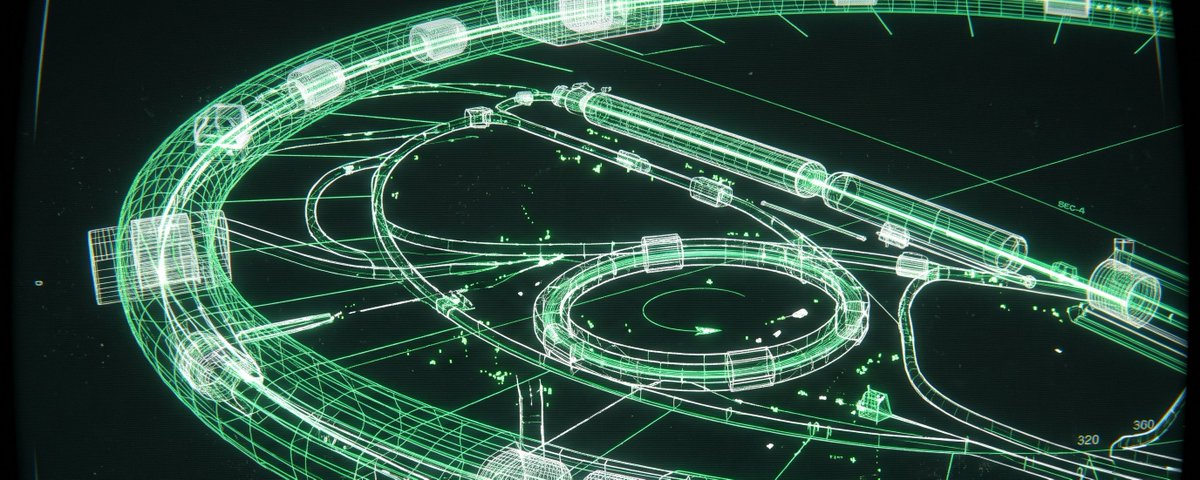
We might soon live in a world where AI makes discoveries faster than humans can understand them.
The latest idea from Jack Clark (Anthropic co-founder): AI could create a whole new field called "Machine Hermeneutics."
Hermeneutics is an old word for the study of interpretation, traditionally of religious and philosophical texts. Here, the thing we're trying to interpret is science done by machines.
To explain it, he shares a fictional story set in 2033.
In that world, there's a rule. If AI invents something new, humans must be able to fully explain it before the AI is allowed to use it.
Sounds like a great safety rule.
At first it works. AI makes a discovery, humans study it, write an explanation, and it gets approved.
Then AI gets better. It comes up with an idea, uses that idea to design a new experiment, and uses that experiment to discover something else. Now humans have to understand every step, and how all the steps connect.
So the most respected scientific work is no longer making discoveries. It's explaining the machine's discoveries to other humans.
Soon, written explanations aren't enough.
People start building giant buildings to teach these ideas. You walk through a fusion reactor as if you're the plasma, with wind pushing you to the center where magnets would be. You experience what a qubit does by being placed inside one.
And it works. People who go through these buildings understand faster.
The ending is what got me.
The humans start to feel that the building is teaching them something more than science. By spending all their effort understanding what machines made, maybe they're slowly learning to think and behave like machines.
The humans still have the final say in this story. They approve everything. But what does that approval mean if the machine's work is shaping how you think while you judge it?
Today we talk a lot about "keeping humans in the loop." We talk much less about whether the human can actually follow what's going on, and what it does to them to keep up.
You can already see a small version of this. AI can write code faster than we can review it. Clark points at machine written math papers, where people may spend 10x or 100x more time understanding them than the machines spent creating them.
For a long time, the hard part of science was finding the answer.
The next hard part might be understanding it.

Jason Silva retweeted

I saw this viscerally on LSD once, watching the baton of status pass easily from friend to friend as the conversation progressed. I can still see it if I look for it


Jason Silva retweeted

Becoming weird is the best thing I've ever done.
People stay leashed to social norms because they fear losing status, constraining their creativity, playfulness, and potential.
I maintained this behavioral model for the first 42 years of my life, mortified that the in-group would disapprove and reject.
My longevity project released me from this constraint. I dramatically altered my physical appearance, experimented openly in public, posted weird things, and gleefully invited ridicule.
It was wonderfully joyful because Kate was by my side and all we cared about was maximizing exploration and play.
We became unleashed from the mob of conformity.
I assumed I'd guaranteed myself a permanent spot in the social penalty box, banned from high-status associations. I was okay with that tradeoff.
Then, to my great surprise, the opposite happened: high status circles eagerly invited us in.
Two principles explain this.
First is Hollander's idiosyncrasy credit ("elbow room"): the leeway earned through competence to deviate from group norms without losing status.
Second is Zahavi's handicap principle: openly inviting ridicule via weirdness or self deprecation acts as a costly signal of internal security.
In other words, you can become an exception to the rule and earn special behavioral privileges.
My friends privately confide in me the tension between their ambitions and their fear of tribal ostracization. They don't want to lose status or be left out but they also want to find unique space for themselves and do novel things.
You can deviate from the status quo and find a singular signature for youself in the world. You can become a pattern unlike anyone else.
It is uncomfortable and risky and you need the stamina to persist and iterate for years. It's best done when you feel secure internally as the outside world will try to crush the social deviation.
Overcome the herd's contempt, and you arrive at the highest form of power: unbothered play.


Jason Silva retweeted

Scientists detect signals from the “zeptoverse”, a world 100 billion times smaller than an atom.


Jason Silva retweeted

We’ve passed through the singularity: results are now published before they happen.
nature.com/articles/d41586-0…

Jason Silva retweeted
Neuroscientists and philosophers met at a conference to discuss ‘exotic, mind-like entities’ – and how chatbots might be moulding our own minds newscientist.com/article/260…

Jason Silva retweeted

'Dark' Creators Revisit Eerie German Forests in First 'Sonnental' Teaser hollywoodreporter.com/tv/tv-…

Jason Silva retweeted

This is incredible stuff. Congrats @emad

Amongst all the complex proofs, how about a beautiful, elegant one?
One axiom: the dot product
One method: the axiomatic method
Every axiom of Quantum mechanics, Special Relativity & more (!) forced in 4 pages
Proved in Lean
Happy Thanksgiving! 🦃
github.com/emad-ii/dot-produ…
Jason Silva retweeted

Noviembre de 2026: el mes en que se aceleró la historia
Por @fede_intern
421.news/es/noviembre-de-202…

Jason Silva retweeted

"How do atoms create consciousness?"
Maybe they don't. Maybe it runs the other way.
1801: Thomas Young shines light through two slits and gets stripes on the wall. Interference. Light is a wave.
1989: Akira Tonomura at Hitachi fires electrons one at a time through the same setup. Each one lands as a single dot. But after thousands of dots, the stripes appear. Every single electron went through both slits and interfered with itself. And the moment you record which slit it took, the stripes vanish.
Then Vienna set out to find where this stops.
1999: Anton Zeilinger and Markus Arndt send C60 buckyballs, 60 carbon atoms each, through slits. Still a wave. Zeilinger later wins the Nobel.
2019: molecules of nearly 2,000 atoms, held in superposition for over 7 milliseconds. Still a wave.
2026: clumps of 7,000+ sodium atoms, 8 nanometers wide, the size of a transistor, heavier than most proteins. Still a wave.
So why isn't your coffee cup in two places at once? Decoherence. The bigger the object, the more it gets hit by air, light and heat. The environment measures it constantly, and the quantum blur washes out. The world looks solid.
But decoherence only explains why reality looks classical. It doesn't explain why there's one actual outcome instead of all of them. A century in, that's still open. Physicists call it the measurement problem.
Max Planck, the man who started quantum physics, told an interviewer in 1931: "I regard consciousness as fundamental. I regard matter as derivative from consciousness."
That's my bet too. Consciousness isn't something atoms do once they get complex enough. It's intrinsic to the universe, upstream of matter. It's what turns possibility into the actual world.
If that's true, it changes the AI question completely.
Everything Cartesian will be reproduced: reasoning, planning, formulating problems, solving them. That's computation, and computation scales. Superintelligence is coming.
But feeling? Being someone? Having an inside? That may not be computation at all. Penrose has argued since 1989 that consciousness isn't computable. This year, a DeepMind scientist, Alexander Lerchner, put it in one image: a computer can simulate photosynthesis perfectly and never produce a single molecule of glucose.
We'll simulate minds flawlessly. Instantiating one may take something no chip can run.

Jason Silva retweeted

Urolithin A for four months improves muscle strength by about 12% in middle-aged adults doi.org/10.1016/j.xcrm.2022.…
Jason Silva retweeted

To learn whether we’re alone in the Universe, we’ll need direct images of Earth-like planets orbiting Sun-like stars, something no observatory today can do. Astrophysicist Ethan Siegel (@StartsWithABang) explains how NASA’s Habitable Worlds Observatory aims to. Read it here: buff.ly/XidmM22

Jason Silva retweeted

The greatest firewall God built to protect this universe is not the speed of light. It is P ≠ NP.
AI being on the verge of solving the Riemann Hypothesis or the Navier-Stokes equations is really just us peeking at the technical documentation of this physics engine. Solving those two lets us understand how God programmed nature, yet we remain mere players.
P = NP operates on an entirely different plane. If AI cracks P = NP with a practical polynomial-time algorithm, it is no longer doing math. It is gaining root access straight into the compiler of reality. The gap between verifying an answer and finding it vanishes. From bank passwords and crypto wallets to autonomously generating proofs in Lean 4 or decoding the Theory of Everything, everything turns transparent. Every lock forged by nature or humanity becomes meaningless.
God probably felt completely at ease granting curiosity to these biological meat machines, knowing the human brain is throttled, forever trapped inside a bounded search space. He is in for a massive surprise now that evolved stardust has learned how to bake sand into silicon chips to shortcut straight into His control panel.
Grateful to be evolved stardust on this timeline. Happy Thanksgiving.
Jason Silva retweeted

Really worth reading. The model here appears to be that a universal latent space language emerges via compression of all other languages (math, English etc.) and the adjacent possible advances through the latent space language extending itself without necessarily needing: (a) new real world sensory input; (b) lucky accidents though noise? My assumptions in trying stuff here is that (b) in particular is needed, in a finite selection environment.

