
Scientist @mpiib_berlin interested in statistics, genetics and malaria.
Joined August 2020
- Tweets42
- Following123
- Followers100
- Likes90



Pinned Tweet
Happy to share that our preprint on @nanopore sequencing of #malaria has been published in @NatureComms: nature.com/articles/s41467-0… 🧵 1/n

There is a lot to do still, particularly around polyclonal infections. The value here is that our approach includes major drug resistance targets and csp, as well as the hrp2/3 targets, providing comprehensive surveillance from a single, field-deployable approach. 9/n
1
198
Thanks to the editor and reviewers (@Koepfli_Lab, Yutaka Suzuki, Anonymous) for their time and feedback. And thanks to @gatesfoundation, especially @EsteeTorok for continued support! 🧵done.
199
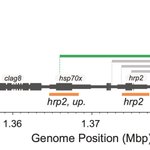
We strengthen our evidence further by including flanking genes for both hrp2 and hrp3. Since observed deletions are often large, we expect these flanking genes to also fail when one is present. 7/n


1
168

But our hrp2/3 assay is embedded into a larger multiplex PCR. If other amplicons are amplifying well, but hrp2/3 are not, we can be more confident the sample carries a true deletion. 6/n
1
121
Next, detecting deletions in general is tricky as (to quote Carl Sagan) "absence of evidence is not evidence of absence". For e.g., can you tell if hrp2 is really deleted, or the amplification just failed? 5/n
1
122
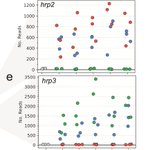
Our hrp2 and hrp3 amplicons are both 3 to 4kbp and map uniquely to their targets, generating robust coverage in our NOMADS16 panel. 4/n

1
131
It is also a hard problem: hrp2 and hrp3 are repetitive genes, and reside in repetitive subtelomeric regions, so designing robust amplicons and mapping them is problematic. We solve this with long reads. 3/n
1
107
We now show we can detect hrp2 and hrp3 deletions that cause RDT failure with our targeted nanopore sequencing approach. This is a pressing problem that could compromise the majority of the 400m RDTs sold annually. 2/n
1
143
Jason A. Hendry retweeted

Super proud of our latest work now published in @FrontTropDis! Using genetic epi, we explore the continued disease #transmission of P. falciparum in #Ecuador after a local outbreak to distinguish whether clinical cases are imported or locally-acquired 1/
frontiersin.org/articles/10.…
Jason A. Hendry retweeted

Excited to share our K13 622I and co-occurrence with hrp2/3 deletions paper is now in Preprint. The findings raise concern for future spread of drug- and diagnostic resistant parasites - a double threat @elimination
Thanks @JBaileyOmics @IDEELlabs @EPHI
medrxiv.org/content/10.1101/…

Jason A. Hendry retweeted

Running our annual Malaria Genomics Training in Ghana in collaboration with Ghansah Lab @aghansah2013. One week (02-27 - 03-03-2023) of intense #seekdeep and #MIPtools training applied to #Illumina and #Nanopore data. BaileyLab @JBaileyOmics , @IDEELlabs


Jason A. Hendry retweeted

Finally got my hands on the R10 flow cell. Offering a malaria Nanopore sequencing workshop in Rwanda to an amazing team of African scientists from DRC. I am thrilled to help others start their own Nanopore journey with the NOMADS8.
@JasonAHendry1
@danieljbridges
@nanopore


Excited to share this preprint about our approach to flexible & cost-effective targeted @nanopore sequencing of #malaria. A thread🧵 1/n.
biorxiv.org/content/10.1101/…

I want to thank the whole team for their awesome work. Thanks also to Zambia NMEC and @PATHMalaria for the great partnership; and to @gatesfoundation, especially @EsteeTorok and @jennifergardy, for their continued support. 10/n
1
2
269
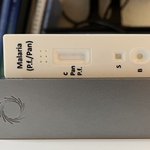
It's been a long road (literally: mobilemalaria.com/ and figuratively), but isn't this just the perfect pairing? 🧵done.

3
5
274