

risk research @AllezLabs | DeFi data science | prev @openblocklabs @SkyEcosystem @BlockAnalitica
Joined February 2009
- Tweets4.1K
- Following1.5K
- Followers618
- Likes4.4K


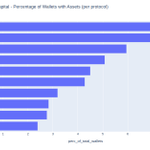

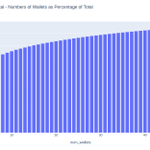


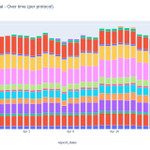

Steady growth in Kamino’s RWA collateral: over $500M and ~1/5 of total supply. Our monthly report digs into it.

Monthly @Kamino Lend Insights - September 2026
RWA collateral grew 19.1% to $537.8M, now a fifth of all supply.
Total supply rose 4.4% to $2.64B and debt 4.0% to $1.04B, as collateral broadened into real-world assets and USDC borrowing grew.
Continues
Jan Osolnik retweeted

👑👑👑

ZEC-backed credit is now live on Solana.
Introducing the ZCASH Market on Kamino, curated by @AllezLabs.
ZEC holders can supply ZEC as collateral and borrow USDC against their position in a fully isolated market on Kamino.

More transparency for one of the highest-momentum RWA collaterals: Full breakdown of ONyc, from yield sources to failure modes
11.56% APY on an RWA asset? What are the risks?
Allez assesses @OnReFinance's ONyc as High Quality Collateral under the Asset Risk Framework.
Continues


These kinds of losses will just continue to increase the importance of curator reputation as the protocol infra underneath is intentionally unopinionated with minimal risk controls

"broader developments affecting protocols operating within the space" = we borrowed $8.5M on Morpho with unbacked tokens
"contributed to increased uncertainty and heightened redemption activity" = idiots are asking us when we will repay the money we stole
Real reinsurance yield, on-chain, in the senior seat
Lending stablecoins here = the senior tranche: over-collateralised by ONyc, ahead of borrower equity.
@onrefinance underwrites catastrophe reinsurance and holds low-risk assets like T-bills and yield bearing stables for its yield. Only ~half the book is currently deployed to reinsurance, which limits drawdown risk and leaves potential redemption capacity.
A supplier loss needs both a ~30% ONyc NAV drop and a liquidation failure. @kamino has passed no bad debt to date, across ~$230M of liquidations cleared (280k+ events since 2023).
Jan Osolnik retweeted

We are glad to have risk partners who have strong experience in insurance and DeFi.
@AllezLabs is responsible for the level of improved transparency, reporting, and information accountability we hold ourselves too.
Excited to scale insurance on chain!

A reasonable criticism of RWAs like OnRe is that the real stress sits upstream of the chain, so all you can lean on is monthly attestations. Worth adding some nuance to that.
The transparency limit here is structural, not @onrefinance choosing to be opaque: reinsurance losses are off-chain events that only crystallize when a treaty settles. What matters is how an issuer mitigates that, and OnRe does it two ways:
a liquidity buffer deliberately kept unallocated (they cap their own yield to hold it) and a well-diversified underwriting book, both public on their transparency dashboard (app.onre.finance/earn/transp…). That is what lets you actually stress-test the asset, simulating potential NAV drawdowns from treaty concentration and cat exposure against the buffer.
On the reserves: about half sit on-chain and are readable continuously (stablecoins + T-bill proxies), and the rest is the monthly cadence, BNY Mellon / Clarien custodian statements confirming the balances, plus an Apex attestation on the NAV. That stress-test lens is exactly what a venue like @kamino works through before listing it as collateral.

if you are have exposure to assets like Onre and Figure, what are you tracking and what is your exit condition?
It's hard to manage risk with RWAs, as the stress events are upstream of what can be seen onchain. So everything falls in the counterparty risk.
Is there any asset with a stronger transparency than monthly attestations of fund administrators?
When cashflows for these assets are stablecoins based, it will be easier to track and monitor loans health. This already is possible for protocols like Maple, Pareto and Wildcat, where loan repayments and liquidity buffer can be monitored easily. Hope it will become standard over time for all credit facilities coming onchain.
Jan Osolnik retweeted

Monthly @VenusProtocol Insights - June 2026
As markets contracted to their lowest levels in years, Venus Core Pool absorbed the shock cleanly. BNB fell 23%, 1,697 liquidation events seized $4.24M, protecting protocol solvency along the drop.
Continues 👇

Jan Osolnik retweeted

ONyc has received an independent A- risk score from @AllezLabs.
The score reflects ONyc's standing as a high-quality collateral asset, supported by regulated insurance infrastructure, institutional custody arrangements, and deep integration across the Solana ecosystem.

Jan Osolnik retweeted
OnRe has selected @AllezLabs as its independent risk partner.
As ONyc expands across lending markets, liquidity venues, and structured products, risk analysis plays a key role in evaluating collateral quality, secondary liquidity, DeFi integrations, and portfolio resilience.
Jan Osolnik retweeted
Allez Labs has been selected by @OnReFinance as its independent risk partner.
OnRe is a Bermuda-licensed onchain reinsurance company bringing reinsurance premium income onchain through ONyc under regulatory oversight.


OnRe has selected @AllezLabs as its independent risk partner.
As ONyc expands across lending markets, liquidity venues, and structured products, risk analysis plays a key role in evaluating collateral quality, secondary liquidity, DeFi integrations, and portfolio resilience.
Jan Osolnik retweeted

INSIGHT: Solana-based @kamino now leads in major RWA lending protocols by deposits, ahead of both Aave and Morpho.

Jan Osolnik retweeted
The @SolsticeFi Yield Looping Vault strategy is unfolding with new allocation to PT-eUSX at 5.30% APY.
Boosted by extra USX rewards.
Capacity is currently available, enjoy while it lasts.

Jan Osolnik retweeted

Credit looping for @Solsticefi markets, now accessible in a single deposit
The Solstice Yield Looping vault, curated by @AllezLabs, officially marks its debut on Exponent
Purpose-built for one-click PT-eUSX & USX looping on @Kamino, with $15K in rewards for launch ↓

Jan Osolnik retweeted
The Solstice Yield Looping Vault is now live on @ExponentFinance.
Curated by Allez Labs, the vault gives depositors single-click exposure to @SolsticeFi yield from one USX deposit.
Non-custodial. Curated. 👇


Credit looping for @Solsticefi markets, now accessible in a single deposit
The Solstice Yield Looping vault, curated by @AllezLabs, officially marks its debut on Exponent
Purpose-built for one-click PT-eUSX & USX looping on @Kamino, with $15K in rewards for launch ↓


Interesting setup, hopefully this isn't just retail exit liquidity for insiders who'd rather skip the IPO.
Had this existed before the AI hype boom, retail wouldn't be entering at these valuations.
How much alpha is actually left for this to still count as venture?

Announcing: USVC
AngelList exists to power the innovation economy.
To date, we have powered $125 billion in assets, 25,000+ funds, and 13,000+ startups.
Today, we’re opening it for retail access.
@usvc_ is a regulated fund that holds stakes in promising private companies.
There are no accreditation requirements and anyone can get started with as little as $500.
Early portfolio includes xAI, Anthropic, OpenAI, Sierra, Vercel, Crusoe, and Legora.
Own a stake in the companies defining the future.
Learn more: usvc.com/

Readers added context they thought people might want to know
The post may imply more direct access than the filings support. Per the fund’s own filings, liquidity is board-controlled, fees include up to 3% sales load + 1.00% management fee + acquired fund fees, and exposure may be via SPVs/VC funds, not direct stakes.
usvc.com/documents/USVC…
Jan Osolnik retweeted

🚨 Venus Protocol has zero exposure to rsETH and incurred no bad debt. However, as a precautionary measure following the advice of our risk manager @Allezlabs, we have temporarily set the collateral factor of the following assets to 0:
USDe, sUSDe, SolvBTC, xSolvBTC, USD1, XAUM
Users can still repay and withdraw these assets directly via the Venus UI.
To reiterate, Venus was not affected by the hack and all user funds remain safe. We will provide updates when the collateral factor of these assets returns to normal.