

Gas is Back Worked in energy (banks / hedge funds / corporate) since '10. I work for Tourmaline. These posts & replies are my comments and views, not my firms.
Calgary, Alberta
Joined December 2013
- Tweets4.8K
- Following835
- Followers16.9K
- Likes10.3K


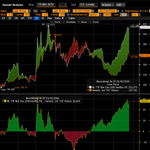



US coal prices (per mmbtu) have quietly doubled over the past two years, while the recent spike in Europe could continue to spur US coal exports.
Coal + LNG is how US domestic gas prices start to link to global prices (currently >$20/mcf).


We've got a wall of worry to climb over the 26/27 El Nino winter but on anyone's numbers 2H27/28 natural gas demand will be nothing short of spectacular. 2028 will be a clear all time high of power demand + export growth for the USA.

Jamie Heard retweeted

LNG Canada today announced that its Joint Venture Participants have taken a Final Investment Decision (FID) on the LNG Canada Phase 2 expansion project in Kitimat, BC, in the traditional territory of the Haisla Nation tinyurl.com/3ysr2jxy


Would China prefer low or high oil prices ahead of the US midterm elections…


Fun Fact.
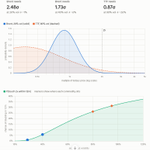
Using the option market pricing and prompt volatility as a guide, the rolling forward TTF front month contract has about a 25% chance to double sometime in the next year (odds are it would be this winter).
Crude with the same methodology has a 5% chance.


Jamie Heard retweeted


The @CaliforniaISO grid set a new peak demand for 2026 last night at 46,615 MW.
Here is how that fits with demand records for recent years.

Firmly in a new phase of the Strait of Hormuz commodity impact paradigm.
You could loop in Diesel with LNG if you zoom out to include the Russia drop in product export.


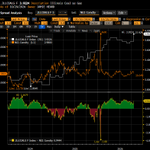
The return of escalation around the SoH has recently had a larger impact on LNG markets than crude markets. TTF is now outperforming Brent by a spread of ~50% (vs Jan 1st pricing), whereas through the first spike in prices they traded within a +/-20% band of each other.
Tanker crossing (oil vs LNG) have been similar and LNG is not as impacted by Red Sea Houthis issues which should be a net crude tightener vs LNG.
I think a key reason oil is lagging LNG on this next wave is that oil has had more help on inventory and demand response through this spring and summer.
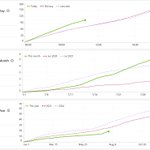
Asian LNG import demand is climbing again and European storage levels are placing a real threat of stock out risk on the table, as they continue to grind towards a <80% peak fill profile, at an increasingly underperforming injection rate (see inset chart).
Gas has always been a more volatile commodity than oil, a feature of fewer 'days storage', seasonal essential use, and less S&D elasticity. It will be interesting to watch the progression from here.


Must follow for deep cuts on LNG

China: Planned and unplanned maintenance events contributed to China’s second quarter domestic natural gas production recording its slowest growth rate for 2Q in over 15 years. #LNG #TTF #JKM #natgas Read more here: balancepointresearch.com/chi…

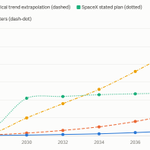
$SPCX reported and in classic Elon fashion it's bold on capex and growth. Starship runs on natural gas. If we scenario how fast SpaceX ramps launches, we've got another platform of demand for North American natural gas with consumption by 2040 ranging between 1 - 5 Bcfpd.

After a weak start for natural gas (warm wet winter), California is turning the corner.
July gas burn crushed it. Biggest July storage draws in over five years. Waha firming as Permain egress comes on, provides tension for Malin/PG&E pricing (toll math suggests Malin/PG&E should always trade well over waha) and ability to pull hard on WCSB. GTN maintenance is choppy through August so California draws should continue and then fall dynamic can be a set up where strong Malin/PG&E pricing is what drives AECO - HHUB basis tighter.
Chart credit: GridStatusIO, National Bank, Criterion, Bloomberg


The return of escalation around the SoH has recently had a larger impact on LNG markets than crude markets. TTF is now outperforming Brent by a spread of ~50% (vs Jan 1st pricing), whereas through the first spike in prices they traded within a +/-20% band of each other.
Tanker crossing (oil vs LNG) have been similar and LNG is not as impacted by Red Sea Houthis issues which should be a net crude tightener vs LNG.
I think a key reason oil is lagging LNG on this next wave is that oil has had more help on inventory and demand response through this spring and summer.
Asian LNG import demand is climbing again and European storage levels are placing a real threat of stock out risk on the table, as they continue to grind towards a <80% peak fill profile, at an increasingly underperforming injection rate (see inset chart).
Gas has always been a more volatile commodity than oil, a feature of fewer 'days storage', seasonal essential use, and less S&D elasticity. It will be interesting to watch the progression from here.
Happy Friday
As of writing, TTF is trading at US$19.65, near its March / April highs as it doesn't appear normality is coming to the SoH anytime soon. Oil / LPGs creeping back up but lethargically - traders are wise to the many incentives to keep a lid on price and the tools that can create losses in a bullish bet. Oil E&P's are up 20-30% on the year, refiners more, while US and Canadian Gas E&Ps are flat to down this year.
Near term refiners specifically have been handed the gift of a century. Jawboned & China influenced lower crude feedstock market, very tight product market, and a Ukraine/Russia war that delights in candle lighting refining stacks. CRAK (US Refinery ETF) vs XOP (US Energy ETF) performance spread is now 30% and in the 99th percentile.
Back to Gas - PJM (East Coast Power Markets) hitting records on July heat. I've seen some notes bemoaning the lack of gas demand as the reason for lower HHUB pricing recently. That doesn't really track for me - power demand has beat last year and all time records for many periods this year so far. I think the reason HHUB is soft is Hugh Brinson on a little early and some trepidation on what the actual 2H Permian gas growth number will be. I think Permian is +3 Bcfpd YoY (27/26) and that's not that bearish given the demand adds in LNG and Power look closer to 4 Bcfpd.
On Gas, global supply risk at multi-decade highs (>8 Bcfpd offline), domestic and export demand is growing at a faster pace then ever observed in history, and yet resource exploration progressing at a snails pace and 'they don't make more'. The long term resource trade feels more obvious than ever, but can we all close our eyes and get there.


A couple take aways from a busy stampede week.
(1) The Canadian government is ambitious enough on its plans to grow egress and the Canadian energy business that it is willing to capitalize SOE's to at least make hard things easier. Will private enterprise buy in over time or will SOE interest grow over time remains to be seen - but either way more egress is going to happen faster than some were expecting before.
(2) Oil Sands will grow again. From a gas lens this also means gas demand growth (1 mmbpd of oil sands growth is 0.7-1.0 bcfpd of natural gas consumption depending on SAGD market share) and it means condensate demand growth.
(3) Alberta Data Centers are on deck. GLEC is the first; how many more will we get before year end? At optimized rates 1 GW = 150 MMcfpd but many of these centers will start out on older grid units or behind the meter mobile units that are far thirstier. This means gas consumption will J curve while power consumption is more linear.
(4) West and Mid West Data Centers impact Canadian gas egress and pricing. There isn't a growing gas supply basin between the WCSB and the east coast or gulf coast of note. As data centers move to drier, cooler, wide open northerly states, the S&D they impact is increasingly tangential or directly Canadian molecules.
(5) Near term local AECO pricing is directly tied to the brimming Pacific and PACNW storage picture. While getting better we need to burn off some gas with hot weather in the west to reconnect AECO to mid west basis dynamics. We drew Pacific storage today (224 MMcfpd PG&E and 40 MMcfpd SoCal) which is a new high for July so far. Weather is the whole call here for the next 60 days.
(6) We got a lot on power and oil in Stampede week, not as much on gas egress or LNG. Premier Eby announced pre stampede that he expected LNG Canada Ph2 FID in September - that could be the next catalyst on this file.


Flagged by CIBC this week, TTF prices have diverged from WTI as hot Euro summer stresses already low storage levels. Normalized Strait traffic may not be enough to have ample cushion for next winter. '25 exit was ~85% full, '26 on pace for <80% which risks <20% spring levels.


AECO is firming up.
AB/BC injections are well off pace, not only do we have ample room vs max storage, you can paint a tight forward picture as west exports recover (June has been a meaningful step back higher).
Once west exports are fully normalized forward basis should look to mid west transport arbs and thats another ~50c improvement for forward AECO basis.
July should be the turning point month as heat arrives to our south and local S&D dynamics are a greater influencer on price discovery.
The simple math this year to date is; Production +0.5 Bcfpd, export underperformance -0.7 bcfpd, LNG +1.8 Bcfpd = 0.5 bcfpd less in storage on average.
Export underperformance is all US West S&D not structural and that 0.7 can become 0.5/0.2/0.0 in months as weather unfolds. Of all the S&D items this is the fastest to change vs supply which can take a year to bleed off / catch up, and demand which takes years to build.


Jamie Heard retweeted
I recreated this chart but included a range of assumptions for the gas turbine capex. The story holds even if turbine costs increase.


This seems like a pretty clear answer to "Why are hyperscalers choosing to build natural gas btm when solar and batteries are cheaper?"
It's because right now, btm (fastest way on to power), natural gas is cheaper
From: cdn.jpmorganfunds.com/conten…

A quick "before war / after war" screen would tell you integrated business with meaningful refining, liquids rich gas businesses, and LNG exposed businesses are probably worth a look as being "cheaper" now than they were before. "Beta" or smid oil E&P's might not be cheaper. Simple table below.
Anything in Canada is worth a double look as the polar peso continues to plummit against the USD. For many energy businesses this is a pretty large but also undiscussed tailwind to cash flow and earnings, especially if they directly export product to the US.

