

Helping investors create, acquire & develop exceptional wine estates From Vineyard to Market Former LVMH | Author
Toulouse, France
Joined September 2015
- Tweets1.2K
- Following162
- Followers319
- Likes12.2K





Pinned Tweet
1/7 Every year, people who've built fortunes in tech, finance or industry arrive in France chasing the same dream: to own a vineyard. Most fall in love with the château. Very few understand the business they're actually buying🍷

Is French vineyard investment waking up?
After years of bad news, transactions are returning. Crédit Agricole, institutional investors, entrepreneurs, international buyers…
Markets often become interesting before the consensus turns positive.

La crise viticole demande du courage à tous les niveaux : politique, syndical, mais aussi individuel. Celui des producteurs pour adapter leur offre, parfois réduire la voilure, se diversifier et repenser leur modèle. Le statu quo n’est plus une option.


Alcohol consumption is declining, but averages hide opportunities. This US data shows how differently generations behave. Wine must understand who drinks, what, when, why — and at what price. The future must be built from the consumer backwards, not the vineyard forwards.

Alcohol consumption is on the decline in the US, but there’s one generation that’s bucking this trend – and that’s Gen X. db looks into the reasons why older Americans are actually drinking more. thedrinksbusiness.com/2026/1…

Wine estates need to diversify.
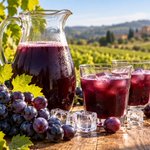
One obvious opportunity is already growing in their vineyards: grape juice.
Same grapes. Same know-how. New consumers, new occasions — and no alcohol.
Sometimes diversification starts with looking differently at what you already produce.
#NoLow
🤖 Made with AI

#MyXAnniversary today. A good time to say what I do.
After 30+ years in wine, I help investors and wine estates acquire, develop and reposition vineyards in France & Europe — strategy, due diligence, export, brands, wine tourism and part-time management.
DM open.

Breaking news: Moët Hennessy & Verallia launch a 10-year R&D programme to cut bottle weight by 30–50% while preserving resistance.
Glass can represent up to 30% of wine & spirits’ carbon footprint.
Less glass. Same wine. Lower impact.

€12m invested in the future of Roussillon wine.
Jean-Marc Lafage takes over Terres des Templiers, with long-term commitments to 400 growers.
In a region facing severe water challenges, that’s a strong commitment to its future.
« Steve & Jemma Copley – CC BY-SA 2.0 »

Buying a vineyard can be a business decision. Or simply a dream.
Both can be good reasons to buy.
But even a trophy winery needs the right team, distribution and strategy.
Buy with your heart if you wish. Just make sure the business doesn’t spoil the dream.

Crédit Agricole investing in Miraval is a strong signal.
In today’s wine market, value is no longer just in owning vineyards. It is increasingly built through brands, distribution, marketing and access to consumers.
That is where investment can make the difference.

The wine industry may not have an alcohol problem. It may have a relevance problem. For centuries, wine was first and foremost a drink. In the last 50 years, we made it sophisticated — and sometimes intimidating. Perhaps wine simply needs to become a drink again.

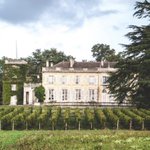
A second Bordeaux vineyard acquisition in six months. Laurent Marti, President of UBB, Bordeaux’s leading rugby club, knows the region well. After Château Picque Caillou, he has acquired Château du Taillan. When insiders start buying, it may be a sign that the market is turning.

A 1966 Château Prieuré-Lichine tonight.
Nearly 60 years old — and still alive.
Old wines don’t have to be perfect to be fascinating. Sometimes the pleasure is simply discovering what time has left behind.
What’s the oldest bottle you’ve enjoyed recently?

When buying a vineyard, the château may seduce you. But water may determine the value of your investment. A well, a reliable water source or an irrigation network can matter more than the view.

Wine has become far too complicated.
You don’t need a tasting note, the perfect glass or a special occasion.
Drink rosé with ice. Add fruit juice if you enjoy it. Make a cocktail. Have a great bottle with a burger.
Wine is a drink. Pleasure comes first.
Buying a vineyard in France doesn’t mean becoming a winemaker.
The smartest investors don’t try to run everything themselves.
They buy the right estate, build the right team and remain owners, not operators.
This makes the difference between a dream and a costly mistake.
“Vineyard prices have fallen. Is now the right time to buy?
I’d love to own one — but I know nothing about running a vineyard.”
You don’t need to.
The key is buying the right estate, at the right price — and having the right people to run it.
3/3 SIGNAL FROM BORDEAUX
Bordeaux is facing a severe crisis. But crises also reset valuations and create opportunities.
For investors with a long-term perspective, this may be precisely the time to start looking again.
Sources: Sud Ouest & Vitisphere, Aug. 5–6, 2026.
2/3 SIGNAL FROM BORDEAUX
Insurers understand risk — and think long term.
Generali is not making its first move into Bordeaux. This is its third estate.
At a time when many investors are looking elsewhere, notably at tech & AI, this is an interesting signal for vineyard assets
1/3 — SIGNAL FROM BORDEAUX
Generali has just acquired Château Gombaude-Guillot in Pomerol — its third Bordeaux wine estate.
In the middle of Bordeaux’s deepest crisis in decades, one of Europe’s major insurers is buying.
That deserves attention. 🧵

6/7 So if you're serious about buying and running a winery in France, you don't need another cheerleader for the dream.
You need someone who will show you where the dream breaks — before your capital does.