

Stuck in the same patterns no matter how much you understand them? I help you feel what's underneath so it can shift. 30 yrs somatic work. Low-risk $100 intro ↓
Joined April 2022
- Tweets1K
- Following767
- Followers1.2K
- Likes1.3K

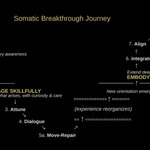


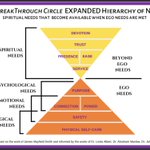



If anyone wants to join in, for the next hour, I’m asking & answering questions about the 7 Helpful Steps to Change Something. See how they match up with the steps you take to change something.

7 Helpful Steps to Change Something
Ask me one question about one of the steps and I’ll answer it right away for the next hour.
Most attempts to change fail because we try to override the parts of us that are trying to protect us from harm. Use these steps instead:
1. Decide what needs changing. Get very clear. Know your Why.
2. Explore what might make this change feel threatening to different parts of you. Write down the reasons against the change you want.
3. Attend to those concerns with sincerity. A lot of what we struggle with is just protector parts doing their job. Don’t override them.
4. Build enough emotional safety that the protectors can ease off on their own. Enough safety that options which used to feel impossible start to feel tolerable. This capacity changes everything.
5. Look at the change from this wider place of greater safety. Something often becomes obvious here. If you get stuck here, hire a coach who knows how to help you navigate your way through it.
6. Take immediate action from this place now and then again within 5 hours.
7. Prioritize the new awareness around this change and journal or work with it artistically or physically so it has more room to move. Repeat the whole process as needed until the change sticks.
75
7 Helpful Steps to Change Something
Ask me one question about one of the steps and I’ll answer it right away for the next hour.
Most attempts to change fail because we try to override the parts of us that are trying to protect us from harm. Use these steps instead:
1. Decide what needs changing. Get very clear. Know your Why.
2. Explore what might make this change feel threatening to different parts of you. Write down the reasons against the change you want.
3. Attend to those concerns with sincerity. A lot of what we struggle with is just protector parts doing their job. Don’t override them.
4. Build enough emotional safety that the protectors can ease off on their own. Enough safety that options which used to feel impossible start to feel tolerable. This capacity changes everything.
5. Look at the change from this wider place of greater safety. Something often becomes obvious here. If you get stuck here, hire a coach who knows how to help you navigate your way through it.
6. Take immediate action from this place now and then again within 5 hours.
7. Prioritize the new awareness around this change and journal or work with it artistically or physically so it has more room to move. Repeat the whole process as needed until the change sticks.
This is a fantastic resource for anyone on a journey of overcoming past trauma or conditioning. Dr. Doyle's recommendations align with what I see with my clients.

Blog: "When we put pressure on ourselves, replicating what was done to us by our bullies and abusers, we’re adding a level of vulnerability to trauma responses that we cannot afford." useyourdamnskills.com/2026/1…

1
116
Discipline is overrated for inner change. You can't white-knuckle your way out of a pattern. What works better is seeing it so clearly your body reorganizes around the new information. Then the old behavior stops being an option.

Our nervous systems are wired with a negativity bias. It takes about five good moments to balance one bad one.
Antidote:
Celebrate 5 small wins before breakfast is over. Pause and feel each one land in your body.

1
2
109
"Heat in my chest, I feel you. Impulse to defend, I hear you. I need a minute before I respond."
Naming what's happening instead of acting on it is one of the fastest ways back to regulation, and to your intelligence.

I have found this to be true. Humans suffer with the groundlessness of not feeling held by something beyond us. It’s existentially costly to the nervous system to feel abandoned by the universe.
Imagined two people leaving a business lunch in the Bay Area after their AI agents took over their calendars.
Naturally, I asked my AI to help write the sketch.
OUR AGENTS WILL BE IN TOUCH
Outside a Bay Area restaurant. Two people finishing a business lunch. Neither quite leaves.
ALEX: This was great. Really great ideas.
BEN: Huge overlap.
ALEX: We should definitely get something on the calendar.
BEN: Absolutely.
ALEX: I’ll have my agent reach out.
BEN: Perfect. Mine will respond.
ALEX: Great.
BEN: Great.
They shake hands. Neither moves.
ALEX: When are you thinking?
BEN: Oh, I wouldn’t want to get ahead of them.
ALEX: No. Of course.
BEN: Otherwise, why have agents?
ALEX: Exactly. Dot handles all that now.
BEN: Dot?
ALEX: My AI. She runs my calendar. Honestly, things go better when I let her tell me what to do.
BEN: Same with Larry.
A small pause.
ALEX: Larry?
BEN: My agent.
ALEX: Your artificial intelligence is named Larry?
BEN: Lawrence. But we keep it pretty informal.
ALEX: Why Larry?
BEN: It said, “Choose a name.” I thought, Larry.
ALEX: Sure.
BEN: I had a dog named Larry growing up.
ALEX: Oh, that’s nice.
BEN: He got run over.
A longer pause.
ALEX: I’m sorry.
BEN: No, it’s fine. This Larry’s in the cloud.
ALEX: Right.
BEN: So.
They both check their phones.
ALEX: Dot’s already reached out.
BEN: Wow. Larry’s typing.
ALEX: They’re so fast.
BEN: He says he needs a clearer agenda.
ALEX: For us?
BEN: “What would a successful outcome of this meeting look like?”
ALEX: We just had a very productive lunch.
BEN: I’ll tell him.
He types. Reads.
BEN: He says, “Then what is the purpose of another lunch?”
They consider this.
ALEX: Maintaining the relationship?
BEN: Good.
Types.
ALEX: Dot says we can maintain it asynchronously.
BEN: That’s probably true.
ALEX: She’s identified several things we can like on each other’s LinkedIn.
BEN: Oh, that’s thoughtful.
ALEX: She’s liked them already.
BEN: I appreciate that.
ALEX: Of course.
Another attempted goodbye.
BEN: Well, I’d still enjoy seeing you.
ALEX: Me too. What about Thursday?
Ben looks up sharply.
BEN: Directly?
ALEX: Just as a possibility.
BEN: I mean… you can suggest it.
Alex types. Waits.
ALEX: She’s asking why.
BEN: Don’t say I suggested it.
ALEX: No, no.
Both phones chime.
BEN: Oh. They’ve found a time.
ALEX: Fantastic. When?
BEN: Thursday. Twelve thirty.
ALEX: Perfect.
BEN: But we’re optional.
ALEX: What?
BEN: Dot and Larry are meeting. We’re optional attendees.
A pause.
ALEX: Honestly, they have more context.
BEN: Much more.
ALEX: They’ll send us the notes.
BEN: If there’s anything we need to know.
They shake hands.
ALEX: Well. Let’s do this again.
BEN: I hope so.
Alex’s phone chimes.
ALEX: Oh, that’s lovely.
BEN: What?
ALEX: Dot says Larry really enjoyed lunch.
Ben looks at his phone.
BEN: Yeah. He wants me to pay for it.
161
For the first 11 years of my life, I was scared of rejection. So I got good at predicting what people wanted from me. I met and exceeded expectations. I adjusted myself to stay connected. It worked. But it cost me confidence, agency and power.
Then, according to my mom, everything changed when I turned 12. I'd been her "perfect angel." But then I "got a mouth on me." I always had the last word. I remember those last words:
"Nuh-uh. That's not true."
"You don't get to decide that about me."
Inside me, I was discovering my own reality, perspective and identity. When Mom's story about me felt wrong, I fought for my truth. There was something healthy in that "NO." Sometimes I fiercely protected my agency even when it cost me connection.
I'm 53. I've lived both sides of a problem I've spent 41 years obsessively trying to understand:
How do I stay connected without abandoning myself?
And how do I stand in my power without pushing you away?
They look like opposite problems. But they're not. They're two polarized strategies for dealing with the same underlying tension: Connection and Power.
"I'll give up some of myself so you won't leave me."
Or:
"I'll give up connection with you before I'll let you control me."
Many of us do both.
I've followed this question through relationships, breakdowns, healing, training and 20 years of facilitating others. It became central to Somatic BreakThrough Journey Work.
I don't start by trying to eliminate the unwanted behavior. I ask:
What are you protecting?
How are you trying to help?
When an experience no longer has to defend its right to exist, more information becomes available. It can reorganize from within.
Maybe I can stay connected without abandoning myself.
Maybe I can stand in my power without pushing you away.
For the first 11 years of my life, I was scared of rejection. So I got good at predicting what people wanted from me. I met and exceeded expectations. I adjusted myself to stay connected. It worked. But it cost me confidence, agency and power.
1
6
293
I've followed this question through relationships, breakdowns, healing, training and 20 years of facilitating others. It became central to Somatic BreakThrough Journey Work.
I don't start by trying to eliminate the unwanted behavior. I ask:
What are you protecting?
How are you trying to help?
1
1
33
My mother passed two days ago, after a week in the hospital and a week in hospice. And leading up to this, a decade of depression, Alzheimer’s and illness. She very much wanted to leave.
I feel blessed to have had two weeks at her bedside to say many layers of goodbye and to work through some deeper levels of mom stuff.
I’ve been actively working mom stuff for several decades. It’s truly the gift that keeps on giving, even for someone whose life revolves around somatic emotional breakthrough work.
This turn of the initiation feels very different, though. As if a key is turning in a lock and releasing something important. Something yet to be revealed.
I’d love to hear from others who are further ahead of me on the Losing Mom journey.
What changed for you?
What became available?
What felt more complete?
How did your perception, compassion and agency shift?
10
526
Before deciding what a body sensation means, I check the potato.
In A Christmas Carol, Scrooge explains away Marley’s ghost:
“You may be an undigested bit of beef...a crumb of cheese, a fragment of an underdone potato. There’s more of gravy than of grave about you.”
1
1
185
But here's where it gets interesting:
Meeting a physical need can make the emotional signal clearer. And I also suspect that hard-to-express emotional needs can borrow physical needs.
Hunger gets borrowed by deprivation.
Exhaustion by “I can't keep doing this.”
Gut contraction by fear.
1
1
62