
Strategic Communications | Private Advisor to Leaders | Board Member | Thought Leadership | Executive Positioning | Writer & Speaker
Joined April 2009
- Tweets59.1K
- Following74.7K
- Followers73.1K
- Likes30.2K




James Michael Sama retweeted

Take this private 10-minute assessment to discover where life's pressure is really coming from. jamesmsama.beehiiv.com/p/tak… via @JamesMSama

There's not one singular formula for having a magnetic presence.
The key is a strong sense of certainty in oneself, and the variety of people shown here prove it.
They're all very different, but they share that core foundation as a common trait.
There's a reason why Frank Sinatra and George Clooney played Danny Ocean so effortlessly.
There's a reason Idris Elba oozes charm.
There's a reason Steve McQueen is an immortal legend.
There's a reason Lucifer Morningstar is unapologetic.
There's a reason that Denzel is...well, DENZEL.
They're grounded, measured, calm, and certain in themselves.
In a world that's constantly chasing external validation, nothing catches our attention more than someone who refuses to.
You cannot build a fulfilling life if you don’t really know who you are.
For most people, the concept of identity or purpose is a foreign one.
They tie their identity to their career, or business, or relationship, or family.
An external factor that, if we’re being completely honest, could at some point in time, go away. This leaves people feeling empty, lost, and confused about their fundamental existence.
Our identity must serve as our internal compass. It’s a collection of our values, beliefs, worldviews, and characteristics.
It defines us independently of any external factors. Yes, even if you’re a parent, or a spouse, or a CEO.
These things are valuable parts of your life, but they are not who you are as a person.
It takes time, honest introspection, and pushing through resistance in order to discover and define one’s true identity.
For many, particularly adults who’ve been going down a road for decades, it can be an uncomfortable question to ask. What if, after all of this, we don’t like the answers we find? What if we’re on the wrong path?
Because of this, many will completely avoid the question.
More, still, won’t even know it’s a question they should be asking.
Once they do, though…life begins to crystallize in front of them.
Decisions they’ve made in the past (good or bad) begin to make more sense.
The path into the future starts to clear.
They’re more certain about their relationships.
They are able to make stronger decisions because the values that guide them are more on the surface.
They become happier, more confident, and more fulfilled.
When you can wake up every single day and be certain about who you are and why you’re doing what you’re doing…you can go to bed every single day with fulfillment.
Feeling great about yourself when you’re by yourself.
And nothing, my friend, is more valuable than that.
Producing content and knowing what should be said are not the same skill.
WPP reportedly plans to eliminate up to 1,000 additional positions by year-end, following roughly 11,000 reductions since early 2025...New CEO Cindy Rose is reorganizing the advertising giant, including consolidating Ogilvy, VML and AKQA into WPP Creative, as the company increasingly incorporates AI into client work.
We've all seen AI shifting the marketing and communications landscape with production becoming faster, cheaper, and increasingly more automated...yet it's important to remember that the production of content is just one piece of the puzzle.
Human judgment...understanding audience, reputation, context, timing, emotion and what *shouldn't* be said, becomes even more valuable as this content becomes easier to generate.
Now you've got mountains of what feels like excess overflowing content...who's there to decide what to do (or not do) with it?
The communications leaders who thrive in the AI era won't be the people who can create the most, because that playing field has now been leveled...they'll be the people who know what to do with it.
Sitting in my car in the gym parking lot and someone parked so close to my door it was difficult for him to get out.
The next thing you know, he's knocking on my window.
"I just wanted to apologize for parking so close, I'm a student driver."
We ended up having a great conversation, he was driving back to MA from his family's lakehouse in NH, and goes to school near where I grew up. He was VERY polite, asked if we knew any of the same people from the area (he was embarrassed when he found out I graduated high school in 2003 and he was BORN in 2009), but we shook hands, called each other sir, I congratulated him on the huge step he is taking, and we continued with our days.
I love seeing polite and respectful kids from the next generation. There is hope for us yet.
The best leaders are great communicators.
Aside from just being eloquent in front of a group, great communication goes beyond enunciation. Leaders need to communicate with diplomacy and grace. To be comforting and empathetic. To be pragmatic but heartfelt. To be inspiring and uplifting.
Without being able to effectively organize and communicate one’s plans, thoughts, or feelings, doubt will be sewed at every corner as people feel uncertain about important information.
Communication skills in any area of life are an enormous strength, but for a leader, how something is said can put people in ease, or into a panic.
Always lead with an attitude of gratitude.
People who embody confidence and high self worth regularly practice gratitude. They are able to recognize and feel thankful for what (and who) is already in their life, which allows them to feel secure and content in their position.
Those who are always seeking something external, or comparing themselves to others, are going to constantly feel “less than” and slighted, because there is always somebody with “more.”
But, if we take the focus off of other people and turn inward, we can truly build an appreciation for the life that we have already built.
Pro tip: Implement gratitude journaling into your day and make a running list of all of the things you’re thankful for. At the end of the week, month, or year ...just imagine all of the great things you’ll be able to recognize in your life.

Treat everyone like your best friend.
I believe that people are craving connection now more than ever. This was true before the pandemic, and even more so now as we have been further isolated with each other in both work and play.
That means, people will remember where they feel this connection, but it must be genuine. Asking genuine questions, being curious about someone’s work, life, family, or values. Listening more than you speak. Engaging and being consistent.
This is true for all social interacts, no matter how long or short. When receiving your coffee from the barista, it means a warm and genuine smile paired with well-wishes for their day.
At a business meeting, it means treating your counterparts like actual human beings rather than numbers or titles.
At a social or networking event, it means having the same demeanor you would around people you’ve known for years.
When you are friendly and kind to those around you, you will radiate an energy that everyone will notice...and remember.

Learning is more important than being right.
Truly confident people aren’t afraid to be wrong, because their identity and self-worth isn’t tied to being right all the time.
They know that nobody is right all the time, and when they’re not, it’s an opportunity for learning and growth.
True confidence is being able to welcome these opportunities and separate your own personal feelings from the factual topic at hand.
Someone who is always trying to prove themselves will fight to be right constantly, even if they’re not. They believe it will impact their value as a person if they don’t know the answer to something so they’d rather make it up and then fight for the fantasy rather than admit not knowing.
True confidence doesn’t have to prove itself. It’s willing to open its mind to new information and adjust its opinions and conclusions accordingly.
When we gain true confidence, we learn to tie our identities to learning and growth. Two things that can never happen if we always insist that we are correct.
The best leaders empower others.
Nobody is perfect, and what’s also true is that nobody knows everything about everything.
There is a struggle that many entrepreneurs face when it comes to delegating tasks, because they want to do everything themselves. By holding on too tightly to control, though, we actually impede progress because we may not be the best candidate for a certain task.
Just like on a sports team, players are organized based on their skillset. You wouldn’t expect a quarterback to also be a receiver, and a lineman, and a kicker.
Great leadership empowers those on the team to do what they’re best at. Assembling an effective group with their own strengths is the purpose of a leader. You help to organize them and move them all forward, but empowerment and delegation must be at the forefront.

I literally JUST made a post about how marketing seems to have lost all of its IQ points, and then Callaway & Good Good entered the chat.
If you're not yet aware, these two brands collaborated on an ad for a new Callaway driver and decimated both of their public images in the process.
The commercial opens with a man body checking a woman onto the ground, telling her to not to touch his new driver.
It still would've been stupid if he'd body checked another man, but it wouldn't have been nuclear, and 90% of people who've heard about it now...wouldn't have.
Callaway's share prices plummeted and their CEO has issued TWO public apologies already.
Predictably, there are plenty of people defending the ad as just a skit, and saying everyone has become soft.
Here’s the thing though: It's 2026. The only thing sillier than brands producing and approving ads like this is their surprise over the very obvious and predictable backlash they create.
Someone was asleep at the wheel when this thing went live, but they’re certainly awake now.
The best leaders are compassionate.
You simply cannot effectively lead people when you don’t deeply care about them. Great leaders are sympathetic to the needs of those in their charge and have the responsibility to make decisions that positively impact as many as possible. How can any leader effectively navigate those decisions if they’re not compassionate towards those the decisions affect?
They can’t.

The best leaders are great listeners.
Leadership is not dictatorship. It is not “my way or the highway.” Great leadership requires collaboration and input from a skilled team.
Or, at the very least, the willingness to communicate with and listen to those you’ve been tasked to lead. Each individual person will bring valuable insight to a specific problem or challenge that you wouldn’t be experiencing on your own. If you don’t take in new information, you’ll be stuck making decisions solely based on preconceived notions and inaccurate perceptions of reality.
Leaders must take the time to connect with and listen to those around them, or they'll soon find themselves with nobody around them at all.
Honored to share that I've been appointed to the Board of Trustees at our kids' academy. My wife and I have both volunteered for programs and events over the years (her, more than I), so it is a privilege to be trusted with a more formal role in shaping the school's future direction.
A meaningful new chapter that I am proud to be embarking on.
There's an @FT article this morning that discusses whether the economy or *checks notes* feminism...has damaged the "male breadwinner" model.
Listen, whether it's 1950 or 2050, whether you're a man or a woman, whether you're single or married with 10 kids, the truth has always been this:
Being a breadwinner requires you to create enough value on the marketplace that it rewards you enough to win enough bread.
That's it, that's the job.
There are always going to be shifting social and economic landscapes in which we must figure out how to operate.
That's the thing about an openly competitive market, you need to figure out how to win no matter who or what the competition is.
People have achieved astronomical success (and failure) in every economic landscape to every exist.
Your success is the result of YOUR actions, but nobody likes to admit that until the results are positive.
And yes, I say this as someone who has been repeatedly kicked in the teeth and needed to forge a new path forward no matter what it took.
You don’t need to succeed more times than you fail.
You need the collective size of the successes to be bigger.
One huge win can outweigh 100 small losses.
Keep going.
I see a lot of people commenting on things in the mainstream that they have no formal knowledge or expertise in. Now, of course, everyone is entitled to having an opinion...but not all opinions are created or respected equally.
It's great that social media has given everyone a platform, but it has also led to many people believing that platform makes them equally as credible as an expert just because they have the ability to voice their thoughts.
It doesn't.
Start discussions. Ask questions. Learn. We have access to virtually all of the world's information in our hands (literally).
But rushing to comment on something one knows nothing about just because it's trending, doesn't mean those comments hold weight.
You won’t see me opining on the best way to bake a cake any more than you'd catch me calculating the trajectory of a Space-X rocket.
Get undeniably outstanding in the lane that you're in, but don't pretend to be in all of them.

Bloomberg recently published an article titled: The Improbable, Inevitable Return of the Suit.
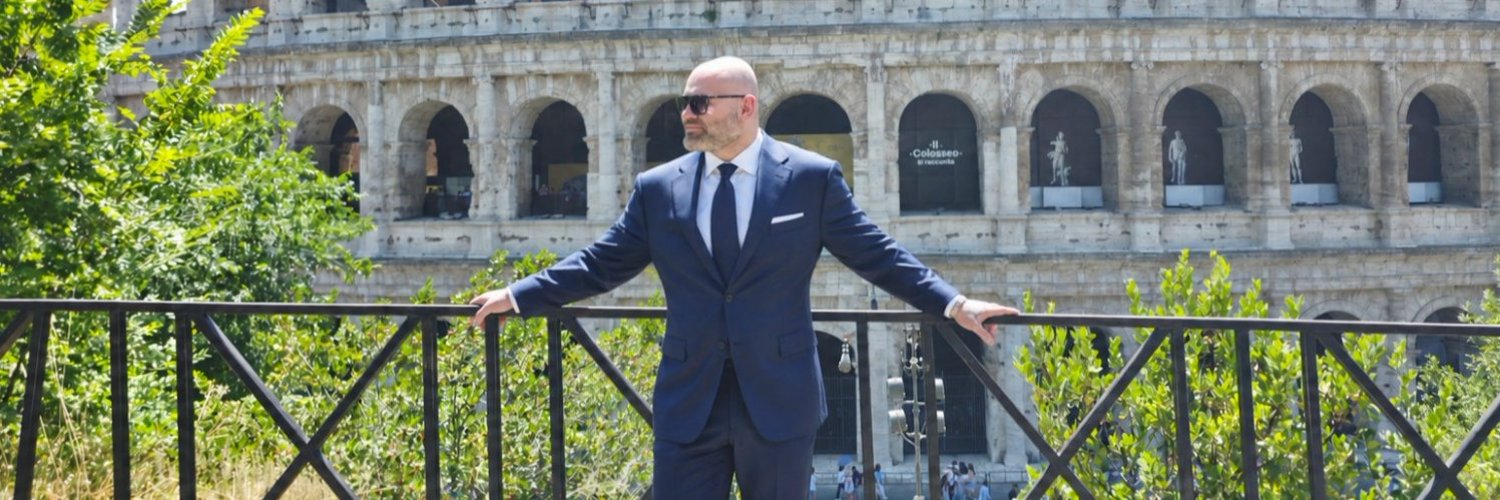
I have a bit of an old-school take on this: I think the suit (second only to the tuxedo) is the ultimate opportunity for a man to project confidence and presence.
It's not just about how it looks, either. Putting on a suit is a routine that requires your attention and effort. Coordinating cufflinks, getting the tie knot right, understanding the subtle messaging of your lapel style, structuring the fit...each small individual piece comes together into a final product that is greater than the sum of its parts.
There are parts to this that people don't like to say out loud, either:
- You'll be treated differently when you're wearing a suit.
- You'll feel more authoritative and confident in yourself.
- People will make automatic assumptions about you (for better or for worse) depending on fit and tailoring, which makes a suit an opportunity to make a statement without speaking.
For my entire adult life, I have pulled direct inspiration not only from family members, but from characters like Harvey Specter, James Bond, Harry Hart (IYKYK), and more.
Let's be clear: Wearing a suit doesn't make you a better person than someone who doesn't. It doesn't prove that you're wealthier or more successful (I got this suit at an outlet store). It doesn't necessarily mean that you deserve the respect that it looks like you do...
But, it DOES ensure that you'll be taken more seriously and be seen as someone who respects themselves and the occasion enough to put in the effort.
And, in today's world, simply doing that puts you ahead of most.
