

🧙🏻♂️ DC Basketball — Made a useful thing one time that changed my life — Mostly tweets about space now — Views my own
Joined September 2011
- Tweets36.8K
- Following756
- Followers10.3K
- Likes52.3K




Pinned Tweet
Some personal news:
I have accepted a position with Monumental Sports & Entertainment as a research analyst assisting across the Wizards, Mystics and Go-Go.
I am truly thrilled to be joining such a high class organization and cannot wait to get going.
Jacob Goldstein retweeted

"Let's just take a closer look."
Famous last words.
NSF–DOE Rubin Observatory images reveal stars, nebulae, and a mindblowing number of distant galaxies hiding in the background.
So go ahead. Zoom in.
You might want to clear your schedule.
➡️ skyviewer.app
Extremely proud of everything this team and organization accomplished this season. Laying the foundation for a bright future! Privileged to be a part of the journey.


Jacob Goldstein retweeted

The ROI showing the extent of this massive crater, named after Thomas McGetchin centered at 1.3536°N, 67.1765°E
To be very clear, you're watching the same area before and after the impact.
Credits: NASA/GSFC/Intuitive Machines

The Moon’s got a big new crater! 🕳️
Spotted by NASA’s Lunar Reconnaissance Orbiter, the McGetchin crater formed when a rock as big as a six-story building crashed into the Moon. It’s 141 feet deep and wider than the length of two football fields.🪨💥🌕
go.nasa.gov/3TzHqUf

ALT An aerial view of a lunar crater. A bright, circular impact crater sits in the center of a dark, cratered surface, with white rays of ejected lunar material radiating outwards in all directions, creating a stark contrast against the gray terrain.

Jacob Goldstein retweeted
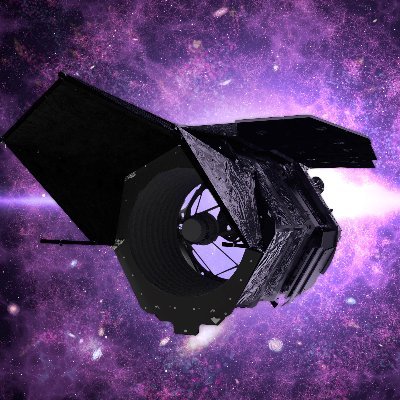
Achievement unlocked!
Reward: More years of fuel!
We have completed Roman's first course correction so accurately that it conserved years of fuel for the mission!
Learn more: go.nasa.gov/46qdvRj
Jacob Goldstein retweeted

🛰️ 〰️〰️

⏳ The countdown is over.
#BepiColombo's Mercury Transfer Module should have now separated from the spacecraft, a key step in the mission's journey towards orbiting #Mercury. 🛰️↔️🚀
Now expecting acquisition of signal confirming separation no earlier than 15:53 CEST.
@ESA @JAXA_en @BepiColombo @ISAS_JAXA_EN
Jacob Goldstein retweeted

The Nancy Grace Roman Space Telescope carries the name of a scientist whose influence on modern space astronomy goes far beyond the telescope itself. Nancy Grace Roman was NASA’s first chief of astronomy and the first woman to hold an executive position at the agency. Her career helped establish the idea that astronomy from space should become a major and permanent part of NASA’s scientific program, at a time when that concept was still largely experimental. Roman is notably associated with the development of the Hubble Space Telescope, but her contribution was broader: she helped create the institutional and scientific foundations on which much of NASA’s space-based astronomy program was later built.
Roman was born in Nashville in 1925 and became interested in astronomy at a very young age. By eleven, she had organized an astronomy club with classmates, and by high school she had already decided that she wanted to become a professional astronomer. That decision was unusual for a woman at the time and repeatedly brought her into conflict with the expectations of teachers and academic institutions. She nevertheless studied astronomy at Swarthmore College, graduating in 1946, and completed her PhD at the University of Chicago in 1949. Her early scientific work focused on stellar populations, spectroscopy and stellar dynamics, especially on how the motions and chemical compositions of stars can reveal the history of the Milky Way.
One of her important early results came from studying the relationship between stellar composition and orbital motion. Roman showed that stars with different chemical abundances also tended to display different patterns of motion through the Galaxy. Younger, relatively metal-rich stars generally follow more nearly circular Galactic orbits, while older, metal-poor populations tend to have more eccentric and dynamically distinct trajectories. Today, this connection between chemistry and kinematics is fundamental to Galactic archaeology because the chemical composition and motion of a star together preserve information about when and where it formed and about the assembly history of the Milky Way.
Despite her research success, Roman became increasingly aware that advancement within academic astronomy was considerably more difficult for women. In 1955, she moved to the US Naval Research Laboratory, where she worked in the relatively new field of radio astronomy. Her combination of scientific expertise, organizational ability and communication skills eventually brought her to the attention of @NASA , which itself had only been established in 1958. In 1959, she joined the agency and became its first chief of astronomy. NASA at that point did not yet possess the mature space-astronomy infrastructure we now take for granted, so Roman was involved in determining which missions should be pursued, how they could be justified scientifically and how a coherent long-term astronomy program could be built.
A central part of that work was her support for placing a large telescope above Earth’s atmosphere. Together with figures such as Lyman Spitzer, Roman promoted the scientific case for a major space observatory capable of avoiding atmospheric turbulence, absorption and much of the background that limits ground-based observations. She worked on the early planning, scientific justification and institutional support for what eventually became the Hubble Space Telescope. Hubble would not launch until 1990, long after these early efforts, but Roman’s role in getting the idea accepted and developed was substantial enough that she became widely known as the “Mother of Hubble.” Her influence also extended to earlier missions such as the Orbiting Astronomical Observatories and other programs that demonstrated the scientific potential of observing the Universe from space.
That history explains why NASA renamed what had previously been called the Wide Field Infrared Survey Telescope, or WFIRST, as the Nancy Grace Roman Space Telescope in 2020. The choice is fitting because Roman represents the transition from space astronomy as an ambitious idea to space observatories becoming one of the central tools of modern astrophysics. She died in 2018, two years before the mission was renamed in her honor.
Scientifically, the Roman Space Telescope is much more than a simple successor to Hubble. Its primary mirror is about the same diameter as Hubble’s, 2.4 metres, so its principal advantage is not dramatically greater angular resolution. Instead, Roman combines Hubble-like resolution with an enormous field of view. Its 300-megapixel Wide Field Instrument can cover an area of sky at least 100 times larger than Hubble can in a comparable observation. This makes Roman fundamentally a survey telescope: rather than concentrating on extremely detailed observations of relatively small regions, it can repeatedly map vast populations of galaxies, stars and planetary systems at high spatial resolution.
This capability will be used to address several major problems in contemporary astrophysics. Roman will map the large-scale distribution and evolution of galaxies to investigate dark energy and dark matter, study how cosmic structure evolved, monitor enormous numbers of stars in the Galactic bulge and conduct one of the most extensive exoplanet censuses ever attempted. Its Galactic Bulge Time-Domain Survey will use gravitational microlensing to detect more than a thousand planets, including relatively cold planets at large orbital separations and potentially free-floating worlds that do not orbit any star. At the same time, because Roman will repeatedly monitor hundreds of millions of stars, the same observations are expected to reveal around 100,000 additional planets through transits. The figure of roughly 100,000 exoplanets often associated with Roman therefore mainly refers to transit detections contained within the same survey data, rather than to microlensing alone.
Roman also carries a Coronagraph Instrument intended primarily as a technology demonstration. By suppressing the glare of a host star by up to hundreds of millions of times, it will test techniques for directly imaging and characterizing faint planets and circumstellar disks. Roman itself is not designed to carry out a systematic search for Earth analogues, but the technologies demonstrated by its coronagraph are directly relevant to future observatories that may eventually attempt spectroscopy of rocky planets in habitable zones and search for atmospheric signatures associated with habitability.
What makes the Roman mission especially interesting scientifically is the connection between the person and the type of observatory that now carries her name. Nancy Grace Roman’s greatest contribution was not a single discovery. It was helping create the framework that allowed entire generations of space observatories to exist. The new telescope follows the same philosophy on a much larger statistical scale: rather than concentrating on a handful of exceptional objects, Roman will produce enormous, uniform datasets that allow astronomers to study entire populations and test cosmological and planetary models statistically.
Today, August 30, 2026, the mission is reaching the milestone that decades of development have been leading toward. NASA is targeting the launch of the Nancy Grace Roman Space Telescope for 7:26 a.m. EDT, aboard a @SpaceX Falcon Heavy from Launch Complex 39A at Kennedy Space Center in Florida. After launch, Roman will travel toward the Sun-Earth L2 region, roughly 1.5 million kilometres from Earth, where it will operate in a large orbit around the second Lagrange point. From there, the observatory will begin a mission designed to transform wide-field astrophysics, cosmology and the statistical study of planetary systems.
Roman’s launch and deployment sequence is also much less mechanically complex than that of the James Webb Space Telescope. Webb had more than 300 single points of failure during deployment, largely because it had to unfold a segmented 6.5-metre primary mirror, deploy a five-layer sunshield roughly the size of a tennis court, extend multiple booms and secondary structures, and precisely tension and lock dozens of mechanisms after launch. Each of those operations had to work correctly because many could not be repaired or repeated once the spacecraft was in space.
Roman was designed very differently. Its 2.4-metre primary mirror is monolithic and launches essentially in its operational optical configuration, so it does not require the complex mirror unfolding sequence used by Webb. Its main post-launch deployments are comparatively limited, including the solar arrays and sunshade, the high-gain antenna and the deployable aperture cover. As a result, Roman has fewer than a dozen single points of failure, a dramatic reduction compared with Webb’s more than 300.
This does not mean Roman’s deployment is risk-free. The first hours and days after launch remain critical, especially while power systems, communications and protective structures are being deployed and verified. But from an engineering perspective, Roman’s architecture removes much of the mechanical complexity that made Webb’s deployment unusually demanding. Webb had to be folded to fit inside its launch vehicle and then transform itself into a much larger observatory in space; Roman, by contrast, leaves Earth much closer to its final working configuration.
Hubble and Webb have shown us extraordinary individual systems in remarkable detail; Roman should help determine how representative those systems actually are. Its strength will lie not only in what it discovers, but in its ability to place those discoveries within a much broader statistical context, giving us a more complete picture of how galaxies, stars and planetary systems are distributed and evolve across the Universe.

Jacob Goldstein retweeted
Shades on and batteries charging! 😎 🔋
Roman’s Solar Array Sun Shield and Lower Instrument Sun Shade have successfully deployed, powering the observatory and shading its instruments!
go.nasa.gov/4gw2rqc


Jacob Goldstein retweeted

🌕 Today marks the 57th anniversary of the Apollo 11 Moon landing.
If you have a small telescope, head outside tonight. By a remarkable coincidence, the Moon is almost exactly the same phase it was when Neil Armstrong and Buzz Aldrin walked on its surface in 1969.
We'll show you how to find Tranquility Base at capitalweather.com

Jacob Goldstein retweeted

Tonight's starting 5️⃣:
Will Riley
Tre Johnson
AJ Dybantsa
Jamir Watkins
Felix Okpara
