

translator of Italian &c. “irresistibly drawn by a web of thrilling daydreams awash on a shore of panic”. 🇮🇹 🇬🇷 @jrichards.bsky.social 🦋
Los Angeles, CA
Joined September 2009
- Tweets1.9K
- Following2.1K
- Followers1.3K
- Likes10.7K






Jamie Richards retweeted

"Carson's win was likely ideologically motivated" by whose ideology Liza? Big Classics?

I've been reading a lot of Anne Carson over the past 24 hours to gather my thoughts about the recent Nobel Prize news. Here goes.
I originally called her a serious scholar and later retracted my statement after digging deeper into her work, but listen—she's still a better writer than the vast majority of writers out there because the bar for contemporary literary writing is so abysmally low. Sure, there's Thomas Pynchon and Salman Rushdie, but who else is really a literary mastermind today? You struggle to name anyone because most good writing just doesn't get published today. The literary establishment has largely declared a boycott on deep, introspective writing with a human soul.
Yes, Carson's win was likely ideologically motivated, but everything getting published today is ideologically motivated as well. The pool for Nobel Prize winners was so weak to begin with that it's no wonder that Carson emerged as a top contender.
If we want good writing back on our shelves, we must call out minimalist slop and topical trash. Great literature has always explored the human condition, and that's what we seem to have forgotten today.
Jamie Richards retweeted

We congratulate Anne Carson, winner of the 2026 Nobel Prize in Literature. Carson is a contributing editor at Granta and a regular writer for the magazine. In celebration, we have lifted the paywall on all her contributions to our pages.
granta.com/contributor/anne-…


Jamie Richards retweeted

Congratulations to our talented translators nominated for the inaugural US Sophie Castille Award: @JRichWords (Petra Chérie) and Andrea Rosenberg (Witchcraft)! @comicsbeat has the scoop: ow.ly/MMwS50ZUEno.

Jamie Richards retweeted

Jacques Testard's opening bid for Svetlana Alexievich's Second-hand Time was $2,000. Nobody else was bidding.
The next year, she won the Nobel. What started as a one-man press running on 18 months' savings has since published four Nobel laureates: buff.ly/pyhNq5o


Jamie Richards retweeted

Rest in peace Annie Dillard. You wrote one of the greatest essays of all time theatlantic.com/science/arch…

Jamie Richards retweeted

You can buy (and read) 500-600 translated books instead of the IPhone Duo, and every single one of them can be flipped open.
Jamie Richards retweeted

Instead of becoming stupid getting annoyed at people’s fake arguments about books, you could be becoming a genius attempting to translate a very long sentence from the Bulgarian better than anyone else
nplusonemag.com/online-only/…


Jamie Richards retweeted

The Ukrainian Book Institute has appealed to the international publishing community to support Ukrainian publishers following a series of devastating Russian attacks in July and August 2026.👇 ebx.sh/Kbt8t3

Jamie Richards retweeted

It's Monday, 10 August and 39 degrees centigrade here in Bologna, Italy. Yet you never see any AC units on the buildings.
Do people in Bologna just not have AC?
Well, not quite... (1/n)


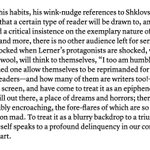
"like an animal taxidermized into an awkward lunge" 👀

"The sheer volume of non-epiphanies in 'The Beginnings' begs the question: is this shorting of our usual literary circuits really the book’s point?"
Josh Billings reviews Antonio Moresco’s "The Beginnings": lareviewofbooks.org/article/…
Jamie Richards retweeted

Upton Sinclair is also responsible for something else that passes without notice in our lives: the way we use shirt collars to talk about class.
About fifteen years after publishing The Jungle, Sinclair wrote "The Brass Check," which was a muckraking expose on American newsrooms. In it, he described the office clerks upstairs as wearing white collar dress shirts, while the people in the mailroom below as wearing blue collar button-ups. This taxonomic shorthand — white collar vs blue collar — would become a popular way for writers to sidestep the uncomfortable discussion of class throughout the 20th century.
Sinclair suggested that the ability to wear a white dress shirt allowed office clerks and middle managers to see themselves as socially distinct from laborers, even if they shared similar interests. An excerpt:
"It is a fact with which every union workingman is familiar, that his most bitter despisers are the petty underlings of the business world, the poor office-clerks, who are often the worst exploited of proletarians, but who, because they are allowed to wear a white collar and to work in the office with the boss, regard themselves as members of the capitalist class."
Of course, there were other dynamics at the time, such as race, but this taxonomic device (white collar, blue collar) continues to be popular today, especially in a post-industrial economy.

more than one hundred years ago a young man named Upton Sinclair, living in a small cabin about two miles from this house, on Rosedale Rd., Princeton, wrote a novel exposing the unspeakably filthy conditions of meat-packing in Chicago, titled "The Jungle." President Teddy Roosevelt read the novel, his stomach (which was considerable) was turned, he called Sinclair to the White House, & soon thereafter laws were passed to regulate (to some degree) the meat-packing industry.
Today we don't have a US president who can read, let alone read an entire novel; we have a US president who has deregulated industries that provide food & medicine for us, to our detriment.


Jamie Richards retweeted

According to The Atlantic, the end of literacy is nigh, though you already know that if you read The Baffler—we devoted an entire issue to the subject last fall.
thebaffler.com/issues/no-81
