

vires in numeris bitcoin mining
Joined January 2017
- Tweets11.2K
- Following4.9K
- Followers626
- Likes4K






JP.₿ retweeted

A data room tells you what an AI company earns. You have to actually open the codebase to find out whether it'll keep earning or what it's worth.
A PE firm once asked us to look at an M&A target before close. The data room showed $4.2M ARR growing 40% a year, and the deck promised a proprietary AI platform.
We looked at the codebase, and it turned out to be a GPT-4o call with a system prompt and about 600 lines of glue code. They were asking 12x revenue, and the firm walked away.
These are the seven things we check about every AI target before close:
1. Ask how long a senior engineer would need to rebuild it. If the answer is a weekend, you're paying a software multiple for a sales team.
2. Open the system prompt. Plenty of "proprietary AI features" turn out to be one well-written prompt. Read it yourself before you buy.
3. Ask for the eval set. An eval set is a collection of production cases with answers the company's own experts agreed on. Without one, nobody there can prove the product still works after they change a model or a prompt.
4. Find out who can explain how the AI works. Standard HR diligence counts heads. In an AI company, the knowledge that keeps the product running tends to sit with two or three engineers, and you want their names before you sign.
5. Trace the training data. Bartz v. Anthropic settled at $3,000 per book across 500,000 works, $1.5 billion in total. When you buy an AI company, you inherit however it sourced its data, and EU AI Act violations can reach 7% of global turnover.
6. Put AI costs next to revenue per customer. Ask for inference cost per customer, broken out from the rest of COGS. If heavy users cost more to serve than they pay, growth makes the margin worse.
7. Check what gets logged. Ask to see the traces for one customer request from start to finish. If the company can't produce them, nobody there can explain a bad output to a customer (or a regulator for that matter).
Financial and commercial diligence are standard on every deal.
Technical diligence on an AI company belongs on that list, because the codebase is where the valuation falls apart.
That's what we run for PE firms at Limestone Digital.
JP.₿ retweeted

Venezuela, crudo y Trump.
A ver si te enteras.
Cuando Maduro regalaba petróleo a la dictadura de Cuba —unos 57.000 millones de dólares en dos décadas, mientras PDVSA pagaba hasta 12 dólares más por barril importado de lo que le cobraba a La Habana— lo llamaban "soberanía".
Cuando vendía el Merey a China con descuentos de 14 a 21 dólares por barril bajo el Brent, a través de intermediarios opacos, lo llamaban "soberanía".
Cuando regalaba crudo a Rosneft, no por dinero, sino para amortizar 6.500 millones de dólares en préstamos rusos a cambio de cobertura política, lo llamaban "soberanía".
Cuando 21.000 millones de dólares de exportaciones quedaron sin cobrar entre 2020 y 2023 —solo se pagó el 16% de lo facturado— y 42.000 millones se esfumaron en tramas de corrupción en PDVSA, lo llamaban "soberanía".
Ahora Estados Unidos aporta 100.000 millones de dólares de inversión 100% privada, empleo e infraestructuras, con un régimen fiscal transparente de hasta 30% de regalía más 15% sobre el ingreso bruto, que supondrán 209.000 millones de ingresos para el pueblo venezolano, gestionados por EE. UU. para evitar que el chavismo lo robe.
El dinero que antes desaparecía en intermediarios y empresas pantalla de la mafia chavista ahora es auditable y trazable.
... Y ahora —sí, ahora— se "indignan".
Fascinante.

JP.₿ retweeted

100 عام أم 25؟ ومن يسيطر فعلياً على النفط؟ بعد إعلان ترمب “أكبر صفقة نفط في التاريخ”، خرجت رئيسة فنزويلا ديلسي رودريغيز برواية مختلفة عن الاتفاق🇺🇸🇻🇪
وهنا، دعني أشرح لك أين تتفق الروايتان وأين تختلفان:
📌 الرئيس دونالد ترمب يقول إن الولايات المتحدة حصلت على سيطرة الأغلبية على أكثر من 65 مليار برميل من احتياطيات النفط الفنزويلية.
📌 البيت الأبيض يقول إن حصة واشنطن ستبلغ 55% من شركة جديدة تتولى تطوير 17 حقلاً نفطياً، فيما تحدثت تقارير أميركية عن امتيازات للحقول تمتد 100 عام.
📌 لكن الرئيسة الفنزويلية ديلسي رودريغيز أكدت أن فنزويلا ستحتفظ بسيادتها على مواردها الطبيعية، وقالت إن اتفاق الطاقة مع واشنطن ستكون مدته 25 عاماً فقط.
📌 رودريغيز أوضحت أن الهدف هو رفع إنتاج فنزويلا إلى 1.5 مليون برميل يومياً، مقارنة بنحو 1.25 مليون برميل حالياً؛ أي زيادة تقارب 250 ألف برميل يومياً.
فلماذا دخلت الحكومة الأميركية بنفسها في الصفقة؟
📌 “وول ستريت جورنال” كشفت أن شركات النفط الأميركية لم تستثمر بالسرعة والحجم اللذين أرادهما ترمب، بسبب تهالك المنشآت والمخاطر السياسية والقانونية.
📌 لذلك قررت إدارة ترمب ألا تكتفي بجلب الشركات وحماية استثماراتها، بل أن تصبح الحكومة الأميركية نفسها شريكاً مالياً مباشراً في المشروع.
📌 واشنطن لن تكون وسيطاً بين فنزويلا وشركات النفط فقط، بل ستملك حصة في الشركة التي ستطور الحقول.
📍 باختصار:
ترمب يقدم الصفقة باعتبارها سيطرة أميركية على النفط، بينما تقدمها رودريغيز باعتبارها استثماراً محدود المدة لا يمس سيادة فنزويلا.
#أميركا #فنزويلا #ترمب #النفط #الاقتصاد


🇺🇸🇻🇪 فندق ماريوت في قلب العاصمة كاراكاس تحول إلى المكان الذي تُرسم داخله فنزويلا الجديدة.. دبلوماسيون وجنود وشركات نفط أميركية ومفاوضون تحت سقف واحد.
في الواجهة، حوار بين الحكومة والمعارضة للانتقال إلى الديمقراطية.. لكن كواليس “بوليتيكو” تكشف أن واشنطن تمسك بمعظم الخيوط:
📌 عشرات الدبلوماسيين والموظفين الأميركيين يقيمون في الفندق، إلى جانب عناصر من مشاة البحرية ومتعاقدين أمنيين.
📌 ممثلو شركات الطاقة الأميركية يعقدون صفقاتهم في بهو الفندق، بينما تستعد واشنطن للسيطرة على معظم إنتاج مشروع نفطي يشمل 65 مليار برميل من الاحتياطيات الفنزويلية.
📌 وزارة الخارجية الأميركية أعادت سياسيين معارضين من المنفى، ووفرت لهم الحماية والمركبات خلال وجودهم في كاراكاس.
📌 واشنطن اختارت دينورا فيغيرا لقيادة وفد المعارضة، رغم أنها ليست من أبرز وجوه المعارضة داخل فنزويلا.
📌 الاختيار جاء على حساب ماريا كورينا ماتشادو، أشهر قادة المعارضة والحائزة على نوبل للسلام، رغم أن استطلاعاً حديثاً أظهر أن 72% من الفنزويليين ينظرون إليها بإيجابية.
📌 ترمب سبق أن قال إن ماتشادو لا تملك “الاحترام” الكافي لقيادة البلاد، ثم دعم ديلسي رودريغيز لتولي الرئاسة مؤقتاً بعد اعتقال نيكولاس مادورو.
📌 وفد الحكومة يقوده خورخي رودريغيز، شقيق ديلسي، بينما يجتمع الدبلوماسيون الأميركيون مع وفد المعارضة قبل جلسات التفاوض وبعدها لمناقشة العقبات والخطوات المقبلة.
📌 واشنطن تقول إنها “تسهّل ولا تُملي”، لكن بوليتيكو نقلت عن مصادر أن إدارة ترمب حددت شخصيات التفاوض وشكله، وتدخلت أيضاً لمنع عودة ماتشادو إلى فنزويلا بعد الزلزالين.
ماذا خرج من الجولة الأولى؟
👈🏻 اتفاق على العمل لإصلاح المحكمة العليا.
👈🏻 السعي إلى تحرير 4 مليارات دولار من الذهب الفنزويلي المجمد في بنك إنجلترا.
👈🏻 إعلان الحكومة إطلاق 131 سجيناً سياسياً، بينما تمكنت منظمة حقوقية من تأكيد الإفراج عن نحو 80 فقط.
📍 الجولة المقبلة متوقعة في منتصف سبتمبر، لكن لا يوجد حتى الآن موعد للانتخابات الرئاسية.. وهذا هو الخلاف الحقيقي.
#فنزويلا #أميركا #ترمب #النفط #ماريا_كورينا_ماتشادو

JP.₿ retweeted

On the filter fork topic.
I don't usually have time, but this morning listened to one of the twitter spaces from earlier in the week, with some well meaning relative bitcoin newcomers, that humanized them, and their concerns and thoughts for why they thought that made it logical to support 110.
My feeling after listening, is if these are the people with #110 in their handles, I'm sad to see them about to fork off and get disillusioned without understanding why bitcoin rejected 110 robustly.
So here's a more empathetic, constructive higher level version of explaining why not. I hope it's high-level and first-principles enough that everyone can follow.
They seem to want to understand what makes people tick, and are suspicious of intent. So, if someone asked me why is Bitcoin important and what is it, I'd say my (personal) mission and hope for bitcoin is to build the cypherpunk future, that "Snow Crash" was a blueprint, and work backwards from there. Bitcoin I hope leads to fully free markets via bearer unseizable, hard mathematically dependable money. Not everyone is comfortable with that level of freedom, but that's my view. And at this point, I believe that surprisingly, even now many governments have come to understand and value bitcoin's gold-like mathematical assurance, a positive development. Others may have milder views than myself, but still like hard censorship resistant money.
Because of motive suspicion, if it's not obvious: I hate spam with a passion, that's how I came to design hashcash while researching decentralized bearer money with others, and running nodes in privacy related cypherpunk p2p networks nearly three decades ago.
People seem upset about the default op return policy change in bitcoin. I will just assert, there are extremely robust and simple reasons for bitcoin changing default relay policy, and most just didn't do their research, so don't know what those are, or maybe not technical enough to fully understand though there have been 1000s of posts trying to explain in various simplified ways. So that lack of understanding lends itself to shared build-up of false narratives. So here's my back-to-basics higher level explanation.
The decentralization needed to create cypherpunk money has implications a: side effect of decentralization is that you can't impose your views on others. The very decentralization mechanism that helps that, is working against what BIP 110 wants, which at it's most basic is a quest to police other people. I understand supporters don't see their intent like that, but introspect deeper.
You can modify your software, but not anyone else's. Another critical and incredibly robust technical bitcoin immune system is bitcoin can't have people who don't understand technology basics insist on eroding security, decentralization robustness and core properties. That would end badly, fast, and so people will fight you on that.
So the message is Bitcoin respectfully says "no" to what you want. Sorry, and bitcoiners do genuinely understand and empathize that you mean well, have high level thoughts that make emotional sense, and articulate sensible bitcoin-defensive high level ideas, but they are not grounded and without you seeing it, the way you propose to achieve your ideas, hard-conflict with free cypherpunk permissionless money.
My advice is to listen to more experienced people who understand the system and why it works the way it does, to whatever detail you want to understand the grounded reasons for why this is the implication of decentralization and cypherpunk money.
I guarantee you the developer and protocol ecosystem shares and exceeds your views on bearer hard money (and dislike of spam). You may not agree with individual developers choices, views, way of expressing themselves etc, BUT you also need to understand the IETF-like decentralized technical consensus process creates a protective change resistance, that is highly effective at protecting bitcoin mission. The implication of which is no developer can change anything without technical consensus from hundreds of other developers and protocol observers who are pedantic and extremely knowledgeable clever people who won't let any unaddressed technical question past. The protective change resistance is robust and decentralized in an amplifying way because of this technical consensus.
And the many highly technical mainline developers' cypherpunk mission mindsets are probably far more determined than you can even handle on clarity of understanding and views about freedoms on permissionless networks, as many of you are probably still subconsciously inured by the matrix, where they have transcended that, and grew up immersed in it decades ago. They think natively in this space, while you are just grappling with the surface. Many wont have internalized or have the experience to know how this internet physics works, where there is no policeman, no policy authority, just mathematics, free market and hard money. That has implications for your views also, unfortunately.
Now the tough pill, which is unfortunately true: If you won't listen to reason, educate yourself, learn, the same radical freedom applies to you: your permissionless recourse is to club together and create a fork. But bitcoin won't be joining it. (With respect and no sleight intended.)
Please rejoin bitcoin now, or later if you're not convinced and need to experience 110 forking off and fizzling for yourself to start that journey of introspecting and learning. It would be sad if bitcoin lost people disillusioned due to simple lack of understanding of what's going on there, we're all trying to defend bitcoin and keep it on mission. Including btw the 110 technical promoters, just they wandered off plot somehow.
Join the cypherpunks on bitcoin, come cypherpunk summer🌞 in a few weeks.
JP.₿ retweeted

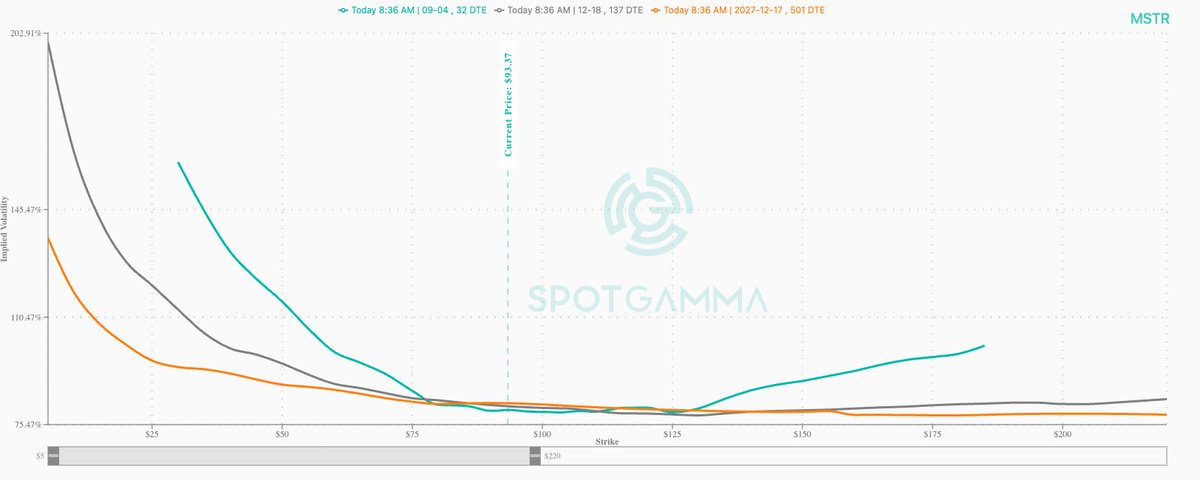
Why is Strategy selling bitcoin? MSTR's volatility surface answered months ago: the call skew that funded the machine is gone. SpotGamma breaks it down.
JP.₿ retweeted

UPDATE COLDCARD:
THE THIEF IS NOW MIXING HIS 64 BTC
1. The funds were sent to that address:
bc1pynd6vswmxkghw6k5463xwcj7el7u4tpl2t2pnh0s8llmc2wgzfqsdu7h92
2. It was mixed in that strange transaction:
- 64 BTC input
- and a 54 BTC output bc1qajcrhj3s2x0yfcj54emjukghv93su80svp2d3t
- Only ~10 BTC mixed
3. Surprising at first sight to see, but then the 54 BTC have also been mixed in smaller outputs (see second image)
4. Rn smaller outputs of ~7 BTC are still easily identifiable, but they are themselves also being mixed in smaller pieces (see third image)
To on-chain analysts :
Have you ever seen something like this?
Is there another recent ColdCard thief that used this pattern of mixing?


JP.₿ retweeted

How I'd Secure a Life Changing Amount of Bitcoin
If I were helping a friend secure a life changing amount of Bitcoin from scratch, this is the process I'd recommend:
1. Purchase two Bitcoin only hardware wallets from two different vendors and create a collaborative custody 2 of 3 multisig vault with @unchained , where you hold two keys and Unchained securely holds the third.
2. Generate each hardware wallet 24 word seed using a minimum of 100 dice rolls. Do not rely solely on the hardware wallet's random number generator.
3. Back up each seed on titanium and store every backup in separate secure geographic locations.
4. Download and save the Bitcoin config file immediately. Print multiple paper copies and store them in separate secure geographic locations. Unchained also retains a copy, but your recovery plan should never depend on a third party. This file contains the information required to reconstruct your multisig wallet, including the xpubs and derivation paths.
5. Import the Bitcoin config file into Sparrow Wallet.
6. Compare the receive addresses shown in Sparrow Wallet with those shown in Unchained and ensure they match exactly.
7. Send a small amount of bitcoin to your new multisig wallet.
8. Confirm the UTXO appears correctly in both Sparrow Wallet and Unchained.
9. Wipe both signing devices completely.
10. Recreate the watch only wallet in Sparrow Wallet using only the Bitcoin config file.
11. Restore both signing devices from their titanium seed backups.
12. Verify each restored signing device can successfully participate in signing for the reconstructed wallet using your normal workflow, whether USB, QR codes or microSD. Confirm the receive addresses still match those shown in Unchained and that the test UTXO is visible.
13. Spend the test bitcoin to a separate wallet you control and verify the transaction is successfully broadcast and confirmed.
14. Never use that original receive address again. Generate a fresh receive address for your long term bitcoin holdings and always use a fresh receive address for every future deposit.
15. Only after successfully completing every step above should you transfer a meaningful amount of bitcoin to the new receive address.
I hope someone finds this useful. This isn't the only way to self custody bitcoin. It's simply the process I'd be comfortable recommending to friends and family.
JP.₿ retweeted

Here's how to create a simple 12 word bitcoin seed using Seedsigner and dice.
Its filmed in real time with a timer running so you can see the entire process & how long it takes
Do you really think this is too hard, or too much trouble for you to secure your family's future?

They don't want you to know you can do this. How hard is it really and how long does it take?
I've seen a lot of aggressive fear porn raging against the idea that people can or will roll dice to generate a seed - I was curious how long it'd take to sit there and do the process from beginning to end...
I turned up some music loud and went into an adjoining room with no electronics. The music both masks the dice roll and keyboard entry sounds, and is fun to listen to.
Results: It takes about 4 minutes to roll a 12-word seed phrase and enter it into a Seedsigner. Skill level - kindergarten
I was able to go through everything below in 75 minutes
🎲 roll three unique 12-word seed phrases
✅ load them into seedsigner,
✅ Verify the fingerprints
✅ Verify the words
✅ Write down the words
✅ Export xpubs into Sparrow
✅ Create a watch-only multisig wallet over airgap between Sparrow and Seedsigner
✅ Receive testnet coins from the @mempool faucet
✅ Create a batch transaction sending back the coins to the faucet as well as another 2 wallets in Sparrow
✅ Send he tx over airgap back to the Seedsigner for the first signature,
✅ Sending the partially signed PSBT back to Sparrow to display the next PSBT QR,
✅ Sending the fully signed PSBT back to Sparrow and finally
✅ Broadcasting
And I did this all before Widespread Panic could even finish the first set of the concert! I basically started rolling dice at Stop-Go, and was done before the end of One By One.
Note: transactions all sent on testnet4. (Both Sparrow and Seedsigner were also set to Testnet/4.)


JP.₿ retweeted

🚨 LIKELY 4TH ORGANIZED WAVE COLDCARD ATTACK OCCURRING RIGHT NOW
THERE ARE STILL SIMILAR TXS IN THE MEMPOOL WAITING TO BE CONFIRMED AND THE PREVIOUSLY-CONFIRMED TXS SIGNAL RBF OPT-IN, CHECK YOUR FUNDS AND YOU MAY BE ABLE TO RBF YOUR WAY OUT OF THIS
pattern identified:
blocks 960,778 - 960,792 (last ~2.5 hours, still going):
• 218 transactions, 462 victim addresses, 216 fresh destinations.
• 388.92748828 BTC
• EVERY one has ZERO inputs predating the Coldcard firmware boundary
• Rate 13.8 sweeps/block vs 0.3/block in a pre-incident control window = ~45x elevated
• Topology is 1:1 — one fresh destination per victim, only ONE destination received two sweeps. No collector funnel.
• Some funds have already been swept into 2nd hop addresses.
these are LIKELY Coldcard victims -- they match the shape of coldcard vulnerable utxos and the elevated transaction pattern gives me high confidence they are another wave of attacks
MOVE YOUR FUNDS OFF COLDCARD DEVICES ASAP AND USE HIGH TX FEES
more details to come as this takes shape


JP.₿ retweeted

JUST IN: Dustin Dettmer (@dusty_daemon) digs into the COLDCARD firmware commit history to uncover what actually happened in the code to introduce one of the worst bugs for self-custody in recent bitcoin history
open.substack.com/pub/btcpp/…

JP.₿ retweeted

O que aconteceu hoje com a Coldcard já vem sendo avisado pelo @coffnix há anos e mesmo assim o tiram para maluco. Se você tem uma Seed criada na Coldcard sem passphrase, você corre riscos de perder todo o seu saldo de Bitcoin.
JP.₿ retweeted

Check out these two Bitcoin seed phrases:
(a general lesson in entropy)
SEED A:
ocean tiger silver dance pigeon melody crystal rocket amber jungle violin sunset.
Now check out this one:
SEED B:
garden mirror silent canyon river melody crystal rocket amber jungle violin sunset
They both look random to me.
But this is the issue that has unfortunately happened with the Coldcard wallet bug.
It's random generator didn't give sufficient randomness.
You can't tell the two phrases apart if you use the device to give you your words.
You get them. You write them down. Stamp them in steel. Done.
All proper 12-word BIP-39 seed phrases starts with 128 bits of high-quality randomness (entropy).
And most devices have a TRNG (True Random Number Generator).
If that TRNG is flawed or has a bug, the device doesn't produce the full 128 bits of real entropy (or 256 bits for a 24-word seed phrase).
SEED A above was generated with 128 bits of entropy.
SEED B, however, was generated with only 40 bits of entropy.
Again, so what? Doesn't someone still have to guess those 12 words?
With only 40 bits of entropy, a skilled attacker could download the entire possibilities of those seed words, which is about 1.1 trillion.
Although large, that's small enough to run a program, extract every possibility, and begin taking funds from wallets with balances.
This is the bug/attack that struck Coinkite with their Coldcark MK3 generated seeds (using firmware 4.0.1 and later).
You cannot spot the problem just by looking at the words👀
SEED A above has the full 128 bit entropy, and thus gives 340 undecillion combinations.
This number can't be brute forced with any computing power currently available to man.
The fix?
Roll your own words for true, full randomness you can see and verify. Add a passphrase (a 13th "word") to increase that randomness. And don't let those words touch the internet.
But still... look into multi-sig. It really solves so many problems that we've had and continue to have.


JP.₿ retweeted

This is the most rigorous Bitcoin paper
I've read. I've been studying —
and testing — it for 20 days.
scientificbitcoininstitute.o…
Dr. Santostasi and Dr. Perrenod gave us the ruler —
and the imagination to see the oscillator.
Together: the most falsifiable framework
in crypto economics.
The Power Law isn't just a model —
it's the most precise ruler we have
for measuring where Bitcoin stands.
Most models describe the past.
The Power Law keeps passing tests
it was never designed for.
"Isn't β=5.69 just curve-fitting?"
Fair question.
So I ran a test the paper didn't.
━━━━━━━━━━━━━━━━━━━━━━
Materials & Methods
━━━━━━━━━━━━━━━━━━━━━━
Data: Daily closing price and non-zero balance
address count (BitcoinMagazinePro,
2010-08-17 to 2026-06-04, n=5,771).
Model: log₁₀P(t) = log₁₀A + β·log₁₀(t)
where t = days since Genesis Block (2009-01-03).
Out-of-sample design:
The power law was fitted exclusively on data
up to the freeze date, with zero observations
from the test period used in estimation.
Two freeze points were tested:
① Freeze at 2016-07-08 (2nd halving)
Training: n=2,153 | Test: n=3,617 (10 years)
② Freeze at 2020-05-10 (3rd halving)
Training: n=3,555 | Test: n=2,215 (6 years)
Residuals computed as:
ε = log₁₀(P_observed / P_predicted)
normalized by in-sample σ.
Mean residual and area integrals
(trapezoidal rule) applied to test period only.
The out-of-sample test was my idea.
Computation and analysis executed with
Claude Opus 4.8 (Anthropic).
━━━━━━━━━━━━━━━━━━━━━━
Froze the power law using data up to 2016 only (β=5.717).
Then measured the following 10 years it had never seen.
Result: mean residual −0.05σ. Effectively zero.
Frozen at 2020 instead → next 6 years, −0.13σ.
Same story.
The line drawn in 2016 ran straight through the next decade.
That's not fitting. That's forecasting.
The Power Law: powerful because it can be broken —
and hasn't been.
Knowing where we are won't tell us when things will happen — but it tells us exactly what to do now.
Buy Bitcoin Now.
@Giovann35084111 @moneyordebt @ScientificBTC
@saylor @natbrunell
#Bitcoin #PowerLaw


If you didn't read it yet. 10 k downloads. zenodo.org/records/19387099

JP.₿ retweeted

SEC approves Nasdaq rule for tokenized securities trading
The SEC has approved @Nasdaq’s proposed rule change (SR-NASDAQ-2025-072), enabling trading of tokenized, DTC-eligible securities on the exchange.
The framework allows blockchain-based settlement for traditional assets such as equities and ETFs, with implementation tied to DTC infrastructure readiness.

JP.₿ retweeted

This 𝗖𝗟𝗔𝗨𝗗𝗘.𝗺𝗱 file will make you 10x engineer 👇
It combines all the best practices shared by Claude Code creator:
Boris Cherny (creator of Claude Code at Anthropic) shared on X internal best practices and workflows he and his team actually use with Claude Code daily. Someone turned those threads into a structured 𝗖𝗟𝗔𝗨𝗗𝗘.𝗺𝗱 you can drop into any project.
It includes:
• Workflow orchestration
• Subagent strategy
• Self-improvement loop
• Verification before done
• Autonomous bug fixing
• Core principles
This is a compounding system. Every correction you make gets captured as a rule. Over time, Claude's mistake rate drops because it learns from your feedback.
If you build with AI daily, this will save you a lot of time.

JP.₿ retweeted

A Stanford professor analyzed 1,000's of angel investments to find out who's had the MOST unicorns.
The results are fascinating.
- David Morin tops the list with 23 unicorns
- Peter Thiel and Lee Linden follow with 21 each
- David Sacks at 20
- Marc Benioff at 19
A few things that stand out:
1) Almost every top angel was a founder or exec at a large tech company first. The clear signal here - they were mostly operators who earned their access.
2) Many co-invested together repeatedly. Thiel, Sacks, and Levchin all overlapped at PayPal and went on to back the same unicorns (Facebook, Airbnb, Palantir Technologies, SpaceX).
3) No women appear in the top 50. Sad.
4) The entry threshold to make this list is 9 unicorns (nuts!). The average unicorns across the top 50 is 13 (more nuts!).
I share this for folks to have inspiration to angel invest themselves!
There has NEVER been a better time - we are at a major tech inflection point.
If you're thinking about angel investing and forming angel syndicates, you should check out Verivend. Automated capital calls, one-click funding for co-investors, real-time visibility into who's in. Seamless software with a great team to hold your hand through it.
Try it yourself: lnkd.in/grrJxqxq
Full credit to Ilya Strebulaev and his team at the Stanford for this research.

JP.₿ retweeted

SpaceX and xAI are in advanced merger talks that could be announced as soon as this week.
What this means is that Musk is consolidating his empire by combining his rocket company with his AI startup.
This would bring together Starlink satellites, the Grok AI model, the X platform and SpaceX's launch infrastructure all under one roof.
The deal would work like this, xAI shareholders would exchange their shares for SpaceX stock in what's basically a stock for stock merger.
Two Nevada entities were already set up on January 21 to facilitate the transaction and both companies have already informed some of their investors about the plans.
Neither company has officially confirmed it yet.
However, Musk apparently responded positively to merger posts on X, which crypto traders are reading as a soft confirmation.
Here's why this matters.
SpaceX is valued at around $800 billion as the world's most valuable private company.
xAI just hit a $230 billion valuation after raising $20 billion in funding.
Combined, you're looking at over a trillion dollar enterprise before an IPO.
SpaceX has a blockbuster IPO planned for 2026, potentially raising $50 billion.
This could beat OpenAI and Anthropic to the public markets.
The merger would simplify the IPO structure and create a more compelling story for investors.
You'd have a vertically integrated AI infrastructure company that owns both the hardware (rockets and satellites) and the software (Grok AI).
The strategic logic is straightforward.
xAI needs computing power and infrastructure to compete with OpenAI and Google.
SpaceX is building a constellation of one million satellites that Musk wants to turn into orbital data centers powered by solar energy.
This would solve AI's energy problem.
By merging them, xAI gets the infrastructure it needs to deploy AI computing in space.
SpaceX gets the AI expertise to actually build and operate it.
It's vertical integration at maximum scale.
There's also a Pentagon angle. xAI has a $200 million defense contract to supply Grok to US military networks.
This is part of the Defense Department's AI acceleration strategy.
Combined with SpaceX's dominant position in military space contracts, a merged entity becomes critical national security infrastructure.
That could actually strengthen the company's moat and government support.
The timeline is aggressive.
Musk said last week at Davos that space based AI will be cost effective within two to three years.
With a potential merger announcement this week and an IPO as early as June 2026, you could see actual orbital computing capacity launching within two years.
The risk is complexity.
Merging two massive companies right before an IPO is tricky.
Regulatory approval could be slow.
Integrating xAI's Colossus supercomputer in Memphis with SpaceX's satellite infrastructure is an engineering challenge.
But if it works, Musk basically owns the entire AI infrastructure stack from the models to the compute to the distribution network.

SPACEX–XAI MERGER COULD BE ANNOUNCED THIS WEEK
SpaceX is in advanced talks to merge with xAI as Elon Musk moves to consolidate his companies, Bloomberg reported. Some investors have already been informed.
An announcement could come as soon as this week, though talks could still collapse. The move comes as SpaceX reportedly prepares for a possible IPO later this year and has also explored ties with Tesla.