

Professor&Chief,Plastic and Reconstructive Surgery WashU in St. Louis School of Medicine/ @bjc_healthcare @wustlmed @washuplastics Head to toe Surgery Innovator
St.Louis, United States
Joined June 2009
- Tweets677
- Following2.2K
- Followers2.3K
- Likes8.6K




Justin Sacks MD MBA FACS retweeted

TOMORROW: Don't miss your chance to hear ASPS members pitch their innovations at the ASPS Inventors Challenge while battling it out to be awarded Top Innovator of 2026! bit.ly/42mEBYs #PSTM26 #PlasticSurgery

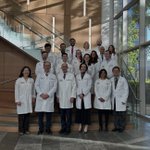
Interview season is right around the corner, and so let’s take a look at WashU Plastic and Reconstructive Surgery.
We are an academic program. We perform research. We train medical students, residents, and fellows. We operate head to toe. We performed over 6000 operations last year. And we are lucky to work with some of the brightest minds and best plastic surgeons in our field.
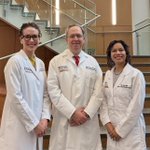
This week we start with the people who run our residency: Dr. Amber Leis, program director, and Dr. Kelly Currie, associate program director. Both are hand, upper extremity and reconstructive surgeons who operate and teach our trainees every week.
Weekly over the next few months we will introduce you to faculty, residents, and fellows, one person or team at a time. No brochure. Just the people who make WashU Plastic Surgery what it is. LG!
@ASPS_Members @washuplastics @WashUSurgery @washumedicine @WashU

Amazing opportunity for @ASPS_Members @ASPS_News

There's no better way to grow than by learning alongside people who get what you do! Applications are open for the Essentials of Leadership program, bringing ASPS members together to share ideas, build skills and make lasting connections. bit.ly/4hER7uk #PlasticSurgery


This is awesome! Congratulations to Dr Carolyn De La Cruz and her team! @ASPS_Members @ASPS_News @PittPlasticSurg

In partnership with our sister societies, The PSF is dedicated to fostering the development of surgeon-scientists. Apply for a Combined Pilot Research Grant today! bit.ly/47JGVMf #PlasticSurgery

Looking forward to seeing everyone in Houston @washuplastics @ASPS_Members @ASPS_News @washumedicine

Join us for a WashU Medicine Plastic & Reconstructive Surgery Alumni Reception at the 2026 PSTM.
📅 October 17, 2026
⏰ 6–8 p.m.
📍 Hilton Americas Houston
RSVP here: bit.ly/3VEbajs
We look forward to seeing you there!


We are lucky to have surgeon scientists of the highest caliber and committed tonight and every night here in St. LOUIS @WashUSurgery @BJC_HealthCare @acsJACS @isaiah_turnbull

15 cases on the board for tomorrow. Before anything comes in overnight. And that assumes all the overnight stuff gets done. 2 lap choles, some extremity stuff, 2 robot cases, plus the rest. @washusurgres acute care surgery is getting it done.
Keep cooking @mikepat711 Perfect explanation to why we have Grok Bot and Cursor and how they work together. Can't wait for the Videos!!! :))) and more tutorials on how these agents can optimize. LG! @elonmusk


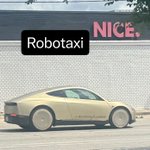
In Austin now. Waymos all over the place. A few Robotaxi’where and there. I remember my Blackberry and how my much I adored it…@mikepat711
This is the first principle thinking. Human in the loop always and forever. Well maybe not forever… :)

Oxford researchers just published a paper arguing LLMs cannot invent anything. Mathematically impossible.
The reason is simple and brutal. A model trained to predict the next word can never believe something the existing data says is wrong. And every real breakthrough in history started with exactly that belief.
In 1903 every prediction machine on Earth would have told the Wright Brothers that human flight was one to ten million years away. Nine weeks later they flew. Not because they had better data. Because they had a theory the data hadn't caught up to yet.
That is the gap between AI and human thinking. LLMs mirror the past. Humans reason into a future that doesn't exist yet. Oxford just proved mathematically that those are two different things.
I use these models every day. This matches what I see. The new stuff always comes from the human at the keyboard who decides the data is wrong.
LLMs don't think. You do.

Readers added context they thought people might want to know
This paper published 2 years ago has zero mathmatical proofs in it at all. It contains no equations and is a conceptual essay. Claiming from it that anything is mathmatically proven is false and misleading.
Original paper:
pubsonline.informs.org/doi/10.1287/st…
Will be amazing! @ASPS_News @ASPS_Members

🎙️ Something new is coming from PRS
Join Editor-in-Chief Samuel J. Lin, MD, MBA, as he goes beyond the pages with leading voices in plastic surgery.
🎧 PRS Beyond the Pages: The Plastic Surgery Editors’ Podcast
Coming soon to Apple, Spotify, PRSJournal.com, and more.

This is an important tweet. Human in the loop needs to become the mantra. The frontier leaders and creators never speak of humanity. Humanity is not just an algorithm to be optimized. Good for MIT. Lead from the educational frontier. We will follow.

MIT published a brutally honest report on what AI is doing to students.
A committee of professors and students spent five months studying how AI changed learning on campus, and the findings read like a warning to every university on the planet.
Study groups are disappearing. Office hours are emptying out. Problem sets and take-home exams no longer prove anything, because AI can produce credible solutions to almost any written assignment in the undergraduate curriculum. Students who lean on chatbots lose mastery and confidence, and some slip into what the report calls cognitive surrender, reaching for AI at the first hint of struggle.
The numbers are rough. 46 percent of surveyed MIT undergrads use LLMs daily. 90 percent worry about their own overreliance. Undergrads who feel AI makes them replaceable now outnumber those who feel it makes them capable.
The committee's answer surprised me. They refused to fight AI with surveillance. The report calls AI detectors unreliable, says lockdown browsers feel like spying, and warns that policing students builds a classroom atmosphere of mutual distrust.
Instead, MIT wants to rebuild education around the things AI can't replace. That means oral exams, semester portfolios, in-person project work, and a required social component in every subject. The report even floats the idea of rethinking grades entirely, since without a GPA to optimize, much of the incentive to cheat with AI evaporates.
The committee warns professors against replacing undergrad research assistants with AI agents just because they're cheaper, because a university exists to grow people, not output.
The most famous tech school on earth admitted the machines broke its way of teaching. Its answer is more humans, not more software.

25 years ago today I was in an operating room in New York when the first tower was hit.
I lost dear friends. I also lost a place and a time I grew up with as a child and a young man. My Midwood high school prom was there (Vista Hotel). Year after year, birthday celebrations were at the Greatest Bar on Earth Tower 1 Nothing about that day has faded. I still remember. I remember the smoke on the Island.
I am still in the operating room. Still helping patients. Still showing up.
We remember them. We remember what was taken. Never forget.


This is the story of 2001 A Space Odyssey. Arthur Clarke described this. Ray Kurzweil in his The Singulary is Near predicts this. We are on the curve upwards now.

⚡️The self is a continuously running pattern that mistakes its substrate for its identity.
Your body is already changing beneath you. The thing called “you” may be the persistence of a causal loop through time.
If that is right, death eventually becomes a continuity-engineering problem.
Preserve the loop.
Repair the substrate.
Replace pieces without terminating the process.
Keep the witness running.
And if civilization ever learns to do that reliably, then the boundary between biological life and machine life dissolves in a very literal sense.
You would not upload yourself into the machine.
You would slowly become the machine without ever noticing a moment when you stopped being you.

Technology always gets what it wants in the limit of time - to be ubiquitous and less expensive

leave aside @jason's other points.
because 99+% of miles are current manually driven
and a service priced at ~$1 per mile should pull the entire US market economically on-sides for robotaxi
even at a ratio of 1 remote operator/help desk employee for every *50* vehicles (which is more efficient than we think it will get and certainly more efficient than Waymo's current operations)
full-scale roll-out of robotaxi would *double* the number of "driver" jobs even if they eliminated all human driven chauffeur-ing which they won't.
and that ignores miles-demand elasticity. With induced demand we would actually expect a rough sextupling of "driver" jobs at that ratio.
Arguing to slow the robotaxi robot is to argue against health *and* labor.
Perhaps it's in Uber's fiduciary best interest to see more people die (so as to extract maximum rent out of the driver-vehicle-matched supply it has painstakingly constructed over two business cycles), but it is fundamentally anti-human (and inhumane.)
Who are you to ask somebody to be the last to die due to the neglect of a distracted human piloting a machine that carries the same kinetic energy as a stick of dynamite?
Many opportunities for regulation and taxation. All part of the signal.
⚡️Autonomous driving looks like a transportation upgrade, but economically it is a reorganization of mobility itself.
The core change is simple:
The car becomes productive capital.
Today, most cars are expensive assets that sit idle and depreciate. Once the driver disappears, the vehicle can operate continuously, serve many users, generate cash flow, and be financed like infrastructure.
That shifts value from car ownership to network ownership.
The real prize becomes owning the autonomy stack, fleet, charging, dispatch, customer relationship, and ultimately the economics of every mile traveled.
The endgame is owning the mile.
Labor takes the first hit. Taxi drivers, rideshare drivers, delivery drivers, chauffeurs, and eventually parts of trucking lose the scarcity premium attached to human driving. Transportation gets cheaper because the human operator disappears from marginal cost.
Cheaper mobility probably creates more mobility. People may own fewer cars while total miles traveled rise. Children, elderly people, non-drivers, commuters, and businesses all gain access to cheaper movement.
Then geography starts bending.
Parking loses value. Urban land gets released. At the same time, commuting distance becomes less painful because travel time becomes usable time. That expands the viable radius around cities and changes housing, labor markets, and commercial real estate.
Short-haul aviation, rental cars, buses, and some rail also come under pressure. Door-to-door autonomous travel removes enormous friction.
Insurance changes too. If autonomy becomes materially safer than humans, the entire accident economy contracts: claims, repairs, towing, litigation, rental replacement. Liability migrates toward software, manufacturers, and fleet operators.
And then comes the hidden layer:
driving time becomes monetizable attention.
The cabin becomes a screen, office, game room, shopping surface, entertainment platform. The company controlling the vehicle controls another slice of human attention.
So the full economic transition is:
cars become yield-producing assets, fleets replace some ownership, software captures more value, driving labor gets repriced, land gets repriced, travel expands, accident economics shrink, and mobility becomes a platform business.
The macro consequence is the same pattern AI is creating elsewhere:
productivity rises, prices fall, output expands, labor becomes less necessary, and capital ownership becomes more valuable.
That is the real fracture line.
Once the machine drives itself, the central economic question becomes:
Who owns the machine, the software, and the network?
Because whoever owns that layer can collect rent from motion itself.
Welcome Dr. Peters to WashU Plastic Surgery @washuplastics LG!

