

Prof of Mathematics· Founder https://xitter.cf/t.co/k16NINtMUQ | Former: BP Fellow at @Harvard · Marie-Curie Fellow| Be the change you want to see. Opinions my own.
Boston, MA
Joined August 2009
- Tweets9.3K
- Following2.3K
- Followers4.7K
- Likes9.4K




Jonathan Mboyo Esole retweeted

Mike was my colleague at Berkeley, and he's been fairly skeptical of deep learning's trajectory for years. Most scientists are skeptics, and it can take a big shock to get someone to consider a possibility that goes against the anchoring effect coded in our DNA.
I too was somewhat of a skeptic until ~6 months ago, and people ask me all the time why I joined Anthropic.
It started in April, when a friend I've known for 20 yrs messaged me saying he'd be in the Bay Area in a week, and he suggested we meet up. I invited him to my house for dinner, and he told me he had just joined Anthropic. He said the models were becoming increasingly more capable, and he believed both that they'd soon be smarter than him and also that all intellectual work would be highly devalued in the near future, and lastly that society was not at all ready for what's coming.
I'd of course heard claims similar to this before, but not from a friend I'd known for this long, and who I trusted, at my dining room table. It was the initial shock needed to destabilize my own anchoring. Also, I've been fortunate to work with and/or mentor many smart people in my life (e.g. Fields medalists, a 4x Putnam Fellow, IOI first place winners, etc.), so I feel pretty calibrated in recognizing very smart people, and this was someone who is definitely very smart and with impressive such credentials. So, it was hard to ignore this friend saying the models would be smarter than even him in particular.
After that dinner, I decided to do an informal survey, calling and meeting up with a lot of my friends who now work on improving model capabilities at these frontier labs. They all agreed with that first friend. These were all people I'd known 10, 15, 20 years, who mentored me, or I mentored them, or we met professionally in academia. These are people I trust, and their beliefs on this topic were consistent.
I then spent a whole lot of time understanding the missions of different companies, and talking to current and former employees and people in leadership. I read Dario's (long) essays and watched videos on YouTube of company leaders being interviewed. Anthropic's stated mission "to ensure that the world safely makes the transition through transformative AI" felt like exactly the right guiding principle to handle such a society-disrupting technology, and everyone I spoke to at the company was very aligned with this mission. It's easily the most mission-focused place I've ever been at, and everyone takes the work extremely seriously and with a profound sense of responsibility.
And now here I am. And being on the inside, the pace of progress has surprised me more than I first imagined. The moment that pure mathematicians are in, to me, is just a microcosm of what I predict a much larger of society will be grappling with in the not too distant future, and I really hope our leaders and the general public internalize sooner than later just how significant a moment we're in.

Michael Jordan (the machine learning one): "Superintelligence is Science Fiction" 🔥🔥🔥
di.ens.fr/~fbach/MJordan_ITW…
Jonathan Mboyo Esole retweeted

Gentle reminder that the sign error that caused 3 withdrawals in the mathematical findings compilation by @OpenAI could not be probed by just asking Astra to audit the article, even specifying the section. Indeed, the correction came from humans who found the entire proof strategy suspect.
The proof strategy involves constructing "flexible" Lagrangians inside symplectic manifolds that are obstructed in Lagrangian Floer homology. This immediately fires up red flags in any experts' mind: loose Legendrians having vanishing Floer invariants.
Cutting humans out of the loop gives way for proof-destroying errors of such magnitude to go unchecked. Now extrapolate such blunders to biotech research, where formal verifications aren't available (even in math, they had Lean, but sheer negligence made them assume a Bayesian epsitemology precludes major errors).

Interesting: one of the OpenAI papers has an error. It’s a sign error—which is oddly common.
Astra Pro finds the error when asked (without further hints) to “Audit lemma 3.6” but not with less focus, eg, Audit Section 3” didn’t work when I tried.
It’s interesting because it suggests something about the depth and intensity of the proof and audit workflow by OpenAI (of course, very weakly so).
Jonathan Mboyo Esole retweeted

The French mathematician Jean-Pierre Serre, an emeritus professor at the Collège de France in Paris — who has won two of math’s top prizes, the Fields Medal and the Abel Prize, and celebrated his 100th birthday last month — was naturally attracted to finding No. 46 in OpenAI’s list, which solves positively a conjecture he made almost 70 years ago.
But Dr. Serre is conflicted about doing math with A.I. He uses the technology for things like references, and, with the help of friends, for chasing down hunches about errors.
“Mathematicians take pleasure in doing maths in two different ways: learning and finding new things,” Dr. Serre said. “Hence a conflict: A.I. increases the first pleasure and lowers the second one. The problem is it may lower the pleasure too much; that is especially serious for young mathematicians.”
I think that last sentence from Serre nails it.
‘Breathtaking,’ ‘Devastating’: Mathematics Reels After New OpenAI Release - The New York Times
nytimes.com/2026/10/08/scien…

Jonathan Mboyo Esole retweeted

My great thanks to Terence Tao for offering to share a post of mine on his blog. The topic:
"What should we tell our students?"
If you are a student or early career mathematician, I would love it if you read it. If you are not, I would love it if you shared it with students! Thanks!
terrytao.wordpress.com/2026/…

Jonathan Mboyo Esole retweeted

Terence Tao says AI can lower mental effort so much that the brain may stop “lifting its own weights.”
Early studies suggest reduced cognitive load can come with real harms, not just convenience.
Math is especially vulnerable because it’s easy to outsource every step to a tool.
Responsible use means choosing when to think, not just when to click, says Terence Tao.
Jonathan Mboyo Esole retweeted

Is this one of the most iconic ways a laureate has been informed about their prize?
Economist Paul Milgrom was unreachable the morning his prize was announced. Instead his neighbour and co-laureate Robert Wilson delivered the news about their 2020 prize in economic sciences in person.
Next week we start announcing the 2026 Nobel Prizes - who will receive the life-changing call this year? Follow us and find out.
Video footage: Courtesy of Paul Milgrom / Stanford University.
Jonathan Mboyo Esole retweeted

How do mathematicians reveal patterns in structures too complex to see directly?
That is at the heart of the work of 2026 Wolf Prize in Mathematics Laureates David Kazhdan and Joseph Bernstein.
Their discoveries helped build what is now known as geometric representation theory — a field that connects algebra, geometry and symmetry in powerful new ways.
Kazhdan’s work introduced new tools for understanding groups and symmetry, including the influential Kazhdan–Lusztig theory. Bernstein developed ideas such as D-modules and helped create mathematical frameworks that linked representation theory with geometry in entirely new ways.
The result is a mathematical language that allows researchers to move between different fields and uncover relationships that were previously hidden.
Watch the video for a clear visual introduction to their breakthrough — and see how abstract mathematics can connect geometry, algebra and symmetry in surprisingly elegant ways.
🤖 Made with AI
Jonathan Mboyo Esole retweeted

We've made a breakthrough in self-evolving AI scientists moving from "search" to "principled discovery": Scientific discovery requires that the search space itself changes, and an AI scientist must perceive this shift without intervention. We built an AI that achieves this for the first time with the ability to discover the scientific vocabulary it reasons in. Evidence, tools, artifacts, verifiers, failures & claims become typed provenance. We show three distinct modalities: 1) retrieval, adding known objects; 2) search, exploring a fixed schema; and critically: 3) discovery, a verified regime transition.
We solve the open-endedness evaluation problem by lifting agentic workflows into a typed copresheaf and proving, via a Kan obstruction, that true discovery is not unbounded generation but a verifiable schema expansion: old evidence is transported by Left Kan extension, and genuine novelty is mathematically quantified by the pointwise residual beyond the transported image - separating discovery from mere search and making novelty objective and measurable rather than a subjective judgment or benchmark delta.
Our AI scientist is built in a way that does not pre-conceive the approach it chooses; instead, we endow the system with formal power to adapt, evolve, and reason from first principles. Case studies include:
1⃣Builder/Breaker model that discovers mode-conditioned compliance in proteins;
2⃣CategoryScienceClaw that finds anisotropic fiber-network stiffness rules.
Great work in collaboration with my graduate student @fwang108_ @MITdeptofBE
F.Y. Wang & M.J. Buehler, Self-Revising Discovery Systems for Science: A Categorical Framework for Agentic Artificial Intelligence, arXiv:2606.01444, 2026
Jonathan Mboyo Esole retweeted

Attention arXiv authors. Because of the exponential increase in submissions, arXiv is limiting the number of papers that a person can submit each month to two. 1/

arXiv has updated our policy on rate limiting for all submitters.
This update was made to fairly distribute moderator time & support the arXiv community of staff, volunteers, readers & authors.
Please read our announcement to learn more: blog.arxiv.org/2026/10/01/up…

ALT arXiv logo in white over a whiteboard with math symbols.
Jonathan Mboyo Esole retweeted
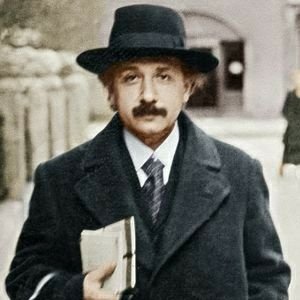
The shortest physics paper ever published is the 1951 Physical Review note by Friedrich Lenz, titled
“The Ratio of Proton and Electron Mass.”
At just 27 words long (plus one equation, one number and a single reference).

Jonathan Mboyo Esole retweeted

We are approaching cyber-superintelligence.
But our systems aren't ready. We must secure our model weights and infrastructure against three new threats: sabotage, escape, and theft.
There is a way forward.
Secure Acceleration:
A Cyberdefense Strategy for Superintelligence


Jonathan Mboyo Esole retweeted

An absolutely packed house at yesterday's inaugural 'Mathematics in the Age of AI' seminar with Tristan Buckmaster! Professor Buckmaster walked the crowd through his and co-collaborators recent breakthroughs in a talk entitled 'Blowup for the Euler equations with smooth forcing.'

Jonathan Mboyo Esole retweeted

On this day, 1908: Minkowski’s “Space and Time” lecture.
Hermann Minkowski delivered his famous address “Raum und Zeit” (“Space and Time”) at the 80th meeting of the German Society of Scientists and Physicians in Cologne. He opened with the now-classic lines:
“The views of space and time which I wish to lay before you have sprung from the soil of experimental physics, and therein lies their strength. They are radical. Henceforth space by itself, and time by itself, are doomed to fade away into mere shadows, and only a kind of union of the two will preserve an independent reality.”
The talk introduced the four-dimensional spacetime continuum that became the geometric foundation of special relativity.

Jonathan Mboyo Esole retweeted
In the 1940s, Subrahmanyan Chandrasekhar was committed to his teaching role at the University of Chicago, despite being based at the Yerkes Observatory. Each week, he traveled 80 miles to teach a special course attended by only two students.
The students were Tsung-Dao Lee and Chen-Ning Yang. They proved their mentor's faith was well-placed when they both won the Nobel Prize in Physics in 1957, years before Chandrasekhar received the same honor in 1983. Remarkably, this course went down in history as the only one where every attendee received a Nobel Prize, underscoring the extraordinary impact of Chandrasekhar's dedication and teaching.
📷 AIP Emilio Segrè Visual Archives, Physics Today Collection

Jonathan Mboyo Esole retweeted

A lovely interview with Jean-Pierre Serre on the occasion of his 100th birthday:
ems.press/content/serial-art…

Jonathan Mboyo Esole retweeted

On 18 September 1783, Leonhard Euler spent the day working as usual. That afternoon, he discussed the recently discovered planet Uranus with Anders Johan Lexell and Nicolas Fuss.
At about 5 p.m., Euler suffered a cerebral haemorrhage and reportedly uttered, “I am dying,” before losing consciousness. He died later that evening.
Historical accounts therefore support the striking fact that Euler was engaged with astronomical and mathematical problems almost until the end of his life.
Pierre-Simon Laplace is credited with saying: “Read Euler, read Euler; he is the master of us all.”
It was reported by Guglielmo Libri in 1846, decades after Euler’s death.

Jonathan Mboyo Esole retweeted

"As long as men are free to ask what they will, free to say what they think, free to think what they must, science will never regress and freedom itself will never be wholly lost."
—J. Robert Oppenheimer
Jonathan Mboyo Esole retweeted
On the morning of Monday, 19 September 1994, Andrew Wiles had the insight that completed his proof of Fermat’s Last Theorem.
He had announced a proof in 1993, but a gap was found in a key part that used the Kolyvagin–Flach method. After nearly a year of work with Richard Taylor trying to repair it, Wiles realized that the reason that approach failed was exactly what allowed him to revive and strengthen an earlier approach based on Iwasawa theory.
He later described the moment as “indescribably beautiful; so simple and so elegant” and “the most important moment of my working life.” The corrected proof was published in 1995.
The Wiles story is one of the cleanest examples of a bigger truth in mathematics: the process is not just the road to the answer, it often is the answer, or it produces something even more valuable than the original goal.


Jonathan Mboyo Esole retweeted

My father #French #mathematician #JeanPierreSerre, youngest #FieldsMedal at 27, today 100 years old, who spoke about his #maths souvenirs in front of a crowd at the Institut Henri Poincaré on September 15th.

100 years old. Still the sharpest mind in the room.
Jean-Pierre Serre, youngest Fields Medalist in history (age 27), first Abel Prize winner, and the “Mozart of mathematics,” turned 100 on September 15 and is still lecturing, still writing on the blackboard, still shaping the field.
Happy 100th to the greatest living mathematician. The rest of us are just trying to keep up.
