

8 years in GTM. 3 years building with AI. Founder @ TC9, GTM engines for B2B. Clay / Lemlist / FullEnrich partner. 60K on LinkedIn.
Joined May 2010
- Tweets2.9K
- Following222
- Followers623
- Likes4.6K



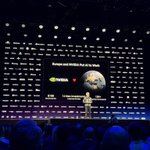



“We should all hold ourselves to a standard of responsible optimism.”
@JensenHuang dropped that line earlier today, and I deeply resonated with it.
Not blind optimism. Not doom.
Responsible optimism.
Honestly, hearing this from someone in his position is refreshing.
Today, every debate gets pushed to the extremes.
Look at Paris these days, you'll understand what I mean.
And when it comes to AI, it's the same.
AI will save us all. AI will end us all.
Pick a side, shout louder.
Jensen did the opposite.
He named the hard questions directly: safety, energy, capital, jobs.
He called them fair.
Then he refused to stop there.
Optimism is the job of adults.
Nobody has to work hard to create a future worse than today.
Being responsible means building.
His example: instead of complaining about agent safety, @NVIDIAAI shipped OpenShell.
I truly appreciated his pragmatic approach.
Don’t try to boil the ocean. Send scouts.
A small team goes ahead, proves it can be done, and its success pulls everyone else forward.
Some scouts won’t make it. That doesn’t make them failures.
We need more leaders with this mindset.
And we need everyone else to back them.
Fund them, give them room, share what they learn.
Less waiting. Less complaining.
More building.
I'm usually not a fanboy.
But if I had to, I'd be a Jensen fanboy.
Be a scout, or back one.

Jérémy Grandillon retweeted
Just walked out of Jensen Huang's keynote at NVIDIA GTC Berlin.
3 announcements stood out.
They all point the same way.
1️⃣ Agents are becoming the software layer of every company.
Jensen broke an agent into 5 parts:
A model. A harness. A sandbox. Knowledge. Tools.
That framing alone will help a lot of leaders understand what they're actually deploying.
NVIDIA wants agents to be secure, simple, and accessible. Open source, and fully owned by the companies running them.
OpenShell is a big step.
An open-source runtime that sandboxes agents and enforces what they can access.
Minimal privileges. Constant monitoring. Simple rules.
Security stops being the reason to wait.
My bet: agents take a much bigger role inside organizations in the next 12 months.
2️⃣ Open models: rent when you can, build when you must.
I've quoted Jensen on this before. It matters more than ever.
→ Frontier models to move fast, test ideas, ship MVPs
→ Owned, right-sized open models like Nemotron, post-trained on your data, for production
It also protects your business.
When a rented model goes down or raises its prices, your operations shouldn't stop.
3️⃣ Europe has a real shot.
Jensen's message: Europe shouldn't just consume AI. It should produce it.
I believe it for two reasons.
We have great brains.
Europe has been solving hard problems for centuries.
We have great industries.
Siemens agents test production changes in a digital twin before they hit the factory floor.
Dassault Systèmes agents refine vehicle designs through simulation.
That industrial know-how is our edge.
We fell behind in several recent tech revolutions.
This one plays to our strengths.
I hope we seize it.
At GTC Berlin this week? Come say hi.
I just love this idea of mixing frontier models with Open ones.
Nothing new for the tech-savvy here, but critical for knowledge workers.
I think we're reaching the point where everybody must ask themselves this questions about what model can touch what in their systems.
Thanks a lot @Thom_Wolf for taking the time during @NVIDIAGTC!
I'm definitely adopting the "fusion" word.
Merci !
« We were happy to have open models to defend ourselves when we were under attack ».
Yep, you definitely want a few open models you own in your roaster.
Great talk, @Thom_Wolf

Just walked out of Jensen Huang's keynote at NVIDIA GTC Berlin.
3 announcements stood out.
They all point the same way.
1️⃣ Agents are becoming the software layer of every company.
Jensen broke an agent into 5 parts:
A model. A harness. A sandbox. Knowledge. Tools.
That framing alone will help a lot of leaders understand what they're actually deploying.
NVIDIA wants agents to be secure, simple, and accessible. Open source, and fully owned by the companies running them.
OpenShell is a big step.
An open-source runtime that sandboxes agents and enforces what they can access.
Minimal privileges. Constant monitoring. Simple rules.
Security stops being the reason to wait.
My bet: agents take a much bigger role inside organizations in the next 12 months.
2️⃣ Open models: rent when you can, build when you must.
I've quoted Jensen on this before. It matters more than ever.
→ Frontier models to move fast, test ideas, ship MVPs
→ Owned, right-sized open models like Nemotron, post-trained on your data, for production
It also protects your business.
When a rented model goes down or raises its prices, your operations shouldn't stop.
3️⃣ Europe has a real shot.
Jensen's message: Europe shouldn't just consume AI. It should produce it.
I believe it for two reasons.
We have great brains.
Europe has been solving hard problems for centuries.
We have great industries.
Siemens agents test production changes in a digital twin before they hit the factory floor.
Dassault Systèmes agents refine vehicle designs through simulation.
That industrial know-how is our edge.
We fell behind in several recent tech revolutions.
This one plays to our strengths.
I hope we seize it.
At GTC Berlin this week? Come say hi.
Love to see things moving in the European AI landscape!

Today we’re announcing a new collaboration with @nvidia to bring AI to industrial engineering:
- faster simulation
- open benchmarks and supporting datasets for physics AI
- evaluations for agentic AI in CAE and EDA
More here: mistral.ai/news/mistral-nvid…


A few people got to ask questions of Jensen Huang.
I was one of them.
One line rewired how I think about AI.
AI isn't a tool anymore.
It's a manufacturing business.
You're manufacturing intelligence.
And it's becoming infrastructure, like electricity.
That's why NVIDIA is:
→ Building AI factories across Europe
→ Shipping open models
→ Putting another $2B into European startups, on top of the $8B already invested
But the part that stuck with me was practical.
Use off-the-shelf models as much as you can. They're built that well.
Only build your own when you have to:
1️⃣ Proprietary data
2️⃣ Regulation
3️⃣ Sovereignty
Rent when you can.
Build when you must.
My take for businesses:
Your data is your edge.
Your systems are your job.
The model is whatever makes the most sense today.
It will change tomorrow anyway.
The day was also about autonomous agents with Build-a-Claw.
That one gets its own post.
Next week I'm at NVIDIA GTC Berlin, October 20 to 22.
More from Jensen and NVIDIA there.


Like software engineers moved from writing code to managing coding agents, GTM engineers are moving from handling tables to managing agents doing it for them


