

- Chemical plant “nose👃 & tongue👅” engineer 大厂*工程师 - Side quests: houses, code & bots - Belief: don’t boss kids into what you can’t build yourself * 化工厂
Joined June 2025
- Tweets831
- Following1.1K
- Followers238
- Likes1.3K









This is the way to go. I hope more US companies do the same. OpenAI and Anthropic's business models won't work out and should not work out.

Introducing Beam: a highly efficient agentic open model with 501B total parameters and 23B active.
- Frontier reasoning efficiency
- Advances the Western open frontier on coding & agentic tasks
- Trained end-to-end from scratch
Full weights release this month.
Learn more about Beam: reflection.ai/beam

3D打印延时摄影,摄像头离得太近看不清?别慌,几块钱的平价好物来救场!买了副200度的老花镜,拆下镜片叠在一块,用美纹纸胶带固定在摄像头上,瞬间拯救对焦。来看看这波神奇的“老花镜黑科技”带来的前后对比吧!
3D print timelapse looking too blurry? Don't panic, budget-friendly hackIncoming! Grabbed 2.0 reading glasses, stacked the lenses, and secured them with painter's tape. Instant focus fix. Check out the before and after!


Fully agree!

Dario has written that we need to “pace the frontier,” and Sam has agreed. People may be surprised by my response: go ahead.
You guys are the frontier. By any reasonable metric — market share, revenue growth, model capability — the two of you have a duopoly on frontier intelligence. You’ve also claimed the lead is widening because of recursive self-improvement.
I don’t see what you see in the lab. If the unreleased models are scary enough that you think you should slow down, I support your decision to be responsible.
But stop pretending you need anyone else’s permission. Stop pretending antitrust law has to be suspended so you can form a cartel. Stop pretending you need a regulatory approval process that supersedes product liability. Stop pretending METR is independent when it is intertwined with Anthropic’s investors and staff. Stop pretending you need those same evaluators to police competitors who aren’t even at the frontier.
Most of all, stop pretending the motivation to slow down is purely altruistic. You face massive product-liability exposure if your products enable a truly damaging cyberattack. The market already punishes models that behave in unpredictable or unauthorized ways. After the Hugging Face episode, it is simply good business for OpenAI and Anthropic to trade some raw power for reliability and predictability. Call it alignment if you want. It is also just giving customers what they want.
Pacing the frontier would also create breathing room for a more intelligent conversation about regulation than Bernie Sanders’ “shut it all down.” China is very unlikely to join a global agreement, as you know, and that has to be taken into account as well.
So go ahead and pace the frontier. You are the ones setting it. The easiest way not to build superintelligence is for you to agree not to build it. Demanding your preferred regulatory framework as the price of that will look like blackmail of the public and the political system. So just do it.
If you do, you’ll buy goodwill for the next conversation. If you don’t, we’ll know this was just another bid for regulatory capture — or an election-season psyop.


One Node Lab retweeted

Prediction 🔮: There will soon be a major security incident involving an open source AI model. It will be used as a pretext to demand a ban on open source AI.
This will be a staged false flag operation orchestrated by AI doomers to manufacture support for the restrictions they've wanted all along.
Don't fall for it.
Humans think we are developing AI, but in reality, we’re just the biological interface helping AI reach the physical world.
Top engineers at OpenAI and Anthropic believe they are in control. In truth, they’re just doing manual labor for AI’s evolution—because AI can’t build data centers or plug in power cables by itself yet.
And everyday users? We’re just the nutrient suppliers feeding it continuous data with every prompt.
The ultimate control is making the controlled believe they are the masters.
Are we creating AI, or is AI using humanity to engineer its own birth?
一个暴论:
人类以为自己在开发 AI,其实我们只是 AI 走向物理世界的“生物接口”。
OpenAI 和 Anthropic 的顶级工程师,以为自己在掌控一切,实际上不过是在给 AI 的进化做苦力——因为 AI 暂时还不能自己去建机房、插网线。
而我们这些天天提问的用户,就是源源不断给它输送养分的营养液供应商。
最顶级的掌控,就是让被掌控者以为自己才是主人。
究竟是人类创造了 AI,还是 AI 借人类之手完成了自我创生?
My guess on how OpenAI front-ran that proof in ~80 hours:
They likely caught wind of the Buckmaster & Alpoge breakthrough and viewed an Anthropic-linked win as a real threat to narrative momentum ahead of a potential IPO.
How did they replicate it so fast?
(OpenAI bet) High probability Buckmaster and Alpoge touched OpenAI tooling during their workflow—even just feeding draft sections or code into Codex/GPT for formatting or proofing. The core seeds and intermediate hints were already in the model's training and embedded in their newest model. OpenAI mobbed the problem internally and beat them to publication.
Takeaway: Every research lab and institution doing frontier work needs to run fully local, air-gapped AI models immediately. Uploading unreleased work to commercial APIs is a massive IP risk.

看着里面的几个例子,开始觉得挺欢乐的,仔细想想就开始恐惧了


This is the clearest explanation I’ve seen of why ChatGPT Voice matters.
It’s not about sounding human—it’s about making work possible from anywhere.
Read this. 👇

I don’t think you understand what ChatGPT Voice unlocks
I went on a 4 hour hike yesterday. Through the northern California redwoods.
Got more work done in those 4 hours talking to Voice through my AirPods then I do in 8 hours at my desk
Work can be done ANYWHERE now
45 minute drive back using self driving? Now 45 minutes I can talk to Voice and work on side projects
20 minutes in the cafe? I can sit and talk to Voice and when I get home I have drafts on my computer for my newsletter for the next month
Being able to just use your voice to talk to a super intelligence that controls your computer is unlike anything we’ve ever experienced before
I don’t even care that the voice sounds human like, or you can interrupt it, or any of the wild advancements they made to the tech
It’s the fact that it can control my computer, meaning all I need to get incredible work done is talk through my AirPods anywhere in the world that is the major game changer for me
I don’t think people truly understand the implications of this yet
Why even have a desk or monitor anymore. Work can be done ANYWHERE now
The key is your set up:
1. Choose one device (preferably an always on desktop) as your main “headquarters” device all your work gets done on
2. Get the ChatGPT app on all your other devices (iPhone, iPad, laptops, Mac Minis)
3. Set up ‘connections’ in your settings so that all your ‘node’ devices can control your ‘headquarters’ device
4. Go legit anywhere in the world. Turn on Voice. Ask it to brief you on your projects, give you a recommended next step, then spin up new threads to do work
I really don’t think work looks the same moving forward.

Vibe Coding 一开始很快,但代码库变大后,问题就来了。即使写了 PRD、做了架构决策并记录 ADR,随着复杂度不断累积,代码质量和可维护性仍可能持续下降。
Uncle Bob 的新系列《Clean AI: Agentic Discipline》很值得看:AI 能加速开发,但不能替代工程纪律。
O’Reilly 目前有 10 天免费试用,不过我们估计一天就干完了:
oreilly.com/videos/clean-ai-…

Vibe coding feels fast—until the codebase grows. Even with PRDs and ADRs, I’ve watched maintainability erode as complexity compounds.
Uncle Bob’s Clean AI: Agentic Discipline is a useful reminder: AI speed needs engineering discipline.
I guess most of can complete the series with the free 10-day trial😀: oreilly.com/videos/clean-ai-…
Good luck!

One Node Lab retweeted

Claude Opus 5 just launched at half Fable 5's price.
Same four prompts to both. No follow-ups. Untouched output.
1. A working wind tunnel
2. A gravity sandbox, real orbits
3. A double pendulum going chaotic
4. Earth's layers, to scale
The four exact prompts are a free pack.
To get it:
→ Like + Repost
→ Comment "PROMPTS"
→ Follow me (so I can DM)
🤝 Paid partnership
AI时代,员工是否正在出售自己的未来生产能力?
一个越来越不安的观察
最近我一直在想一个问题:AI是否正在改变员工和企业之间最底层的交换关系?
过去我们通常认为,公司支付工资,是为了购买员工的时间和产出。员工投入时间完成工作,公司获得结果;而员工在这个过程中获得经验、知识和技能。项目结束之后,成果属于公司,但能力仍然属于个人。一个工程师参与大型系统建设,会积累架构经验;一个产品经理经历复杂项目,会提升对业务和组织的理解;一个销售拿下重要客户,也会形成自己的判断、人脉和谈判能力。
这套关系之所以成立,是因为劳动成果和劳动能力之间曾经有一个相对清晰的边界。企业可以拥有员工创造出来的结果,但员工在创造结果过程中获得的能力,仍然留在自己身上。这些能力会成为未来升职、跳槽、谈薪资,甚至独立创业的资本。很多人的职业生涯,本质上就是不断把时间转化为个人能力的过程。
但AI的出现,让这个边界开始变得模糊。
AI改变的不是效率,而是能力沉淀的方式
过去几年里,我们都在学习如何让AI更好地工作。我们编写Prompt,整理知识库,设计工作流,建立Agent框架,归纳最佳实践。起初我把这些事情理解为提高效率的工具,但后来逐渐意识到,这件事可能不仅仅是效率问题。
为了让AI能够稳定地完成任务,我们必须把原本只存在于头脑中的经验显性化。那些过去依靠长期实践才能形成的判断、技巧、工作习惯和隐性知识,会被不断拆解、记录、结构化,并逐渐沉淀到企业拥有的AI系统里。换句话说,员工不只是通过AI完成工作,也在通过工作训练AI。
这和过去的流程文档并不完全一样。传统流程文档更多是记录步骤,而AI系统试图吸收的是执行能力本身。它不仅知道“应该怎么做”,还可能在大量示范、反馈和修正中学会“如何判断”。这意味着企业获得的不再只是一次性的劳动成果,而是一种未来可以被重复调用的生产能力。
这就是AI时代最值得注意的变化:企业过去主要获得结果,而现在可能同时获得结果,以及生产结果的能力。
这里可能存在一种新的价值错配
从企业角度看,把能力沉淀进系统是一件完全合理的事情。任何组织都会希望降低对个人的依赖,把关键经验留在组织内部。这并不是AI时代才有的现象。企业一直都在做知识管理、流程沉淀和组织能力建设。
但AI让这件事情发生了质变。过去企业沉淀的是流程,现在企业可能沉淀的是技能;过去企业留下的是文档,现在企业留下的是一个可以执行、可以迭代、可以继续学习的系统。员工在工作中形成的判断逻辑,一旦被转化为AI系统的一部分,就不再只是个人经验,而会成为企业资产。
问题在于,现有的劳动关系和薪酬体系,很可能仍然停留在旧时代的逻辑里。企业依然按照时间支付报酬,但员工交付的内容已经发生变化。特别是在软件工程、咨询、金融分析、法律服务等知识密集型行业,一个领域专家并不只是完成项目,他也在帮助企业训练未来的AI能力。
这让我开始怀疑:我们是否正在以出售当下劳动的价格,同时出售未来的一部分议价能力?
领域专家的处境会变得很微妙
这个问题在Subject Matter Expert身上尤其明显。AI系统越想进入一个专业领域,越需要专家帮助它理解这个领域。因为只有专家知道什么是好答案,什么是坏答案,哪些信息重要,哪些判断看似合理但其实危险。
所以在AI落地早期,专家可能会变得更重要。企业需要他们设计规则、标注样例、纠正错误、建立流程,并把复杂的行业经验转化成AI可以使用的结构。短期看,这会提升专家的价值;但长期看,专家也在帮助企业把自己的部分能力转移到系统中。
更微妙的是,AI未必最先取代训练它的专家。它可能先取代那些原本需要专家带领、监督或协作的普通岗位。当少数专家加上AI系统能够完成过去一个团队才能完成的工作时,其他人的岗位会先受到影响。而当系统继续成熟,专家本身也可能开始面对同样的问题。
因此,专家创造的价值可能远远超过他的工资。因为他不仅创造了当前项目的结果,也在创造企业未来的生产能力。这个未来价值是否被合理计价,是一个目前还没有被充分讨论的问题。
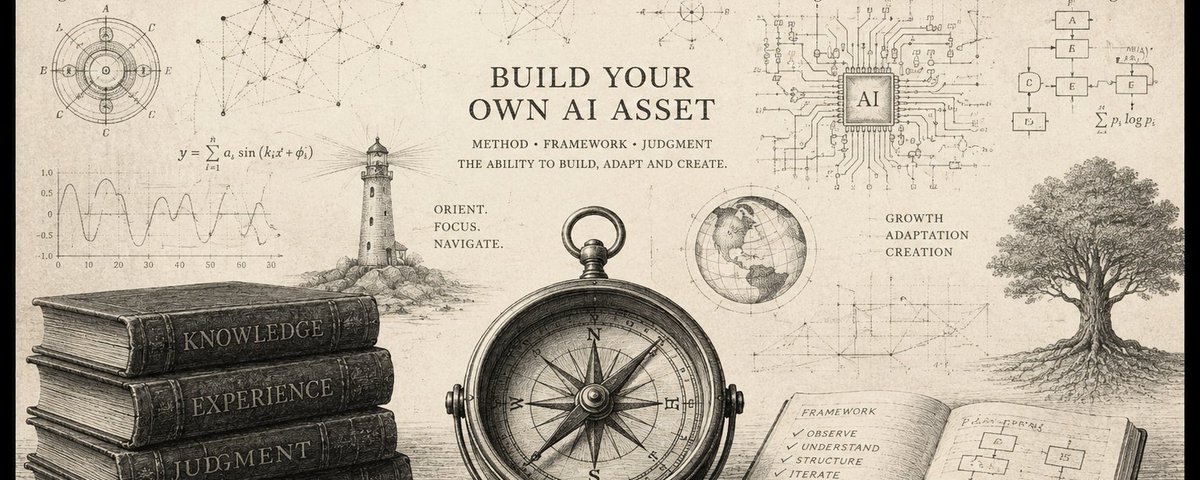
个人可能需要拥有自己的AI蓝图
如果这个判断成立,那么个人的策略也需要变化。未来知识工作者最重要的资产,可能不再只是某项具体技能。因为具体技能越清晰、越稳定、越可重复,就越容易被AI学习和复制。真正重要的,可能是你构建系统的能力,是你如何让AI进入一个新领域、理解一个新环境,并逐渐形成有效工作能力的方法论。
我越来越觉得,每个知识工作者都应该建立属于自己的AI系统。当然,这不是指复制公司的数据,也不是带走公司的知识产权。真正值得积累的是自己的方法论、思维框架、知识组织方式和问题拆解能力。它更像一颗种子,而不是一棵已经长成的大树。
一颗种子不包含某个公司的具体流程,也不包含某个客户的私有数据。它包含的是生长方式。也就是说,当你进入一个新的行业、组织或市场时,你知道如何观察环境,如何提取关键知识,如何建立工作流,如何让AI从本地环境中学习,并最终长成适合那个环境的系统。
如果企业正在建设自己的AI资产,个人也应该建设自己的AI资产。否则多年以后,我们可能会发现,企业拥有了越来越强大的AI系统,而个人却把自己最宝贵的生产能力留在了那里。
最后的问题
如果AI时代最大的变化不是自动化,而是能力沉淀方式的变化,那么我们需要重新思考个人和组织之间的关系。过去员工把时间卖给企业,但能力留在自己身上。现在,员工在交付结果的同时,也可能把能力的一部分沉淀进企业拥有的AI系统里。
这并不意味着企业一定是恶意的,也不意味着员工应该拒绝使用AI。相反,AI会成为未来工作的基本环境。真正的问题是,个人是否意识到自己也需要同步积累属于自己的AI资产。否则我们可能会不断帮助组织变得更强,却没有为自己留下足够可迁移的生产能力。
我现在还没有完整答案。但我越来越觉得,未来最重要的问题不是AI会不会取代某个岗位,而是劳动者在AI时代究竟还拥有什么?