





LE7_hc retweeted

A major milestone for #IVZ, with the PPSA now formally gazetted.
We thank the Government of Zimbabwe for its continued support in reaching this important milestone.
Read More: api.investi.com.au/api/annou…
#ASX #ZW


The sale of a stake in LFC worries me, because at a valuation of almost £8bn where do we go from here?
We attract rich investment grifters who use big name business purchases to grow their empire through debt.
I doubt long term much will go into the team.

lose games from their season ticket purchase getting less in return for the price paid.
It wouldn't surprise me if in 30 yrs we don't look like some crackhead sleeping rough after the soul and profits have been ripped from the club.
1
34
LE7_hc retweeted

Great coverage from Kristie Batten on what’s ahead for Stavely Minerals!
Read the article below:
ow.ly/33iA50ZzBO3
$SVY


LE7_hc retweeted

EVERY TIME WE UPLOAD THE VIDEO AND IT GETS DELETED, WE'LL JUST KEEP UPLOADING IT. 🤣👌

LE7_hc retweeted

George Orwell’s 1984 was published today in 1949.
“The Party told you to reject the evidence of your eyes and ears. It was their final, most essential command.”

LE7_hc retweeted

They’ll wait until the Henry Nowak murder is out of the headlines and then they’ll focus on censoring X so such a public outcry can never happen again.
LE7_hc retweeted

Well…. This speaks volumes….
#YouCouldntMakeThisShitUp

A PM that says capital gains tax will be unchanged while working on a secret plan to do the opposite #auspol xitter.cf/elizaborrello/status/7…
LE7_hc retweeted
Central Bankers they don’t serve capitalism. They serve their own interests.
If capitalism were their aim, we would have built stronger industries, deeper productive capacity, and a broader class of owners, makers, engineers, farmers, builders and manufacturers.
Instead, the system was selected for deindustrialisation. It rewarded financial extraction over production, asset inflation over wages, imports over national capability, and dependence over sovereignty.
In the 17th century, a serf might work three days for the manor house. Today, many workers spend a similar portion of their lives working for the bank.
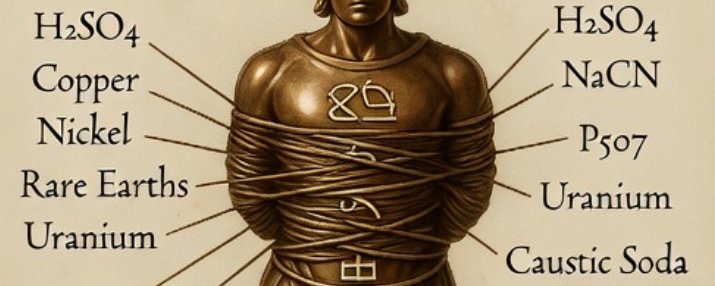
The name and firm have changed, but the system is familiar. The modern worker is chained to his shelter by debt, rent, mortgages, fees, inflation and financial claims created by institutions that contribute little to the real economy.
In a systemic sense, they are patristic; sure, they provide capital, though in this cycle, they provided capital to financialise the systems indentured workers.
The banks don't support the economy. Too often, they sit above it. They create credit, expand asset prices, collect interest, and then claim they are the indispensable engine of prosperity.
But when finance grows too large, it stops funding production and starts feeding on it. We stopped funding production decades ago.
Which is the cycle? Every time banks and financial interests overstep, they become too greedy. Every time they become too greedy, they distort the economy. Every time they distort the economy, the political class eventually protects them instead of the public. Then the technocratic class arrives to justify the arrangement with complicated language, models, forecasts and moral lectures.
But the outcome is fewer real industries, fewer independent producers, fewer competitive markets, and more dependence on a narrow class of financial and technological gatekeepers.
Hamilton understood the importance of productive industry. Eisenhower warned against concentrated power and the military-industrial machine. Robert Menzies understood that national strength required more than consumption and financial speculation.
Leaders of the past, whatever their flaws, often understood something many modern leaders have forgotten: liberty is not built on debt, dependence and imports. Freedom rests on the ability of a people to make things, defend themselves, feed themselves, power themselves and not be permanently beholden to foreign suppliers or domestic financiers.
A nation that cannot produce is not truly sovereign. A nation that cannot manufacture becomes strategically weak. A nation that sells off its productive base and calls the result “efficiency” is not modernising, it is dismantling its own state.
When production and finance fall out of balance, rivalry becomes inevitable. Nations that lose their industrial base become insecure. Nations that dominate supply chains become aggressive. Financial elites profit from instability, while ordinary people pay the price through inflation, unemployment, debt and war.
Central banks and financial institutions may not print ammunition directly, but they create the conditions that make conflict more likely. They inflate assets, punish workers, reward speculation, and push nations into dependency. Then, when the imbalance becomes dangerous, the same class that caused the instability presents itself as the only class capable of managing it.
Real capitalism requires competition, productive investment, broad ownership, failure for the incompetent, reward for the capable, and markets that are not permanently rigged in favour of insiders. But most of the modern economy is not that. It is dominated by duopolies, monopolies, cartels, too-big-to-fail banks, captured regulators, and technology platforms that behave more like private governments than companies.
Capitalism exists as an ideal, and at certain points in the economic cycle, it briefly appears. But it rarely remains pure for long. Power concentrates. Finance captures politics. Corporations eliminate competitors. Banks socialise losses and privatise gains. The productive economy gets hollowed out while everyone is told this is progress.
A free society cannot survive on financial engineering, imported goods, inflated property values and digital monopolies. It needs productive strength. It needs industry. It needs skilled workers. It needs competition. It needs national independence. Above all, it needs a system where money serves the real economy, not the other way around.
Once finance becomes the master rather than the servant, liberty begins to disappear. And once a nation forgets how to make things, it eventually forgets how to defend itself.
LE7_hc retweeted

I think most are sympathetic to the idea that all Australians should benefit more from the prosperity coming from the resources sector. And even more so to the idea that these revenues are put to use ensuring our prosperity in to the future, rather than using these cyclical revenues to underpin permanent current spending.
That said the long term foreign investors (in the absence of Australian ones or the government itself) took the risk and raised the capital to invest and now it is paying off. To my understanding they are obeying the law and paying all the taxes they are required to under the legislation brought by the governments of the day. Changing the taxes law now they have made a successful investment the type of sovereign risk investors look to avoid.

I ran for the Senate because I wanted to help make politics about people again - not multinationals, vested interests or party donors.
And that's why our campaign to get a 25% gas tax matters.
Public pressure has made politicians pay attention and we have to keep it up because it can help make sure in one of the wealthiest counties on earth (and biggest gas exporters in the world), more Australians actually feel the benefit of our gas exports.
Head to ourgas.com.au to make your voice heard.
thesaturdaypaper.com.au/news…


