

I run the Ads behind your favourite brands • 200+ accounts managed• Scaling e-com brands past $100K+/day profitably with Google/YouTube.
Joined March 2022
- Tweets10.6K
- Following168
- Followers1.5K
- Likes13.9K





Pinned Tweet
I’ve started doing something I haven't seen anyone else do.
It's a no-call audit of ur Google Ads acc
1/ fill out a form
2/ give me read-only access
3/ i send you a Loom in 48 hours.
I've used the same approach to scale 50+ brand past $100K/day w/ GAds
LINK IN BIO


I spent 2 years working 72+ hours a week to build my Google Ads business.
My total income for those two years was less than £2,000.
At one point, I went over 6 months without landing a single client. When someone finally said yes, it was a £500 setup project for a small business.
Their website had a custom checkout that made conversion tracking difficult to set up. For 2 weeks, I worked from 8 am to 8 pm trying to get it working.
I still remember finishing the project while sitting in a café.
I begged the client for a review. He left a great one and paid the £500.
I've finished a difficult job. The client was happy. After months without work, I’d finally earned something.
But then I realised I was back at square one.
The project was over, and I needed another client. It had taken 6 months to find this one. I didn’t know how long it would take to find the next one.
That was what made it so bittersweet. I’d done the work well, but I still hadn’t figured out how to make a living from it.
People who know me today would probably be surprised by how long those early years went on. I was working 6 days a week with very little income to show for it.
For some reason, I kept going.
When I think about the first time I felt the business could work, I remember getting my first referral.
After struggling so hard to find clients, someone recommending me to another person meant a lot. That was a huge moment for me.
Today, 6 years into building this business, I run 20+ ad accounts.
Looking back now, I know things got better. At the time, I had no guarantee they would.
There will be points when you doubt yourself, especially when you’ve put in the work and have little to show for it.
That doesn’t mean you have to give up. You can change your approach, learn from what isn’t working and give yourself another chance.
Keep working on what you believe in. You don’t need to have the whole future figured out to take the next step.


Stop chasing your next goal for 30 seconds and read this.
You can get almost everything you wanted 5 years ago and still feel like you’re failing.
Back then, all I wanted was to:
• Make real money from my own work
• Finish a project without stressing over where the next client was coming from
• Travel and see the world
• Give my family a better life
At one point, I went 6 straight months without a single client. Today, I’m handling 20+.
My goals are bigger now, but that old list reminds me why I started.
Don’t spend so much time chasing what’s missing that you forget what’s already changed.
I’m nowhere near done, but I’m proud of how far I’ve come.
What my week looks like managing 20+ ad accounts solo:
Monday: Client calls. Anyone who wants one gets one.
Tuesday: Finishing reports and making strategy changes. Every account follows the same growth
framework, with a different strategy based on what the business needs next.
Wednesday and Thursday: Account audits and anything else that comes up.
Friday: Working on my own business.
Of course, an account can need attention before its next audit.
I check the accounts daily. Alongside that, an automated system analyses the data 24/7 and alerts me to major issues or opportunities between checks.
That helps me keep track of what needs attention across all 20+ accounts.
I handle the changes myself, and clients speak directly to me.
They hired me. They should be able to reach me.
your late 20s get expensive when you start trying to keep up with your friends’ life decisions.
a friend buys a house. suddenly, renting feels like falling behind.
another gets married. now your relationship feels too slow.
someone starts a business. the job you liked last week no longer feels good enough.
you end up wanting the house one friend has, the relationship of another and someone else’s income. all before 30.
it’s worth asking how much of that you wanted before you saw them with it.
you can be happy for your friends without treating their milestones as your deadlines.
a mortgage, a marriage or a career change will affect your daily life long after the pressure to keep up has passed.
MAKE SURE you actually want what you’re rushing into.


“having kids will destroy your freedom.”
this might be one of the biggest myths ambitious adults carry.
i think the answer becomes clearer once you’ve built the life you actually want.
before that, you’re trying to picture parenthood without knowing what your time, freedom, or priorities will look like.
once those pieces fall into place, the picture may look completely different.
summers in Europe can include your kids. road trips can have another seat. they can experience the life you worked so hard to create.
you may reach every career milestone and still decide children are not for you. completely fair.
but deciding too early feels like choosing what you’ll eat for dinner next Friday. you don’t know where you’ll be, how hungry you’ll feel, or what options you’ll have.
i’d rather build the life first, then decide with the full picture in front of me.

Not having kids is a life hack
I spend my summers in Europe, take cross-country road trips, and disappear off-grid on weekends
The money I’d spend on kids goes to investing, experiences, & freedom.
Different priorities. Different definition of rich
^^I saw @TheMattViera post this & I think it’s one of the reasons people are more selfish, the world is more sinister & we are more disconnected
I could not disagree with this ANY more. What do you think?
"It's 2 AM. I should be sleeping, but I keep thinking about the life I want."
most ecom guys we work with have had a version of this night...
refreshing Shopify at midnight, running the numbers again, waiting for something to move.
The ecom guys who scale tend to have a quieter routine than that. logged off by 9 PM, and the sales still came in overnight.
Both of them worked hard this month. Only one was working on something that kept paying after the laptop closed.
late nights tend to go on:
> checking ROAS every hour
> pausing an ad after one slow day
> rewriting the product page again at 1 AM
the quieter version goes on:
> a google account set up properly
> tracking that counts every sale once
> campaigns left alone long enough to actually learn
So while one guy sleeps, people are searching google for exactly what they sell, and their ads are the ones showing up.
That setup takes a few weeks to build, then it keeps running while you're offline.
Every 2 AM night like this is interest on an account nobody set up properly. The debt doesn’t clear just because you stayed up later.

Your “$100k/month” store might be paying you less than a 9-5.
Let’s run the actual math on a normal DTC setup doing $100k in revenue:
• Product costs: ~$35k
• Shipping, fulfilment, packaging: ~$12k
• Returns + payment fees: ~$6k
• Ads to buy those customers: ~$30k
That’s $83k gone. You’re left with $17k before software, team, agency, and tax.
Once those hit, a founder at this level often takes home $3k–$5k a month.
while an employee on $75k a year takes home around $4.5k to $5k a month, with no inventory risk, no ad account that can get banned overnight, and their weekends back.
Founders love posting revenue screenshots, but margin is the only flex that pays.

You have to realize 100k is not a lot of money. After taxes, living expenses, taking care of bills, you are left with very little.
In order to get rich you have to do 3 things:
1) Live below your means for a long time (BUT live in style and comfortable so you don't feel the urge to overspend).
2) Learn about emerging markets and invest your extra capital and play the long term game understanding your investments
3) Put time and money into yourself and your network. This will yield great opportunities and connections beyond direct paychecks.
People focus on money but to make generational wealth you need to follow a specific playbook when you are starting from zero. Don't get distracted by the noise.... stack your dollars and if you invest them wisely they can some become millions.
your homepage is where HIGH-INTENT Google traffic goes to DIE.
I audited an account last week that made this painfully obvious.
clean account, great product, campaigns set up properly.
every click going to the homepage.
the numbers:
€176,769 spent on homepage traffic, converting at 5.02%.
€54,085 spent on search term specific pages, converting at 6.47%.
the pages they barely funded were the ones doing the work.
BUT why does it happen??
Let's take an example.
someone searches for "red leather office chair". Google finds it for them, they click, and they land on your homepage.
now they have to search for it again. except this time on your site, past a hero banner, a bestsellers row and a newsletter popup, using filters that are worse than Google's.
Almost nobody bothers. they hit back and buy from whoever's next in the results.
you paid for that click and then asked the buyer to do the finding.
Google watches this entire interaction too…
if users constantly bounce back to search, Google penalizes your account with higher ad costs and lower positions
3 things to check, in this order:
1. Spot the waste: Pull your landing page report and sort by spend. Compare your homepage conversion rate against your product pages, the gap will shock you.
2. Match the search: Specific products go to product pages, broad searches go to collection pages, and problems go to solution pages. Simple.
3. Pass the 1-second test: Show the exact item, price, and answer above the fold so visitors don't have to scroll or guess.
Do that before you touch another bid.
the WORST product in your category is probably outranking you.
no, they aren't Google's favourite son. Google just can't tell that your product is better.
it can only judge what you put in front of it:
> your images
> your titles
> your landing page
> your Merchant Center data
that's it.
your materials, your fit, your 10 years of getting it right, your customer service... none of it reaches the algorithm.
there’s actually a hidden metric in the Merchant Center you probably haven't opened: Click Potential.
it scores the only things Google can actually see:
> price against competitors
> landing page experience
> image quality
> title relevance
There's one more thing you're probably getting wrong: Shopping ads have a quality score, too.
assuming it's a search-only metric is a massive mistake
if your inputs are off, you're paying a hidden penalty on every single impression you buy
We took a menswear brand from $47k to $198k per month by fixing exactly this.
their images looked like every other brand in the grid. so we tested 3 variations, found a clear winner, and pushed it across all 42 SKUs.
Google re-crawled the feed and immediately started ranking them against a completely different set of competitors.
The only thing that changed was how the product was presented to the machine.
If you're losing to brands you know you're better than, don't assume you need a better product or a bigger budget.
Google can't see through the screen your competitor is just presenting better to an algorithm that only reads presentations.
you can spend months rebuilding campaigns to fix a problem that was never in the campaigns.
if you don't believe me, do this today:
1/ pull your landing page report and sort by spend.
2/ find where your homepage sits on that list.
3/ put its conversion rate next to your product and category page conversion rates.
4/ now open the search terms driving your top-spending campaigns and read what people actually typed.
5/ ask whether the page they landed on answers that specific search.
audited an account last week that ran exactly this way.
€176,769 spent sending traffic to the homepage, converting at 5.02%.
€54,085 to product pages, converting at 6.47%.
the pages getting the least spend were doing the most work.
Every search comes with an intent. Your page either helps them get there or it doesn't, and Google grades you on that either way.
the click was the expensive part, the page is free
A brand owner told me something last week that made 0 sense at first.
He's profitable at 1.2x ROAS, while his competitors need 3x just to survive.
The difference isn't better ads.
It's how he built the business around them.
1/ He made his supplier a partner.
Instead of treating his supplier like someone he buys from, he gave him a reason to help the brand grow.
That led to two big advantages.
2/ He got access to an agency ad account.
99% of brands run ads through their own account. One policy issue can shut it down, along with years of data.
His agency account gives him better support and a more stable setup. So he can keep running while competitors are stuck trying to recover.
3/ He gets 3% cashback on ad spend.
That means every $1 in ads costs him 97¢. And when he spends more, his supplier gets bigger orders.
They both want the brand to grow.
While his competitors' suppliers are just waiting for the next purchase order.
Then he adds strong checkout upsells. A customer who came to buy a $50 product might end up spending $70. So he can afford to pay more for the same click.
And because he can afford more, he wins more auctions.
His competitors see the prices, think they're crazy, and back off.
He won because he built a business that could afford to buy customers his competitors couldn't.
8 most EXPENSIVE mistakes I find in google ad accounts:
1/ you're judging Google on Meta's attribution window.
2/ you're sending high-intent search traffic to your homepage, then blaming the traffic when it doesn't convert.
3/ you think your better product should be winning. Google reads your image, your title, your page and your feed data. product quality isn't an input it can see.
4/ you've spent 6 months tuning PMax settings and haven't opened the merchant center feed once.
5/ you've got auto-applied recommendations switched on right now and you don't know it. neither does your agency.
6/ you're paying a retainer for someone to check a dashboard you could check yourself, and calling that management.
7/ you asked for a performance guarantee, which means the only people who'll say yes to you are the ones willing to lie.
8/ you're pausing campaigns based on a number your attribution tool made up.
London might be the worst city in the world to get rich in.
you can't even wear a nice watch outside. and if you do, you don't know if you're coming home with your hand or not.
because someone is going to chop it off. that isn't a joke, it actually happens here.
and owning a home in 2026 is its own problem, because a flat starts at 1M+ and that's before you've looked at what you're actually getting for it.
so I don't own a house, and I don't own a car either, because in this city you don't need one.
made more money than I expected this year and I still haven't bought a single expensive thing you're supposed to buy when that happens.
The reward for doing well in this city is getting to keep both your hands.
At 16, I thought "making it" meant $5k/month.
Today, $5k/month would mean I'm losing money.
That’s a pretty big change in a few years.
But I spent a lot of the years in between doing things that made getting here harder than it needed to be.
2 mistakes, mainly. And if you're building something right now, I'd rather you skip them than repeat them.
Mistake #1: Chasing money instead of the craft
Early on, I didn't care how the money was made, just that it came fast.
• I chased every shiny object, new offer, and trending business model.
• Got Obsessed with fast cash, completely uninterested in mastery.
Get obsessed with the craft. The money comes from getting good at something people actually need.
I spent years trying to figure out how to make money before I figured out how to create value.
I had it backward.
Mistake #2: Refusing to pay for experience
I thought I could solve every problem through DIY research:
• Endless hours on YouTube and forums.
• Doing everything alone to "save money."
YouTube can’t teach real-world experience. The money I saved by doing everything solo cost me 10x more in wasted time. Reinvest in leverage and mentorship early.
test 100 images
one changes your CTR.
test 100 titles
one changes what Google ranks you against.
test 100 landing pages
one doubles what the same traffic is worth.
everyone wants a better bid strategy.
the account gets won on the boring stuff nobody tests.
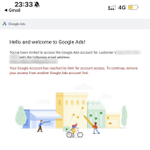
got told "NO" by Google today.
new client sent their access over and Google declined it.
bro really just said "you're too connected, delete a friend."
ScALiNg PrOBLeMs 🤫

Finlay Williams retweeted
Steal the exact structure behind every google ads account we've scaled past $50k a day:

