
Psychology post-grad student. Research interests: continental philosophy, psychology, neuroscience, linguistics, literature and human nature.
Sydney, Australia
Joined January 2022
- Tweets264
- Following679
- Followers101
- Likes9.3K







Matt Ayoubi retweeted

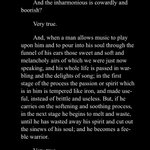
Every now and again I go back to this passage from Chesterton and it just gets better each time


Matt Ayoubi retweeted

Interesting to read Professor Anita Thapar's editorial, “Overdiagnosis of ADHD? Here we go again”. 🚨
Many of the arguments around moving beyond the underdiagnosis–overdiagnosis debate, recognising ADHD as a dimensional construct, and focusing on individual needs and functioning rather than diagnostic labels closely reflect what I discussed in my video last year.
Sharing a few quotes from that video.
“The rise in ADHD diagnoses has drawn polarising reactions. Critics argue that it reflects pathologising everyday behaviors, while proponents see it as a necessary recognition of a historically under diagnosed condition. And we know that the truth lies somewhere in the middle.”
“ADHD is best understood through an evolving framework informed by neurobiology, behavior and the environment. It's not a single pathology, but a constellation of traits that exist along a spectrum.”
“To move forward, to improve diagnosis and treatment, we've got to firstly, adopt a dimensional approach, viewing ADHD traits along a continuum rather than a binary diagnosis.”
“Without a diagnosis, individuals are left struggling, leading to poorer educational, occupational and social outcomes.”
“The challenge lies in balancing accurate diagnosis with a nuanced formulation that considers the individual's broader context.”
“But note here, a diagnostic label on its own does not encompass the individual's broader needs.”
“When we shift our focus from labels to formulations, we can address questions like, How does this individual's ADHD intersect with anxiety, depression or trauma? What environmental factors exacerbate or mitigate symptoms? What strengths can be leveraged to improve outcomes in this individual?”
“We also need to think about behavioral interventions and environmental modifications.”
“Remember, a diagnosis is more than a label. It's a tool to guide treatment and improve lives.”

Professor Anita Thapar, a real expert on #ADHD - possibly the only real expert on ADHD.
“Overdiagnosis of ADHD? Here we go again”
acamh.onlinelibrary.wiley.co…
Matt Ayoubi retweeted

"'moral deskilling': if computers increasingly make ethical calls, might people become less willing to make their own judgments?...morality is historically unstable, culturally variable, strategically manipulable, and often only retrospectively legible” economist.com/science-and-te…


Matt Ayoubi retweeted
I will return to this paragraph by C. S. Lewis at least once a week until the day I die


Matt Ayoubi retweeted
Arrogance is what pride looks like when it's hiding something from you.
Pride is an emotion tied to status. When people receive admiration or respect, they feel pride, and that feeling pushes them to seek more of it. Most people recognize this in themselves.
There are two kinds of pride. The first is authentic pride. This comes from real accomplishment, things you know you did, feel confident about, and that others recognize too. People with authentic pride tend to be outgoing, friendly, and good at maintaining relationships. This kind of pride usually grows out of earning genuine prestige.
The second is hubristic pride. Unlike authentic pride, it does not rest on anything solid. People with hubristic pride often seem very confident, but if you challenge them, they either fall apart or get angry. On some level, they know their pride has no real foundation. This type of pride tends to go hand in hand with hostility and a tendency to manipulate others. Where authentic pride comes from earning prestige, hubristic pride is more often tied to seeking status through dominance.


Matt Ayoubi retweeted
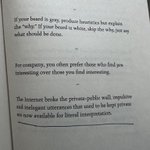
"Across the board, the top 5 preferred traits were intelligence, humor, honesty, kindness, and overall good looks; women rated honesty and dependability higher than men did, and men rated facial attractiveness higher than women did." a.co/d/0eP5pIGD




