

WSET-certified burgundy geek, with occasional detours to other regions. A meal without wine is a lost opportunity. Silicon Valley tech exec by day.
Palo Alto, CA
Joined February 2009
- Tweets3.7K
- Following188
- Followers925
- Likes4.7K



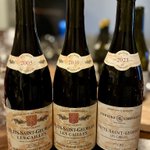


Continuing on the subject of Nuits-Saint-Georges…. Did you know that the entire Côte de Nuits is named after a village that doesn’t have a single Grand Cru?
And the historical irony goes much deeper.
Today, Vosne-Romanée, Chambolle-Musigny and Gevrey-Chambertin dominate the conversation about the greatest red Burgundies. Yet the region takes its name from Nuits-Saint-Georges, a village often overshadowed by its more illustrious neighbors.
Historically, Nuits was an important commercial center of Burgundy’s wine trade, home to influential merchants and négociants. Its prominence helped establish the name Côte de Nuits, just as Beaune lent its name to the Côte de Beaune.
But here’s where the story gets really interesting.
Until 1892, the town was simply called Nuits. That year it officially became Nuits-Saint-Georges, honoring its most celebrated vineyard, Les Saint-Georges, whose reputation for exceptional wines had been established for centuries.
Yet when Burgundy’s Grand Cru classifications were established in the 1930s, Les Saint-Georges remained a Premier Cru. Economic considerations and the decisions of influential local growers reportedly played a role, and efforts to elevate the vineyard have continued for years.
Consider the remarkable chain of history:
Les Saint-Georges lent its name to the town. The town lent its name to the entire Côte de Nuits. Yet the vineyard itself never received Grand Cru status.
Burgundy has a long memory, but its classifications don’t always tell the whole story.


Is Nuits-Saint-Georges Burgundy's most underrated great village? Or does its reputation for rusticity hold it back?
When we talk about the greatest red Burgundies, Vosne-Romanée, Chambolle-Musigny and Gevrey-Chambertin tend to dominate the conversation. Romanée-Conti, Musigny, Chambertin... legendary vineyards, extraordinary prestige, astronomical prices.
And then there's Nuits-Saint-Georges. 41 Premier Cru climats, some outstanding terroirs and producers, yet not a single Grand Cru.
Historically, Les Saint-Georges was considered Grand Cru caliber, but economic and political considerations reportedly played a role in its exclusion from the original classification. Efforts to elevate it have continued for years.
But perhaps classification isn't the whole story.
Nuits has traditionally been associated with muscular, earthy, sometimes rustic Pinot Noir — arguably closer in spirit to Gevrey or Morey than to the aristocratic spice of Vosne or the silk and perfume of Chambolle.
Is that reputation deserved, or has it become an outdated stereotype?
The terroirs themselves tell a more nuanced story. Northern Nuits, particularly Boudots and Murgers, can approach Vosne in refinement. In the south, Vaucrains offers power and structure, Les Saint-Georges combines depth with finesse, while Les Cailles can be remarkably silky, perfumed and elegant.
Robert Chevillon is one of my favorite producers for exploring these differences. His remarkable range of Nuits Premier Crus is practically a masterclass in terroir.
At a recent dinner, we tasted Chevillon Les Cailles 2005, 2010 and 2023. The 2005 was simply magnificent — vivid, juicy, beautifully focused and energetic at 21 years, with a long future ahead. A wine that could stand proudly alongside many Grands Crus.
Which brings me back to the larger question:
Is Nuits-Saint-Georges undervalued because it lacks Grand Cru status, because its more savory, muscular character is less fashionable, or because its best vineyards genuinely fall short of its illustrious neighbors?
And among Les Saint-Georges, Les Cailles, Vaucrains and Boudots, which would you nominate for Grand Cru status — if any?


What’s your take on 2022 white Burgundy? And is 2017 making a case as the most satisfying red Burgundy vintage to drink right now?
An excellent Wine & Food Society dinner at SF’s French Club gave me plenty to think about.
2022 Jean-Michel Gaunoux Meursault 1er Cru Gouttes d’Or, with lobster.
Jean-Michel established his domaine in 1990 after working with his father François; his son Henri now makes the wines. Traditional methods, modest new oak. Gouttes d’Or—“drops of gold”—is a small, east-facing premier cru with clay-rich soils over limestone.
This bottle delivered beautiful richness balanced by freshness, with a hint of toast. A wonderful partner for lobster, and another reason I’m enjoying 2022 whites.
2017 Lamarche Vosne-Romanée village and 1er Cru Les Suchots, with duck confit.
Still bearing the François Lamarche name, these were already Nicole’s wines. Her emphasis on fragrance, elegance and refinement makes an appealing match for the accessible character of 2017.
The village was classic and satisfying. Suchots brought distinctly more depth: darker, richer, more concentrated, almost plummy. This premier cru sits between illustrious grand cru neighbors—Échezeaux, Richebourg and Romanée-St-Vivant—and here it had the presence to match the intensely savory duck.
Classic Burgundy, classic pairings. Both vintages giving a lot of pleasure.


What makes a truly great Champagne? For me, it’s not just acidity or richness — it’s having both in abundance.
We kicked off an extraordinary Burgundy dinner at Scott’s with a revelation: 2013 Veuve Fourny & Fils Cuvée du Clos Notre Dame, from a tiny 0.29-hectare monopole in Vertus, Côte des Blancs.
100% Chardonnay, oak vinification, extended lees aging, just 3 g/L dosage.
Absolutely stellar! Deeply vinous, with luscious ripe fruit, beautiful texture, and exhilarating acidity that keeps everything vibrant and precise. Rich without heaviness, powerful without sacrificing finesse. Delicious now, yet I can easily see another 20 years of evolution.
It reminded me of the magnificent 2008 Bollinger R.D. — a very different expression, but that same thrilling combination of ripe fruit, vinosity, freshness and structure.
I’m increasingly realizing this is my Champagne sweet spot. Egly-Ouriet, Bérêche, Fallet-Dart, André Clouet 1911, and a memorable 2010 Cœur de Mesnil — very different Champagnes, yet all delivering that wonderful marriage of richness and tension.
I loved the Fourny so much I immediately hunted down a couple more bottles for the cellar!
What other Champagnes deliver this combination of ripe, vinous depth and electric acidity? Any overlooked gems I should be hunting down?

Is 2005 Burgundy finally having its moment?
After the Raveneau vertical, we moved on to another remarkable trio:
Robert Chevillon Nuits-Saint-Georges 1er Cru Les Cailles — 2005, 2010, 2023.
With beautifully roasted quail.
2005 — Perfection! Vivid, juicy, beautifully focused and full of energy. Remarkable vitality at 21 years, with a long life still ahead. My clear WOTN.
2010 — Well balanced, but comparatively muted. Less expressive and less focused than the 2005, which simply had another gear.
2023 — Quite lovely already. Naturally more fruit-forward, but not excessively ripe. A promising young wine.
What surprised me was that the 2005 wasn’t merely more powerful — it was more vibrant, expressive and precise than the 2010.
Are your 2005 Burgundies finally coming into their own, or are you still finding them stubbornly closed?


Last night at Scott & Kate’s: all-you-can-eat Hog Island oysters and all-you-can-drink Raveneau. Simple, classic, perfect. Life is good!
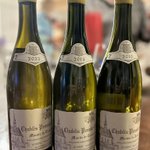
A fascinating mini-vertical of Raveneau Chablis 1er Cru Montée de Tonnerre: 2010, 2014, 2023. All excellent, yet remarkably different.
2010 — My WOTN. Delicate white fruit, verbena, lychee, almond. The least overtly fruity of the three, but the most captivating aromatically. Beautiful complexity.
2014 — Perhaps the most classically Chablis of the lineup. Beautifully balanced, yellow fruit, structure and precision. Still youthful, with a long road ahead.
2023 — The ripest and most generous, with delicious orchard fruit. A very enjoyable young Raveneau.
Interesting that I preferred the 2010 today, while the 2014 may have the greatest future.
Three exceptional wines, three very different expressions of the same vineyard.
Which vintage of Raveneau — or Chablis generally — is your favorite of the 21st century, and why?


1/5 — Can a wine become too ripe for its terroir?
I’ve been thinking about this after drinking some recent Chablis.
Rich fruit, generous texture, impressive concentration. Perfectly pleasant wines, sometimes highly rated.
But occasionally I find myself asking: where did the Chablis go?
At what point does ripeness begin to obscure the very character that makes a region special?
2/5
Chablis, to me, is about more than Chardonnay grown on Kimmeridgian limestone.
It’s the interplay of acidity, saline tension, restrained fruit, and that elusive oyster-shell character.
A little richness is welcome. Great Chablis need not be austere.
But when ripe yellow fruit, breadth, and warmth dominate, I begin to wonder whether something essential has been lost.
3/5
The question extends well beyond Chablis.
Côte-Rôtie without its floral lift, pepper, and savory complexity?
Barolo whose ripe, powerful fruit overwhelms its traditional aromatic transparency?
Mosel Riesling that trades delicacy and precision for weight and tropical richness?
These can all be excellent wines.
But excellence and typicity aren’t necessarily the same thing.
4/5
Of course, terroir isn’t a fixed flavor profile.
Climate changes. Viticulture evolves. Great growers adapt. And some historically lean wines are unquestionably better with more complete ripeness.
Nor should we romanticize green tannins, underripe fruit, or painfully austere wines merely because they resemble an older ideal.
The challenge is finding the point where greater ripeness enhances terroir rather than masks it.
5/5
My own preference increasingly leans toward wines with freshness, nuance, aromatic complexity, and a recognizable sense of place.
I’d rather drink a less concentrated wine that speaks clearly of its origin than a more impressive one that could have come from almost anywhere.
Where do you draw the line between ripe and overripe?
And which wine regions—or particular vintages—do you think illustrate this tension most clearly?

I should add that most Chablis producers I admire manage to preserve that unmistakable Chablis character even in warmer vintages. But this Moreau-Naudet (2023) I found rather undistinguished—not just lacking the saline tension I look for, but also the nuance and complexity. It wasn't a bad wine, just one that didn't particularly speak of Chablis to me. Which raises the question of how much comes down to vintage versus producer and stylistic choices.
Does pork actually give you more wine freedom than steak?
Tonight made a pretty good case.
Thick bone-in pork chops: brined first, then marinated for 2–3 days, smoked at 225°F for about an hour, moved to a 375°F oven while being basted with a Mongolian-style glaze of hoisin, soy, Worcestershire, mustard, citrus, garlic and a little chili heat, then finished with a hard sear to about 145°F.
Smoky, sweet-savory, tangy, deeply caramelized outside — still juicy inside.
And two completely different wines both worked:
2022 Protos Verdejo Reserva — a richer, more serious take on Verdejo from Rueda, with herbal notes, almond, texture and enough acidity to cut through the glaze and pork.
2020 Clos Puy Arnaud — biodynamic Castillon Côtes de Bordeaux, Merlot-led and much more savory than plush: dark fruit, herbs, earth and structure that played beautifully with the smoke, char and umami.
Pork seems to occupy a sweet spot: enough richness for a serious red, but not so dominant that a substantial white gets overwhelmed.
What’s your favorite wine pairing with pork?


Why does rosé get no respect?
We still tend to put it in the “summer, poolside, drink it cold and young” box. But some of my favorite rosés over the years have been very different wines:
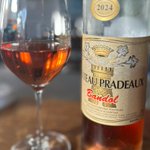
Tempier / Pradeaux, Bandol — Mourvèdre-driven, structured, savory, ageworthy.
Clos Cibonne, Provence — mostly Tibouren, aged in old foudres, with real texture and development.
Ridge Lytton Estate Rosé — direct-pressed and picked for freshness, but still very much an expression of a serious vineyard.
Nervi-Conterno Il Rosato, Gattinara — Nebbiolo from northern Piemonte, with acidity, savory character and a real sense of grape and place.
Domaine de la Mordorée, Tavel — southern Rhône rosé in a completely different register: deeper, richer, more extracted and structured, sometimes almost closer in spirit to a light red. Tavel is also an appellation devoted entirely to rosé.
And then there’s rosé Champagne and other serious sparkling rosé — yet another world, with different methods and ambitions.
The winemaking can vary enormously too: direct press, short skin contact, saignée, blending in some sparkling wines, different aging vessels, different goals.
A recent discussion here has also given me a few more to explore: PYCM Rosé de Pinot Noir, Joseph Roty Marsannay Rosé, Marisa Cuomo Costa d’Amalfi Rosato, and Terre Nere Etna Rosato.
So why does rosé still get treated as somehow less serious than white or red?
What rosé made you take the category seriously?


Raw oysters have plenty of classic pairings. But for BBQ oysters?
The 2025 Nervi-Conterno Il Rosato at Tony’s in Marshall might be my answer.
Nervi is the historic Gattinara estate now owned by Roberto Conterno, working with Nebbiolo from the volcanic soils of Alto Piemonte — wines that tend to have a distinctly lifted, savory, mineral character.
Tony’s, meanwhile, has been sitting on Tomales Bay since 1948, and today is part of Hog Island, whose oysters are farmed right there in the bay.
Salty, smoky, sweet and briny oysters against bright citrus, red fruit, acidity and that savory Gattinara edge.
Two very different places, somehow speaking the same language.
What would you pour instead?

What’s the closest thing to Raveneau or Dauvissat you’ve found in Chablis?
Raveneau and Dauvissat are the anchors for me. That combination of ocean tide, seaweed, oyster shell, cream and honeyed complexity — especially with air and age — is what I keep chasing.
And, of course, I’m always looking for the next best thing.
So over the last few weeks I’ve been working through three vintages of Samuel Billaud Montée de Tonnerre — 2021, 2023 and 2024 — drinking each over multiple days to see how they developed.
The 2021 was probably the most approachable, but the overall impression was remarkably consistent: precise, saline, mineral, chiseled Chablis, but quite linear. Even with plenty of air, they never really blossomed.
That doesn’t mean they won’t. I’m drinking them far too young, partly because I’m trying to decide whether these are wines I should be putting away for 10–15 years.
The historical notes are encouraging — older Samuel Billaud does pick up wax, honeycomb and more texture — but I’m beginning to think this may simply be a different expression of Chablis. More about tension, chalk and precision than the broader, almost haunting complexity I associate with Raveneau and Dauvissat.
Very good wines. Clearly ageworthy. But I’m not yet convinced this is the “next best thing” I’ve been looking for.
So: who gets closest for you?


Premox scared a lot of collectors into drinking great white Burgundy too young.
Premox = premature oxidation: a white wine aging far faster than it should, sometimes becoming tired or oxidized years before its expected peak.
I understand the fear. The longer you wait, the more bottle variation matters — meaning two bottles of the exact same wine can show very differently after years of storage — and some producers clearly have a better track record than others.
But for me, the payoff is worth the risk — selectively.
I’m much more willing to go long on wines with the structure for it: high-acid vintages, concentrated material, cooler sites, great Chablis. 2014 is an obvious example. 2002 and 2010 too.
And then there are vintages like 2022, which I love for their early appeal, while 2024 looks like it may have the kind of classical shape that rewards patience.
When mature white Burgundy is right, it becomes something young Chardonnay simply can’t imitate — spice, wax, hazelnut, truffle, citrus oil, mineral complexity, all layered over a still-living core of acidity.
So I don’t think the lesson from premox is “drink white Burgundy young.”
I think it’s choose carefully what you age — then give the right wines enough time to become what they’re capable of becoming.
Which white Burgundy vintages, producers or appellations do you still trust for 20–30+ years?
Some favorite mature white Burgundies over the years — including a fabulous 2002 Château de la Maltroye Bâtard-Montrachet from magnum at the Atherton Paulée earlier this year. A reminder that great aging isn’t reserved for the most famous producers.


At what age does a tasting note become as much a bottle note as a wine note?
Bottle variation in mature wine isn’t theoretical — it’s inevitable.
My rough rule of thumb: once red Burgundy gets past ~20–25 years, Bordeaux/Barolo past ~25–30, or Champagne past ~20–25, I become increasingly reluctant to generalize from one bottle.
White Burgundy can get there much earlier.
Sweet Riesling, Port and especially Madeira seem far more resilient.
So when we say a 30-year-old Burgundy is “at peak” or “past it,” how confident should we really be that we’re describing the wine, rather than that particular bottle?
What are your own cutoff points — and which wines do you think resist bottle variation best?


The German Riesling sweetness ladder isn’t really a ladder.
I’ve always thought of Kabinett → Spätlese → Auslese → BA/TBA as progressively sweeter versions of the same wine.
But I’m starting to think that’s wrong.
They actually occupy different worlds.
Kabinett: dinner wine. Low alcohol, high acid, brilliant with spicy or umami-heavy food.
Spätlese: richer, but still very much at the table.
Auslese: this may be my sweet spot — clearly dessert-wine territory, but capable of astonishing complexity with age.
BA/TBA: magic elixirs. Tiny pours. A completely different occasion.
Even the aging curves and pairings change as you climb the scale.
Do you think of the Prädikat levels as a sweetness ladder — or as fundamentally different styles of wine?


Wine lovers praise sweet wine far more than they actually drink it.
We finished our Chambolle dinner with a 2002 Dönnhoff Oberhäuser Brücke Auslese Goldkapsel. Spectacular at 24 years old — intense, high-acid, complex, seemingly immortal.
And sweet wine wasn’t always niche. Tokaji, Sauternes and Constantia were once among the most prestigious wines in Europe.
So what changed?
The wines are still great. Critics still score them highly. But modern wine culture seems much more drawn to dryness.
Is it food pairing and versatility? Health perceptions? Fashion? Or has “serious wine” simply become culturally associated with dry wine?
Be honest: how many sweet wines do you actually open in a year?

Why does Champagne taste like Champagne — and not just like sparkling wine?
Plenty of places now make excellent sparkling wine. But every so often I drink a bottle that reminds me there is still a particular combination of aromas, texture and maturity that feels unmistakably Champagne.
This Fallet-Dart Clos du Mont was exactly that. I bought it as a K&L @klwines direct import, on the recommendation of Gary Westby — one of my favorite wine characters and a serious Champagne expert.
It comes entirely from the 2006 harvest despite being labeled NV: 80% Chardonnay, 20% Pinot Noir, barrel fermented, with extraordinarily long lees aging.
My bottle was rich and mature rather than especially chiseled: brioche, toasted nuts, baked orchard fruit, creaminess and a distinctly vinous depth — yet still fresh and lifted.
What fascinates me is that none of those things individually explains it. Other sparkling wines can be yeasty, nutty, creamy or high-acid. But put mature fruit, brioche, nuttiness, vinosity, acidity and texture together in the right proportions, and somehow it tastes like something that could only be Champagne.
I liked it enough to order three more.
Even if you’re not a Champagne drinker: is there a wine, food, or drink whose character seems impossible to reproduce anywhere else?

Are Burgundy’s “lesser” appellations becoming less lesser?
2022 Dureuil-Janthial Rully 1er Cru Les Margotés was one of the surprises of our Chambolle dinner.
Fantastic wine — intense mineral drive, almost electric/fuzzy on the palate, cool menthol, serious extract and plenty of acid.
It made me wonder whether we’ve been thinking about places like Rully the wrong way.
Is this simply a great producer outperforming the appellation?
Or are talented growers, better viticulture and a warmer climate revealing potential in these cooler, historically less prestigious sites that was always there?
The market certainly seems to have noticed — Dureuil-Janthial isn’t exactly cheap anymore.
Which Burgundy appellations do you think have gained the most from this shift?

The muscular side of Chambolle: Bonnes-Mares.
After Amoureuses and Musigny, Bonnes-Mares felt almost like a different village.
1996 Jadot — meaty, gritty, powerful, still surprisingly backward. Good depth and flavor, but the structure was still pretty rough.
2000 de Vogüé — excellent. More forceful, deeper and less developed than the Musignys, with plenty still in reserve. This should continue to evolve for a long time.
Chambolle is so often described in terms of perfume, silk and delicacy.
But is Bonnes-Mares really “Chambolle” in that sense at all?

