

IDA is Encouraging, Educating and Connecting People and Organizations Touched by Illness, Pain and Disability Around the Globe. 🌍
- Tweets6.8K
- Following2.2K
- Followers7K
- Likes7.4K




ALT A poster with a green background features a sketch of a Lego puzzle. In the top left corner, the text "#LearnYourConcept" is displayed in white. The bottom left corner reads "poornamidam" in white, and the bottom right corner shows "linktr.ee/poornamidam" in white. At the centre, a graphic of white sticky notes pinned with a red pin is featured. The text written on the sticky notes as follows - "What are Invisible Disabilities?"

ALT A poster with a green background features a sketch of a Lego puzzle. In the top left corner, the text "#LearnYourConcept" is displayed in white. The bottom left corner reads "poornamidam" in white, and the bottom right corner shows "linktr.ee/poornamidam" in white. At the centre, a graphic of white sticky notes pinned with a red pin is featured. The text written on the sticky notes as follows - "Meaning: Invisible disabilities refer to physical, mental, or neurological conditions that aren't visible from the outside yet can limit a person's movements, senses, or activities. These conditions include unseen symptoms such as chronic pain, fatigue, dizziness, cognitive dysfunction, mental health disorders, and sensory impairments, often leading to misunderstandings and false judgments due to their hidden nature."

ALT A poster with a green background features a sketch of a Lego puzzle. In the top left corner, the text "#LearnYourConcept" is displayed in white. The bottom left corner reads "poornamidam" in white, and the bottom right corner shows "linktr.ee/poornamidam" in white. At the centre, a graphic of white sticky notes pinned with a red pin is featured. The text written on the sticky notes as follows - "Invisible/Hidden/Non-apparent/Dynamic disabilities are REAL, and you don't have to SEE it to BELIEVE it!” Followed by an illustration — the first line says "SOME DISABILITIES LOOK LIKE THIS," followed by icons representing various physical disabilities. These icons include a person using a cane, a wheelchair user, a person with a prosthetic leg, someone walking with a walker, and a seated individual. The second line says "SOME LOOK LIKE THIS," followed by a simple icon of a standing person, symbolizing invisible or non-visible disabilities.


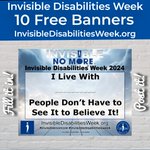
ALT A graphic made by Invisible Disabilities® Association. It reads: INVISIBLE NO MORE Invisible Disabilities Week 2024 My disabilities may be invisible, but I'm not! InvisibleDisabilitiesWeek.org #invisiblenomore #invisibledisabilitiesweek Invisible Disabilities® Association.

ALT Young man and young lady holding up a board with information about the National Invisible Disabilities ID.


