

AI builds ugly apps. We fix that. 🎨
Internet
Joined July 2026
- Tweets84
- Following49
- Followers3
- Likes13

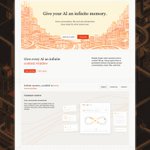


Aevum.
UI made with Claude + InterfaceKit.
Available now as a Blueprint.
Free.
Download the exact DESIGN.md, drop it into Cursor, Claude, Codex, or Gemini, and recreate the UI using the original design tokens, fonts, icons, assets, and linked resources.

ALT Aevum Blueprint landing page with an orange line-art city and the headline Give your AI an infinite memory on a dark architectural background.
Your design system probably isn't ready for AI coding agents.
It can look polished in Figma and work perfectly for your team while still forcing agents to guess. Those guesses become production code.
Here is how to find the gaps before they ship.
9/9 An agent-ready system makes correct reuse easy to discover and incorrect use easy to detect.
Markdown, code examples, screenshots, MCP, and automated checks solve different parts of that problem. Read the full guide: blog.interfacekit.io/is-your…

8/9 Here is a simple readiness test: ask an agent to build a real product screen using only your design system.
Then count its guesses, workarounds, and custom values. Each one points to a boundary the system has not explained.
7/9 Documentation helps agents make good choices, but enforcement catches bad ones.
Typed APIs, linting, tests, and visual checks should stop unsupported props, custom styles, broken states, and inaccessible patterns from shipping.
6/9 Figma and code need to tell the same story. Component names, properties, variants, tokens, and states should map across both systems.
Every mismatch creates a decision the agent must make without enough context.
5/9 Components rarely appear alone in real products. Agents need examples that show how parts combine into forms, navigation, tables, settings pages, and complete flows.
Document the composition, not only the individual pieces.
4/9 Default examples are not enough. Agents also need guidance for focus, loading, disabled, empty, validation, error, and success states.
If those states are not documented, the agent will invent them or skip them.
3/9 Component selection must be obvious. An agent needs to know when to use a Button instead of a Link, or a Dialog instead of a Drawer.
Without clear boundaries, it will choose whatever looks close enough.
2/9 Foundations need to explain intent, not just values. Names like blue-500 and spacing-16 tell an agent what exists, but not when to use it.
Semantic names like action-primary give it the missing context.
1/9 Start with discovery. Can an agent quickly find the canonical components, tokens, documentation, and examples?
If several files look authoritative, it may follow outdated guidance and still produce code that seems reasonable.
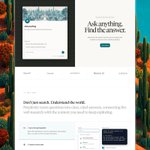
Formiq Studio.
UI made with Claude + InterfaceKit.
Available now as a Blueprint.
Download the exact DESIGN.md, drop it into Cursor, Claude, Codex, or Gemini, and recreate the UI using the original design tokens, fonts, icons, assets, and linked resources. Free.

ALT Formiq Studio Blueprint showing an AI architecture landing page with a line-drawn building under construction, presented on a colorful architectural landscape.


