

We cover military and political strategies in the Arab and Middle Eastern countries, tracking news, security, and military movements on land, sea, and air.
Lebanon 🇱🇧
Joined November 2021
- Tweets8K
- Following6.2K
- Followers73.4K
- Likes605






Pinned Tweet
✈️ IntelSky OSINT Radar Update!
We've rolled out key improvements:
✅ Explore historical flight paths via date selection & a new detail view calendar.
✅ Enhanced UI & improved mobile layout.
✅ Track selected aircraft with a new pulsing highlight
intelsky.org/
More powerful OSINT tools at your fingertips!
#IntelSky #OSINT #ADSB #Military #FlightTracking
🚨⛽ INTELSKY ANALYTICAL STUDY | USAF Aerial Refueling Operations in West Asia (Aug 1 – Oct 14, 2026)
An in-depth @IntelSky ADS-B investigation of 344 US Air Force aerial refueling tanker sorties (175 unique airframes) alongside 295 military cargo flights (639 combined missions) reveals a major operational surge and forward combat posture across West Asia in early October:
1️⃣ OPERATIONAL TEMPO SURGE (+50.4% IN OCTOBER)
• August 2026: 133 tanker flights (4.29/day calendar | 4.43/active day; peak: 25 on Aug 31)
• September 2026: 124 tanker flights (4.13/day calendar | 4.59/active day; record single-day peak: 32 tankers on Sep 30)
• October 1–14, 2026: 87 tanker flights in two weeks — surging to 6.21 flights/day (+44.8% vs Aug, +50.4% vs Sep) and 6.69 flights/active day (+51.0% vs Aug)
• Full-Month October Projection: ~193–207 tanker sorties at current pace.
2️⃣ FLEET COMPOSITION & HIGH PERSISTENCE
• Boeing KC-135R/T Stratotanker (K35R): 303 flights (88.1%) — 117 Aug, 110 Sep, 76 Oct (1–14).
• Boeing KC-46A Pegasus (B762): 41 flights (11.9%) — 16 Aug, 14 Sep, 11 Oct (1–14).
• Fleet Persistence: Out of 175 unique tanker airframes (HEX), 57 tankers (32.6%) operated continuously across all three months, and 112 (64.0%) operated across multiple months — double the multi-month persistence rate of cargo aircraft.
3️⃣ WEST ASIA THEATER CONCENTRATION (68.0% IN COMBAT/PATROL HUBS)
Unlike USAF cargo flights—where 62.0% were tracked transiting the Aegean corridor—68.0% of all tanker activity (234 of 344 flights) concentrated directly inside West Asia refueling orbits:
• Levant / East Med / Jordan–Syria–Iraq Orbit (148 flights | 43.0%): 61 in Aug, 49 in Sep, 38 in Oct (1–14). Split between Jordan / Syria–Iraq border tracks near Muwaffaq Salti AB (77 flights, Lon ≥ 35°E) and Israel / Sinai / East Med tracks (71 flights, Lon < 35°E). Dominated by KC-135R/T (139 flights | 93.9%).
• Arabian Gulf / Al Dhafra–Hormuz Hub (86 flights | 25.0%): 34 in Aug, 25 in Sep, and 27 in just the first 14 days of Oct (surpassing all of Sep!). Tightly clustered around Al Dhafra AB (UAE), southern Persian Gulf, and Strait of Hormuz (23.87°–26.03°N, 53.34°–58.00°E). Notably, 65.9% of all next-gen KC-46A Pegasus sorties (27 of 41) operated in this Gulf sector.
• Balkans / Black Sea Corridor (56 flights | 16.3%): 22 Aug, 23 Sep, 11 Oct (100% KC-135R/T).
• Aegean / Crete (Souda Bay) Staging Bridge (54 flights | 15.7%): 16 Aug, 27 Sep, 11 Oct.
4️⃣ ALTITUDE ORBITS & OPSEC CALLSIGN MASKING
• Active AAR Orbit Band (15,000–28,000 ft): Accounts for 47.0% (86 of 183 altitude-logged flights). Median altitude over the Levant/Jordan–Syria–Iraq track is 18,763 ft (75th pct: 19,081 ft) and 24,513 ft over the Arabian Gulf, confirming active tactical fighter refueling (CAP support) rather than transit.
• High-Altitude Transit (>28,000 ft): 20.8% (38 flights), concentrated over the Aegean/Crete bridge (median: 34,000 ft; mean: 34,344 ft) as tankers ferry between Europe/Souda Bay and CENTCOM.
• OPSEC Masking: 85.8% of tanker flights (295 of 344) masked their callsigns on ADS-B (compared to 0.3% of cargo flights). Only 49 flights (14.2%) broadcast callsigns: RCH (31 | 9.0% — Coronet fighter drags/ferry), YETI (6), FLYER (5), BLUE (2), CLEAN (2), GOLD/ZEUS/BORA (3).
5️⃣ SYNCHRONIZED SURGE: CARGO (295) + TANKERS (344) = 639 FLIGHTS
• Combined USAF daily air mobility tempo jumped +62.0% from 7.45 flights/day in Aug (231) and 7.97/day in Sep (239) to 12.07 flights/day in Oct 1–14 (169).
• Synchronized Peak Waves:
- Sep 30: 48 combined flights (16 Cargo + 32 Tankers)
- Aug 31: 36 combined flights (11 Cargo + 25 Tankers)
- Oct 13: 36 combined flights (16 Cargo + 20 Tankers), followed by 19 Tankers on Oct 14.
Data & OSINT Analysis: @IntelSky
#IntelSky #USAF #OSINT #AerialRefueling #KC135 #KC46 #CENTCOM #WestAsia #MilitaryAviation #ADSB


🚨✈️ INTELSKY REPORT | USAF Military Cargo Surge (Aug – Oct 14, 2026)
@IntelSky ADS-B tracking records a sharp escalation in US Air Force strategic & tactical airlift tempo during the first two weeks of October:
📊 Total Tracked Flights: 295 (175 Unique Airframes)
• August: 98 flights (3.16/day)
• September: 115 flights (3.83/day | +21.3% vs Aug)
• October (1–14): 82 flights (5.86/day | +85.3% vs Aug; 6.31/day across 13 active days)
📈 Full-Month Oct Projection: ~182–196 flights at current pace
🛩️ Fleet Breakdown:
• C-17A Globemaster III: 234 flights (79.3%)
• C-130 Hercules: 36 flights (12.2%)
• C-5M Super Galaxy: 25 flights (8.5%) — 10 heavy airlift flights logged in Oct (1–14) alone, matching all of Sep (10) and doubling Aug (5)
🌍 Key Air Corridors (Last Seen Positions):
• Aegean / Greece–W. Turkey: 183 (62.0%)
• East Med / Levant: 49 (16.6%)
• Balkans / Black Sea: 39 (13.2% — surged to 22 flights in Oct 1–14)
• Arabian Gulf & Other: 24 (8.1%)
📡 Callsigns: RCH 75.3% (222) | MOOSE 12.5% (37) | Masked/Other 12.2% (36)
🔥 Peak Activity: 16 flights/day on Sep 30 & Oct 13
Data & Analytics: @IntelSky
#IntelSky #USAF #OSINT #MilitaryAviation #AirMobility #ADSB #C17 #C5M #C130


A Comprehensive Siege Engulfs the Gulf and Yemen Establishes "Rules of Engagement": The US Three-Day Plan Collides with the "Flood" of Hormuz and Riyadh Airport — Talal Nahle
On the evening of the 113th day since the collapse of the memorandum of understanding (Friday, October 9, 2026 - Day 222 of the war), the Middle East enters a phase of absolute no return. The scene is turning the pages of mere threats to move toward decisive execution. Iran has officially announced the complete closure of the Gulf waters and the pursuit of violating vessels wherever they may be. Meanwhile, Yemen shocked Washington and Riyadh with a strike targeting King Khalid International Airport, tightening an aerial blockade parallel to the blockade of Hormuz. Conversely, Washington and Tel Aviv are accelerating efforts to execute the aerial "three-day plan" in a frantic race between military resolution and total collapse.
First: The Total Upheaval in Hormuz and the Gulf... No Place is Safe
* Imposing Sovereignty and Expanding the Siege: In a pivotal announcement that overturns navigation equations, the Islamic Revolutionary Guard Corps (IRGC) Navy issued a statement confirming that the pursuit of ships "will no longer be limited to the Strait of Hormuz, but will encompass any vessel crossing through an unauthorized route anywhere in the region," vowing to inflict inevitable punishment upon them. This effectively turns the entire Gulf into an Iranian theater of operations, where any vessel associated with US bypass routes will be targeted wherever it is found.
* Targeting the "NV Sunshine": The IRGC immediately translated its threat into action by targeting the giant gas tanker "NV Sunshine" (belonging to Natuit) for sailing an illegal route south of the strait, resulting in a massive fire in the engine room. Reports have continuously rolled in (via UKMTO and Ambrey) of other ships being targeted (including an incident off Umm Al Quwain in the UAE, and another near Qatar), bringing the number of attacks in the past week to over 15—the highest since the war began.
* Flying Mine Tests: In a terrifying development for aerial supply lines, Iran has begun testing "aerial mines" designed to obstruct and shoot down military transport planes bringing troops and equipment into the region.
* School Closures and Hormozgan Mobilization: In a clear signal of anticipating a US attack, Iran has closed schools in the Hormozgan province and the southern coastal areas adjacent to the strait (which house missile bases and IRGC centers) starting tomorrow, in preparation to transition to a hybrid system.
Second: The Paralysis of Riyadh Airport and Sana'a's "Permits"... Siege Meets Siege
* The Riyadh Strike and the Aerial Siege: Yemen's blow was not limited to the western coast; it extended to paralyze the main artery of the Saudi capital. King Khalid International Airport in Riyadh has been closing and opening repeatedly, with 124 flights canceled so far. The strike hit the VIP lounge and a Saudia Airlines plane, amid reports of an attack targeting a military delegation (including Americans, Israelis, Turks, and Pakistanis). Dammam Airport has also delayed and canceled dozens of flights, while air traffic at Jeddah Airport has come to a complete halt at the time of writing this report.
* Yahya Saree's Equation: The spokesman for the Yemeni Armed Forces made a statement that caused a seismic shift in the concept of sovereignty: "Humanitarian flights to and from Riyadh Airport will be permitted for all flights that obtain a permit from the Humanitarian Operations Coordination Center in the capital, Sana'a." This declaration is a literal copy of Iran's "Hormuz permits" model, imposing fiery Yemeni sovereignty over Saudi airspace. It confirms Sana'a's ability to monitor and paralyze air traffic, cementing the equation of "non-reciprocity" with a touch of humanity despite the prolonged siege.
1/2

* Crushing the New Offensive: Saree also announced the repelling of a new mercenary advance in Lahj toward Bab al-Mandab, resulting in the destruction of 22 armored vehicles and the killing and wounding of dozens of their commanders.
Third: The "Three-Day" Plan and Maximum Mobilization (Military OSINT)
* The Pentagon's Ready Plan: The New York Times, along with Israeli and US officials, leaked the contours of the anticipated operation: an intensive three-day US plan to strike oil facilities, missile and drone arsenals, and IRGC headquarters. The plan, discussed at Camp David, could begin within weeks (or even days, taking advantage of the upcoming Columbus Day holiday on Monday). This shatters expectations that Trump would wait until after the elections, especially after Washington informed the Israeli Chief of Staff that intense fighting would resume within 3 weeks, a move that threatens to postpone the Israeli elections.
* Israeli Alert and Airspace Closures: The Israeli entity has raised its alert levels, while the US embassies in Jordan and Jerusalem sent strict warnings to their citizens in the region to prepare for evacuation flights, sudden airspace closures, and flight cancellations (a strong indicator of readiness for an Iranian ballistic response).
* Aircraft Movements (Reconnaissance and Refueling): Intensive activity by spy planes (RC-135) was monitored over Europe en route to the island of Crete. Concurrently, a British refueling aircraft (KC2) arrived off the coast of Yemen to support Saudi forces, and Kuwait's entry into the support line was recorded with the activation of a KC-130 aircraft to back fighter jets in the skies over Asir.
Fourth: Israeli Chaos and Sanctions on the ICC
* Katz's Statements: At the peak of the crisis, Israeli Defense Minister Yisrael Katz exposed sharp internal divisions, accusing the opposition (Golan, Bennett, Lapid, Eisenkot) of rejecting strategic military operations (such as the assassination of Khamenei) and fleeing the front lines, viewing them as a tool serving enemy interests. Opinion polls confirm a tie between the political camps and a preference for Eisenkot over Netanyahu, which explains the latter's desire to ignite a broader war that would postpone the elections.
* Rubio's Sanctions: In a political show of force, US Secretary of State Marco Rubio announced the imposition of sanctions on the International Criminal Court (ICC) to protect US officials from prosecution, threatening to dismantle the institution entirely if it does not comply.
Conclusion:
The coming hours are decisive. Washington is inching closer to activating the three-day plan under the pressure of the deadlock in Hormuz and the UAE's partial adaptation by seizing gas markets, which turns the entire Gulf into an open shooting range. On the other hand, Sana'a has proven that its sovereign reach has crossed Yemen's borders to dominate the skies over Riyadh, establishing that a siege can only be broken by a similar siege. We are days, if not hours, away from a spark that will incinerate whatever remains of the balance in the region.
2/2
U.S. Military Cargo Aircraft Movements Toward West Asia Today
RCH556 · AE1196
C17 · 03-3113
RCH610 · AE07FA
C17 · 97-0048
N/A · ADFE7D
C130 · 92-3284
X · AE49C7
C17 · 09-9211
RCH720 · AE07DC
C17 · 93-0602
X · ADFDEA
C130 · 94-6705
RCH1800 · AE1170
C17 · 02-1098
RCH4980 · AE20C2
C17 · 07-7181
MOOSE95 · AE1178
C17 · 02-1106
RCH4987 · AE2FB0
C17 · 08-8204
RCH4972 · AE4D66
C17 · 10-0213

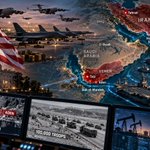
Drums of a "Ground Invasion" Echo in Washington, and Riyadh Prepares for a 100,000-Troop Gamble: Hell at the Aden Headquarters and a Race to Save Energy Markets — Talal Nahle
The General Strategic and Geopolitical Landscape
As the confrontation enters its 217th day (the 108th day since the fall of the MoU), the regional military landscape returns to the highest levels of alert and heavy mobilization, in a scene reminiscent of the major buildup and deployment operations that preceded the outbreak of the war last January and February. Washington is pushing more naval and air units to increase its presence to three aircraft carrier strike groups and two amphibious landing groups backed by thousands of Marines, amid intelligence leaks speaking of serious consideration by US President Donald Trump to launch ground operations against Iran following the midterm elections in November.
Conversely, the Yemeni theater is heading towards an unprecedented explosion. While Ansar Allah tightened the siege on the city of Taiz and pounded the Coalition command headquarters in Aden with a devastating missile strike, data reveals Riyadh is preparing for a massive ground offensive led by 100,000 fighters to retake the West Coast and the Bab el-Mandeb Strait, in the absence of direct American field cover. This coincides with the continuous ignition of the Strait of Hormuz front and the hunting of oil tankers, prompting the G7 and the International Energy Agency to take a desperate emergency step by pumping 100 million barrels of oil to absorb the fuel shock and the paralysis of global supply lines.
First: Rebuilding the "Striking Fist" and the 60-Cargo Plane Bridge (Military OSINT)
The pace of logistical operations for US forces has accelerated through movements paving the way for a broader round of fighting that solidifies operational deployment lines:
- Naval Force and Amphibious Landing: The aircraft carrier USS Theodore Roosevelt (CVN-71) continues its voyage after departing San Diego alongside its strike group, in parallel with satellite tracking of the amphibious assault ship USS Makin Island (LHD-8), which is set to join the buildup in the Arabian Sea alongside the USS George Washington, USS George H.W. Bush, and the USS Boxer amphibious group. The arrival of these formations will raise the US presence to three aircraft carriers and two amphibious landing groups comprising approximately 10,000 Marines and sailors, granting CENTCOM intense offensive maneuver options.
- Tactical Airlift Surge: Tracking platforms documented the landing of no less than 60 US military cargo planes (C-17 Globemaster and C-130T) at vital bases distributed across Jordan, Saudi Arabia, Qatar, and the UAE within the past 72 hours alone. The airlift transported equipment, spare parts, and specialized munitions, coinciding with the deployment of two additional "Patriot" missile batteries to protect oil and gas facilities in Saudi Arabia and Qatar from retaliatory strikes.
- Strategic Bomber Movement in the UK: RAF Fairford witnessed an operational swap for the B-1B Lancer heavy bomber fleet. A B-1B from the 28th Bomb Wing under the callsign "BANYA 11" (tail number 86-0139) departed back to the US, replaced by a B-1B under the callsign "TINO 40" (tail number 86-0111, nicknamed "Let's Roll"). Field monitoring data shows the deployment of at least 11 B-1B strategic bombers from the 28th and 7th Bomb Wings at the British base, on high alert to launch precise, long-range missile strikes.
- "Ground Operation" Leaks: Reports quoting US officials indicated that Trump is studying the option of pushing "Boots on the Ground" into the Iranian theater of operations after the midterm elections (November 3), stemming from a feeling that he no longer has anything to lose politically. This is a step the military establishment is seeking to prepare the theater for by bringing in landing ships and advanced reconnaissance units.
1/3

Second: The Yemeni Earthquake — The Aden Headquarters Massacre and the 100,000-Troop Plan
- Coalition HQ Strike in Aden: The Yemeni Armed Forces executed a coordinated missile and aerial strike with dozens of ballistic missiles and drones, directly targeting the Coalition command headquarters in the temporary capital, Aden. The strike successfully penetrated the dense defensive umbrella surrounding the facility, causing a large number of dead, wounded, and dozens missing among Coalition officers and supporting forces, which afflicted the field command and the management of joint operation theaters with severe logistical paralysis.
- Tightening the Siege on Taiz and Cutting the Aden Artery: Sana'a forces achieved decisive strategic progress by tightening a complete siege on the city of Taiz. All access points and axes leading to it were seized, including severing the main supply route linking Taiz to Aden and securing the Al-Turba area following the collapse of the protection brigade affiliated with the recognized government. This puts the second-largest city in Yemen on the brink of a comprehensive military fall.
- The Saudi Ground Offensive Gamble (100,000 Fighters): Reuters revealed an emergency military plan being studied by Saudi Crown Prince Mohammed bin Salman to launch a major ground operation led by 100,000 fighters from the Yemeni government forces, with intense Saudi air support, US intelligence backing, and Pakistani air defense. The plan aims to recapture the Bab el-Mandeb Strait either through a concentrated coastal push or by opening a simultaneous multi-axis battle encompassing the fronts of Marib, Al Bayda, Al Jawf, and Taiz, in an attempt to disengage from the diplomatic failure and impose a new reality before the Houthi encirclement is complete.
- Mysterious British Cargo Shipments: A new flight of a British A400M military cargo plane was tracked landing at King Fahd Air Base in Taif (the fourth flight in 10 days), at an unprecedented transport pace that raises serious questions about the nature of the tactical munitions or technical components being transported to support "Typhoon" fighters operating against Yemeni targets.
Third: The War of the Straits and Global Energy Depletion
- The Ship Holocaust in Hormuz and Oman: The IRGC Navy continued to assert absolute control over the Strait of Hormuz. A new oil tanker was hit by an unknown projectile while attempting to exit the strait, leading to a fire and power outage on board. Meanwhile, IRGC boats and missiles targeted another violating commercial vessel 4 nautical miles east of the coast of Oman. This brings the number of targeted tankers to 7 in just three days, with a weekly attack rate approaching 30 drones and 10 naval missiles, according to Pentagon estimates.
- Rezaee's Calculations and the "Reality of Missiles": The Secretary of the Supreme National Security Council, Mohsen Rezaee, firmly responded to Trump's statements, saying the US President "can win every day in his imagination, but reality is drawn by Iran with its people, soldiers, and missiles." This was accompanied by a confirmation from the IRGC Deputy Commander that Tehran holds a tight grip on the strait and that adversaries do not dare to approach it directly.
- Leap in Targeting Moving Objects: The advisor to the Commander of the IRGC Aerospace Force, Brigadier General Ali Balali, revealed a prominent technical achievement represented in testing and developing the capability to hit moving naval targets with long-range ballistic missiles (referring to the Qasem Soleirmani and Khalij Fars missiles, which have a range of up to 1200 km and are equipped with an electro-optical seeker). This further solidifies keeping Western naval vessels out of the waters of the Gulf and the Arabian Sea.
2/3
- International Emergency Plan (100 Million Barrels): In an attempt to rein in prices and avert a suffocating diesel crisis in Europe and the United States, the G7, in cooperation with the International Energy Agency (IEA), announced a coordinated release of 100 million barrels from strategic reserves over 4 months. This includes an early and intensive injection of diesel derivatives during the first 20 days, in an attempt to prop up reeling markets until the military trajectories become clear.
Conclusion and Upcoming Trajectories
The field landscape on October 3 proves that the trajectory of the confrontation is no longer containable via economic pressure cards or passing de-escalation statements:
- Race to November: The US administration is seeking to solidify the pillars of massive firepower, amassing bomber squadrons, aircraft carriers, and Marine groups ahead of the midterm elections deadline, attempting to fortify its allies with new air defenses to deter Iranian retaliation.
- The Potential Ground Holocaust: The Saudi bet on fighting a ground battle with 100,000 fighters on the Yemeni coast amidst the siege of Taiz and the destruction of the command center in Aden represents a major military gamble. Its faltering could lead to a total collapse of what remains of the allied forces and unleash Sana'a to expand its targeting of vital infrastructure deep inside the Kingdom.
- The Postponed Zero Hour: The contradiction between the depletion in the Strait of Hormuz and the paralysis of maritime navigation on one hand, and Western attempts to patch the deficit by pumping oil reserves on the other, confirms that the explosion is coming, and that the region is approaching a moment of major clash as soon as the positioning of US naval vessels is complete in late November.
3/3
The "Doomsday War" Alliance Convenes in Abu Dhabi, and B-1B Bombers Land in Britain: Araghchi Leaves New York Ready for the Grand Showdown — Talal Nahle
General Strategic and Geopolitical Overview
On the 104th day since the collapse of the memorandum of understanding (Tuesday, September 29, 2026 - Day 213 of the war), the outlines of the regional camps are solidifying in preparation for what could be the fiercest round of combat since the conflict erupted—a phase described by Hebrew circles as the "Doomsday War." While Iranian Foreign Minister Abbas Araghchi departed the UN corridors in New York for Tehran after reaching a diplomatic dead end, he explicitly declared that Tehran is "ready for the Doomsday War."
This Iranian readiness is countered by the overt formation of a "tripartite alliance," embodied in a fleeting, secret visit by Benjamin Netanyahu to Abu Dhabi to meet with Mohammed bin Zayed, with the participation of Saudi representatives. This was immediately followed by Saudi Defense Minister Khalid bin Salman summoning UAE Vice President Mansour bin Zayed to Riyadh. The operational objective of this axis is now exposed: preparing for a broad, direct military operation against Yemen to break Ansar Allah's grip on the Bab-el-Mandeb Strait, functioning under direct Israeli intelligence supervision and an American umbrella gathering in European bases via B-1B bombers and F-35A stealth fighters.
I. The "Doomsday War" Alliance: The Abu Dhabi-Riyadh-Tel Aviv Trio Targets Yemen
Abu Dhabi Leak and Mossad's Fury: Hebrew Channel 14 revealed that Netanyahu's visit to the UAE was not merely a bilateral meeting with Mohammed bin Zayed, but evolved into an expanded regional security summit involving Saudi representatives. The leak caused a security earthquake within Tel Aviv; Mossad leadership demanded the report be classified as a "serious incident threatening state security and the Prime Minister's safety," given that the "Wing of Zion" aircraft was still airborne outside Israeli airspace.
Saudi-Emirati Coordination Under Israeli Auspices: In an immediate translation of the Abu Dhabi meeting's outcomes, Saudi Defense Minister Khalid bin Salman issued an urgent invitation to Mansour bin Zayed to visit Riyadh. Intelligence data confirms that the two parties, whose strategies had previously diverged, are now finalizing a coordinated military operation. The objective is to recapture the western Yemeni coast and alleviate the suffocating pressure on the Bab-el-Mandeb Strait, relying on Israeli intelligence and air defense cover formulated after the Berlin meeting with the Israeli Chief of Staff.
American "Doomsday" Doctrine: US Secretary of State Marco Rubio escalated his ideological rhetoric, accusing the Iranian leadership of possessing a "catastrophic vision that believes in the necessity of igniting the spark of the apocalypse and destruction." This rhetoric is being utilized to justify the American push toward comprehensive strikes aimed at permanently depriving Tehran of any strategic capabilities.
II. The Collapse of New York Diplomacy and the "Spin Until We Spin" Equation
Araghchi's Departure and Closing the Nuclear File: Iranian Foreign Minister Abbas Araghchi settled the debate over extending his stay in New York by departing early for Tehran, confirming that "the only file on the table is the Strait of Hormuz." He categorically denied making any concessions regarding the nuclear file or discussing Trump's proposals on surrendering highly enriched uranium and allowing unconditional inspections. He noted that new Qatari proposals had been relayed to Washington, pending a final response by Wednesday, asserting that Iran's finger is on the trigger should Washington choose war.
1/2

Parliament's Message: In Tehran, Parliament Speaker Mohammad Bagher Ghalibaf responded to Trump's UN threats using a candid, historical popular idiom: "Spin until we spin" (meaning, "do your worst, and we will match it"). He emphasized that the era of threatening aerial and commercial blockades is over, and that Tehran will respond with a firmness and speed that exceeds Washington's calculations.
III. Aerial Deployment and Mobilization (Military OSINT)
Flight tracking and monitoring platforms have recorded exceptional movements, confirming the completion of the infrastructure for a long-range aerial bombing campaign:
B-1B Strategic Bombers at Fairford: A heavy American B-1B Lancer bomber from the Ellsworth AFB squadron (call sign TINO 40) landed at the British RAF Fairford base, arriving via the Atlantic refueling route (AR62 with ABBOT85). This deployment raises the strike readiness at the base, which has been placed under maximum emergency (FPCON Delta).
Stealth Fighters (Coronet East 118): 12 F-35A Lightning II fighters from the 325th Fighter Wing (325th FW - TY) completed their arrival at the British RAF Mildenhall base in "TABOR 71" and "TABOR 81" formations, supported by six tankers (KC-46A and KC-135R). This executes a rapid forward deployment and rotation to replace fighters returning from the CENTCOM theater of operations.
Suspicious Activity at Lebanon's Hamat Base: Monitoring sources documented unusual and overt American military activity in Lebanon, including:
The arrival of a US Air Force C-130 tactical transport aircraft (call sign CROME 19) at Hamat base at dawn today, operating without active tracking devices.
The landing of an AFSOC MC-130 special operations aircraft (call sign FELON 53) in broad daylight at the same base.
The movement of a US Marine Corps (USMC) UC-35D jet (tail number 166767 - CADDY 27) in a circular route connecting Paphos, Tel Aviv, Larnaca, and Beirut. This intelligence and logistical movement suggests intensive security coordination, the evacuation of personnel, or the preparation of advanced monitoring stations on the eastern Mediterranean coast.
IV. Ignition of the Frontlines (Hormuz and the Saudi Depth)
The Ship Massacre in Hormuz and the Khasab Operation: The Iranian Revolutionary Guard Navy fired precision missile barrages targeting ships that attempted to bypass navigational directives. Maritime security firm Ambrey confirmed a commercial vessel was struck by a projectile north of the Omani city of Khasab in the Strait of Hormuz, leaving navigation paralyzed and at the mercy of Iranian missiles.
Bombardment of Najran and Renewed Paralysis of Riyadh Airport: Yemeni armed forces pounded military and vital positions in Najran with ballistic missiles. This coincided with the launch of drone swarms and cruise missiles targeting the Saudi capital, which led to the suspension of air traffic and a temporary halt of flights at King Khalid International Airport in Riyadh.
September 29 reveals the final lines of demarcation. The new regional alliance (Israel, the UAE, and Saudi Arabia) is preparing to push forward by launching a ground and air campaign against Yemen under Tel Aviv's supervision to break the naval blockade in the Red Sea. Concurrently, Washington is completing the mobilization of its strategic arms (B-1B and F-35A) to strike Iranian facilities.
The coming hours are critical as the theater awaits the final American response to the Qatari proposals. If Washington and Tel Aviv opt for the "Doomsday War" and the launch of the new Red Sea coalition, the synchronized Iranian-Yemeni response will not be limited to closing transit corridors. Instead, the conflict will escalate into a comprehensive and direct targeting of the deep ports, military bases, and airports of the involved nations, placing Dubai, Riyadh, and Tel Aviv squarely in the crosshairs of missiles that recognize no red lines.
2/2
The Militarization of Airspace and the Collapse of Diplomacy: Trump Rejects Tehran’s Conditions as the Region Awaits an Explosion — Talal Nahle
General Strategic and Geopolitical Landscape
On the 102nd day after the signing of the Memorandum of Understanding (Sunday, September 27, 2026 - Day 211 of the war), diplomacy has hit a dead end. US President Donald Trump’s categorical rejection of the Iranian proposal to reopen the Strait of Hormuz (on Tehran's terms), coupled with Iranian President Masoud Pezeshkian’s assertion of a lack of trust in Washington, shatters any bets on a "last-minute settlement" in New York.
This political deadlock is clearly reflected in aviation maps. Beyond mere rhetoric, Notice to Air Missions (NOTAM) data reveals that the region is not preparing for peace, but is rather witnessing the largest "militarization of airspace" and the closure of vital routes, particularly in Saudi Arabia and Iran. This aerial mobilization, coinciding with Iranian warnings of a "more destructive" response, foreshadows that the coming days may see the conflict shift from the sea to the sky in a scenario threatening a complete paralysis of transport in the Middle East.
First: The Collapse of the New York Track... Trump Rejects and Tehran Threatens
Categorical US Rejection: Trump explicitly announced his rejection of the Iranian proposal to open the Strait of Hormuz, stating that Tehran seeks to open the strait to save itself from the losses of "the greatest siege in military history." This rejection torpedoes Qatari-Pakistani efforts aimed at a "short-term" agreement and confirms that Washington is betting on economically suffocating Iran rather than making political concessions ahead of the elections.
Iranian Lack of Trust: Conversely, Iranian President Masoud Pezeshkian pronounced the negotiation track dead (via Al Jazeera), emphasizing a complete lack of trust in Washington due to its repeated attacks following every round of talks. This stance, backed by the Armed Forces spokesperson's warning of a "fiercer and broader" response to any American mistake, demonstrates that the Iranian leadership (whose Supreme Leader Pezeshkian met for 10 hours prior to his departure) has firmly chosen not to back down without strategic gains, relying on its internal cohesion.
The Iraqi Dilemma: Iraq finds itself in the eye of the storm, torn between Washington's pressure to close its airspace to Iranian flights and pressure from armed factions (such as Hadi Al-Amiri's warning) to reject the "unjust siege." Baghdad's attempts to negotiate exemptions for certain airports reflect the magnitude of the predicament for a state trying to maintain its fragile sovereignty between the hammer of Washington and the anvil of Tehran.
Second: Militarization of Airspace (OSINT)... What Do the Saudi Closures Hide?
While politics speaks of stalled negotiations, NOTAMs point to unprecedented military preparations, indicating that September 27 may be a turning point:
Anxious Saudi Synchronization: A careful analysis of Saudi NOTAM data (FIR: OEJD) reveals an organized, multi-sector military plan rather than mere routine exercises. The simultaneous closure of three massive geographical blocks has been monitored:
The North (OER72): A widespread closure south of the Al Jawf region (from 03:00Z to 19:00Z) up to an altitude of 25,000 feet.
Center/North of Riyadh (OER31A/B/C and OER39): Activation of 4 adjacent sectors in the exact same minute (15:00Z).
South/Southwest of Riyadh (OED24/A/B): Activation of 3 danger areas starting from (16:00Z) until dawn the following day.
1/2

Strategic Significance: This temporal synchronization (from 15:00Z to 02:00Z) of sectors extending from the north to the capital points to two possibilities: either preparing safe corridors for the launch of massive offensive waves (Saudi/American) or, more likely, clearing the airspace in preparation for activating air defenses (Patriot/THAAD) to intercept expected ballistic barrages, especially with the continuation of Yemeni strikes on Saudi targets.
Iranian Mobilization and Electronic Warfare: On the other side, Iranian advisories (A2090/26 and A1980/26) show the closure of a massive military zone from the surface up to an unlimited altitude (UNL), with explicit warnings of "increased naval and military activity," electronic warfare, and GNSS jamming. This jamming extends to encompass the airspace of Iraq, the UAE, and Oman, turning the region's sky into a hostile environment for civil aviation.
Third: Israeli Isolation and UN Boycott
Netanyahu’s Speech... Empty Seats and Messages for the Home Front: The scene at the UN General Assembly was highly expressive. The walkout of most international and Arab delegations as soon as the Israeli Prime Minister began his speech embodies Tel Aviv's suffocating diplomatic isolation. His speech was not directed at the international community; rather, it was an attempt to restore his crumbling legitimacy before the Israeli right-wing and to justify the continuation of the war of attrition in the Palestinian and Lebanese territories amid military disarray and troop reductions.
International Criticism and Demands for Arrest: The New York Mayor’s assertion of the necessity to arrest Netanyahu as a war criminal (despite lacking the authority to do so) reflects the growing global popular and political rejection of Israel’s policies. This weakens Washington's position, as it finds itself forced to defend an internationally pariah ally at a time when it needs allies in its war against Iran.
Fourth: Beijing Rejects the "Trade-Off" and Supports Diplomacy
The Decisive Chinese Stance: Chinese President Xi Jinping’s visit to Washington revealed the failure of the American attempt (leaked by Reuters) to link the Hormuz file with Taiwan. The Chinese President affirmed his opposition to unilateral sanctions and the use of military force against Iran, calling for a return to the Islamabad Memorandum. This position (which Pezeshkian praised) strips American threats of their substance, confirming that Beijing will not abandon its strategic partner in the Middle East (to which it supplies 1,300 military shipments) and will not allow Washington to impose its hegemony over the region.
Conclusion and Upcoming Outcomes
The collapse of the New York negotiation track, coupled with the militarization of airspace and the American naval withdrawal, plunges the region into a dark tunnel.
The Upcoming Outcome: The coming hours (specifically the 15:00Z to 02:00Z window monitored by the NOTAMs) will be decisive. Washington and Riyadh are clearing their airspace in preparation for potential Yemeni missile strikes or to execute offensive operations. In light of Trump's refusal to lift the siege on Tehran, and the latter's confidence in its arsenal and Beijing's support, it appears that the "brinkmanship" war will soon evolve into a kinetic clash that reshapes the rules of engagement before Washington is forced to yield to new regional security terms.
2/2
The Secret New York Breakthrough and the Final Sprint: Will the "Kushner Settlement" Preempt the Major Preemptive Strike? — Talal Nahle
At the dawn of the 97th day since the collapse of the memorandum of understanding (Wednesday, September 23, 2026), the corridors of the UN General Assembly in New York are transforming into a strategic operations room shaping the contours of the Middle East for the coming decade. The scene is sharply divided between the public podium, where leaders exchange threats and recall the genocide, and the secret backstage, where the largest geopolitical deal to end the 206-day war is being woven amid a frantic race between diplomacy and a preemptive military explosion that has Tel Aviv trembling.
First: Shadow Diplomacy—Behind the Scenes of the New York Breakthrough and the Chinese Barter
The past few hours have stripped away all performative rhetoric, revealing a feverish negotiating momentum aimed at producing an "October Surprise" ahead of the US midterm elections:
The Araghchi-Witkoff/Kushner Meeting: The negotiating ice has officially been broken with a direct and fruitful meeting between Iranian Foreign Minister Abbas Araghchi and US Envoy Steve Witkoff (with the participation of Jared Kushner). The Iranian delegation, possessing "full authority," laid out its conditions clearly: an immediate lifting of the naval blockade, the release of assets, and an end to the war on all fronts of the Axis (including Lebanon). In return, Tehran offered Trump an enticing card: reopening the Strait of Hormuz to oil flow within just 7 days of easing the pressure.
The "Taiwan" for "Hormuz" Extortion: In a strategic development that expands the playing field, Beijing has entered the fray with a shrewd barter offer for the Trump administration: China will pressure Tehran to de-escalate in Hormuz and Bab-el-Mandeb in exchange for Washington making tangible concessions in arms sales to Taiwan. This linkage turns the Gulf crisis into a bargaining chip in the South China Sea, complicating American calculations.
The French Maneuver in the Security Council: Sensing the danger of European marginalization, Paris, in cooperation with Washington, is leading a push to draft a UN resolution establishing an international naval force to protect navigation in Hormuz. The French objective is to decouple the waterway crisis from the bilateral (US-Iranian) deal—a path that Russia and China may block with a veto to keep the Strait card in Tehran's hands.
Second: Trump’s Grandstanding and the Contradictions of the Battlefield
On the UN rostrum, Trump presented a narrative disconnected from operational reality; while he threatens to obliterate "Mount Axe" and claims the US Navy has cleared Hormuz and allowed a billion barrels to pass, military realities speak a different language:
The Comprehensive Aviation Blockade (September 23): US sanctions have come into effect, forcing Iraq, Turkey, Oman, and Azerbaijan to suspend all flights with Iran. This civilian strangulation is met with rising Iranian military deterrence.
The 500 km Ballistic Missile: The Revolutionary Guard refuted Trump's claims by revealing details of the Anti-Ship Ballistic Missile (ASBM) that struck a US aircraft carrier from a distance of 500 kilometers, confirming continuous Iranian fire control over the Strait, which only a few disguised ships have managed to cross.
British Relief for Saudi Arabia: In damning evidence of the depletion of the Saudi Air Force following the "Yanbu" and Riyadh strikes, Britain dispatched a Voyager KC.2 from Cyprus to Saudi airspace. The aircraft is designed with a "Drogue" system exclusively compatible with Typhoon and Tornado fighter jets, and was deployed strictly under the clause of "defensive operations." This means its mission is limited to keeping Saudi Typhoons in the air as interception shields to protect the skies of Jeddah and Riyadh from Yemeni drones, following the failure of Patriot systems.
1/2

Coronet East 113 Supplies: Washington painstakingly completed the transfer of 12 F-16C fighter jets from Germany to the CENTCOM theater of operations to compensate for a severe shortage of support aircraft.
Third: Lebanon and Gaza—Scorched Earth and the Panic of a "Preemptive Strike"
Tel Aviv Awaits the Strike: The Israeli security establishment has raised its alert level to the maximum. Estimates (according to Channel 12) indicate that Tehran may launch a "sweeping preemptive strike" to reshuffle the deck in the event the New York negotiations collapse, which explains the Israeli tension.
The "Tyre-Al Mansouri" Pincer Plan: In southern Lebanon, the occupation army has resorted to a policy of burning orchards and homes in Khiam and Nabatieh. Warnings converge around an Israeli attempt to expand its incursion along the "Tyre-Al Mansouri" axis to seize the area and place the city of Tyre under direct threat.
The Iranian Guarantee for Lebanon: Facing this threat, Minister Araghchi relayed decisive assurances to MP Hassan Fadlallah that Lebanon is a "fundamental clause" in any upcoming memorandum of understanding, meaning Tehran is negotiating a comprehensive regional package in New York that prevents the Lebanese resistance front from being isolated.
Fourth: Forward-Looking Report—What Will Happen in the Coming Days?
We stand at the "Singularity" point of this conflict. Based on the data above, the probable scenarios over the next three weeks are:
The "October Surprise" Scenario (Most Likely): Trump desperately needs to lower diesel and oil prices before the midterm elections, and Iran is suffering from severe economic suffocation (halted aviation). The "Witkoff-Araghchi" meeting will lay the groundwork for a "mini-memorandum of understanding" that includes: halting US and Saudi airstrikes, gradually lifting the blockade on Iranian aviation and ports, in exchange for halting the targeting of US bases and rescheduling maritime traffic in Hormuz under Gulf-Iranian supervision. The Lebanese front will be frozen with a gradual Israeli withdrawal in exchange for an undeclared ceasefire.
The Collapse and Preemptive Strike Scenario (The Alternative Risk): If Washington insists on decoupling the Hormuz file from the Gaza and Lebanon files, or if Trump attempts to impose terms of capitulation to market as a "total victory," Tehran will officially withdraw from the NPT. The following day, Iran, alongside Yemen, will launch a preemptive strike with hypersonic missiles (Mach 10) that destroys what remains of Aramco's refineries and disables CENTCOM bases in the Gulf. This will force Israel into a reckless strike deep into Beirut, dragging us into an open war that will crash global energy markets—and take the Republicans' chances in Congress down with them.
The diplomatic window in New York is extremely narrow, and everyone is negotiating with a gun pointed at the other's head. The coming days will either birth a forced settlement that freezes the conflict for months, or spark a fire that burns away whatever red lines remain in the Middle East.
2/2
A Night of Bated Breath: Airspace Closures, Embassy Alerts, and a Region on the Brink of an Inevitable Confrontation Within Hours — Talal Nahle
On the 95th day since the collapse of the Memorandum of Understanding (Sunday, September 20, 2026 - Day 204 of the war), intelligence indicators, aviation data, and diplomatic warnings intersect to paint one unequivocal picture: the region is bracing for an imminent military explosion tonight or within the next 48 hours. Iranian diplomatic statements regarding "negotiation conditions" appear closer to finalizing an ultimatum, while the movements of US Central Command (CENTCOM) and the restructuring of Saudi airspace reveal preparations for a large-scale operation. This unfolds amid unconfirmed reports of a preemptive US strike targeting an Iranian military site near Ahvaz.
First: Air Observation (OSINT) – Preparing the Theater of Operations
A close reading of air traffic and Notices to Airmen (NOTAMs) issued today reveals unprecedented operational preparations:
Battlefield Airborne Communications Node (BACN): A US Bombardier (E-11A) aircraft, carrying the hex code (AE77A3/22-9046), was tracked broadcasting signals from the ground at Prince Sultan Air Base (OEPS) in Saudi Arabia. This is no ordinary surveillance plane; it operates as a Battlefield Airborne Communications Node (BACN) to connect forces in heavily jammed electronic warfare environments. Its presence typically precedes or accompanies complex air campaigns and joint attacks.
Militarization of Saudi Airspace: Saudi authorities have issued a batch of NOTAMs (W1177/26, W1279/26, W1280/26, W1281/26) that effectively reserve vast swathes of airspace in the central, eastern, and northern parts of the Kingdom (Hafar Al-Batin, Qassim, Hail) at altitudes reaching Flight Level 250 (FL250). This coordinated closure cannot be interpreted as a routine drill. Rather, it is a clearance of air corridors either to accommodate outgoing US/Saudi attack waves or to open the skies for interceptor missiles (Patriot/THAAD) in anticipation of incoming ballistic barrages.
Iranian and Omani Mobilization: In contrast, Iran has activated danger area (OID45) and restricted airway (G670), coinciding with the closure of large zones in northwestern Iran and the Caspian Sea (N A2029/26). In Oman, intense drone activity was detected over the Sahma camp at an exceptional altitude reaching 10,000 feet.
Second: Synchronized Embassy Alerts and the "Ahvaz" Rumor
Routine warnings have escalated into a full-scale state of emergency. The simultaneous activation of the STEP system to issue "severe security alerts" for Americans in Jerusalem, Muscat, Beirut, Baghdad, Manama, Kuwait, and Jordan suggests that the US administration possesses definitive intelligence regarding a major impending event.
Evacuation of Erbil: The most prominent warning was directed at those in Iraq generally, and Erbil specifically, urging them to "leave immediately." This reflects a US conviction that remaining bases there will face overwhelming fire from militias or the Revolutionary Guard should a confrontation erupt tonight.
The Potential Spark: These measures coincide with reports of a US missile strike targeting an Iranian military site near Ahvaz today. If confirmed, this strike represents a breach of the rules of engagement and provides a direct explanation for the wave of panic sweeping Western embassies in anticipation of an Iranian retaliation.
Third: Diplomacy Under Fire – Tehran’s Conditions and the Hormuz Dilemma
Today's Iranian political discourse bears the hallmarks of brinkmanship. The Secretary of the Supreme National Security Council, Mohsen Rezaee, revealed that Tehran's conditions had been communicated to Qatari and Pakistani mediators, while simultaneously asserting full readiness to absorb any US aerial assault.
1/2

Naval Deterrence Messaging: Rezaee’s announcement of an anti-ship missile test near a US aircraft carrier, backed by the Armed Forces spokesperson's statement that "the initiative in Hormuz remains in our hands," aims to make Washington understand that any attack (such as the rumored strike in Ahvaz) will be met with the sinking of US naval vessels, not merely the bombardment of bases.
Regional Complexity: The Turkish Foreign Minister's statements that the situation is growing increasingly complex reflect the bottleneck in negotiation channels. This is particularly evident given Tehran’s confirmation that the Pakistani Interior Minister's visit carries no new initiatives, effectively closing the door on political settlements at this current juncture.
Fourth: Lebanon – The Destruction of Villages and Completing the Picture
On the other side, Israel continues to exploit the open umbrella of firepower to solidify a fait accompli in southern Lebanon. The intense airstrikes and artillery shelling in the south, coupled with the UNIFIL commander's condemnation of the ongoing explosive demolition of border villages, confirm that the Israeli army is racing against time to create a scorched buffer zone. This is in anticipation of a major regional front erupting, which could upend its calculations and force a redistribution of its already depleted defensive capabilities.
All technical, diplomatic, and security indicators intersect tonight at a single point: the Middle Eastern theater has been cleared of air traffic, logistically prepped, and its foreign nationals have been issued security warnings. We are facing critical hours in which Trump's threats of "massive attacks" may translate into reality, or we may witness a pivotal preemptive strike that turns the tables before mobilization is complete.
2/2
Structural War of Attrition Batters Washington, Tehran Demands the "Ouster of Trump and Netanyahu": Macron Summons Intelligence, Riyadh Pleads for a Truce — Talal Nahle
General Strategic and Geopolitical Landscape
On the 92nd day since the collapse of the memorandum of understanding (Thursday, September 17, 2026 - Day 200 of the war), the open confrontation has reached a boiling point and a point of no return. While US President Donald Trump acts defiantly, hinting at a "decisive turning point" and the resumption of large-scale attacks, official US figures and reports reveal an unprecedented financial, military, and structural attrition striking at the core of American power.
The Iranian response to Trump's threats was decisively delivered by the Supreme Leader's advisor: there will be no opening of the Strait of Hormuz and no negotiations before the "ouster of Trump and Netanyahu." Amid this deadlock, global markets are in a state of panic, prompting French President Emmanuel Macron to summon his intelligence chiefs for an emergency meeting under the banner, "We are entering a different world." Meanwhile, Saudi Arabia, drowning in an oil paralysis expected to last for weeks, has begun begging for a Yemeni truce via Oman, only to be met with a firm rejection from Sanaa, which insists on entirely ending the hegemony.
First: US Structural Attrition and the "Diesel" Crisis (Military & Economic OSINT)
The narrative of "American dominance" promoted by Trump has been undermined by three terrifying strategic and economic reports issued in Washington:
Naval Bleeding and Global Readiness: A lengthy Bloomberg report revealed that the naval blockade is no longer merely a financial cost (having exceeded $7.1 billion) but has turned into a structural attrition swallowing 30% of US warships. Washington is being forced to withdraw Seventh Fleet ships from Asia, delay aircraft carrier maintenance (such as the USS Abraham Lincoln), and deplete human resources and interceptor missiles, leaving it strategically exposed to China and Russia.
Official Acknowledgment of F-35A Losses and Hegseth's Trial: A Congressional Budget Office (CBO) report officially documented, for the first time, the loss of a stealth fighter (F-35A) and two aerial refueling tankers (KC-135) during Operation "Epic Wrath." The collapse of this secrecy prompted Representative Thomas Massie to introduce a bill to impeach Defense Secretary Pete Hegseth, accusing him of pursuing an unauthorized war that is draining the country's capabilities.
The Fuel Crisis and JPMorgan's Admission: JPMorgan officially announced its inability to "model" an end to this crisis, emphasizing that the assumption that the Middle East disruption is temporary has become "difficult to defend." This was echoed by Chevron's CEO, who announced the onset of a major fuel crisis. Jet fuel prices have jumped by 96%, while diesel hit the maximum limit on gas station displays ($9.99), portending catastrophic inflation just before the midterm elections.
Air Deployment Crisis (Coronet East): Logistically, aviation tracking documented disarray in transport operations. F-16C fighters from the 148th Fighter Wing (Coronet East 114) suffered malfunctions that prevented them from completing their journey to the Middle East intact, while Washington continues to withdraw support aircraft (F-15E) from the 366th Fighter Wing (Coronet East 080) back to America via the Mediterranean.
1/3

Second: Tehran's Impossible Conditions and the Expansion of the "Cruise" War
"No Hormuz Before the Ouster of Trump and Netanyahu": In response to Trump's hints to Axios about taking decisive actions to launch large-scale attacks, Mohammad Baqer Zolqadr (Political Advisor to the Iranian Supreme Leader) set an impossible political condition: "The fighters will not open the Strait of Hormuz until the criminal Trump and the bloody Netanyahu are ousted from power." He framed this closure as the "first phase" of retaliation, definitively shutting the door on any settlement that keeps the current administration in place.
Downing of an MQ-9 and Cyberattacks in Gibraltar: On the ground, Iranian air defenses downed the 53rd MQ-9 drone at dawn today over Qeshm Island. More dangerously, complex cyberattacks were recorded targeting two foreign-flagged oil tankers in the Strait of Gibraltar en route to the United States, indicating that Tehran is geographically expanding its economic war to include navigation routes in Western Europe.
Third: The Collapse of the Saudi Gamble and the Rush Towards a Truce
Yanbu Paralysis for 6 Weeks and Appealing to China: Riyadh realized the magnitude of the disaster after British and American experts confirmed that the "East-West" pipeline would require 6 weeks to repair, meaning 4 million barrels per day (4% of global supplies) would be knocked out of the market. This dilemma pushed Saudi Arabia to turn to China to pressure Tehran, but Beijing relayed the message without endorsing it, holding Washington and Israel responsible for the instability.
Sanaa Rejects "Patching" the Truce: Saudi Arabia asked the Sultanate of Oman to mediate with "Ansar Allah" for a two-week truce to discuss humanitarian demands. The Yemeni response was firm, rejecting partial solutions and insisting on the total lifting of Saudi hegemony, ending the blockade, and the payment of reparations, asserting that internal dialogue is a Yemeni matter in which Riyadh has no business.
Fourth: The "Middle East NATO," Paris Panic, and the Occupation's Deficit
The Germany Conference and Integrating Israel into the Arab System: Details of the secret "Germany" meeting led by Central Command (CENTCOM) revealed a dangerous structural shift: Arab military capabilities are being linked to Israeli defense and intelligence systems under an American umbrella to counter Iran and Yemen. This blatantly bypasses the lack of political normalization and entrenches Israel as an "operational component" in the security of the Red Sea and the Gulf.
Élysée Panic: French President Emmanuel Macron summoned all political leaders, presidential candidates, and intelligence chiefs for an emergency meeting tomorrow, declaring a "rapid deterioration of the international situation" and that France is entering a "different world." This signals Europe's terror of a winter without Gulf energy and its repercussions for the continent's security.
Israeli Financial Bankruptcy in Lebanon: On the occupation's northern front, the Israeli army warned the political leadership that it is losing the ability to maintain security belts across 3 fronts (Gaza, Lebanon, the West Bank) due to a funding gap of 25 billion shekels. This financial deficit and battlefield disarray explain the successive tactical withdrawals of the occupation army, which is now relying exclusively on the air force and heavy American bombs to destroy southern villages as an alternative to ground holding, which has become too costly in blood and money.
2/3
Conclusion and Upcoming Trajectories
September 17 reveals a profound abyss between the West's ability to issue military threats and its ability to bear their costs. Trump's threats of "large-scale attacks" are colliding with ballot boxes, diesel inflation, and an exhausted American navy.
The Upcoming Trajectory:
Iran's declaration of its existential condition (the departure of the current administration to open the Strait) and the expansion of cyberattacks to Gibraltar leave America and Europe with two choices: either swallow the poison and submit to a new equation that ends the blockade imposed on the Axis, or slide toward an all-out war that Pentagon generals themselves are warning against before anyone else. Awaiting "Trump's decision," the world will pay a daily tax for delaying a settlement in the form of its security, energy, and stability.
3/3
What are your thoughts on the recent updates to the IntelSky platform? Have you started using it yet?
intelsky.org


