

Evidence over ideology. Explaining science in context, exposing harmful misinformation, sharing references—and posting reminders the world is beautiful.
Joined August 2011
- Tweets114K
- Following6.4K
- Followers12.1K
- Likes108K


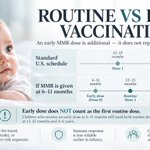
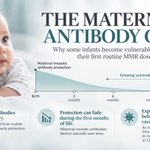


Greg, I think you’ve identified something important that gets lost when people attribute today’s measles resurgence entirely to pandemic lockdowns.
The missed vaccinations of 2020 were a serious problem, but we’ve now had several years to restore routine immunization services and catch up those children.
Instead, US kindergarten MMR coverage has continued declining, from 95.2% in 2019–20 to just 92.4% in 2025–26. Vaccine exemptions have also reached record levels.
That suggests we’re dealing with something more persistent than interrupted healthcare access.
I suspect you’re right that distrust generated during COVID spilled over into attitudes toward childhood vaccines. There’s published research supporting that possibility.
And RFK Jr.‘s longstanding promotion of vaccine skepticism certainly hasn’t helped, although the decline predates his appointment to HHS.
We should also distinguish legitimate discussion of rare COVID vaccine adverse events from sweeping claims that the vaccines were ineffective or broadly dangerous.
The larger tragedy is that doubts surrounding a relatively new vaccine technology have helped undermine confidence in MMR, a vaccine with decades of strong safety and effectiveness evidence.
Restoring services is comparatively straightforward. Restoring public trust may prove considerably harder.
Mazda, I’m familiar with Bendavid and Patel’s 2024 paper, and I agree it raises legitimate questions about the confidence with which some pandemic interventions were defended.
But I think you’re overstating its conclusions.
The study examined data from 2020–2021, not four years, and its nearly 100,000 models were alternative analytical specifications, not independent investigations.
The authors found no consistent relationship between government restrictions and COVID outcomes across their analyses. That’s an important finding.
But they also explicitly acknowledged that their models could not establish what would have happened without those interventions or reliably estimate their causal effects.
Their conclusion warrants greater scientific humility. It doesn’t establish that NPIs accomplished nothing.
Your Oxford visualization presents another problem. It’s a government policy stringency index. It measures how restrictive policies were, not whether they reduced infections or deaths. Oxford explicitly warns against interpreting it as a measure of effectiveness. So I’m puzzled how it could have settled the debate by mid-2021.
And Osterholm? He’s actually been a vocal critic of sustained lockdowns, favoring more targeted, temporary measures to protect hospital capacity, alongside effective respiratory protection.
There’s plenty to criticize about pandemic management, including prolonged school closures, inconsistent policies and failures to preserve routine childhood vaccination.
I’m quite willing to acknowledge those failures.
But if we’re going to scrutinize the evidence supporting NPIs, we need to apply equally rigorous scrutiny to the evidence invoked to dismiss them.
Uncertainty about the magnitude of an intervention’s benefit isn’t evidence that the benefit was zero.
That’s an inference the available science doesn’t justify.
Mazda, you raise a legitimate concern, but you’re drawing a conclusion the evidence doesn’t support.
The disruption of routine childhood vaccination during COVID was a genuine public health failure. Fauci acknowledged precisely that in his May 6, 2020 diary entry, expressing concern that missed measles vaccinations could have devastating consequences for children.
And he was right to be concerned.
WHO and UNICEF subsequently documented millions of missed childhood vaccinations. Lockdown restrictions contributed, alongside overwhelmed healthcare systems, suspended vaccination campaigns, staffing shortages and families avoiding medical facilities.
These consequences deserve serious scrutiny. Pandemic policies should never be exempt from examining their unintended harms.
But your suggestion that restrictions accomplished virtually nothing in reducing COVID transmission is contradicted by substantial scientific evidence, including the Royal Society’s comprehensive review.
There is also a distinction between children who temporarily missed vaccinations because healthcare access was disrupted and those who remain unvaccinated because of misinformation, distrust or deliberate refusal.
Both problems contribute to vulnerability. Both deserve attention.
We can acknowledge serious mistakes in pandemic management without rewriting the evidence about what worked, what failed and why measles is resurging today.
There are a number of reasons, perhaps most notably the damage done by Andrew Wakefield’s 1998 paper suggesting a link between MMR vaccination and autism. The paper was eventually retracted, its claims thoroughly discredited, but the fear it generated proved remarkably resistant to evidence.
Then came social media, which gave misinformation an enormous audience, followed by growing distrust of medical institutions and the politicization of what should have remained a straightforward public health issue.
There’s also a cruel irony here: vaccination was so successful that generations of parents grew up never witnessing the devastation measles once caused. The perceived danger of the vaccine gradually displaced the very real danger of the disease.
And now we’re seeing the consequences.
Measles hasn’t become less contagious or less capable of causing serious complications. Two doses of MMR remain approximately 97% effective at preventing it.
We’ve allowed a remarkable public health achievement to become a cultural and political battleground. And children are ultimately paying the price.
3/3
On October 20, 2014, the World Health Organization declared that Nigeria’s Ebola outbreak had ended.
Dr. Ameyo Stella Adadevoh did not live to see that announcement.
The outbreak that began with Patrick Sawyer’s arrival had produced 20 confirmed or probable cases and eight deaths, according to the CDC.
It could have been much worse.
Lagos was home to millions of people, with extensive transportation links throughout Africa and the wider world.
Adadevoh’s early recognition of the threat and her hospital’s refusal to release a potentially infectious patient had bought precious time.
What followed was a remarkable coordinated public-health operation.
Nigerian authorities, physicians, nurses, epidemiologists, laboratory personnel, and international partners identified 894 contacts and carried out approximately 18,500 face-to-face monitoring visits.
Transmission was interrupted.
It would be inaccurate to credit one person with stopping Ebola in Nigeria. Containment required an extraordinary collective effort, and several healthcare workers paid for that effort with their lives.
But Adadevoh’s decision was pivotal.
She acted when the diagnosis was still uncertain, when pressure was mounting, and when the consequences of being wrong in either direction were enormous.
There is an especially painful contrast in her story.
A woman who spent more than two decades caring for the families of Lagos would never return to her own.
Her son, Bankole, later helped establish a health trust in her name to strengthen Nigeria’s capacity to confront future infectious diseases.
Perhaps that is the most fitting continuation of her work.
Her story is a reminder that epidemic preparedness ultimately depends on people: their clinical judgment, their willingness to recognize danger, and the systems available to protect them when they act.
Dr. Ameyo Stella Adadevoh (1956–2014).
She recognized the danger. She refused to ignore it. And her country remembers.
2/3
Dr. Ameyo Stella Adadevoh had worked at First Consultants Medical Centre for 21 years.
She was an experienced physician and endocrinologist, known to generations of families in Lagos.
She was also a wife and mother.
Her only child, Bankole Cardoso, was 25 when Ebola arrived at his mother’s hospital.
The danger became terribly personal when Adadevoh began showing signs of illness.
She had contracted Ebola.
Other healthcare workers from the hospital were also infected. Some would survive. Others would die.
There was no established, widely available Ebola-specific treatment at the time. Medical teams were struggling to provide care during an epidemic that had already overwhelmed health systems elsewhere in West Africa.
Adadevoh was transferred to an isolation facility.
Her son later described the anguish of watching his mother’s condition deteriorate. For a time, there were signs she might recover. Then her doctors told the family that she was unlikely to survive.
On August 19, 2014, Dr. Adadevoh died.
She was 57.
In a deeply moving NPR interview, Bankole recalled his mother’s concern for her patients, even when their care placed her at risk.
He also remembered the last thing she told him.
She was proud of him.
For Nigeria, she would become a national hero.
For Bankole, she was simply his mother, and she was gone.
1/3
On July 20, 2014, a seriously ill man arrived in Lagos, Nigeria, on a flight from Liberia.
His name was Patrick Sawyer. He had a fever, vomiting, and diarrhea. He was taken to First Consultants Medical Centre, where doctors initially treated him for malaria.
But one physician recognized a far more dangerous possibility.
Her name was Dr. Ameyo Stella Adadevoh.
Ebola was spreading through West Africa. Nigeria had never recorded a case, and Lagos was a densely populated international transportation hub.
Adadevoh considered the patient’s symptoms and recent travel history. She suspected Ebola and insisted that he remain isolated while testing was arranged.
Sawyer wanted to leave.
According to the hospital’s director, the Liberian ambassador also pressed for his release, arguing that the hospital was unlawfully detaining him. Sawyer had traveled to Nigeria for an important regional meeting.
Adadevoh and her colleagues refused.
Imagine the circumstances. An unfamiliar disease was devastating neighboring countries. The patient was demanding his freedom. Diplomatic pressure was mounting. The diagnosis had not yet been confirmed.
She understood what releasing a potentially infectious patient into Lagos might mean.
The hospital maintained his isolation, and public-health authorities were alerted.
On July 25, Sawyer died. Laboratory testing confirmed Ebola.
By then, the physician who had helped prevent his departure had herself been exposed to the danger.
🤖 Made with AI

3/3
On April 28, 2003, just 30 days after Carlo Urbani’s death, the World Health Organization announced that Vietnam had become the first country to successfully contain its SARS outbreak.
Vietnam had recorded 63 cases and five deaths.
The achievement belonged to many people: Vietnamese physicians and nurses, public-health officials, government authorities, and international colleagues who worked together under extraordinary circumstances.
But Carlo Urbani had played a pivotal role.
He recognized the danger early, helped sound the alarm, and pressed for protective measures before the full nature of the disease was understood.
His contribution was so significant that one of the first isolates of the SARS coronavirus was named the Urbani strain in his honor.
In 2023, twenty years after his death, the WHO Director-General traveled to Urbani’s hometown of Castelplanio, Italy, for the opening of a museum dedicated to his life.
There is something profoundly moving about his story.
A physician working far from home encountered a disease nobody fully understood. He recognized the threat, tried to protect others, and ultimately lost his life to it.
His three children grew up without their father.
Countless other families, however, benefited from the early warnings and public-health response he helped set in motion.
Carlo Urbani’s legacy reminds us that public health is not simply a collection of statistics, recommendations, or institutional policies.
Behind its greatest achievements are people willing to recognize uncomfortable realities, speak up when evidence is still emerging, and accept responsibility when the consequences of inaction could be devastating.
Sometimes, the people who make the greatest difference never live to see the results.
Dr. Carlo Urbani (1956–2003).
His courage deserves to be remembered.
2/3
Carlo Urbani understood the risks of working with an unidentified infectious disease.
When his wife, Giuliana, expressed her fears, he reportedly answered with a question that would later become inseparable from his memory:
“If I can’t work in such situations, what am I here for?”
On March 11, 2003, while traveling to Bangkok, Urbani developed a fever. Recognizing what it might mean, he warned colleagues to keep their distance. Upon arrival, he requested immediate isolation.
The physician who had helped recognize the emerging epidemic was now fighting for his own life.
His wife traveled from Hanoi to Bangkok with their three children: Tommaso, Luca, and little Maddalena.
But the children could not visit their father in isolation.
On March 19, Giuliana sent them home to Italy, where relatives would care for them. She remained in Bangkok, close to her critically ill husband.
There was no final family embrace at his bedside. No opportunity for the children to say goodbye in person.
For nearly three weeks, Urbani struggled with the disease he had worked so urgently to contain.
On March 29, 2003, he died in a Bangkok hospital.
He was 46 years old.
1/3
In February 2003, an Italian physician working for the World Health Organization in Hanoi was called to investigate a patient suffering from an unusual and severe pneumonia.
His name was Dr. Carlo Urbani. He was 46 years old, a specialist in infectious and tropical diseases, and a former president of Médecins Sans Frontières Italy.
What he encountered in that Hanoi hospital would become one of the defining moments in the history of emerging infectious diseases.
The patient was gravely ill. Soon, doctors and nurses caring for him began developing similar symptoms. Urbani recognized that something dangerous was unfolding.
He alerted the WHO and worked with Vietnamese authorities and hospital staff to introduce isolation procedures, protective measures, and infection controls.
Nobody yet fully understood the pathogen they were confronting. The disease would soon become known worldwide as Severe Acute Respiratory Syndrome — SARS.
Urbani’s early recognition and insistence on immediate action helped give Vietnam a crucial advantage in containing the outbreak.
But while trying to prevent the disease from spreading, he had almost certainly been exposed himself.
🤖 Made with AI


If you’re interested in more than anecdotes…this might help.

COVID Mortality Risk Changed Throughout the Pandemic
One of the biggest misconceptions about COVID vaccines is treating “vaccinated vs. unvaccinated” as if it were a single, fixed comparison.
It wasn’t.
The virus evolved.
Population immunity changed.
Treatments improved.
Vaccination coverage increased.
Boosters were introduced.
As a result, the mortality gap between vaccinated and unvaccinated people changed over time.
Using CDC age-standardized surveillance data from 24 U.S. jurisdictions, the relative risk of dying from COVID among unvaccinated people compared with vaccinated people was approximately:
• Delta: 16.2× higher
• Omicron BA.1: 11.5× higher
• Omicron BA.2: 5.3× higher
• Early BA.4/BA.5: 5.3× higher
• Late BA.4/BA.5: 5.4× higher
These numbers changed because both the virus and our immune landscape changed.
Vaccine effectiveness is not one fixed number—it evolves over time.
Reference: Johnson AG et al. MMWR. 2023.

Anecdotes are essentially worthless when attempting to identify guidelines for a population.
If anecdotes carried the kind of weight you’d like to believe, how do you think my personal experience might compare (my physician wife and I manage over two dozen medical clinics)?
The hospitalization and death rates plummeted in the vaccinated compared to the unvaxed.