

Our mission is to conserve, share and encourage the spirit of exploration.
New Zealand
Joined April 2015
- Tweets4.3K
- Following517
- Followers3.8K
- Likes3K
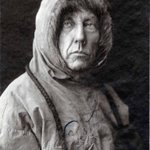

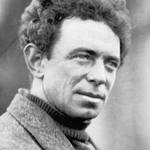



#OnThisDay in 1911, Roald Amundsen departed the Bay of Whales on his expedition to the South Pole. Amundsen was accompanied by Sverre Hassel, Oscar Wisting, Olav Olavson Bjaaland and Hilmer Hanssen, with 4 sledges and 52 dogs.
Amundsen's expedition party began their historic journey 13 days before Sir Robert Falcon Scott's South Pole Party departed. Their expedition team made excellent progress and by 17 November, had reached the edge of the Ross Ice Shelf facing the Transantarctic Mountains. Amundsen and his men had to find their own route through the mountain range as no party had attempted this course to the Polar Plateau before. After several days of perseverance and climbing to around 1,500 feet (460 m), the expedition party found what appeared to be a clear line to the Polar Plateau.
📸 Roald Amundsen, Nome, Alaska 1923. © Norsk Polar Institute
#OTD #inspire #explore #discover #conserve #Antarctica

#OnThisDay in 1877, Norwegian polar explorer and dog sled driver Per John Savio was born at Sør-Varanger, Norway. He was a member of the British Antarctic 'Southern Cross' Expedition 1898-1900 led by Carsten Borchgrevink.
Despite being one of the youngest members of the 'Southern Cross', Savio along with Ole Must, were the most experienced in extreme cold climates and brought with them traditional Sami survival skills that had been developed over generations. Their job was to care for and train the dogs, and their skill in handling these half-wild animals was key to the expedition's survival.
The 'Southern Cross' arrived at Cape Adare 17 February 1899 whereby Savio and Must were sent ashore first, along with the 75 dogs. They became the first people to spend a night on the Antarctic Continent. Savio was also part of the sled team that was the first to travel on the Ross Ice Shelf, reaching a new Farthest South record of 78° 50′S.
Antarctic Heritage Trust is proud to care for Borchgrevink's hut at Cape Adare. The site is important not only for its role in the discovery of Antarctica but is also the only example left of humanity's first building on any continent.
📸 Per Savio and Ole Must. Public Domain
#OTD #inspire #explore #discover #conserve #Antarctica

#OnThisDay in 1885, intrepid photographer Frank Hurley was born in Sydney, Australia.
Hurley began working as a professional photographer in 1904. Several years later, in 1911, Sir Douglas Mawson employed Hurley as official photographer for his first Antarctic expedition, the Australian Antarctic Expedition (1911-13) and later for the British, Australian, and New Zealand Antarctic Expedition in 1929. Hurley also joined Sir Ernest Shackleton's Imperial Trans-Antarctic 'Endurance' Expedition (1914-16) where his legacy lives on in the incredible images he captured of the fateful journey of the 'Endurance'. These images documented the ships slow destruction as it was trapped and crushed in surrounding sea ice. He wrote in his diary "We are not sorry to see the last of the wreck"... " an object of depression for all who turned their eyes in that direction".
📸 Frank Hurley, self portrait. Public Domain.
#OTD #inspire #explore #discover #conserve #Antarctica

#OnThisDay in 1958, Australian geologist and explorer Sir Douglas Mawson died at 76 years of age in Brighton, South Australia.
Born 1882, in Shipley, Yorkshire, England, Sir Douglas Mawson was a key expedition leader during the heroic age of Antarctic exploration. Mawson received a bachelor’s degree in mining engineering from Sydney University in 1902, and while undertaking his doctorate at Sydney University, Mawson joined Ernest Shackleton’s British National Antarctic 'Nimrod' Expedition (1907-09) as a geologist. During this expedition, along with his mentor Professor T.W. Edgeworth David, Mawson completed the longest Antarctic man-hauling sledge journey of 122 days! Enduring hunger, hidden crevasses, frostbite and exhaustion, the men successfully reached the south magnetic pole on the high ice plateau of Victoria Land on 16 January 1909.
Mawson returned to Antarctica when he led the Australasian Antarctic Expedition (1911-14) during which five men set up a base at Macquarie Island, while the remainder sailed on to the Antarctic continent to establish two bases: the Main Base at Commonwealth Bay led by Mawson, and the Western Base at Queen Mary Land led by Frank Wild. Mawson returned South again from 1929-31 when he directed the combined British, Australian, and New Zealand Antarctic Expedition (BANZARE). BANZARE did not use land bases to explore the continent, instead crucial work was successfully completed on voyages along much of the Antarctic coastline, and sub-Antarctic islands.
Mawson received great recognition in the scientific community. In 1923, he was made a fellow of the Royal Society of London as well as a foundation fellow of the Australian Academy of Science, and president of the Australian and New Zealand Association for the Advancement of Science between the years 1935 to 1937.
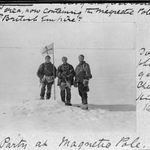
📸 From left: Alistair Mackay, T.W. Edgeworth David and Douglas Mawson at the South Magnetic Pole. Alexander Turnbull Library.
#inspire #explore #discover #conserve #Antarctica

#OnThisDay in 1899, 'Southern Cross' Expedition zoologist, Nicolai Hanson died in Antarctica. He is thought to be the first person to have died on the Antarctic continent, and is the first person to be buried there. On the voyage south Hanson had fallen ill, and his condition deteriorated badly by winter. There was nothing more the expedition doctor, Dr Kløvstad, could do for Hanson.
Hanson was confined to his bunk but eager to see the Adelie penguins return to Cape Adare. On the day of his passing Evans brought the first bird of the season to him. Half an hour later, Hanson sadly passed away. His colleagues laboured for four days to prepare Hanson’s grave on a high ridge overlooking Cape Adare. They used dynamite to blast the rocks apart. After the 'Southern Cross' expedition ended, the men carefully returned Hanson’s wedding ring to his widow and the daughter he never met.
During the 2025-26 summer conservation season, for the first time since 2003, our team completed a full condition assessment of Nicolai Hanson’s grave at Cape Adare.
Using digital recording techniques, they produced a detailed 3D model that provides valuable insight into its current condition and future conservation needs.
📸Nicolai Hanson, public domain. Hanson's Grave during the 2025-26 conservation season. Hanson’s Grave 3D model taken by Gord Macdonald as part of condition assessments. © AHT/Gord Macdonald.
#OTD #inspire #explore #discover #conserve #Antarctica


#OnThisDay in 1905, Norwegian born Per John Savio died at just 27 years old. Despite his short life, Savio’s legacy endures in the frozen landscape of Antarctica.
At 18-years-old, Savio became a member of the British Antarctic Southern Cross' Expedition in 1898-1900, led by Carsten Borchgrevink, along with fellow Sami explorer Ole Must. The expedition departed from St Katherine’s Dock, London on 22 August 1898 and arrived at Cape Adare on 17 February 1899, nearly six months later.
Savio was uniquely suited for this exhibition having knowledge of traditional Sami survival skills, and a mastery of extreme cold climates and dog handling skills. Savio and Must were the first to spend the night on the Antarctic Continent when the ‘Southern Cross’ arrived at Cape Adare, along with the 75 dogs.
Savio was also part of the sled team that became the first to travel on the Ross Ice Shelf, setting a Farthest South record of 78° 50′S. His expertise, particularly in dog handling and survival, was instrumental not only in achieving this milestone, but in ensuring the expedition’s survival.
Today, we remember Savio not only for his courage, but as a representative of the Indigenous knowledge that shaped the early history of Antarctic exploration.
Antarctic Heritage Trust is proud to care for Borchgrevink's hut at Cape Adare. The site is important not only for its role in the exploration of Antarctica but is also the only example left of humanity's first building on any continent.
📸 The firsts dogs in Antarctica a Cape Adare with Savio by the skis and Must and Evans in the background. Canterbury Museum.
Per Savio and Ole Must. Public Domain
#OTD #inspire #explore #discover #conserve #Antarctica


#OnThisDay in 1861, Norwegian explorer, Fridtjof Nansen was born in Christiania (later called Oslo), Norway. Considered by many to be one of the greatest men Norway has ever nurtured, he was renowned as a scientist, explorer, diplomat and humanitarian.
Nansen is famously known for leading a team of six on the first crossing of the Greenland ice cap on skis in 1888. His 'Fram' expedition of 1893-1896 was an attempt to reach the geographical North Pole. Whilst they didn't reach it, they did achieve a farthest North record of 86°14′ and the scientific observations carried out during the period of the exhibition contributed greatly towards the new scientific discipline of Oceanography. The expedition also confirmed that the general character of the north polar region is that of a deep, ice-covered sea.
After the 'Fram' expedition, Nansen retired from exploration and his scientific work focused on oceanography. The final decade of his life was largely devoted to the League of Nations after he was appointed as the League's High Commissioner for Refugees. For his work in repatriating the displaced victims of World War One and related conflicts, he was awarded the Nobel Peace Prize in 1922.
Nansen's legacy of polar travel, equipment and clothing innovation and travel techniques influenced a generation of Arctic and Antarctic explorers, including Shackleton, Scott, and Amundsen.
📸 Portrait of Nansen aged 27, the year he crossed Greenland (1888) © Unknown
#inspire #explore #conserve #discover #antarctica #OTD #nansen

🎙️ What’s happening in the Ross Sea?
Hear from Antarctic Heritage Trust’s Lizzie Meek as she joins RNZ’s podcast 'First Up' to share an update on the Ross Sea Heritage Restoration Project - the largest heritage project ever undertaken in the polar regions!
Listen to the full podcast here: rnz.co.nz/programmes/first-u…

The Spirit of Antarctica voyage has officially come to an end!⛵
After 10 days of sailing, learning, challenging themselves and making new friends, our trainees returned to Auckland on Sunday, and what a voyage it has been!
The final days saw the team sail from Great Barrier Island to Kawau Bay, before spending their final night at Motuihe Island.
For their final challenge, the trainees took the reins for Trainee Day. They elected their own captain and crew, taking on roles as cooks, navigators, engineers and watch assistants, before setting out to sail, cook, clean, and organise their day with very little help from the permanent crew.
And they certainly made the most of it! From successfully sailing the ship to Motuihe Island to throwing their own 'pool party', the trainees embraced the challenge, rewarding themselves by swinging from the rope swing and turning the bottom of a raft into a slide off the ship.
When the trainees made it back to Auckland's Princess Wharf, they were saddened to say goodbye to new friends who had become like family. It is safe to say that new lifelong friendships have been created on this voyage.
The trainees have left the voyage with new skills, new friendships and a strong sense of pride in what they have achieved. They have spent the last 10 days developing their 'Explorer Mindset' by stepping outside their comfort zones, working as a team, and learning to lead alongside people they had never met before.
The Trust thanks our partner Spirit of Adventure Trust and our donors to the Inspiring Explorers™ Fund for making this experience possible.
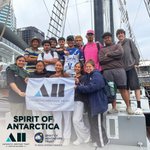
📸Spirit of Adventure team at Princess Wharf. Trainees tacking the sails. (L-R) Espania, Gianny, and Mark with ship's Captain Andrea. Trainees swinging off the ship during their pool party. © AHT/Georgia Airey


Applications close TODAY.
Could you be our next Inspiring Explorer™?
✅ Step inside Antarctica's historic huts.
✅ Contribute to world leading conservation.
✅ Develop your ‘Explorer Mindset’.
✅ Become part of the Trust's legacy.
Apply now: inspiringexplorers.co.nz

#OnThisDay in 1908, the Northern Party, a component of Shackleton's British Antarctic 'Nimrod' Expedition 1907-1909, set out for Victoria Land. During this time, Shackleton's South Pole party were on their own expedition the 'Great Southern Journey'.
The Northern Party consisting of Alistair McKay, Douglas Mawson and Edgeworth David, set out along the coast of Victoria Land to carry out magnetic and geological work and try to reach the South Magnetic Pole. With no help from dogs or ponies the men left with sledges pulled by a motorcar adapted for the Antarctic conditions!
By early November the party were fast running out of food, having to ration themselves quite strictly. They endured inevitable hardships of Antarctic travel at that time - brushes with disaster, snow blindness, sunburn and frostbite. By mid-January 1909, the Northern Party were successful in their journey and reached the South Magnetic Pole 16th January, facing a return journey of 290 miles! After their success, the party had a mere fifteen days to meet their ship, 'Nimrod', before it left the Antarctic.
The men reached the rendezvous point on 2 February 1908, but 'Nimrod' had already passed them, unable to see them in the drifting snow. Two days later, 'Nimrod' returned after picking up a party undertaking geological work from Ferrar Glacier. In the excitement to get on board, Mawson fell 5.5metres down a crevasse and had to be rescued before the weakened party could finally board the ship.
📸 McKay, Mawson and David at the South Magnetic Pole, 1909, Alexander Turnbull Library.
#inspire #explore #discover #conserve #Antarctica

The Spirit of Antarctica team are embracing every opportunity to learn, challenge themselves and step outside their comfort zones aboard the 'Spirit of New Zealand'. ⛵️🌊
From sailing 50 nautical miles from Omataonga Bay on Great Mercury Island to Great Barrier Island, to climbing the rigging, heading out on the yardarm and exploring ashore, they’re putting their 'Explorer Mindset' into action.
They’ve experienced bioluminescence glowing beneath their paddles, incredible night skies, campfires and night paddles, while forming connections and friendships along the way. ✨


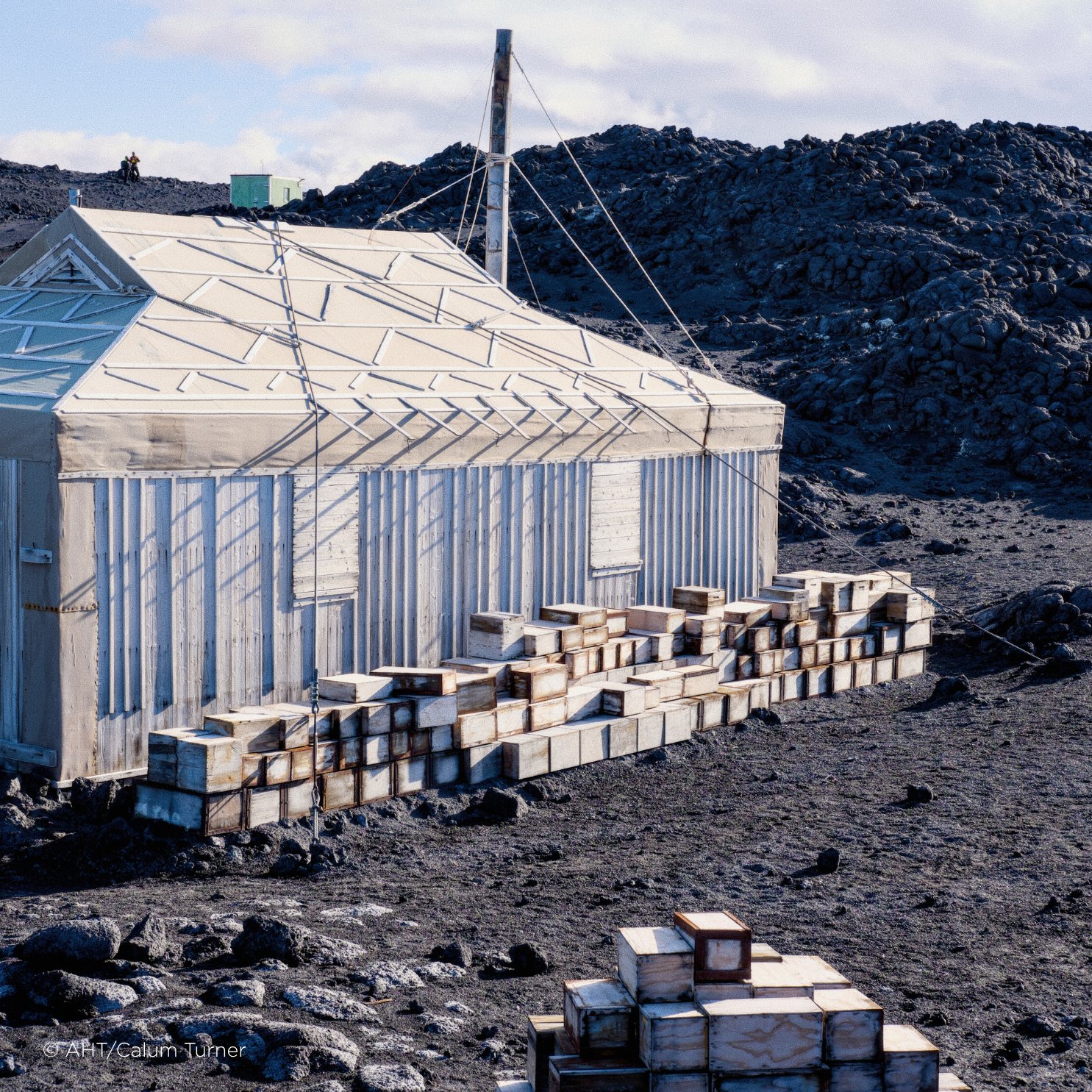
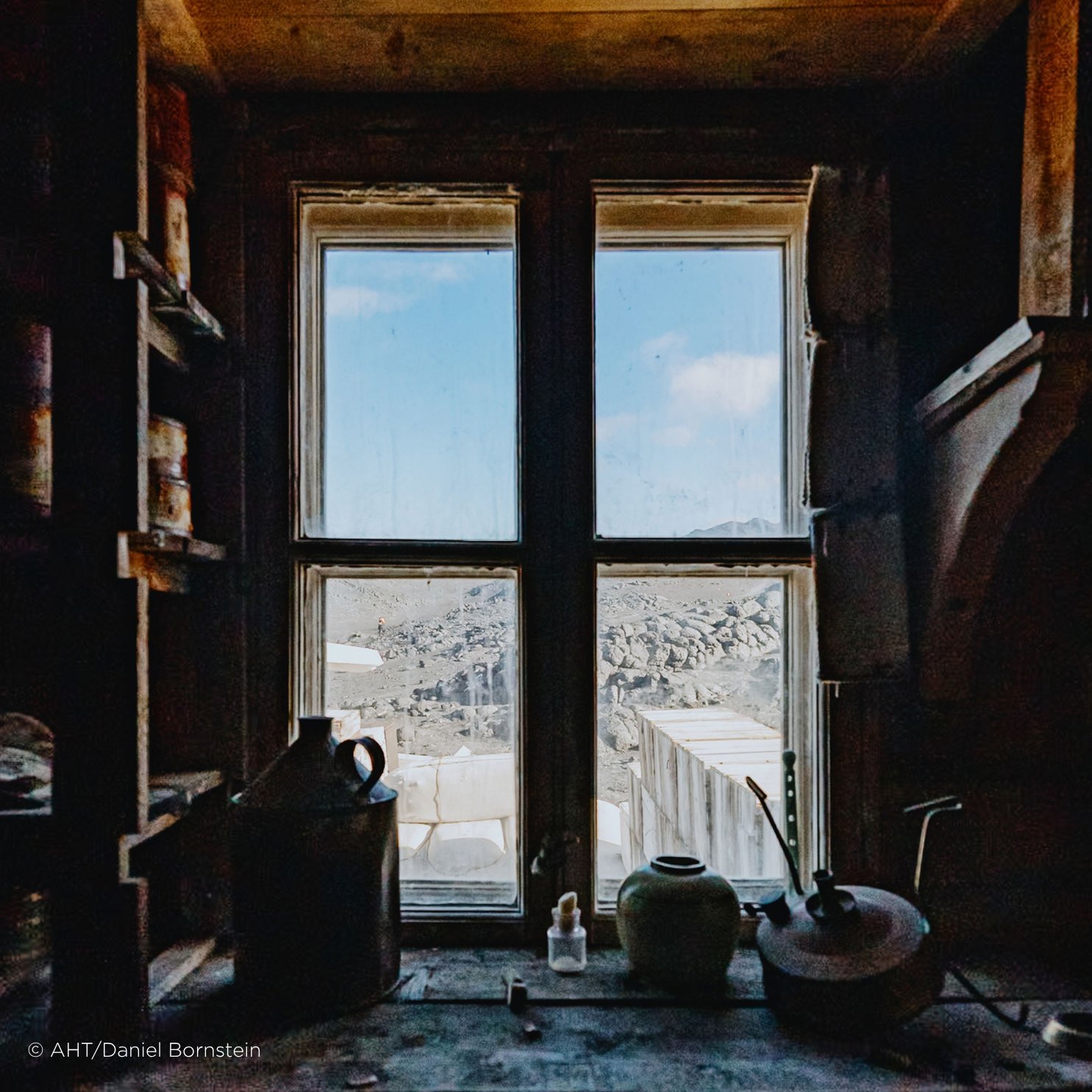
Before and after conservation, in one of the world’s most extreme environments. Our evidence-led approach prioritises the least possible intervention, retaining as much authentic fabric as possible. It helps these remarkable huts remain an outstanding evocation of early polar exploration.
Now, you could experience them for yourself.
Applications for the Inspiring Explorers Expedition™ Ross Sea 2027 close Monday 5 October. Open to NZ citizens and permanent residents, and UK, U.S. and Irish citizens residing in NZ, aged 18–30.
Apply: inspiringexplorers.co.nz


Still deciding whether to apply?
Let our 2025 Inspiring Explorers Expedition™ team take you with them on their journey to the Ross Sea, Antarctica!
Our new podcast 77 Degrees South follows the team as they venture inside the historic huts of legendary Antarctic explorers, and as they experience Antarctica for the very first time.
Have a listen, and if you can picture yourself in their snow boots, there's still time to apply! Applications close end of this week on 5 October 2026.
Apply for the Inspiring Explorers Expedition™ Ross Sea 2027 at inspiringexplorers.co.nz
Applications are to New Zealand citizens or permanent residents, and UK, U.S. and Irish citizens residing in New Zealand.
Applications close 5 October 2026.
The Trust thanks Expedition Partner @HeritageExp and donors to the Inspiring Explorers™ Fund for making this opportunity possible.

Applications for the Inspiring Explorers Expedition™ Ross Sea 2027 close this Monday 5 October 2026!
This is your opportunity to step inside historic explorer huts, contribute to conservation on-Ice and develop your skills in one of the world's harshest environments.
inspiringexplorers.co.nz
The Spirit of Antarctica team have been making the most of life aboard the Spirit of New Zealand! From paddling ashore for beach games, a sandcastle competition and a beach clean-up, to setting the sails and covering 27.4 nautical miles from Te Karaka Bay to Mercury Island.
Next stop: Great Barrier Island.


Antarctic Heritage Trust and the Onehunga Library invite you to visit Scott's 'Discovery' hut through our virtual reality experience.
📍Onehunga Library, Auckland (NZ)
📆Monday 5 October - Friday 9 October
🕐10am – 3pm daily
Scott's 'Discovery' Hut VR transports you to the heart of Antarctic exploration, where you can step inside Captain Scott's historic hut, discover the everyday items used by the explorers, and experience interactive moments including riding in a hydrogen balloon, meeting penguins, feeding huskies, and getting up close to the ‘Discovery’ ship.
The experience is FREE, takes around 30 minutes, and is suitable for ages 11+. Bookings are essential. Follow the link to book: events.humanitix.com/vr-expe…
📸 Discovery Hut, ©Alasdair Turner

#OnThisDay in 1869 Bertram Armytage was born in Lara, Victoria, Australia, the fourth son of a family that had achieved their wealth through the wool industry.
At 38 years old, Armytage was one of the older members of Sir Ernest Shackleton's British Antarctic 'Nimrod' Expedition (1907-09) and the first Australian born member of an Antarctic expedition. He was selected on the basis of his physical strength and hunting skills and was put in charge of the ponies.
During the expedition he was part of the Western 'South Magnetic Pole' party, South Pole support party and various depot laying trips. Armytage was said to be a steady workman who contributed to various successful feats while in Antarctica.
He was awarded the Silver Polar Medal for the 'Nimrod' expedition, at Buckingham Palace by King Edward VII.
📸 Bertram Armytage. Como Collection, National Trust of Victoria, Australia.
#OTD #inspire #explore #discover #conserve #Antarctica

Spirit of Antarctica has set sail! ⛵ From learning to climb the rigging and sail for the first time to navigating rougher seas, the group has been putting their Explorer Mindset qualities of teamwork and resilience into practice. They’ve already sailed an impressive 39 nautical miles in a single day! 🌊


Last week to apply!
Over the past few weeks, we've shared what it means to become an Inspiring Explorer™. You've discovered the historic expedition bases and their stories you'll step inside. The conservation work you'll contribute to. The skills you'll develop. The lifelong friendships you'll make. The stories you'll share through your outreach. The ‘Explorer Mindset’ you'll grow, and the legacy you'll become part of.
Now, it's over to you!
We're looking for young people aged 18 to 30 to join the Inspiring Explorers Expedition™ Ross Sea 2027.
Alongside young NZ citizens and permanent residents from across Aotearoa New Zealand, places are available for:
- One citizen of the United Kingdom currently residing in New Zealand
- One citizen of Ireland currently residing in New Zealand
- One citizen of the United States of America currently residing in New Zealand
There are three types of roles to apply for in the team:
- A general role – you have a passion for Antarctica and Antarctic history, and a desire to step outside your comfort zone and embrace new challenges
- A heritage professional role – you are studying or working in the fields of conservation, heritage, science, engineering, surveying, or architecture
- A videographer role – you have the skills to capture high quality video footage and audio recordings while working in a remote and challenging environment.
If you're ready to step outside of your comfort zone, we'd love to hear from you.
Apply for the Inspiring Explorers Expedition™ Ross Sea 2027 at inspiringexplorers.co.nz
Applications are to New Zealand citizens or permanent residents, and UK, U.S. and Irish citizens residing in New Zealand.
Applications close 5 October 2026.
The Trust thanks Expedition Partner Heritage Expeditions and donors to the Inspiring Explorers™ Fund for making this opportunity possible.
