

Designer Dev
🌍 Remote India
Joined June 2025
- Tweets489
- Following206
- Followers66
- Likes604

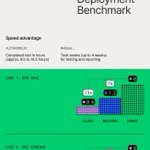










Today, one banger happened by Mike/Team, and I also found out who did the other Mid for Instagram THE WordMark koto studio --koto.com/projects/instagram
xitter.cf/mikesmith187/status/20…

🗓️ NEW WORK FOR @Calendly 🗓️
Back when we first started S&D one of the most needless hassles that drove me crazy was the email tennis of scheduling a meeting. A few years ago, we started using Calendly, and it was infinitely better. So when they asked us to work on their brand it felt like karma.
It's so rare that you get to work on an identity for something that actually changed your business. So we knew we had to do it right.
Read the full case study here
↓
smith-diction.medium.com/bra…
Special thanks to my whole team at @Smith_Diction who constantly inspire me every day and to @gavinpotenza, @liz__meyer, @studiojud, @j3rks_inc, and @JustinLawes for hopping in with us on this one. Literally couldnt have done it without you.

Ignore retweeted

Most teams open agent traces when a customer complains.
That's backwards.
Technical failures are easy to catch. A tool call errors → you see it → you fix it.
What actually kills agents in production is behaviour.
The agent takes a worse trajectory. Quality drifts. It hits a tool-call limit and quietly degrades instead of stopping.
No error. Just worse work.
The fix isn't better prompts.
Treat agent runs like a data pipeline:
→ Structured traces, captured by default → Auto-tagging that makes each pass more useful → Deterministic + non-deterministic logs together → Evals continuously running on real production runs → Human feedback steering AI evaluators
The goal isn't just observability.
It's making every run teach the system something.
There's another problem almost nobody solves:
The person best qualified to judge whether an agent did good work is often a domain expert who can't read a trace.
Today, their feedback ends up in a Slack thread.
A week later, it's gone.
That feedback needs to become structured data the system can actually learn from.
I've spent a decade in data engineering, then started building agentic systems where non-technical users found weak points within days.
Agents are a data problem wearing an AI costume.
Building the tooling for this at @neatlogs.
Thanks so much, Ajay @BetterSayAJ
The vision deck on the @neatlogs careers page gave me real clarity on where the brand & website should go
"Accessible for everyone, loved by devs'
is the north star 🎯

Spent the last few days working on a rebranding exploration for @neatlogs .
Sharing a few early concepts here. @BetterSayAJ , if you have a few minutes, I'd really appreciate your feedback.
Notion app.notion.com/p/NeatLogs-Re…


Hey @erenbali
I saw the broken back glass on your iPhone in the launch post!
I know you went through some hard times
Now it’s time to change that cracked back glass
You did it bro!
xitter.cf/erenbali/status/207450…


It's time to get out of stealth 👋
Today, we are launching @monogram_ai and announcing our $40m seed round led by DST and Lux Capital.
Monogram is the first AI app that was built around a visual interface, from the ground up.
We created a technology that generates an entire user interface on the fly, in just a few seconds. Ask anything, and instead of staring at a wall of text, you get an interactive visual response.


Just finished a product UI concept for @CorelayerAI
Spent the last 10–15 days refining
Sharing the rebrand + motion reel soon
@MRadhuber @shiprajhahirani would love your thoughts - if you have a moment.


