
Esoteric alternatives, some credit, some public equities. Flâneur.
Joined March 2023
- Tweets888
- Following901
- Followers394
- Likes1.1K


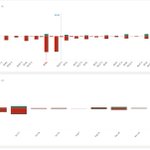



The market is telling you who the leader is here.

The Great Neocloud Meltdown
$SLNH Soluna: -85.99%
$BRUN Boost Run: -77.02%
$BTBT Bit Digital: -76.26%
$AIBZ Bitzero: - 73.76%
$WYFI WhiteFiber: -72.84%
$BTDR Bitdeer: -70.58%
$DGXX Digi Power X: -70.54%
$HIVE Hive Digital: -68.36%
$SHAZ Sharon AI: -68.11%
$CIFR Cipher Mining: -67.02%
$MARA Mara: -64.90%
$NUAI New Era Energy & Digital: -63.92%
$WULF TeraWulf: -61.33%
$GLXY Galaxy Digital: -60.95%
$CLSK CleanSpark: -60.91%
$IREN Iren: -60.24%
$APLD Applied Digital: -59.90%
$ORCL Oracle: -59.52%
$CRWV CoreWeave: -56.26%
$CORZ Core Scientific: -55.65%
$RIOT Riot Platforms: -50.20%
$HUT Hut 8: -46.83%
$VNET VNET: -68.99%
$GDS GDS: -46.79%
$NBIS Nebius: -37.97%

If datacenters stopped getting built and people decided to park this whole AI thing aside, get ready for massive GDP contractions. Good luck.

People are already calling neoclouds by extension datacenters a "bad business model" which is an unbelievably crazy pivot from a few months ago. It hurts to see it but $NBIS is now being thrown in the same basket as weak capital managers like $CRWV while having literally 0 debt maturing in 2027/2028 which people are somehow blind and ignorant to all of a sudden. This level of bearish sentiment sounds like we are close to a bottom. NFA
Let’s look at facts shall we :
1/ $NBIS has ZERO debt maturing in 2027. Compare that to $CRWV , which faces $12B+ in maturities next year with $4-5B of that interest obligations with similar 2028 numbers.
2/ Ultra low fixed coupons: All of $NBIS 's convertible debt sits at tiny fixed rates (0.5%-4.5%). No near term cash crunch, no solvency panic at all.
3/ Plenty of secure debt still left to be used: $NBIS has barely touched any secured debt yet from their hyperscaler contracts, and they have ZERO unsecured non convertible note debt, and still nearly have the entire ~$20B $MSFT contract which will be delivered by end of year in full to take on secure low rate debt against alongside the 27 billion deal with $META which will open up more secure credit facilities with past and future deliveries.
4/ Already secured capex for 2026 and more: $NBIS said that they had fully funded their capex for 2026 a while back and I believe the last few raises they did were already funding 2027 Capex. And unlike $CRWV when you have $12B + revenue which could be far higher coming in within 2027 with literally no spend on debt you can reuse most of that to continue the build out unlike $CRWV who is stuck in older low rental rate contracts and a massive debt portfolio that’s squeezing up.
End of the day when sentiment gets this bad and people call the most in demand infrastructure on the planet right now a "bad business model" while we barely got into this massive demand cycle only months ago, you're looking at a classic sentiment driven bottom which gives opportunities to buy the highest quality companies in the said hated yet absolutely the hottest sector.
If capital constraints really slow down builds industry wide, supply tightens even further and $NBIS has plenty of unsold capacity and plenty more capital to be used far more efficiently than most to juice it out in the near to medium term. If the so called experts turn out to be true on building datacenters being a bad business get ready to see the entire economy collapse because datacenters are the only thing keeping it alive.

Idiosync Capital retweeted

Hmm. Let’s think for a second.
Why are the frontier models cutting price? Might it possibly, just possibly, be a result of the fact that they are losing share to open-weight models?
Given positive elasticity, their price cuts are clearly good for AI infra demand.
Open weight models are positive for AI infra demand, exhibit 1002.
And obviously the semiconductor companies and cloud companies would fund open-weight training if necessary. Jensen already is!
OpenAI and Anthropic have locked in years of compute at below market prices. Other companies would happily assume these commitments at *higher* prices.
Also I’ve always wondered if “missing the forest for the trees” is an idiom, a proverb or an aphorism. Do you have a nuanced view on this?
I am going to ask everyone this question from now on when appropriate.

Excellent summary and a clear demonstration that amongst a sea of providers, $NBIS will be the one providing max ROI on their spend - by optimizing every single variable of the compute equation. Great acquisition.

today we announced the acquisition of Inferize.
i guess headline is the obvious part. Behind it is a bigger bet on what @nebiustf becomes as a production inference platform.
here's the problem Inferize was built for.
-> When you launch a model, spin up for a demand spike, or reload weights mid run (think reinforcement learning), the GPUs are assigned but not yet useful. That warmup window is an idle tax. Platforms hold spare capacity just to stay ready for the slo. You pay for metal that isn't shipping tokens yet.
@InferizeAI's technology cuts that tax. Faster time from "we need more capacity" to "it's actually serving." utilization tracks real demand tighter. Token economics get better because more of the rack does useful work.
The team joins Token Factory with deep gpu systems chops. Running inference well is the whole system responding when demand changes, not just fast GPUs and a tuned model.
this also fits the stack we've been assembling on purpose.
1. Eigen brought optimization at the model, kernel, and system layers
2. Clarifai's core team and licensed tech added system-level inference and compute orchestration
3. Inferize is the layer that attacks readiness and elasticity.
3 moves, one job: serve more customer demand from every GPU, and make TF the place open-weight / production inference scales without burning money on idle readiness.
that's the potential i'm excited about (not a logo on a press release). A Token Factory that gets more elastic, more utilizable, and harder to outrun on the economics of being ready.

We are still within that small triangle where the arrow is pointing. Patience will pay off.

$NBIS incredible week.
Close more weekly candles above the $260 horizontal Gann level, and market symmetry points to the $500 Gann arc as the next target.

This is 100% true. I have seen a step change in my own abilities with Opus 5.5
We can now quickly run deep CLO manager and portfolio analyses within 20 mins (previously getting the data, cleansing it and getting it ready for analysis would have taken multiples of that 20 mins). Adoption across all areas of finance will accelerate.

Every investment decision I've ever made has been informed by a Excel spreadsheet. A financial model that serves as a business simulation and a translation layer between research & insight. The model ultimately is a place to quantify my variant perception and quantify the downside if I am wrong, the two critical pillars of any good public market investment thesis.
One of my PM friends says his analysts spend all day with "their noses in models", identifying and researching the hinge variables in a business. This is the game of alpha generation, simple not easy. A cornerstone of the hedge fund interview process is the modeling test, and hedge funds routinely hire ex bankers & private equity for this skill. (A certain hedge fund founder is rumored to have fired analysts who tried to repurpose sell-side models as their own.)
When you peel back the onion on Tier 1 fundamental research process, four years since the Chat GPT 3.5 moment, AI adoption is slow & uneven with the median investment process far from transformed (despite an exceptional amount of tokens burned...). Why is that?
To me, it's simple. The "bar to impress" a public equity investor with AI has to start with the financial model architecture as the nerve center of the investment process. Almost every AI workflow for investors I've seen is a "hey this is sort of interesting", but not a "you will take this from me over my dead body" workflow. An agent that can summarize your morning inbox well is convenient but won't bend the curve of alpha. An automated, auditable, full-stack research system built around an architecture of Excel models that can help me do the rigor and depth of investment research in 3 days that used to take me 3 weeks? That changes everything.
Financial modeling as the foundational layer in that workflow, the critical unlock to truly enact a full end to end research & risk system. Yes, it is productivity, but ultimately it is more about speed to insight and surfacing the right insight to the decision maker at the right time (this is what great analysts do). "But judgment will still sit with the PM, right?" What is investment judgment if not gathering and weighing as many unique insights about a business as possible then continuously comparing that view to market implied expectations?
"Brett, but won't modeling move to JSON?". I've heard selective instance of that. Perhaps eventually. But Excel is just this beautiful, auditable, sharable, trusted substrate on Wall Street. It won't die a quick death. The challenge investors have of reinventing their investment process while running risk is materially different than software engineers adopting coding agents.
Until September 22nd when Opus 5.5 was released, the technology wasn't there. It's here now.
For this simple reason, I believe we are entering a period of accelerated adoption of AI in Finance, particularly in public equity investment process.
I am having conversations with firms who are interested in co-developing and enacting this vision for their investment teams. If this resonates with you, please DM.
Idiosync Capital retweeted

It’s hard to be right. So minimize the number of things you need to be right about.
Buy commons. Right once. The co eventually goes where you think it does.
Buy calls. Right twice. Direction + timing.
Sell commons hoping to buy it back lower. Right twice. Exit + re-entry.
Sell puts on something you want to own. You don’t even need to be right on direction. Flat, up or somewhat down can all work. Worst case, you own it lower.
Sell CCs. You’re getting paid for time + chop and accepting that you may give up some upside.
Every extra condition you add to a trade is another way to be wrong.
The market is hard enough w/out requiring yourself to nail direction, magnitude and timing at the same time.
Structure is how you reduce the number of things you need to predict.
When I underwrote this company, the software moat’s value (however difficult to quantify back then, even qualitatively) gave it a huge advantage over other, BTC-legacy DC providers.
As the last 12 months unfolded, I did not expect that value to unfold with such clarity and speed. This can only happen with top management/team and execution.
Today, there are other pieces of that puzzle being worked on, and I suspect that in the next 12-24 months we will be dumbfounded with the level of progress and coverage across the entire stack.
Very long $NBIS

Nebius is the AWS of the AI era and here is why (Save this).
AWS became more than a company that rented servers because it built the infrastructure, databases, storage, networking and developer tools that allowed customers to run entire businesses inside one platform.
Nebius is following a similar strategy but it is building specifically for AI.
At the bottom of the stack, Nebius provides the physical infrastructure needed to train and run AI models and this includes GPU and CPU compute, InfiniBand connected clusters, storage, networking, managed Kubernetes, and SLURM environments.
However, raw computing capacity is only the foundation.
The software layer gives developers access to open source models such as Llama, Mistral, and DeepSeek, along with MLOps tools, workflow software, and vector databases. and this allows customers to build, train, deploy, and manage AI applications without combining products from several different providers.
Nebius is also expanding further into inference, which is the process of running a trained model to answer questions or complete tasks for users.
Token Factory gives customers managed infrastructure for deploying open source and custom models in production so instead of building their own serving systems, customers can use Nebius for model endpoints, automatic scaling, orchestration, and inference optimization.
The company’s recent acquisitions fill important gaps in this platform.
Eigen AI improves inference at the model level by making models run faster and more efficiently while Clarifai adds system level optimization by helping Nebius manage how models use GPUs and other infrastructure.
Tavily pushes Nebius further toward the application layer by giving AI agents access to current information from the internet and Nebius can now provide the compute that runs an agent, the inference platform that serves its model, and the search technology that helps it complete useful tasks.
This creates a stronger business than basic GPU rental because a customer may initially come to Nebius for computing capacity but Nebius can also provide storage, networking, model deployment, inference, search, and other managed services.
Every additional product gives that customer another reason to spend more and makes moving the entire workload to another provider more difficult.
Nebius can also place its platform on infrastructure owned by outside partners because under this model, the partner finances and operates the physical data center while Nebius provides the architecture, software, services, and customers.
Nebius can expand its cloud without paying for every data center and GPU itself.
I’m already positioned around Nebius inside Milk Road because the platform is expanding from raw compute into inference, software, search, and managed AI services.
You can see the exact position, my updates, and the rest of the neocloud names I’m tracking using the link below.
link.milkroad.com/tx5qip


Idiosync Capital retweeted

In case you didn't know, there have been ZERO principal defaults in AAA and AA CLO tranches since 1993. The ONE A-rated default was a distressed exchange in 2009.
Even Ba, the worst performing cohort, shows only about 2% impaired with a 1.1% implied loss rate over that period.

You can sub that CIO quote with many other industries and can quickly see where the industry is headed. More control, more independence, and some like $NBIS will provide better tooling.

Latham & Watkins is setting up its own Nvidia GPU racks.
The 2nd largest law firm in America ($8.3B sales in 2025) will spend “potentially…hundreds of millions of dollars” for own in-house legal AI built by fine-tuning Nvidia’s open-weight Nemotron 3 model.
About 100 of the firm’s 900 tech specialist are working on the project.
“Sometimes we may have information that is so sensitive, client information that we really want to protect, we don’t want to put it to any cloud vendor,” the firm’s CIO told FT. “With a lot of consumption costs coming [from the major labs, we wanted] flexibility.”
***
FT link: ft.com/content/a2aaa848-92c3…

Great analogy... and I would even argue that macro isn't as shit as people make it look. Maybe U.S. government balance sheet doesn't look great, but I don't think the rest of the economy is in shambles. Record earnings/beats, credit/investment environment is robust, employment is increasing because of AI despite FUD...

This is really the bottom line of why I'm not selling $NBIS here.
Yes, macro looks shit.
But it's not as shit as the company fundamentals are awesome.
If you're a king and someone takes a shit in your courtyard, you don't sell the palace. You clean up the shit.
Yes, that's the first analogy that came to mind. You're welcome.
How is this not planted FUD? If I ask Claude to take an exam for me it won't do it but somehow it has managed to do all this for some Yemeni group?
bloomberg.com/news/articles/…

For all those who think this is BS, including some credit research shops critiquing 6 year depreciation, remember that contracts have been signed on A100s for 2029. A100s are 6 year old chips (today).

Buried in Citi's new $NBIS note is a detail worth sitting with.
Under "upside risks to our price target," Citi lists this: a shift from 5-year to 6-year GPU depreciation, "leading to higher reported margins and stronger FCF."
Read that again. A buy-rated bank is calling the exact mechanic Michael Burry called earnings manipulation a BULLISH catalyst.
We ran the numbers on this in full a few weeks back.
Burry's claim: stretching GPU useful life inflates reported earnings, understating depreciation by hundreds of billions across the hyperscalers. Citi's own math confirms he's not wrong about the mechanic, the honest EPS haircut at a shorter, more conservative life really is real and material.
But here's what's interesting: Citi is looking at the SAME lever from the other side. To them, if Nebius extends GPU life from 5 to 6 years, that's not obscuring reality, it's a legitimate upside case, because it means the assets are lasting longer than modeled and margins should be read as stronger, not artificially inflated.
Worth remembering next time someone posts the Burry chart as if it's settled science. The banks doing the actual modeling don't treat it that way, they treat depreciation policy as a genuine input to the bull case, not just an accounting trick to be feared.

Idiosync Capital retweeted

Today I did some research into the Groq 3 LPX to understand what truly is the advantage to $NBIS being the first cloud to deploy it.
A general explanation of the lpx would be its essentially a 256 chip accelerator rack built to sit right next to Rubin GPUs. To put it simply for anyone not deep in to the tech, imagine replacing a standard drive with ultra fast memory that eliminates traffic jams. It packs 128 Gigs of on
chip SRAM with a massive 40 PB/s bandwidth so data moves almost instantly.
And the primary action of it is offloading token generation entirely. Usually GPUs get bogged down producing text word by word. LPX takes over that exact step letting GPUs focus on heavy context processing while the LPX handles instant generation with near zero lag.
And thats why being the first cloud to ship this gives $NBIS and @nebiustf an edge. Developers will jump on the platform just to try the new hardware first, but they stay because of the noticable token throughput boost. It makes running complex AI agents ridiculously fast and gives Nebius better token unit economics than anyone sticking to plain GPU setups.

Nebius is the first AI cloud to bring @NVIDIA Groq 3 LPX online in @nebiustf, bringing ultra-fast inference to the same platform developers use to run leading open models in production.
Learn more: nebius.com/blog/posts/nvidia…

$UUUU will be the only mine to magnet company in western markets once the 2 key acquisitions formally close. Thesis needs time and there is leverage involved (although attractive IMO). We will learn more during ER end of the month.


Idiosync Capital retweeted

no idea who this guy is BUT he has really good info.. Thanks melvin.. Always give credit to other that put together great info
This chart explains why a handful of unknown chip suppliers could be the real winners of the AI boom (Save this).
This table breaks down how much optical networking gear each Nvidia GPU needs, comparing today's systems to the next generation Feynman chips coming down the pipe.
Every GPU in a cluster needs to constantly send data to every other GPU, and that requires physical hardware called optical engines, basically tiny devices that convert electrical signals into light so data can move fast enough between chips.
In today's system, each GPU only needs 2 of these optical engines, but in the most advanced Feynman setup, that jumps to 70 optical engines per GPU, a 35x increase in hardware needed for the exact same basic job.
This is happening because Nvidia is cramming way more GPUs into a single connected cluster, going from 72 GPUs today up to 1,152 GPUs in Feynman systems and all those chips need to talk to each other twice as fast, jumping from 1.6 terabits per second up to 3.2 terabits per second.
To handle that much data without needing a mountain of cables, Nvidia is moving toward something called co-packaged optics, or CPO which glues the optical hardware directly onto the chip package instead of plugging it in separately and that one shift alone pushes the total optical hardware per cluster from 144 units today to over 80,000 units in the most advanced setup.
Now here is some of the stocks that can benefit from this.
Nvidia benefits the most obviously, since it controls this entire roadmap and captures more revenue per system as the hardware gets more complex.
Broadcom is one of the only companies that actually makes the specialized chips needed for co-packaged optics, so every step toward CPO adoption means more silicon Broadcom can sell into each rack.
Coherent and Lumentum make the actual lasers and light components that go inside these optical engines, and demand for their parts scales directly with that jump from 144 to 80,000 units per cluster.
Credo Technology and Marvell supply the chips that clean up and boost these ultra-fast signals, and the table's jump from 100 Gb/s to 200 Gb/s and eventually 400 Gb/s speeds plays right into what they build.
Fabrinet builds and assembles optical modules for major networking companies, meaning it captures manufacturing revenue as optical engine volumes scale into the tens of thousands per cluster.
Ciena makes optical networking systems and increasingly supplies components used in data center interconnects, positioning it to benefit as bandwidth requirements double.
Celestica has become a key manufacturing partner for hyperscalers building custom networking gear, riding the same wave of rack complexity.
Bullish on co-packaged optics, make sure to follow @MelvinInvests for more AI infrastructure insights and check out the link below for more details.
