

Europe's largest English-speaking, globally networked business organisation. We help businesses, big and small, to reach their goals on an international level.
Brussels
Joined September 2021
- Tweets740
- Following289
- Followers395
- Likes592





📢 We just launched the latest edition of the Global Compass!
The Fractured Finance Order: Capital, Currency & the New Gatekeepers
ibec.ie/ibec-global/insights…
“Capital today is not just about volume. It’s about venue”.
@ibec_irl
@jackieaking

Global macro insights for the month ahead: what business leaders need to watch.
From the reintroduction of sweeping US tariffs to diverging inflation paths across major economies, July’s trends and early August’s developments point to a global economy at a delicate crossroads.
In this month’s PulsePoint:
➡ Growth slows: OECD forecasts 2.9% global GDP growth in 2025, with sharper declines in major economies.
➡ Inflation splits: UK edges up to 3.6%, while China slips into mild deflation (-0.1%).
➡ Trade tension returns: New US tariffs reset the tone for global trade; “deals” ease escalation but don’t deliver certainty.
➡ Greenfield FDI surges: $1.3 trillion announced globally despite volatility.
➡ Strategic Signal: From coordination to fragmentation: global trade enters a new phase of managed competition.
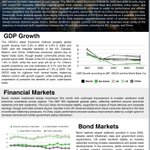
Explore this month’s Quick Reference Snapshot for a concise two-page overview with charts and key takeaways below.
Dive deeper into the full PulsePoint for comprehensive data, insights, and trends: ibec.ie/ibec-global/insights…
@ibec_irl @jackieaking
#GlobalEconomy #Geoeconomics #Trade #Investment #FDI #Inflation #BusinessLeadership #IbecGlobalPulsePoint #GDPGrowth #LabourMarket #FinancialConditions #Trade #IbecGlobal


Power Is Reorganising: What This Week’s Global Developments Could Mean for Business and Investors
From the BRICS summit in Rio to the shifting status of key US tariff exemptions, this week’s events may point to more than diplomatic theatre. We’re seeing early signs of a deeper shift in a reorganisation of global power, away from multilateralism and towards flexible blocs, competing standards, and politically shaped economic zones. For global business leaders and investors, these are not side stories, they are signals of a new operating environment where agility, alignment, and strategic foresight will increasingly define competitiveness.
Three Signals to Watch:
➡ 1. Blocs Are Becoming Systems: At the BRICS summit, political statements grabbed headlines but behind them, the bloc is making moves towards practical cooperation, from developing alternative payment systems to launching bloc-level climate finance initiatives. These are still early-stage efforts, but if they hold, they could evolve into tangible alternatives to dollar-based trade and finance norms. What’s forming isn’t just a geopolitical club. It is the potential foundation of a parallel system that could fragment global flows, standards, and influence.
➡ 2. Trade Alignment Is Replacing Trade Liberalisation: The US decision to extend its pause on sweeping reciprocal tariffs until 1 August highlights a broader trend that trade is no longer a neutral platform. It is a tool of geopolitical leverage. Proposed tariffs reaching up to 70% on industrial imports and the threat of pharmaceutical duties (though delayed for now), signal the use of trade measures to reshape production and pressure partners. The implications are global. From Europe to Asia, governments and multinationals are being forced to navigate politicised trade frameworks, recalibrate supply chains, and negotiate market access in an environment where alignment increasingly matters as much as efficiency.
➡ 3. Political Risk Is Repricing Strategy: From strategic subsidies to the extraterritorial reach of regulation, governments are becoming more assertive actors in shaping economic outcomes. This isn’t a temporary shift, it’s structural. Businesses now operate in a world where market access, technology partnerships, and even capital flows are filtered through a lens of political intent. Whether in digital policy, climate-linked regulation, or industrial realignment, political risk is not just background noise, it is the environment itself. For firms and investors alike, that means reassessing exposure, tracking regulatory divergence, and embedding political intelligence into core decision-making.
The Bottom Line: The global economy is being redrawn and not by market forces alone. It is being shaped by shifting power, rival models, and new strategic alliances. Those who spot the signals early and position accordingly won’t just reduce risk, they will unlock advantage.
@Ibec @jackieaking
#IbecGlobal #BRICS #Trade

In the latest update to our Global PulsePoint, we see persistent inflationary pressures and uneven recovery trajectories across regions as global economic growth continues to slow.
➡ Access the full Global PulsePoint here: ibec.ie/ibec-global/insights…
➡ See our latest Global PulsePoint briefing below.
@ibec_irl @jackieaking
#GlobalEconomy #FinancialConditions #Productivity #LabourMarket #Trade #IbecGlobal


Evolving alliance landscapes
This week’s @NATO Summit comes at a pivotal moment. With rising instability in the Middle East, renewed pledges on Ukraine, and an evolving position of traditional powers, leaders are doubling down on collective defence and budgetary negotiations. Allies committed to the highly anticipated 5%, leading to the critical next step of how to operationalise this increased spending. But a very consequential change is happening in parallel, as Europe rethinks how it builds security ties and industrial policy.
Here are three takeaways to consider:
➡ A diversified approach to influence: In recent weeks, we’ve seen a series of high-level announcements that signal this new direction. In May, the European Union and the United Kingdom concluded a long-awaited Security and Defence Partnership, this week, Canada and the EU inked one of the bloc’s most expansive agreements, and on the heels of the G7 summit, the EU and Australia agreed to launch negotiations for a new Security and Defence Partnership. These moves reflect a recalibration of how Europe projects influence, and shares capabilities as traditional frameworks becomes less certain.
➡ Tailored leverage in a competitive era: As Europe pivots to these bespoke defence pacts that complement traditional alliances, implications go beyond security and embrace broader agendas like competitiveness. Countries are using partnerships within defence to advance technological edge, secure supply chains, and diversify diplomatic leverage. Defence policy is no longer confined to hard power; it’s a platform for strategic positioning across sectors and regions.
➡ Foresight and strategy remain top needs: As governments hardwire security into economic strategy, new frameworks are opening up for critical infrastructure, cybersecurity, and dual-use innovation. Capturing these opportunities requires anticipation and clear direction, from the public and private sector. Businesses will need to navigate new standards, align with emerging priorities, and engage early to capture gains.
As we analysed in our recent Global Compass, it is truly time to “Make Defence Everyone’s Business”.
📖➡ Read our Global Compass here: ibec.ie/ibec-global/insights…
@ibec_irl @jackieaking
#GlobalBusiness #BusinessLeadership #NATO #Defence #Security

G7 Summit 2025: A Signal of Shifting Influence
This year’s G7 Summit in Canada unfolded at a time of intensifying political realignment and escalating tensions. While Ukraine, economic resilience, and global partnerships dominated the official agenda, the real strategic signals came from what wasn’t said, or what was abruptly cut short.
Three key takeaways for business leaders:
➡ Defence keeps setting the tempo: The summit’s sharp focus on security marks a growing convergence between economic policy and strategic affairs. For companies, this development means even formerly “neutral” sectors are increasingly pulled into the orbit of national security. Defence and autonomy narratives permeate all business discourse, demanding enhanced preparation and strategies to navigate this interplay.
➡ Europe’s influence remains fragmented and fading where it matters most: The Middle East crisis exposed how disjointed Europe remains when it comes to high-stakes geopolitics. Trump’s early departure, prompted by developments in the Iran-Israel conflict, underscored that the real power conversations are happening elsewhere. While individual European leaders showed presence, the EU as a bloc lacked weight and coherence. For businesses, it’s time to rethink where global influence is shaped and to distribute engagement strategies accordingly.
➡ G7 is no longer the whole room: The most telling development was what happened outside the formal G7 circle, as real momentum is moving toward ad hoc, flexible groupings beyond traditional frameworks per se. The G7’s outreach to non-member countries from Africa, Latin America, and Southeast Asia illustrates this shift from fixed alliances to issue-based coalitions. The world is reorganising into networks of influence and for business, success now hinges on navigating across these agile ecosystems to extract intelligence and embed desired policy outcomes.
📖 READ our Global Compass titled 'Making defence everyone’s business' here, for five key insights on the evolving landscape of defence: ibec.ie/ibec-global/insights…
@ibec_irl @jackieaking
#IbecGlobal #GlobalBusiness #Defence #G7

The newly released @OECD Economic Outlook offers a sober assessment of current challenges but also outlines policy pathways to support resilience, investment, and more sustainable growth across economies.
Here are 5 major takeaways:
1. Global growth loses momentum: The OECD now forecasts global GDP growth to decline from 3.3% in 2024 to 2.9% in 2025 and 2026. Beyond cyclical cooling, the slowdown reflects tighter financial conditions, eroding confidence, and mounting trade fragmentation—pointing to deeper, more structural headwinds.
2. Inflation outlook worsens: OECD-wide inflation is now expected to reach 4.2% in 2025, up from 3.7% in previous forecasts. Higher trade costs and geopolitical uncertainty offsetting disinflationary forces, delaying the return to target in many economies.
3. Investment remains weak: Despite past gains in corporate profitability, investment remains slow, held back by uncertainty and higher borrowing costs. The OECD highlights structural reforms and improved access to finance as key levers to unlock productivity-enhancing capital flows.
4. Trade tensions are weighing on resilience: Rising tariffs and policy fragmentation are increasing business costs and discouraging international investment. The OECD warns that escalating trade frictions could amplify downside risks through financial volatility and weaker household consumption.
5. Strategic reforms are urgent: To rebuild momentum, the OECD calls for reforms that reduce entry barriers, foster competition, and strengthen public finances. Open markets, credible policy frameworks, and regulatory alignment remain central to restoring growth prospects.
➡ Access the full outlook here: oecd.org/content/dam/oecd/en…
➡ Visit our Global PulsePoint, a one-stop hub tracking macroeconomic conditions, helping you navigate the global business landscape with confidence, here: ibec.ie/ibec-global/insights…
@ibec_irl @jackieaking @BusinessatOECD
#OECD #IbecGlobal #GlobalBusiness

This June, we're celebrating Pride Month at Ibec Global! 🌈
Pride Month offers a key opportunity to unite in celebrating the contributions of the LGBTQ+ community to the business world.
Ibec’s Diversity & Inclusion Hub provides all the support, guidance, and insight you will need to build a diverse and inclusive workplace.
➡ Visit here: ibec.ie/influencing-for-busi…
@ibec_irl
#Pride2025 #DiversityandInclusion

In this Week in Focus, Executive Director @jackieaking outlines the long-term significance of the widening gap between teenage career ambitions and the skills the future economy demands, in line with the OECD 's latest report and Ibec's 'Our skills ambition' campaign.
➡ For more on Ibec's 'Our skills ambition' campaign: ibec.ie/influencing-for-busi…
🧾 READ the full OECD Report here: oecd.org/en/about/news/press…
📖 READ our Global Compass on 'Cracking the Code: Unlocking Competitiveness in a Complex Geopolitical Matrix' here: oecd.org/en/about/news/press…
@ibec_irl @OECD @OECDEduSkills
#OurBusinessAmbition #IbecGlobal #BusinessLeadership #GlobalBusiness #Skills #Competitiveness
Shangri-La Dialogue: Defence as the new map of influence
This week, the Shangri-La Dialogue returns to Singapore—an annual defence forum that has grown into a broader global barometer. While the agenda includes familiar themes—US-China tensions, Indo-Pacific strategy, and regional security risks—what stands out is how defence is increasingly intertwined with economic and technological strategy.
This summit is a platform to signal influence, test alliances, and where the architecture of future resilience begins to take shape.
Here are three takeaways to consider ahead of the summit:
1. A defence summit redefined as a strategic foresight hub - Sessions on China’s global partnerships and cross-regional interlinkages are not just about military doctrine—they are early indicators of political momentum. What countries choose to highlight, and who they engage with, reveals where pressure is building and where space for alignment may open. For business leaders, these signals offer foresight into the next wave of risk exposure—whether via export controls, tech fragmentation, or shifting regulatory blocs.
2. Convergence of public-private priorities - Cyber threats, undersea cable vulnerabilities, and outer-space infrastructure challenges all feature prominently reminding us that the boundary between national security and business continuity is increasingly blurred. As noted in our fall 2024 edition of the Global Compass, defence goes beyond a government-only concern. Resilience now requires joint ownership, where companies are expected to anticipate, defend, and collaborate.
3. Defence as economic strategy - This year’s focus on innovation and non-proliferation signals a deeper shift: defence is now part of how countries structure economic competitiveness. From semiconductors to critical raw materials, national security policy is shaping the industrial landscape. For global firms, this scenario means understanding defence as a framework—one that defines which sectors gain strategic relevance and which partnerships are politically viable.
By spotlighting the convergence of security, technology, and policy, the Shangri-La Dialogue offers more than defence insights—it reveals the evolving map of global influence.
As highlighted consistently by Ibec Global, resilience today means not just reacting to threats but aligning with the systems that shape long-term stability. For businesses, the latest global developments are a signal to integrate geopolitical awareness into strategic planning—not as a response, but as a capability.
Check out our Global Compass “Making defence everyone’s business” here: ibec.ie/ibec-global/insights…
@ibec_irl @jackieaking
#ShangriLa #Defence #US #China #IndoPacific #GlobalBusiness #BusinessLeadership

In the latest update to our Global PulsePoint, we see the global economy continue to lose momentum, with recovery increasingly uneven and vulnerable to policy shocks.
➡ Access the full Global PulsePoint here: ibec.ie/ibec-global/insights…
⬇ See our latest Global PulsePoint briefing below.
@ibec_irl @jackieaking
#GlobalBusiness #GlobalGrowth #InterestRates #Inflation #Productivity #Trade #BondMarkets


Ibec Global retweeted

🇮🇪🤝🇨🇦🤝🇪🇺
Ambassador Concannon & the teams at our Embassy in Ottawa & Consulate Toronto were delighted to welcome IBEC Exec Director, Jackie King for a series of meetings with business leaders & GAC officials, to discuss the economic opportunities for 🇮🇪 as a Gateway to🇪🇺 for🇨🇦


Europe’s two-track push for competitiveness
This Wednesday the European Commission unveiled its EU Single Market Strategy – a renewed approach aiming to boost integration and competitiveness by tackling persistent internal barriers. At the same time, the EU and the UK have launched a renewed strategic partnership, marking a post-Brexit reset with broad economic and political significance.
Together, both initiatives reveal a coordinated shift: Europe is reinforcing its position by advancing integration at home while re-engaging key external partners.
Here are three takeaways to consider:
1. Removing barriers, connecting partners: The EU Single Market Strategy targets longstanding obstacles—from fragmented labelling to cross-border service restrictions—that have limited the Single Market’s potential. But its intent goes beyond technical fixes: it’s a bid to mobilize the market as a structural driver of competitiveness. In parallel, the EU-UK partnership sets out practical steps for regulatory cooperation, including on energy, mobility and professional qualifications. Taken together, both tracks reflect a broader push to use integration – whether internal or cross-border – to restore scale and efficiency.
2. Commitment over coordination: Domestically, the EU is proposing new efficiency mechanisms—Sherpas, SMET upgrades, a possible Barriers Prevention Act—to address chronic enforcement gaps. Externally, the EU-UK reset aims to do the same through structured cooperation in defence, security, and trade. Both cases show that functional governance is less about new rules, and more about mutual commitment to make existing frameworks work. The challenge lies in sustaining political will—without it, alignment remains surface-level.
3. Speed vs. sequencing: The Single Market reforms are staged through 2027, raising concerns in areas like digital compliance and green regulation. Meanwhile, the UK track moves faster, anchored by a summit that produced concrete outcomes and clear political buy-in. This contrast matters: if internal reforms lag, Europe may find that its external partners adapt quicker generating imbalances. Competitiveness today is not just about having the right strategy—it’s about being able to implement it at pace.
By combining structural reform at home with renewed alignment abroad, Europe is retooling integration into a strategic asset. The critical question is whether these two tracks reinforce each other—or highlight the urgency of delivery. For business, these updates signal a pivot from managing fragmentation to capturing scale—where regulatory alignment and cross-border access are set to become key drivers of competitive advantage.
@ibec_irl @jackieaking
#GlobalBusiness #IbecGlobal #SingleMarket #EU #UK

Ibec Global retweeted

#ICYMI 📣 Jackie King, Executive Director @IbecGlobal, joined Nikki Gallagher to discuss the new edition of Global Compass, including how businesses can lead through and adapt to ideological and cultural divides, in the latest #IbecResponds.
Listen now: ibec.ie/ibec-podcasts/ibec-r…

In this episode of Ibec Responds, @jackieaking Executive Director of Ibec Global, and Nikki Gallagher Head of Public Affairs at @Ibec, discuss the latest edition of our Global Compass titled 'Navigating Polarisation: Business Leadership in a Fragmented World', and what the new global political realignments and shifts mean for business.
➡ Listen now: ibec.ie/ibec-podcasts/ibec-r…
📖 Read the latest Global Compass here: ibec.ie/ibec-global/insights…
#GlobalBusiness #BusinessLeadership #Polarisation #Fragmentation

Ibec Global retweeted
#Ibec's Nikki Gallagher, Head of Public Affairs, is joined by Jackie King (@IbecGlobal) in the latest episode of #IbecResponds.
They discuss the latest Ibec Global Compass -Navigating Polarisation: Business Leadership in a Fragmented World
Listen now: ibec.ie/ibec-podcasts/ibec-r…

Given recent developments in US trade relations with the UK and China, Executive Director @jackieaking shares three key takeaways in this Week in Focus edition—showing how tariffs and trade deals are now real-time tools of political influence.
⬇ Watch in full below.
📖Read our latest Global Compass titled 'Navigating Polarisation: Business Leadership in a Fragmented World' here: ibec.ie/ibec-global/insights…
@ibec_irl
#GlobalBusiness #BusinessLeadership #Trade
Ibec Global retweeted
"We stabilise our relationship with them (U.S) and think about our own interests and what else we need to be doing."
@goldyhyder (President/CEO @BizCouncilofCan) joined Jackie King (Exec Director @IbecGlobal), in latest #IbecResponds
Listen now: ibec.ie/ibec-podcasts/ibec-r…
Canada after the election: what’s next for global trade, business leadership, and transatlantic ties?
@goldyhyder joins Ibec Responds to discuss the future of the global economy.
➡Listen now: ibec.ie/ibec-podcasts/ibec-r…
@jackieaking @ibec_irl @IrlEmbCanada @canadaireland @BizCouncilofCan @IrlAmbCanada
#IbecResponds #GlobalBusiness #Geoeconomics #TransatlanticTrade #BusinessLeadership #CanadaBusiness #IrelandBusiness #EUTrade #EconomicPolicy
