

Computational structural biology. PhD from Baker lab @UWproteindesign
Seattle, WA
Joined May 2018
- Tweets103
- Following187
- Followers539
- Likes345



Ian Humphreys retweeted

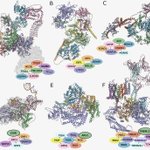
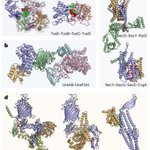
Excited to share our now published manuscript @CellCellPress highlighting advances in modeling the evolution of protein-protein interactions with MSA Pairformer. Big thanks to @ZhidianZ, @oliviatang116, @eunbelivable, Milot Mirdita, Martin Steinegger, and @sokrypton !🧵 (1/10)
cell.com/cell/fulltext/S0092…

Ian Humphreys retweeted

Predicting protein-protein interactions in the human proteome | Science science.org/doi/10.1126/scie…

Ian Humphreys retweeted

We are pleased to share our new preprint: “De novo design of RNA and nucleoprotein complexes”.
This work extends the principles of de novo protein design to RNA and DNA, enabling the generative design of complex multi-polymer structures! (1/6)
doi.org/10.1101/2025.10.01.6…
Ian Humphreys retweeted

pH gradients are central to physiology, from vesicle acidification to the acidic tumor microenvironment. But how do we program proteins to respond to pH? In our new preprint biorxiv.org/content/10.1101/…, we developed computational methods to rationally design pH-sensitive binders. 🧵

Ian Humphreys retweeted

Phosphorylation on tyrosines control key pathways in immunity, cancer, and metabolism. For the first time, we can now design proteins that specifically recognize individual phosphotyrosines, even in disordered regions. (1/8)
Preprint: biorxiv.org/content/10.1101/…
Ian Humphreys retweeted

We sought to make proteins both potent and FAST. We used #proteindesign to design precise control over protein interaction lifetimes, enabling us to construct rapid-response circuits, biosensors, and switchable cytokines. Now published @Nature! Links to paper and tutorial below.
This effort is the culmination of a series of proteome interaction prediction stories from Ecoli (science.org/doi/full/10.1126…), to yeast (science.org/doi/full/10.1126…), and human bacterial pathogens (nature.com/articles/s41564-0…)!

We find predicted interactions which can be linked to GPCRs, cancers, and other genetic diseases. We map SNP data into the interfaces, and assemble higher order oligomers to explore some of these systems, but there’s much more to look at on our website: prodata.swmed.edu/humanPPI

We enriched the evolutionary information by assembling ‘omicMSAs’ from genomic databases, curated a domain-domain distillation dataset of 220k clusters that resemble heterodimers interactions, and trained a a new lightweight RF2-PPI for interactome screening to find 18k PPIs.

Thrilled to share that today we report our human protein interactome in @ScienceMagazine! Predicting which pairs of proteins in the human proteome is a great challenge due to the shallow eukaryotic evolutionary signals but hugely important to understand. science.org/doi/10.1126/scie…
Ian Humphreys retweeted

We asked ourselves what could we do if we worked cooperatively as a team to create a single model that could design any biomolecular interactions.
Yesterday, we reported details of RFdiffusion3, the next step towards building functional proteins straight from the computer.

Ian Humphreys retweeted

Very excited to share our paper "De novo Design of All-atom Biomolecular Interactions with RFdiffusion3", now on BioRXiv. biorxiv.org/content/10.1101/… 1/n
Ian Humphreys retweeted
We built RF3 with @nvidia’s latest cuEquivariance accelerations, letting us iterate fast.
Now we’re sharing the full stack: ModelForge — open-source infra for training biomolecular AI.
Start your project here 👉 github.com/RosettaCommons/mo…

Ian Humphreys retweeted
Excited to share work with @ZhidianZ, Milot Mirdita, Martin Steinegger, and @sokrypton
biorxiv.org/content/10.1101/…
TLDR: We introduce MSA Pairformer, a 111M parameter protein language model that challenges the scaling paradigm in self-supervised protein language modeling
🧵
