

Wife, mother, grandmother. An older fan supporting Team Sky, Team INEOS & now INEOS Grenadiers💂 All views are my own, so I don't expect rudeness or abuse!
St Brelade, Baliwick of Jersey
Joined April 2014
- Tweets72.5K
- Following299
- Followers1.2K
- Likes158K


Liz Miller retweeted

So many people have contacted CRY wondering if there are others they could talk to who have suffered similarly.
CRY has a network of Bereavement Supporters who have themselves been affected by a young sudden cardiac death. They have completed a two-year counselling course so that they can offer support, over the telephone, to others.
If you would like to speak about bereavement support or would like advice about expert pathology or cardiology, please contact CRY’s support team on 01737 363222 or email cry@c-r-y.org.uk.

Liz Miller retweeted
Every week in the UK, at least 12 young people die suddenly from undiagnosed heart conditions. CRY works to reduce this number and offers support for those who are affected by young sudden cardiac death. Visit c-r-y.org.uk/ to find out more about CRY's work #12AWeek

Liz Miller retweeted
Thank you to everyone who supported CRY throughout Raising Awareness Week. Whether you attended or organised a fundraising event, shared our posts, or made a donation, your efforts in raising awareness truly help save lives. We’re incredibly grateful for your support! #raisingawarenessweek

Liz Miller retweeted
Show your support for CRY this Raising Awareness Week!
There are plenty of ways you can help raise awareness and support CRY's vital work.
Learn more about how to get involved at: c-r-y.org.uk/raising-awarene… #12AWeekChallenge #CRYGreatCakeBake

Liz Miller retweeted
Want to know more about cardiac screening? From the full procedure to why heart screening is so important, we can help provide answers. For information about heart screening, visit our FAQ's page 👉 c-r-y.org.uk/category/faq/

Liz Miller retweeted

It's time for my occasional reminder that balloons don't fly up to grandma up in heaven. They go up about five miles, burst, and fall back down.
What lands is a translucent scrap of latex with a ribbon attached, floating on water, stuck on land, looking almost exactly like a jellyfish. Sea turtles, seabirds and fish eat them.
Balloons are the deadliest piece of plastic a seabird can ingest, something like 32 times more likely to kill than a hard fragment, because soft latex folds and blocks the gut instead of passing through.
The ribbon stays intact for years, and it wraps around necks, wings and flippers long after the balloon itself is gone.
The biodegradable balloons don't fix the problem. University of Tasmania researchers buried latex balloons in industrial compost, the fastest breakdown environment that exists, and dug them up 16 weeks later fully intact.
Louisiana made intentional releases a finable offense this year. Most of Europe has banned them.
If you want to mark something: plant a tree, light a candle, blow bubbles, ring a bell. Whatever you're releasing it for, it isn't going where you want it to go.

Liz Miller retweeted
Cardiac screening is so vital in the prevention of young sudden cardiac death and we are so grateful to our CRY supporters who fundraise to host a cardiac screening
#12aweek #testmyheart

Liz Miller retweeted
We need your help!
CRY is looking for a venue to hire for next year's London Marathon weekend.
After Team CRY runners cross the finish line, we'd love to provide them with facilities to shower, have a massage from one of our therapists , and have some well-earned rest and refreshments before heading home.
As we have been fortunate enough to secure places in both the Saturday and Sunday events, we're looking for a venue that would be available on both days.
If you know of a suitable building, such as a hotel, office, or other venue near St James's Park, that CRY could contact, Please email events@c-r-y.org.uk.

Liz Miller retweeted
So many people have contacted CRY wondering if there are others they could talk to who have suffered similarly.
CRY has a network of Bereavement Supporters who have themselves been affected by a young sudden cardiac death. They have completed a two-year counselling course so that they can offer support, over the telephone, to others.
If you would like to speak about bereavement support or would like advice about expert pathology or cardiology, please contact CRY’s support team on 01737 363222 or email cry@c-r-y.org.uk.

Help please X
Why do you keep changing my preferred page from 'following' to 'for you'?
SO ANNOYING🤬
3
233
Liz Miller retweeted
Every week in the UK, at least 12 young people die suddenly from undiagnosed heart conditions. CRY works to reduce this number and offers support for those who are affected by young sudden cardiac death. Visit c-r-y.org.uk/ to find out more about CRY's work #12AWeek

Liz Miller retweeted

There's still time to get your hands on a race-worn jersey from the Tour de Romandie - our final race as the INEOS Grenadiers.
Visit @MatchWornShirt and take a look: l.mws.com/i8i9hG

Liz Miller retweeted

Posting this again as it is nesting time. Dogs on leads near breeding areas - PLEASE 🙏🙏
Liz Miller retweeted
News Article: Appointments for Heart Screening Event Funded by Shetland Heart Screening Group Are Available to Book from 4pm Today.
“We still believe these screenings are very worthwhile and hope they remain to be supported as we continue to do our best to make them happen in Shetland.”
Liz Miller retweeted

We are called "the elderly." But that quiet label hides something most people rarely stop to consider. We are the last living witnesses of a world that no longer exists.
Look at us and you might see gray hair, slower steps, and the patience that time teaches.
But listen to our story — really listen — and you'll realize something extraordinary.
We are the only generation in human history to have lived a fully analog childhood and a fully digital adulthood.
That's not a small thing. That's one of the most breathtaking journeys a human being has ever been asked to make.
We were born in the 1940s, 50s, and early 60s, into a world still rebuilding from the rubble of World War II.
Our toys were marbles and hopscotch and card games at kitchen tables. When the streetlights flickered on, that was it — childhood adventures were over, and it was time to go home. No smartphones. No streaming. No endless scroll.
We built our memories in the real world. With scraped knees and laughter echoing down streets and friendships formed face to face.
In 1969, we sat in living rooms staring at black-and-white televisions as Neil Armstrong took humanity's first steps on the Moon. Hundreds of thousands of us stood in muddy fields at Woodstock believing — really believing — that music and community could reshape the future.
We fell in love to vinyl records spinning on turntables. We waited days, sometimes weeks, for handwritten letters to arrive. We learned patience because information didn't come instantly. Mistakes were fixed with erasers — not a delete button.
Then the world transformed.
Machines that once filled entire rooms shrank to devices lighter than a paperback. We went from rotary phones and party lines to seeing the face of someone we love on the other side of the ocean — instantly, on something that fits in a pocket.
We watched the birth of the personal computer. The arrival of the internet. The smartphone. Artificial intelligence.
And through every single shift — we adapted.
Not because it was easy. Because that's what our generation does.
We also carry the weight of history in our bodies.
We grew up afraid of polio and tuberculosis. We watched science defeat them. We witnessed the discovery of the structure of DNA, the decoding of the human genome, the transformation of medicine itself. We survived pandemics across decades — and kept going.
Few generations have been asked to absorb so much change in a single lifetime.
And through all of it, certain things never changed.
We still know the joy of a cold glass of lemonade on a hot afternoon. The taste of vegetables picked straight from a garden. The value of a long conversation that unfolds slowly, without a screen interrupting it.
We have celebrated births and mourned losses. Carried the stories of friends who are gone. Watched the world become something our younger selves couldn't have imagined — and found ways to belong in it anyway.
We are not relics.
We are living bridges between two entirely different worlds.
Our memory carries something the modern world needs — proof that progress doesn't have to erase wisdom. That speed doesn't have to replace patience, kindness, or reflection.
So when someone calls us elderly, we can smile.
Because behind that word is something remarkable.
We crossed two centuries. Witnessed eight decades of transformation. Walked from handwritten letters to artificial intelligence — and never lost our sense of what actually matters.

Liz Miller retweeted

Axel Zingle doing a Vincenzo Nibali. 🤷 #E3SaxoClassic
Liz Miller retweeted

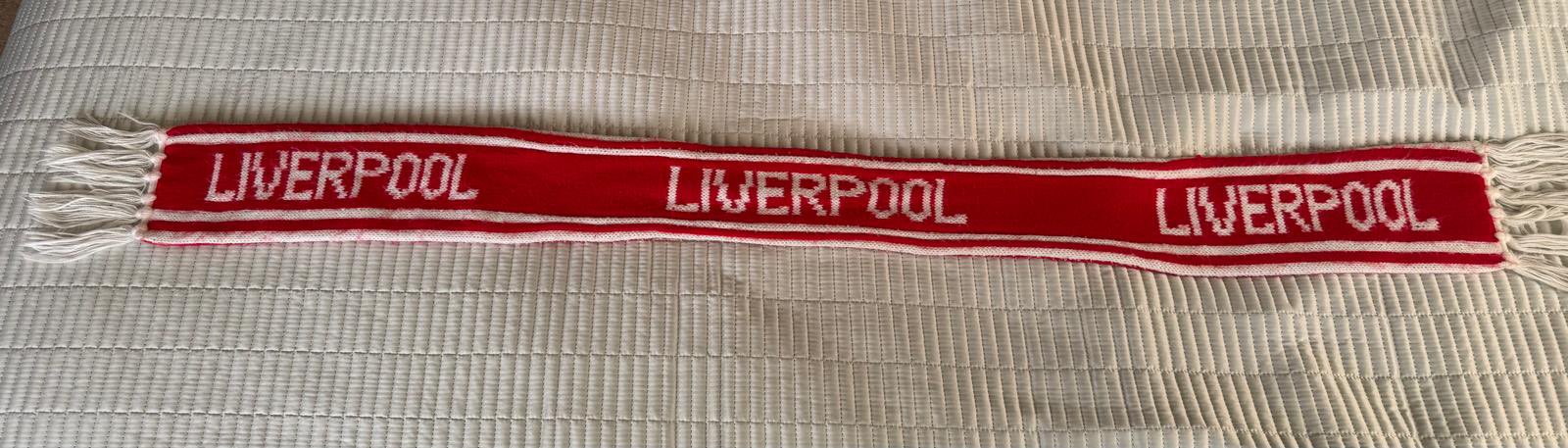
A family friend lost her scarf at the ground after the West Ham or Wolves game late Feb/early March. She’s had it for 45 years and it was with her at Hillsborough and laid on the Kop after. If anyone can help us find it, we’d really appreciate it. Please RT

Liz Miller retweeted
CRY has Facebook groups where people can connect and share experiences with other people who have been affected by a young sudden cardiac death.
To find out more or sign up, visit: c-r-y.org.uk/facebook-bereav…

Liz Miller retweeted
You can now read CRY’s latest Update magazine online!
View the latest issue digitally today and stay up to date with all the latest news and stories. Choosing to read the digital version of our Update Magazine enables CRY to keep supporters informed whilst reducing our cost for printing the Update Magazine. issuu.com/cardiacriskintheyo…

Liz Miller retweeted
1 in 300 young people. Hidden heart conditions. Found by screening.
But a single screening has limits. Some conditions develop with age — on average, 3.6 years after an initial clear result.
That's why CRY's AI Cardiac Screening and Research Project is designed to support repeat testing and smarter monitoring.
Evidence → Innovation → More lives saved.
sbrew.link/mnWbAWW6 #TestMyHeart #CRYResearch
