


Pinned Tweet
"But now money is code & code is speech. So money and speech are actually the same thing. Speech is free but you’re trying to restrict the flow of money and the two just can’t go together." Still favorite statement to date by @naval
#blockchain #decentralize #bitcoin #naval
Refreshing to see the focus on the tech. Happy Alpenglow! 🏔️

From Genesis to Alpenglow! 🏔️
As a @solana validator since the Testnet days, it's been incredible to witness the network's journey and contribute to its growth through every stage. This feels like one of the most meaningful milestones yet.
Now back to producing blocks! ⚡
Ilinca | Chainode Tech retweeted

If AI is risky like fire is risky, then you want everyone to have it.
If AI is risky like a nuclear weapon is risky, then you want no one to have it.

Maybe you have recently become aware of the AI safety debate and the arguments swirling around it.
If you want to understand them, you need to understand a couple things that almost everyone gets wrong:
There are TWO distinct classes of AI dangers, and it's VERY important to think about them separately, and not let one confuse you about the other.
Many many people (including many quite intelligent, clear-thinking people) do not effectively understand the fundamental differences between these two classes of dangers.
The first one has to do with the theory that an AI far superior to human intelligence (Artificial SuperIntelligence, or ASI) will inevitably wipe out the human race.
The second one has to do with the idea that powerful AI will result in very harmful things happening to many human beings, possibly all human beings.
Those two sound VERY similar, don't they?
They are DIFFERENT. Understanding how they are different is crucial if you want to think about or contribute usefully to any conversation about AI safety or AI harm. You might feel like you are Making Very Good Points or Asking Incisive Questions, but if you aren't clear on the differences between the two, you aren't.
So, I'm going to tell you what the difference is so that you can talk more usefully.
The first one concerns itself with a very specific thing, which is ASI (Artificial Superintelligence) that is more intelligent than any human being. When I say that, I am not referring to a thing like how Einstein is smarter than you, we are talking more about something like how a human being is more intelligent than any mouse.
In our regular lives, we meet other people who we can tell are smarter than us, vs some who are less smart. The line is fuzzy, because intelligence has a lot of dimensions. I'm better at a "rotating shapes" kind of intelligence than my wife, and she is better at "words-making" kind of intelligence than I am.
But every human is better in almost every dimension of intelligence than every single mouse.
That's the level we're talking about: an artificial superintelligence - made up of a computer or a network of computers - that is more intelligent than any human. And more intelligent by a long shot, by a wide margin, in an indisputable way like how humans are above mice.
That is the first thing.
The theory says that if you have an AI that is vastly smarter than all humans - in the way that a human is smarter than mice - that superintelligent AI will inevitably, eventually, sooner or later, wipe out every human on the planet.
We will refer to this as "existential risk."
The common follow-up question "well, how exactly is it going to do that?" is NOT the important question, and one of the most important elements of understanding this theory is first getting why that particular question is not important. A couple analogies:
Analogy 1: You are playing chess against a grandmaster. My theory predicts the grandmaster is going to beat you. You can ask "Well, how exactly is he going to do that?" I don't know, because I'm not a grandmaster, I just know that a chess grandmaster is almost always going to beat a normal player like you. And I'd be right. So the question "how is he going to do that" is not important, and doesn't affect the final outcome. He's going to figure out a way because he's way better than you.
Analogy 2: Humans are smarter than all other animals, comprehensively, by a wide margin. We have driven numerous species to extinction, not because we hated them or hunted them. Many of them have died out without most humans even ever thinking about them. All we did was expand our civilization, use up resources, encroach on habitats, and pretty soon the resources needed by those species went away and they died out. We figured out a way to get what we wanted because we're way smarter than them, and often we didn't even notice they died as a result.
A lesser animal asking, "how are the humans going to wipe us out?" is not asking a relevant question. We don't know, but we do know that any time humans and lesser species compete for any kind of resources, the humans will win. The fact that we know who is going to win beforehand - and that it is due to the vastly different levels of intelligence - is the key concept here.
A vastly more intelligent AI is likely to care about things that are incomprehensible to us, the way animals can't understand human goals. It's going to need resources to pursue those goals and it's going to be far more effective at gaining control of them and excluding us from them - in the same way that we are far more effective than other lower species.
A much more intelligent AI will not care about our interests, it will care about its interests, and to whatever small degree we happen to escape total annihilation from losing access to all our resources, any remaining humans will likely be enslaved into a system that serves the AI's own purposes.
That is the first thing. (Remember how I said at the beginning of this post that there was a first thing, and then a second thing?)
The first thing is the most difficult to understand, because you have to extrapolate how a vastly superior intelligence would act, and you can only use analogies like "how do humans treat lesser creatures," and the analogies are messy.
But now let's move on to the second thing.
The second thing is "everything else you've ever heard that AI might do that's harmful."
That's a little inaccurate. It's actually "everything else you've ever heard that humans might use AI to do that's harmful."
This is the critical difference. The first one talks about the inevitable outcome of what happens when two vastly different levels of intelligence collide, e.g. ASI vs humans, or human vs mice.
The second one has to do with what happens when humans possess AI as a powerful tool. This second thing is much easier to understand, because we have many more concrete notions:
Like:
- the military uses AI to make hyper-efficient killer drones and missiles
- your capitalist overlords use AI to replace you and everyone loses their jobs
- authoritarian government uses AI to surveil everybody and control the entire population
- hackers use AI to break into secure networks and hold companies and governments hostage
- students use AI to cheat on homework and show up to college knowing nothing
- AI slop saturates the internet and makes it impossible for artists and writers to make a living
- terrorists use AI to make biological or nuclear weapons
or even things like
- the military hands control to an AI and it misinterprets something and launches nuclear attacks and kills millions
All of those sound pretty familiar, right? Yeah, you've heard them before. We call this second thing "risks from misuse."
These problems are not the first class of problem! This second class of problems exists while AI is a tool that can be controlled by humans, and humans use it to do evil or careless things to each other. The problems may sound exotic or dystopian or novel, but they are fundamentally problems having to do with flawed human nature.
Given a powerful tool, some humans will likely use it to control or otherwise harm others. This is a very familiar problem.
I am not condemning or condoning this. I'm just describing it.
That is a fundamentally different danger from the first thing, which is that when a human is far superior to a mouse, the mouse is likely to come to harm because the human cares about doing human things, and the mouse is not gonna make it once the humans get going.
=====
Hopefully from the above, you have understood the difference between the first thing and the second thing. I will list them again - see if you now understand how they are different:
The first one has to do with the idea that an AI superior to human intelligence (Artificial SuperIntelligence, or ASI) will inevitably wipe out the human race.
The second one has to do with the idea that powerful AI will result in very harmful things happening to many human beings, possibly all human beings.
Can you tell how they are different now?
If not, re-read the stuff from earlier until you understand.
We call the first one "existential risk" and we call the second one "risks from misuse."
Once you understand, here is the CRUX of the problem:
SOLUTIONS TO THE SECOND THING DO NOT HAVE ANYTHING TO DO WITH SOLUTIONS TO THE FIRST THING.
In fact, it's worse:
Solutions to the second thing (misuse) look roughly like "give powerful AI to as many people as you can, so they can fight the other people using powerful AI."
But the general solution to the first one (existential risk) is basically "don't let anyone have powerful AI, no one can control super-intelligent AI."
Throughout history, harms from technological misuse typically arise because a small group has control of it and can use it to dominate or harm others. Once everyone has it, things tend to stabilize: you can hurt me, I can hurt you, maybe we test each other (ouch 💥), and then we agree not to hurt each other.
But the first one (existential risk) pretty much just arises if anyone (good or bad!) creates a superintelligence. Because they aren't going to be able to control it, the superintelligence will decide it has other priorities, and then we will be at great risk of being wiped out.
And the solutions that generally work to solve problems like the second thing are EXACTLY THE OPPOSITE of the ones likely to solve the first thing.
THIS is why lots of arguments about "AI risk" or "AI safety" go nowhere. Because someone will be thinking about the risk from the first thing, and another person will be thinking about the risk from the second thing. Both are plausible risks but fundamentally they arise from different things - and so the solutions are not just "bad" or "flawed" - they are likely to be very nearly exact opposites.
Nothing changes if nothing changes.
If you care about @solana, make sure your opinion is expressed. Voting closes in a few hours.
Hours left to vote. Your voice directly shapes @solana's long-term health. Don't sit this one out.
And a reminder for stakers: even if you're not a validator, you can still vote independently, regardless of your validator's expressed vote. That said, ideally you're staking with validators who share your views and values in the first place.
Ilinca | Chainode Tech retweeted

Hours left to vote. Your voice directly shapes @solana's long-term health. Don't sit this one out.
And a reminder for stakers: even if you're not a validator, you can still vote independently, regardless of your validator's expressed vote. That said, ideally you're staking with validators who share your views and values in the first place.
📡 Governance update
Last Sunday Chainode Tech has voted YES on all three Solana active governance proposals:
* SGP-001 The Solana Constitution - a framework for Solana governance and stake-weighted decision-making.
* SGP-002 Double Disinflation - reduces future SOL emissions by doubling disinflation from 15% to 30%.
* SGP-003 Resource and Inclusion Fee - splits Solana fees into a fixed inclusion fee and a resource fee that scales with usage and is 100% burned.
We strongly believe that, despite differing opinions among some stakeholders about these proposals, having these proposals approved is ultimately for the greater good of the Solana network.
As a delegator, you can cast your own vote with your own stake weight if you have a different opinion than us or the validator you have staked with (otherwise is not needed) and track the proposals’ progress here:
governance.solana.com/propos…
For any questions, we are here as always! 🤝
Ilinca | Chainode Tech retweeted
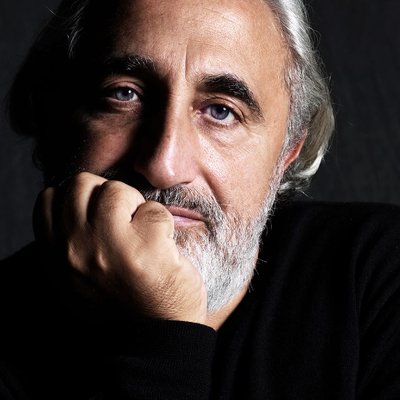
For the first time in recorded history, a civilization has decided that the most enlightened virtue is to surrender its culture, heritage, women, and children without putting up any defence. Suicidal empathy shall prove to be the demise of the West.
Ilinca | Chainode Tech retweeted

BREAKING: Korean fintech giant KSNET is bringing payments on Solana to its network of 330,000+ merchants 🔥
As part of an MOU with Solana Foundation, KSNET will integrate Solana Pay into a payment network processing $4B in monthly volume.

Ilinca | Chainode Tech retweeted

🇪🇺 It's unfortunate to say, but these people seem to live in a world of their own, completely detached from reality. Europe started as a dream and has gradually turned into a kingdom of bureaucracy, populated by bureaucrats trapped inside a self referential bubble. It is astonishing that they want to celebrate €10 billion, which is peanuts compared to the US, while remaining obsessed with the idea that the state should be responsible for everything. Perhaps someone should remind them that they themselves are a significant part of the problem, and that any serious solution must also involve reforming and downsizing both European institutions and national and local bureaucracies.

AI is the most important technology of our time.
Europe wants to become the first AI Continent.
For advanced healthcare, for the transport sector and so much more.
European AI Gigafactories will provide the necessary computing power to make this possible.
Together with our Member States, we are funding their construction with up to €10 billion, which are set to unlock at least €20 billion in private investements across the EU.
Together, we are building our technological sovereignty.
link.europa.eu/qGDhv3
Readers added context they thought people might want to know
Claiming Europe can become the "AI Continent" with a €10B public investment contrasts sharply with reality.
Big Tech alone has invested over $1 TRILLION in AI infrastructure since 2023 (around 100 times the EU's funding).
ft.com/content/dcf387…
Ilinca | Chainode Tech retweeted
Spinning up the validators, planting the genesis flag, counting all 1000 epochs on @solana! 🚀
1000 epochs later, and we're still doing the same thing we've been doing since day one: obsessing over Chainode Tech's validator performance and doing our part to keep the network fast & resilient.
No side quests. No shady yield games. No chasing every shiny meta.
Just relentless uptime, solid infra, fast upgrades, and maximizing rewards for our stakers - the right way.
Here's to the first 1000. The progress has been massive. Onward. 🫡

Ilinca | Chainode Tech retweeted

If Saylor doesn’t stop fucking around with leverage trying to be cute MicroStrategy will fail.
I 1000% believe that.
Don’t give me your shit on the math he tells you either. Sam told us logical math as well right before FTX took down the market.
Greed = fucks you. Period

Ilinca | Chainode Tech retweeted

I've been building something quietly for the last few months. Today I'm sharing it.
Introducing Contextual Design — an AI designer that works directly in your live product. 🧵
(1/6)

Ilinca | Chainode Tech retweeted
Merry Christmas & Happy Holidays to our stakers, partners, and everyone grinding in this industry day in, day out. 🎄
2025 was challenging, so take the break to recharge, reset, spend time with your loved ones, and touch some grass (or snow). We'll keep the nodes running 24/7, as always. 🛠
Grateful for the trust, we don't take it for granted. 🫡 See you in 2026 – stronger. 🚀

Ilinca | Chainode Tech retweeted
Day 1 of @monad Mainnet is finally here! 🚀
Huge congrats to the team, fellow validators and community for making this happen. On day one, few chains launch with the depth of opportunities already live on Monad — DeFi, gaming, yield, consumer apps, and beyond.
For the OG staking enthusiasts: @ChainodeTech is supporting @monad from the very first block with fast, reliable, battle-tested infrastructure. We’re fully live and ready to accept MON delegations for consistent, stress-free rewards. Let’s go! 💜


Monad Mainnet is now live!
Check it out here: app.monad.xyz
app.monad.xyz

Ilinca | Chainode Tech retweeted
One thing @solana and @monad have in common?
🛠️ We’ve been OG validators on both since early testnet days.
Our mission: 100% focused on tech and delivering seamless yields.
Ready for Gmainnet! 🚀
MON, the native token of @monad, will list and be available to trade on Solana simultaneously or even before major exchanges 🔥
Ilinca | Chainode Tech retweeted
Gmainnet! 💜 Chainode Tech is all set and ready to support the @monad Mainnet on day 1 as a validator!
🛠️ Early believers. Testnet grinders. Launch-day validators. 100% committed to the ecosystem. LFG
Ilinca | Chainode Tech retweeted

Your bank lends your checking deposits on risky long duration loans and only insures you up to FDIC limit.
Your stablecoin issuer makes no loans - only buys T-bills - but offers no insurance.
Learn about tradeoffs.