






Dr Daniel retweeted

Thank you 🙏 Canada 🇨🇦: The Genocidal Abiy Ahmed Ali Government has been committing genocide in TIGRAY and in Amhara and the entire state of Ethiopia 🇪🇹‼️
The pathological liar 🤥 Abiy Ahmed Ali is responsible for all the crimes against innocent people of Tigray since the start of the war in November 2020 and till this moment.
Abiy Ahmed Ali, Must be face the consequences of his crimes against humanity and dignity for all the human beings who have been massacred by his regime ordered.
@selama777 @Canada @CanadianPM
#TigrayGenocid #JusticeForTigray
The Myth of Borrowed Strength: Why Misreading Eritrea’s Self-Reliance Is a Fatal Strategic Error
The recent argument PP cadres are allegin that Eritrea relies on foreign powers fundamentally misreads both its history and military doctrine. Eritrea’s entire national identity and defense strategy have always been built on radical self-reliance (Warsay Yikealo), forged not through foreign patronage, but through decades of solitary, sustained combat.
Radical Self-Reliance vs. Foreign Patronage
Eritrea did not subcontract its liberation. For thirty years, it stood alone against an Ethiopian military armed successively by the United States and the Soviet Union, the two foremost superpowers of the Cold War. While foreign powers never bled for Eritrea, the Ethiopian war machine was repeatedly propped up by international patrons:
Cuban brigades, South Yemeni troops, and Libyan forces fought side by side with the Derg; East German specialists fortified its security apparatus; and Soviet commanders directed operations on the ground until EPLF fighters captured three Soviet officers on the battlefield.
By contrast, modern Ethiopian security dynamics tell a very different story:
● Addis Ababa has repeatedly relied on external lifelines to sustain itself during existential crises.
● During the recent northern conflict, foreign support, ranging from extensive United Arab Emirates drone transfers (Wing Loong II and TB2 networks) to foreign technical operators and international financial bailouts, played the decisive role in preventing the collapse of federal lines.
Claiming Eritrea is waiting on Cairo for protection ignores the fundamental reality:
Eritrea has never subcontracted its sovereignty to anyone. While its neighbors routinely rely on foreign patrons and imported hardware just to maintain basic internal cohesion, Eritrea stands on its own.
Critics suffer from remarkably short memories: during the northern conflict, Ethiopia's own Prime Minister admitted before parliament that had it not been for Eritrean intervention, the very survival of the Ethiopian state hung in the balance.
The Fall of the Derg and the Destruction of the Ethiopian Navy
History records who actually dismantled the largest conventional military in Sub-Saharan Africa:
● The Annihilation of the Ethiopian Navy: In March 1990, during Operation Fenkil, EPLF small-boat flotillas and coastal artillery shattered the heavily armed, Soviet-equipped Ethiopian Navy in Massawa within 72 hours, effectively neutralizing Ethiopia's entire naval capacity and sealing its loss of maritime access.
● The Defeat of the Largest Standing Army: The Ethiopian military under the Derg numbered hundreds of thousands, bristling with Soviet T-55 and T-62 tanks, MiG fighter jets, and heavy artillery. The EPLF systematically dismantled this force division by division—from the catastrophic encirclement at Nadew Command in Afabet (1988) to the final push on Asmara in May 1991.
● The Flight of Mengistu: While Mengistu Haile Mariam boasted publicly of "red terror" and fighting to the last bullet, when the EPLF closed the noose on the frontlines, he abandoned his troops, disguised his departure, and fled into exile in Zimbabwe.
Eritrea’s sovereignty was not handed over by a diplomatic summit, nor does it hinge on Egyptian promises. It was carved out against an army backed by world superpowers, built on the unyielding reality that Eritrea fights its own battles. History threatens to repeat itself, precisely because imperialist and expansionist mindsets never learn their lesson.
#Eritrea #HornOfAfrica #WarsayYikealo #Geopolitics #SelfReliance #EastAfrica #MilitaryHistory

39
The Fortified Bastion: Assessing Eritrea’s Asymmetric Deterrence and Readiness Against Ethiopian Aggression
Eritrea’s defense against potential Ethiopian aggression rests on three core pillars:
● asymmetric capability,
●permanent readiness, and
● a deeply militarized national doctrine of existential defense.
Rather than relying on economic scale or raw demographics, Asmara’s strategy is engineered to inflict catastrophic costs on any invading force.
1. Capabilities Built for Attrition
Mass Mobilization:
Eritrean national service provides universal military training. Backed by the People’s Army (militia reserve), Eritrea can field extensive manpower immediately for territorial defense and trench warfare.
Hardened Terrain & Fortifications:
Extensive underground bunkers, trench networks, and pre-sighted artillery kill zones line key southern corridors (Zalambessa, Tsorona, Bure). The highland escarpments create natural choke points that negate mechanized armor breakthroughs, while the harsh Danakil desert punishes extended supply lines.
Denial Firepower:
Eritrea prioritizes massed tube artillery, MLRS, and anti-tank guided missiles (ATGMs) entrenched on elevated ridges over costly air-superiority platforms.
2. Operational Readiness & Asymmetric Leverage
Forward Buffers:
Asmara maintains active border positions and forward observation posts to preemptively disrupt staging grounds before enemy formations can mass.
Threat to the Djibouti Corridor: Proximity to Ethiopia’s sole vital economic lifeline the Addis Ababa–Djibouti road and rail link gives Eritrea immediate retaliatory leverage against any push toward Assab.
Externalized Defense:
Asmara ties down the Ethiopian military internally by maintaining strategic and logistical links with Ethiopian dissident factions, notably the Amhara Fano, fracturing federal focus.
3. Determination & Political Cohesion
Non-Negotiable Sovereignty:
Forged through a 30-year independence struggle and the 1998–2000 border war, Eritrean identity views claims over Assab or its territory as existential red lines that unify the domestic front.
Centralized Command:
A singular, direct chain of command enables instant mobilization and resource rationing without parliamentary debate or regional friction.
Siege Resilience:
Decades of sanctions, economic austerity, and political isolation have conditioned the state and population to endure prolonged wartime hardship.
Deterrence by Punishment
Eritrea does not seek expansion into central Ethiopia. Its doctrine is strictly designed to make an invasion unviable. An Ethiopian assault on Assab or the northern frontier would face a grinding war of attrition in pre-sighted mountain choke points and hostile desert terrain, all while Ethiopia’s vital trade corridor faces disruption and its interior remains consumed by domestic insurgencies.
#Eritrea #HornOfAfrica #Geopolitics #EDF #EritreanDefenceForces #EthiopiaInCrisis #RedSeaSecurity #RegionalSecurity #AsymmetricWarfare #MilitaryStrategy


Imperial Overstretch and Fractured Frontiers: The Accelerated Unraveling of the Ethiopian State.
Ethiopia is sliding from a centralized federal state into accelerated systemic fragmentation and a regionalized war trap.
By attempting to resolve foundational political disputes through unilateral military force, Addis Ababa has overstretched the state, exhausted its treasury, and provoked an encirclement of hostile neighbors.
Core Realities
Military Overstretch and Lost Hegemony:
The ENDF cannot fight simultaneously in Amhara, Tigray, and Oromia while maintaining foreign deterrence. Guerrilla warfare in Amhara has permanently severed the ruling party from its northern base, while the Pretoria framework in Tigray is on life support. The state now rules rural expanses by drone strikes rather than civil administration.
Internal Balkanization:
Targeted massacres in Arsi and recurring clashes along the Oromia–Somali border prove that basic local security has broken down. Communal, ethnic, and religious fault lines are militarizing faster than the federal government can contain them.
Hostile Regional Encirclement:
Threatening Eritrean sovereignty over sea access and facilitating logistics for Sudan’s RSF has forged an opposing regional axis. Eritrea, the Sudanese Armed Forces (SAF), and Egypt now share an active interest in deterrence of the Ethiopian government.
Threatening Eritrean sovereignity:
Eritrea’s posture in the face of threats from Addis Ababa rests on three foundational pillars: asymmetric defensive capability, constant operational readiness, and a militarized national doctrine of existential defense.
The Eritrean Defence Forces (EDF) are not built for expeditionary projection, but they are among the most capable defensive forces in Sub-Saharan Africa, engineered specifically around territorial denial and static attrition.
Economic and Diplomatic Exhaustion:
Heavy defense spending crowds out reconstruction, currency depreciation drives severe inflation, and espionage fallout in Washington further degrades Western confidence.
The Verdict and Direct Trajectory
Ethiopia is heading toward de facto fragmentation through entrenched attrition:
1. "Enclave Governance": The federal government will retain control over Addis Ababa, the Djibouti trade artery, and select urban centers, while wide swathes of the rural interior remain under armed rebel and militia authority.
2. High Risk of Interstate Clash: A single miscalculation on the Eritrean border or along the Sudanese frontier risks triggering an open, interstate conflict that would turn Ethiopia into the ground zero of a wider Horn of Africa proxy war.
Without an immediate pivot from military escalation to an authentic, all-inclusive political settlement, Ethiopia will not emerge as a consolidated regional hegemon,it will function as a fragile, partitioned state surviving from one security crisis to the next.
#Ethiopia #HornOfAfrica #Geopolitics #EthiopiaInCrisis #Amhara #Tigray #Oromia #RedSeaSecurity #Eritrea #RegionalSecurity #StateFragility


63
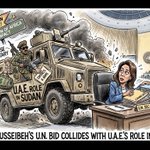
Open Statement: Call to Reject and Boycott the Nomination of Lana Nusseibeh for UN Secretary-General
To: Member States of the United Nations General Assembly , the UN Security Council , and Concerned Global Citizens:
It is urgently called to reject and actively boycott the candidacy of Lana Nusseibeh for the position of United Nations Secretary-General. The credibility of the United Nations rests on the foundational principles of its Charter:
"the preservation of peace, the defense of human rights, and the prevention of mass atrocities."
Endorsing an official who represents a government deeply implicated in fueling armed conflict and atrocities in the Horn of Africa, most notably in Sudan, severely compromises these principles.
Core Grounds for Opposition
Complicity in Sudanese Atrocities:
Investigative reports by UN panels of experts, Human Rights Watch, and leading international media have documented the United Arab Emirates’ material, financial, and logistical backing of the Rapid Support Forces (RSF) in Sudan.
The RSF stands accused by international monitors and rights organizations of genocide, ethnic cleansing, systematic sexual violence, and mass murder against civilians in Darfur and across Sudan.
Foreign Mercenary Networks and Arms Transfers:
Recent findings establish that Emirati-linked firms and infrastructure facilitated the recruitment, training, and deployment of foreign mercenaries including Colombian contractors to support RSF offensives, such as the siege of El Fasher.
The funnelling of illicit military hardware directly contravenes UN arms embargoes.
Destabilization of the Horn of Africa:
Beyond Sudan, geopolitical maneuvering across the Red Sea corridor and the Horn of Africa including unilateral port agreements and proxy alignment has worsened instability, disrupted regional diplomatic efforts, and undermined national sovereignty.
Inherent Conflict of Interest at the UN Secretariat:
As a former long-serving Permanent Representative and current Minister of State, Ambassador Nusseibeh has consistently defended and advanced her government’s foreign policy.
Entrusting the oversight of UN peacekeeping, fact-finding missions, and humanitarian access to an official representing a state accused of undermining these exact mechanisms in Sudan represents an untenable institutional conflict of interest.
Demands
Veto and Rejection by the UN Security Council:
Permanent and elected members of the Security Council must refuse to recommend any candidate whose state apparatus is directly linked to violating UN arms embargoes and prolonging the humanitarian catastrophe in Sudan.
Coalition of Abstention and Opposition:
Member States of the UN General Assembly should pledge to vote against or actively boycott confirmation proceedings that attempt to normalize state-sponsored interventionism under the guise of multilateral leadership.
Prioritization of Impartiality:
The selection process for the next Secretary-General must prioritize leaders with an unimpeachable record of upholding international humanitarian law and defending victims of conflict, rather than actors serving states actively driving civilian suffering.
The United Nations cannot credibly investigate war crimes in Sudan while appointing a representative of the very state enabling them to the organization's highest office.
We urge delegates and human rights advocates worldwide to stand with the people of Sudan and the wider region by rejecting this nomination.
#NoNusseibehForUN #HoldUAEAccountable #RejectTheBid #EyesOnSudan #UNNeutrality #ScrutinizeUAE #HornOfAfricaInCrisis #JusticeForSudan #UNGA #SecurityCouncil #LanaNusseibeh #UABoycott


Dr Daniel retweeted

A large number of Tigrayan youth are rejecting and abandoning Ethiopian government-controlled areas, stepping forward to join the Tigray Defense Forces (TDF). They are rising up in fierce opposition to the ENDF's ongoing genocide against the Tigrayan people, demonstrating an unwavering commitment to protecting their homeland and defending basic human rights.
Resilience isn't just a choice—it's a testament to the strength of a generation determined to safeguard their future and resist oppression.
#Tigray #TDF #StopTigrayGenocide #StandWithTigray #TigrayYouth #JusticeAndPeace
@SecRubio @US_SrAdvisorAF
Dr Daniel retweeted

ከዚህ በላይ ውርደት ምን አለና?
አብይ አህመድ ጎንደር ላይ 50% ያልደረሰውን መገጭን አስመረቅሁ ባለ በሳልስቱ የጎንደር ወጣት አደባባይ ወጥቶ
"አብይ እያለ
የምን ሰላም አለ" እያለ ነው።
🤖 Made with AI
Dr Daniel retweeted

🚨 Anti-government protests in #Ethiopia #AddisAbaba መንእሰይ ኣብ ኣዲስ ኣበባ ንቆልዓ በሻሻ ኣቢ ንሙጉሓፍ ተላዒሉ ሎ:👇🇪🇹
ሕበር መንእሰይ ትግራይን ኣምሓራን: ነዚ ጆነሳይደር ህጻናዊ ዕሸል ሙጉሓፉ ዩ: ማሪክኩም ጥራሕ ናብ ኢድና ኣረኩብና