Ruth Selman retweeted
Woody did it! He completed the triathlon. In Woodys words he swammed! So proud of him and our whole amazing team. A day full of magic celebrating what people CAN do. Any support really means the world.
justgiving.com/campaign/teamā¦
Ruth Selman retweeted
š Can you crack the code?
The National Archives holds thousands of examples of codes and ciphers in our early modern records.
Much of this correspondence was decrypted at the time, but this letter remains a mystery...
nationalarchives.gov.uk/blogā¦
Ruth Selman retweeted
"We are the darkest page of history" Afghan women sing in protest. This #IWD is another day of erasure for us Afghan women. Under 126 Taliban edicts, our faces are banned, our voices silenced, our dignity stolen. This is gender apartheid. Do not look away.
Ruth Selman retweeted
25 January 2025: Southwark Cathedral, London.
Join me and a stellar lineup of historians to explore the fascinating lives of women in the Wars of the Roses. I'll be talking about Queen Marguerite of Anjou.
cathedral.southwark.anglicanā¦
#HistoryTalks #History #BookTalks #WomensHistory
Ruth Selman retweeted
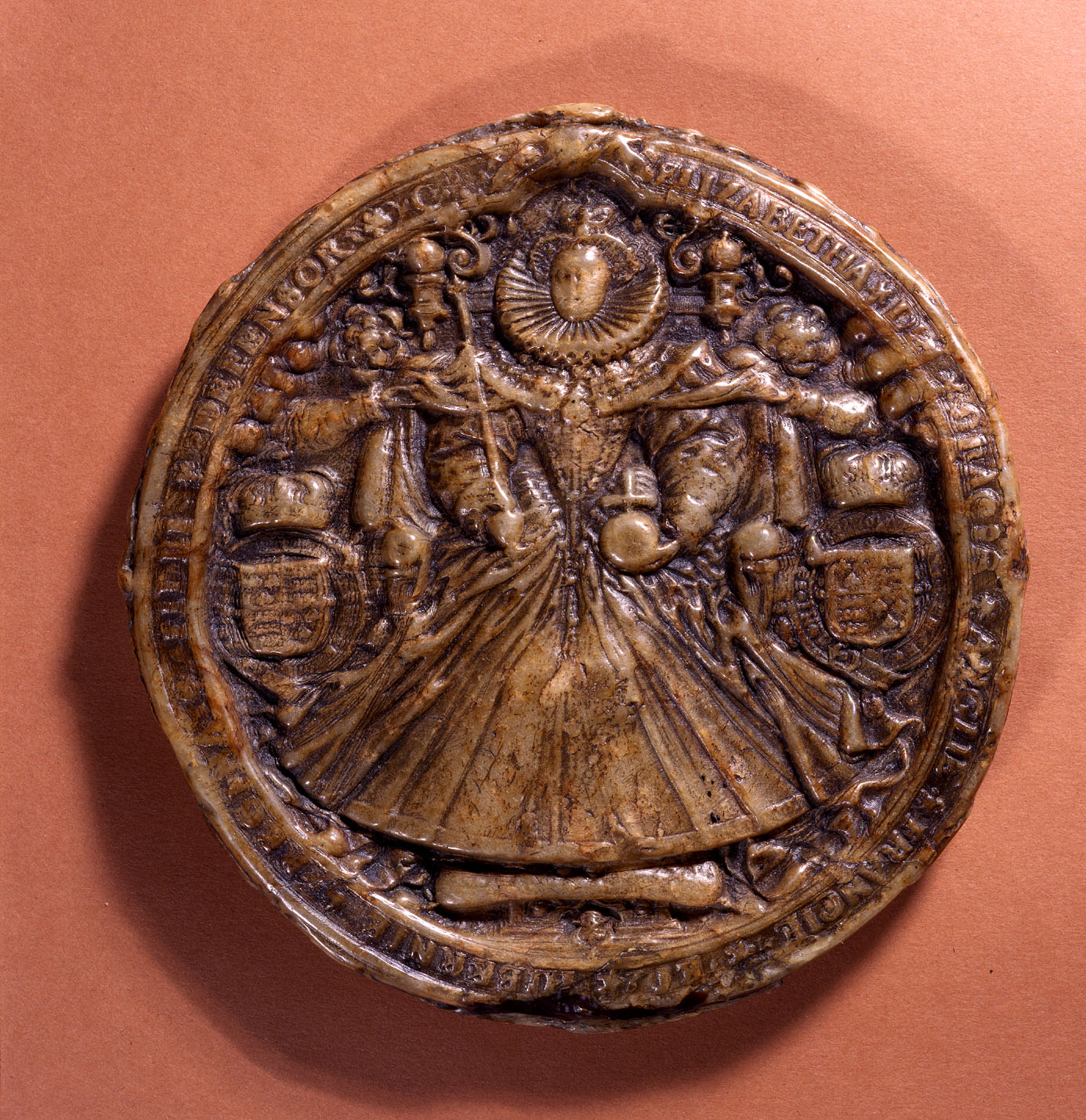
One of our greatest treasures @UkNatArchives (document reference SC 13/N3). Designed by Nicholas Hillyard, engraved by Dederick Anthonye.
El gran sello de la reina Isabel I de Inglaterra (1586-1603).
"Elizabetha dei gracia Anglie Francie et Hibernie Regina Fidei Defensor"
@UkNatArchives nationalarchives.gov.uk/wp-cā¦
#lesceaudumardi @sfhs1937 @BSigilla @DumoulinValrie2 @BrunelGhislain @albanperes
Ruth Selman retweeted
I feel like people who don't see the point of Latin often forget that we aren't just talking about a 2000 y.o language, but that it was officially used right until the 18th century.
There are still 1000s of untranslated documents that could change our understanding of history.
Ruth Selman retweeted
šŗ #WolfHall: The Mirror and the Light in six documents
Ahead of the series' penultimate episode this Sunday, read our latest blog ā delving into our records to find the facts behind the fictionā¦
ā ļø Spoiler alert... blog.nationalarchives.gov.ukā¦
Ruth Selman retweeted
Notice: On Weds 11 Dec our document reading rooms will be closed to the public whilst we undertake essential staff training. Our cafƩ, shop, library and other public areas will remain open. We apologise for any inconvenience caused.
Ruth Selman retweeted
It's not just a huge number.
It represents thousands of lives shattered by life-changing injuries, death and bereavement.
We are working to make the UK's roads safer. Find out more via our website.
Ruth Selman retweeted
UPDATE: A section of the Thames towpath between Richmond Lock and Kew Gardens car park has collapsed into the river. We are asking people to follow signage on the towpath and please do not try and walk through the flooded area as it is not safe.
Ruth Selman retweeted
Thanks to the Bandwagon ppl in the comments tagging me up makin sure I get my damn credit for the 40 hours this took to make.
Yāall are the real homies ššÆšŗš»šŖ
Ruth Selman retweeted
Upcoming speakers at @UkNatArchives
Ruth Selman retweeted
A tribute to the DAME
I will never forget you.
My thoughts are with your sons, grandchildren, family, friends & your legions of fans throughout the world who admired & loved you.
I couldnāt sleep last night, so wrote some words (below).
Ruth Selman retweeted
š¢ Please be advised that @WimPutCommons have been notified by Thames Water that following a mains failure, sewage has entered Beverley Brook on Wimbledon Common.
ā As the Brook flows through Richmond Park dogs should be kept out of the water until the situation is resolved.
Ruth Selman retweeted
Yes, āruthfulā is my favourite: āruthā means ācompassionateā.
This Post is from an account that no longer exists. Learn more
Ruth Selman retweeted
Woman of the Day militant suffragette and lifelong feminist Margaret Haig Thomas, Viscountess Rhondda, born OTD 1883 in London. She used every single opportunity she could to advance the cause of equality for women from all walks of life. As a hereditary peer, she won a famous test case - to sit and vote in the House of Lords - but the Lord Chancellor overruled the decision, a ruling that held for 36 years.
Her mother, Sybil, was an active suffragist but Margaret joined the Women's Social and Political Union four months after her marriage in 1908, describing it as āthe very salt of lifeā¦a draught of fresh air into our padded, stilted livesā¦It gave us hope of freedom and power and opportunityā - and brought militancy to South Wales.
Margaret organised the first ever WSPU meeting in Newport and invited Emmeline Pankhurst to speak. Emmeline was not able to go so she sent her daughter Sylvia instead. Margaretās new husband refused to let Sylvia in the house.
Iād love to have been a fly on the wall. That marriage was doomed from the start. He was a fox-hunting Tory with traditional views about a womanās place. She was an anti-hunting Liberal with a mind of her own. In 1922, Margaret made the headlines when Helena Normanton, the first woman barrister heard in the High Court, successfully obtained for her a decree nisi on the grounds of his desertion and misconduct.
From 1908 until 1914, Margaret went on protest marches, confronted prime minister HH Asquith by jumping on his car and in 1913, tried to set a Royal Mail postbox in Newport on fire with a chemical bomb. She was fined Ā£10 (Ā£964 in todayās money) but refused to pay and was sent to dilapidated HMP Usk. She refused to let her husband bail her out, went on hunger strike, and had to be released under the Cat and Mouse Act after five days. (See footnote in the attached post). Her vow on release: āI shall campaign for the suffrage cause until the franchise is given to women.ā
In 1917, Margaret survived the sinking of the Lusitania. She had to unhook her skirt to swim even though she didnāt know how to swim and passed out from hypothermia in the icy waters, clinging to a wicker chair. When she came to after being rescued by the crew of the Bluebell, she overheard a woman upbraiding the captain of the Lusitania for the lack of organisation and discipline on board during the sinking, which had led to her babyās death. Ā A sailor bringing her a cup of tea apologised for the womanās behaviour, saying, āIām sorry, Iām afraid that lady is hysterical.ā Margaret retorted, āOn the contrary, that woman is the only one aboard the Bluebell who is NOT hysterical.ā It hardened her resolve.
āWhat it did do was to alter my opinion of myself. I had lacked self-confidenceā¦and here I had got through this test without disgracing myself. I had found that when the moment came I could control my fear.ā
Margaret threw herself into a flurry of initiatives designed to advance and promote opportunities for women during WW1. She took on a series of leadership roles to recruit women for agricultural work and as workers for the Women's Auxiliary Army Corps to serve in France; she appealed to the āparents of South Wales to realise their great responsibilities and allow their daughters to go.ā She was the only woman member of the Staff Investigation Committee set up to look at the admin staffing (almost all women, of course) in the Ministry of Munitions and was concerned about women war workers being let go from their jobs when men returned from the Front. She formed the Women's Political and Industrial League in 1919 to lobby for equal employment opportunities.
āNothing in the whole conduct of the War has been more striking than the readiness and the ability of the women in nearly all the belligerent nations to render invaluable service to their respective countries and nothing has been stranger than the slowness of various Governments to realise the vast capacity of the resources upon which they might draw.ā
Margaret inherited her fatherās title in her own right in July 1918. In 1920, she petitioned for the right to receive a writ of summons to Parliament so she could sit and vote in the House of Lords, basing her claim on the Sex Discrimination (Removal) Act 1919. The House of Lords Committee for Privileges initially found in her favour. Margaret suspected it wouldnāt stand: āI am not in the House of Lords yet, in spite of the Committee of Privileges, and I am afraid the Lord Chancellor is going to move against me.ā She was quite correct. The Lord Chancellor overruled the decision and it was not until 1963 that hereditary women peers in their right were allowed to sit in the House of Lords.
Margaret did not live to see it. She died in 1958, aged 75. She did, however, see full suffrage granted to women on the same basis as men.
āI think the war, awful as it has been, did a wonderful thing for women. It brought about a revolution for them which one may well imagine centuries might have otherwise been needed to encompass. But now women have seen what they can do; they have learned to have confidence in themselves to undertake the most amazing and difficult tasks.ā
Ruth Selman retweeted
Books 2024 - on sale today - 'From Tudor to Stuart: The Regime Change from Elizabeth I to James I' by Susan Doran. @SueDora26898513 ladyjanegrey.info/?p=18154