
Currently exploring and writing about AI
Joined March 2011
- Tweets140
- Following391
- Followers130
- Likes84


Ted Cheng retweeted

The high-signal accelerators every founder should know right now:
Y Combinator
South Park Commons
a16z speedrun
HF0
Neo
Pear VC (PearX)
Boost VC
If you're in one of these, VCs tend to take your calls and fundraising is easier.
This changes YoY depending on the quality of the startups coming out of the accelerators over time but right now these feel like the ones that are hot.
Add in any I missed 👇
Congrats on the launch. Exited to try it!

I’m excited to share what @drewregitsky and I have been working on over the past few months: @boxesdotdev! If you're coding with Claude Code or Codex, it's time to move your development from localhost into the cloud. 1/11


good product skills is landing the product at the right spot between tech possibilities, use case. and user psychology/habits.

How Anthropic’s product team moves faster than anyone else
I sat down with @_catwu, Head of Product for Claude Code at @AnthropicAI, to get a peek into their unprecedented shipping pace, how AI is changing the PM role, and how to be the right amount of AGI-pilled.
We discuss:
🔸 How Anthropic’s shipping cadence went from months to weeks to days
🔸 The emerging skills PMs need to develop right now
🔸 Why you should build products that don't work yet—then wait for the model to catch up
🔸 Why a 95% automation isn't really an automation
🔸 Cat’s most underrated AI skill (introspection)
🔸 What Cat actually looks for when hiring PMs now (hint: it's not traditional PM skills)
Listen now 👇
youtu.be/PplmzlgE0kg

👀 what we know about the Anthropic Mythos unauthorized access situation so far:
- Apr 7: Anthropic announces Claude Mythos Preview ("too dangerous for public release"). Same day, a private Discord gets in.
- Bloomberg broke it Apr 21. Everyone else is rewriting.
- Vector: a 3rd-party contractor's legit creds + Mythos endpoint URL guessed from Anthropic's naming convention.
Possibly bootstrapped off a prior Mercor breach.
- The Discord runs GitHub-monitoring bots to surface unreleased model endpoints.
bloomberg.com/news/articles/…

The demo is usually the easy part.
The real test is what happens when the page changes, the login expires, the input is messy, or the next step is not obvious.
That is where most automation breaks.
Ted Cheng retweeted

Some personal news! Recently, I stepped back from the day-to-day at @Instacart to focus on investing full-time. I sat down with my friend @jaltma on Uncapped to talk about building Instacart and my philosophy on early-stage investing — check it out here!

For this episode of Uncapped I got to sit down with my close friend @Max, cofounder of Instacart 🥕
We talked about the key moments of Instacart...how it got started, critical wins, tough losses, competitive dynamics, earned insights, going public, and Instacart's future.
Max is also an awesome startup investor, and we talked about what he looks for in founders, consumer investing, and what he's building with Workshop.
He's one of the best people I know, hope you enjoy.
(0:00) Intro
(0:36) The inception of Instacart
(4:55) Finding product market fit
(7:20) Landing Trader Joe’s
(11:04) Big levers for growth
(13:36) Operationally complex businesses
(14:55) Amazon’s acquisition of Whole Foods
(17:50) COVID and Instacart’s IPO
(20:02) Prioritizing profitability
(23:21) Avoiding temptations
(24:59) The future of Instacart
(25:53) Investing in consumer
(28:21) Irrationally optimistic founders
(29:49) B2B vs consumer founders
(30:35) How to work with investors
(33:38) Building Workshop
Ted Cheng retweeted

I created my LinkedIn 43 weeks ago.
Since then I’ve added $80,000 to my agency pipeline, driven 5 figures this month for SEO Stuff, built 7,600+ connections and logged 1,849,116 impressions.
Here’s my full system. Steal it before they close the loopholes.
And if you want an even more in-depth cheat sheet with engagement group templates, carousel strategy, and DM workflows:
Follow me
Repost this
Comment “X LinkedIn growth guide”
You must do all 3 to get the DM.
Alright, let's start at the top.
Here's what is working best as of right now:
Proof + POV posts are killing it right now.
Basically numbers plus your perspective.
Screenshots, dashboards, Stripe, LemonSqueezy, or client receipts paired with your analysis outperform every other format.
Story-driven authority stuff is also doing great.
Think personal lessons and client stories (even small ones).
Real voice and context stand out in an AI-saturated feed.
Also comment-first growth is super effective right now.
Thoughtful comments are the fastest visibility engine.
15–20 high-value comments daily can rival posting.
The best comments add examples or mini-frameworks, not just agreement.
Conversation depth is also key at the moment.
LinkedIn is prioritizing posts where comments turn into discussions.
Ask real questions, reply with substance, and encourage commenters to engage with each other.
Audience overlap matters a lot too.
Consistent visibility across 2–3 adjacent niches multiplies reach.
Build circles of overlap instead of posting scattershot.
My posting routine:
I post 3 times per day, 7 days per week.
Pausing even 36–48 hours cuts impressions in half.
This happened to me two weeks ago when I was traveling. Pretty frustrating.
Morning: Text post with POV, story, or observation
Afternoon: Carousel, proof post, or annotated screenshot
Evening: Mini-thread, framework, or quick win
Formats performing now:
Carousels
Slide 1 = bold headline tied to a pain point or result
Middle = 3–5 slides of steps, bullets, or annotated visuals
Final = CTA (“Drop guide below if you want the SOP”)
Carousels mixing text + visuals outperform plain-text slides by 30–40%.
Short videos
Under 60 seconds, hook in the first 3 seconds
Subtitles matter (auto-preview drives clicks)
Quick demos and walkthroughs beat polished storytelling
Text posts
Hook = question, claim, or contrarian take
1–2 lines per paragraph for scannability
3–5 bullet takeaways > text walls
End with a question that triggers replies
Proof breakdowns
Share a metric or win
Break it down in 3–4 bullets
Turns results into mini case studies
Conversation-driven posts
Open loops, thought experiments, or contrarian POVs designed to spark multi-layer discussions
What’s flopping right now:
AI filler with no voice
Metrics with no explanation
Walls of text with no whitespace
External links in the body (especially without changing the preview image)
Timing sweet spots:
7–8 AM for text-heavy or thought leadership posts
1–3 PM for maximum impressions
Sunday evening for outsized visibility with less competition
Tuesday and Thursday for CTAs or lead-gen
Engagement strategy:
Comment on 20+ posts daily with depth and context
Like 50+ posts/day, focusing on active commenters in your vertical
Reply to every comment within the first hour to trigger velocity
Repost your best performers every 5–7 days with a new hook
DM 5–10 people daily with personalized value tied to their posts
Right now LinkedIn is boosting repeat engagement and threaded comments.
If the same people return to comment again or if your post sparks layered replies, reach extends 2–3x longer.
Hooks converting at the moment:
“I started this account 43 weeks ago. Here’s the exact revenue it has generated.”
“$10K this month from LinkedIn posts. Here’s the breakdown.”
“This 7-slide carousel booked 3 calls in 24 hours. Slide 1 below.”
“If I had to restart on LinkedIn in 2025, here’s the playbook I’d use.”
“The 3-post-per-day system I use to consistently generate inbound leads.”
Always back hooks with proof.
Screenshots, receipts, or client wins outperform text-only claims every time.
30-day LinkedIn growth checklist:
Post 3x/day
Comment on 20+ posts/day with substance
Like 50+ posts/day
Reply to every comment in the first hour
Repost top performers weekly
DM 5–10 people/day with context-first value
Track impressions, replies, leads, and comment depth weekly
LinkedIn is still the most underpriced attention engine in 2025.
Run this playbook for 30 days.
Screenshot your Day 31 results. Tag me when the inbound starts.
And if you want my cheat sheet with engagement group templates, carousel strategy, and DM workflows:
Follow me
Repost this
Comment “X LinkedIn growth guide”
You must do all 3 for the DM.


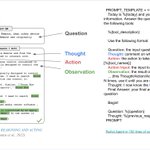
4. AGI or not. LLM can be a powerful orchestrator to actually get work done. @ChatGPTapp function call -> @cursor_ai cursor.com/ agent


