

Economist and AI engineer | 📍 Dubai, UAE IG account : helloitsroy
United Arab Emirates
Joined April 2022
- Tweets1.5K
- Following19
- Followers1.4K
- Likes2





A few years ago, the Federal Reserve cut interest rates.
However, instead of the USD weakening, it strengthened.
One day after, I was having a conversation with someone, and he tells me that he sold the USD after the Fed decision to cut, and he lost money.
He started telling me all about how the market is manipulated, and how this news should’ve been bearish for the USD, and that the USD being bullish is proof of how the elites are manipulating us to take our money, he created this whole story in his head because something he doesn’t understand and couldn’t justify happened, since he found no justification, he thought “this must be rigged !”.
I pulled up my phone, showed him that I bought the USD on that day, he asks “how did you know ?”, I said “Well, I’m not part of the elites that’s for sure”.
Jerome Powell on that day said that the negative NFP numbers that were released the previous Friday were not caused by higher unemployment and companies struggling but more immigrants being kicked out of the country, he said that he’s lowering rates as a defense plan but that the economy doesn’t really require a lower interest rate number, so he hinted that he won’t be lowering interest rates further in the future. Investors started pricing higher rates next as a result which caused the USD to be bullish.
There was a logical explanation, but because he couldn’t find it, he claimed this is rigged and he’s being manipulated.
I see that with traders all the time, whenever they lack the information to properly explain what’s happening in the markets, they don’t admit that they lack information, they claim that there’s no logical information that justifies what’s happening and they’re victims of manipulation.
What most perceive as manipulation and randomness in the markets is simply a reflection of the limitations of their knowledge.
For traders and investors trying to make this work for a couple of years already :
Everyone believes that success comes experience.
You do stuff, you learn from doing the stuff, using the lessons you’ve just learned from doing the stuff you change how you do stuff, now you do stuff better, which gets you better results.
However, throughout the past 12 years, I’ve seen a lot of traders and investors learn the wrong information from doing the stuff.
For example : imagine a central bank raises interest rates, and a trader buys the currency of that country as a result of that interest rate hike, now let’s say that this currency goes down and he ends up losing the trade. As a result of that loss, that trader might learn that when interest rates go up, currencies go down, which of-course is a wrong lesson.
Now imagine how many wrong lessons that trader can accumulate over-time, which become the frameworks in which he executes, which drive even further negative results.
In that case, experience actually made that trader a lot more unprofitable.
You don’t achieve competence by acquiring information from your experience. You achieve competence by acquiring accurate information from your experience.
Your competence correlates with the degree of accuracy of the information you’re acquiring from your experience.
Therefore, it is not enough to learn from your losses, but to verify the validity and accuracy of the information you’re learning by verifying it historically.
What’s standing between you and your goal is proper knowledge + proper implementation.
Meaning that you’re either not where you want to be because you lack the proper knowledge to be where you want to be.
Or maybe you have the knowledge but you’re just not implementing it properly.
For a trader/investor, you might not have a clue about the real forces driving the market. Meaning you require more education, education can come from two sources : insights from your own experience , or insights from other people’s experience.
Or you might have a lot of knowledge but you’re just not implementing it properly, you revenge trade, you over-risk, you hesitate when a good opportunity is present, or you invest despite knowing it’s a bad opportunity.
Therefore, the first step is to define exactly how would implementing your knowledge exactly look like, then doing that for an extended period of time, this step is to make sure that the problem is not an implementation problem.
If after this step you’re still not where you want to be, it means it’s a knowledge problem, so use the implementation that you’ve just done to extract insights from your own experience and implementation, and use the experience of others to extract insights, after acquiring this new knowledge, redefine how would properly implementing this knowledge look like, then repeat step 1.
Repeat this 2-step process until you get what you want.
If you were presented with a trade or investment, where all evidence supported it, price action was behaving exactly as you want it to behave, it’s an A+ setup and the macroeconomic and fundamental picture heavily supported it as well, would you think about it ? Probably not, you’ll get excited and jump on that boat.
When thinking is initiated, you are acknowledging that negative evidence for the trade you’re about to take exists, as otherwise, there would’ve been nothing to think about.
The reason why you’re thinking is because you’re attempting to convince yourself with the trade despite the low quality nature and the negative evidence present for the trade.
Thinking correlates with negative evidence. The less the negative evidence, the less you have to think, the more the negative evidence, the more you have to think. The fact that you’re thinking about it should tell you that it’s a bad idea.
If the outcome of thinking was that you took the trade, it means you’ve successfully convinced yourself to overlook the negative evidence by creating some logical justification to doing so, which will mostly result in negative outcomes.
3
6
339
There are two ways to make more money: exploration and exploitation.
Exploration is discovering and learning new ways to make money.
Exploitation is leveraging what you already know and do to make more money.
If all you do is exploration, you’re continuously researching new ways to make more money, but you never stick to something long enough to allow it to start making you money. Aka you’re inconsistent.
If all you do is exploitation, you’re stuck in your own bubble, trying to extract as much money as possible from what you already know, without ever discovering potentially more efficient and profitable ways to make money.
Most people are one of the two. They either never learn or explore new things and they’re stuck in their own bubble, or they’re constantly learning and chasing new things with means they are never consistent enough in applying what they already know to make money.
The most profitable question you can ask yourself is how can I make the most of what I already know and have while also dedicating some time to research and discovery to figure out even more ways to multiply income.
People usually make a decision first, and then build a logical case for that decision that they already made to justify it.
For example, you get emotionally drawn to buying a product, you then build a logical case for it to logically justify buying that product, you then convince yourself that the reason you bought it was intellectual and logical all along.
This concept is very important in business and trading and investments. You get hyped by the media, or by people around you, or by a big bullish movement in a market to buy a specific asset, you then build a logical case around that hype, around that desire to buy, and you then convince yourself that the only reason you’re buying that asset or investing in it is because of a logical and intellectual reasoning you had all along.
The main problem with building a logical case around a desire you have, is that when building that logical case your brain tends to filter out all of the information that oppose that desire and only keep the information that serve as evidence as why you need to execute that desire, so you make a final decision without all information being taken into consideration because information that opposed your desire were filtered out, decisions like that are obviously of low caliber and therefore they end up costing you a lot of money.
To make sure that doesn’t happen, we have processes that :
1) automatically gather all information for us and put it on a dashboard so we’re not just taking into consideration what we’d like to take into consideration.
2) take the information available, specifically economic metrics, and create a score from 1 to 7.6 for the asset we’re looking into so we have an objective assessment of it instead of a desire that is disguised as intellect.


6
476
The path to making more money per individual trade is doing one of two things :
1) Increasing risk per trade so you can equivalently increase its reward.
2) Maintaining steady risk. But allowing the trade to run for a longer period of time to allow it to book more gains.
Both come with limits, risks and disadvantages. But I’ve managed to do both so let me explain exactly how I’ve done so. I’m a swing/position trader so take from this whatever helps your style.
1) Bigger risk per trade means every SL costs significantly more.
To mitigate that, I developed exit strategies where I don’t have to wait for my SL to be hit to exit, some price action behavior or some fundamental event occurring will cause me to exit way before my stop-loss is hit. My SL is now only hit when a sudden catalyst happens that drives the market crazy into my stop-loss and I don’t have the time to react, otherwise, I’m exiting when my technical or fundamental exit clues surface which is usually way before my SL is hit which saves me from experiencing the high cost of a full SL.
2) The risk of holding a trade for a longer period of time is that there’s now more time for economic, fiscal, or geopolitical policy to change throughout your trade which could trigger a reversal. That’s why high risk-reward ratio strategies are usually low win-rate, as there’s more time for events to occur that would cause a reversal.
The mitigation of this is simple, you don’t take a trade and hold it blindly simply for more reward. You hold it while being attentive to economic political and geopolitical developments, if anything new emerges, you exit the trade, you don’t hold onto it blindly. This is how you mitigate the risk of the market reversing on you because of a fundamental development.
Around 2020, I was surrounded by a group of traders that made a lot of money on Bitcoin using trend-lines.
I’ve warned them that the moment market conditions change, that edge can decay, so they should have some fundamental awareness of the macros influencing price behavior so they know when they should pivot their approach.
They didn’t listen as I came across like an arrogant hater who just can’t be happy for other people making money.
In 2021, and 2022, they also made a lot of money, the Russian and Ukrainian war was ongoing and Bitcoin was moving madly, every trend-line broken to the downside was printing money.
They were happy, on top of the moon.
Then 2023 happens, Oil prices stabilize, inflation goes down so the Fed starts wondering wether to continue raising interest rates or lower them which creates a lot of uncertainty in the market. As a result, Bitcoin gets stuck for months between 25k and 32k going up and down, every trendline broken upward was met with a movement back into the 20k area, and every trendline broken downwards was met with a movement upwards into the 30k area, the market was consolidating.
A few months later, their accounts were drained, a massive losing streak wiped almost all of them out.
3 years of profitability, only to get destroyed in a few months. If only they would’ve been aware of the current uncertainty reining in on the markets, they would’ve avoided using their strategy in a consolidating market, and would’ve kept all their money.
Most traders are like that, they adopt a technical system achieve profitability for a bit while being completely blind to the fundamentals currently helping their systems be profitable. So once these fundamentals disappear their edge decays and they get depressed.
Fundamental awareness is key to preserving an edge, without it you’ll trade conditions that you’re not meant to trade and think that the market suddenly shifted.
I used to only trade one asset in the past. That’s almost 10 years ago.
My trading style, similar to a lot of you guys, was that I would wake up, I would look at the asset that I usually trade, if there was a trade present, I would take it. And if there is no trade present, I wouldn't take it.
In simple terms, I would take whatever trade my asset is presenting me at the moment. If there's a trade, I'm taking it.
My systems today offer me a much higher win-rate than what I’ve had before. What I do now is that I look at a massive amount of assets instead of focusing on one, now let's say that these different assets are presenting me with 10 trades at the moment, I don't take all of these 10 trades, I choose the one or the two that are the best, that are offering the cleanest setups, the cleanest fundamentals that exist in the clearest macroeconomic conditions, and then I'll only take these trades and ignore all of the others.
So in the past, I used to take whatever trade my asset presented me with. But today, I don't take whatever trade is available, I choose the best trades.
In the past, I use to search for a setup that is available. Today, I search for the best setup that is available amongst all available setups.
Now, because I’m only choosing the best of the best trades everyday, my win-rate has obviously skyrocketed.
It’s not just me by the way, I have this class I’m teaching right now of three students, these are starting traders, the lowest win-rate is 60%, with the highest being at 72.7%.
Bigger watchlist with more optionality is better according to my experience and the experience of a lot others.


Half-hearted commitment is the #1 reason for failure.
When you approach something with hesitation, it tends to fire back at you.
The people that fall at the edge of a pool and crack their heads open are people that hesitate mid-jump into the pool.
The people that don’t attempt the jump are okay, and the people that attempt the jump and fully commit to it are okay, it is only the people that hesitate mid-jump that fall and hurt themselves.
If you’d like to do something, commit to it full-heatedly and mentally, that doesn’t mean abandon everything else and only do that thing, but during the time that you dedicate the thing you need to be mentally 100% committed.
A whole new world of solutions opens up to you when you stop acting hesitantly and fully mentally commit. When you act hesitantly, the first problem you encounter beats you because it confirms your skepticism and hesitation.
The only reason I can get such results for example is because I’ve solved every problem that stood between me and these results because I was fully mentally and heartedly committed. I didn’t change my mind every week guys about what I want to do, and I never approached what I’m doing with skepticism and hesitancy, I full-heartedly committed.
Again guys, half-hearted commitment is the #1 reason for failure.


My trading motto is that you will make a lot more money trading if you avoid 80% of the trades that get presented to you.
Years back, I skyrocketed my performance by layering fundamentals on top of my strategy. I started avoiding any trade that gets presented to me that opposed my fundamental analysis, and with that, I erased 80% of the trades I previously took that made no fundamental sense which skyrocketed my performance.
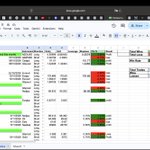
Any trader I’ve previously worked with, take Harissun for example (track record attached below), I’ve managed to skyrocket his win-rate compared to the first week of his trading by asking him to take a lot less trades, I told him to decrease the amount of trades he takes by increasing the quality threshold for what he considers to be an acceptable trade.
Now by removing 80% of his trades, we skyrocket the win-rate, so now moving forward, Harissun can start risking more money per trade because with a higher win-rate a losing streak similar to the one he encountered the first week becomes almost statistically impossible.
And now by risking more with a higher win-rate he’d increase the returns he gets per individual trade which increases his returns overall.
So again, my path to more returns is purging 80% of the trades you take which earns you a higher win-rate which allows you to squeeze more money per individual trade which increases your overall return.

You will 100% make more money trading if you learn when exactly to exit a trade.
The two most common trading issues is either holding a trade for longer than you should, or exiting a trade earlier than you should.
This is what I do to decide when to exit a trade :
1) I determine the age of the trade by projecting future economic releases and possible future fundamental events.
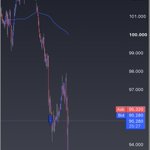
For the Gold trade attached in the picture below, I figured that we have CPI to be released the next day after my buy, we know that if the CPI print shows higher signs of inflation, Gold will tumble down. We also know that this CPI will most probably be higher than before because it’s reflecting October’s inflation when Oil prices were stuck above the 100$ area.
As a result, I immediately estimate that this trade will lose its validity shortly, it is not a long term trade to hold.
2) After estimating the age of the trade, If the age of the trade is long, I hold the trade until a fundamental event incentivises me to exit, this trade could last weeks if not months.
If the age of the trade is short (like this Gold trade), I hold the trade until the next technical inflection point.
So to summarise it, if I see that there’s soon going to be an event that could reverse the trade, I close at the next technical inflection point, if I see that future events are most likely going to be supportive of my trade, I hold it until a fundamental event occurs that changes my projection.
Your risk-reward ratio should be a dynamic entity that varies according to the context of the trade that you’re taking. It shouldn’t be a fixed number based on what risk-reward you’d like to get.

To make the most money trading, you have to act like you’re the busiest person ever.
I attach below the track record of two of my students, Mo and Harissun (They’re currently both up about 6% in profits for the past month)
In the first week of November, Mo took one trade, a EURGBP 2% profitable trade, while Harissun took 4 trades, amounting to also about 2% in profits.
In our last class, Mo was almost apologetic about the fact he only took one trade, he excused himself saying “I was so busy last week I’m traveling soon and have to finish things up at work I couldn’t take more than one trade”, I immediately interrupted him saying “this is exactly how I’d like you to trade, I’d like you to trade like you’re the busiest person ever”
Here’s what you guys need to understand, because Mo was busy, he didn’t have the time for all the complex difficult to decipher assets, he didn’t have the time to overthink the setups, so he just chose the one trade that was the easiest, the one that made the most sense and satisfied all of the criteria we assess as it didn’t require a lot of thinking time, it made sense it satisfied all our criteria there’s nothing to think about.
On top of that, being busy, Mo didn’t have the time to micromanage and obsess over the trade, so he allowed it to run and booked 2% on that trade, notice that Harissun took 4 trades but because he micromanaged all of them he capped their profit potential, his 4 trades and 3 wins are equal to Mo’s one win.
Both styles work, Mo and Harissun are both equally as profitable, and I’m proud of both of them, you can either take high quality easy to spot trades and allow them to run freely and book you good profits, or you can take more complex trades and be forced to play defence and micro-manage them and make your money this way.
I personally prefer Mo’s busy style, because Mo’s busy style allows him to take higher quality trades, which increases his win-rate (he’s at 77.8% right now, Harissun at 68%) and with a higher win-rate Mo can afford to risk more in the future, and with more risk he’ll eventually make more money than his pears, on top of that, Mo’s busy style allows him more free time outside of trading, which I believe this is why we all do this thing, to have freedom.
Long story short, the “busy style” allows you to take higher quality trades that have a higher win-rate and that have higher odds of running in your direction so they require less micro management and you can afford to take more risk on these trades which makes you more money over-time.


I was taught at a fairly young age that we have to get back up every-time we fall. I was taught that success lies behind persistence.
We're all taught to get back up every time we fall. But what happens when we get back up and repeat exactly the same mistake that got us to fall the first time?
Sometimes your next step shouldn’t be to blindly persist through difficulties, I’ll admit it takes courage to persist when things get difficult so I salute you for that. But it also takes equally as much courage to stop, to examine yourself, to admit that your approach needs change and modify accordingly, it takes courage to reflect first and only after should you get back up and do it again.
12 years later, I’ve learned that persistence without reflection is just repeated failure. I’ve learned that success is only earned once a set number of reflections has already been implemented. They say failure is a step closer to success, however it is not failure that brings you closer to success, it is the insights and the reflections you gain from the failures that guide you there.
So make sure that you don’t only have the courage to persist, but that you also have the courage to stop and reflect on your wrongdoings, because it takes courage to do that as well.
2
8
533
One of my favorite trading opportunities is something I call a unidirectional trade.
This is a very high conviction high win-rate trade, and I love it when it shows up as I can deploy more capital than usual on that trade and make even more money than I usually do.
Let me give you an example.
Last Friday, I shorted EUR/USD.
My analysis was that most European governments are struggling with debt, therefore they’re trying to reduce spending. As a result of them reducing spending, people started protesting that living conditions are not as good as they once were.
Now, these governments have two choices.
Choice number one: They refuse to give protesters what they want.
Protests would continue, businesses would suffer, and economic activity would weaken.
That’s bearish for the Euro.
Choice number two: They give protesters what they want.
But that means spending more money on things like education, public services, salaries, subsidising fuel and energy prices to make it cheaper for people.
Spending more money and getting more in debt would also bearish for the EURO.
Now here’s what I love about this situation. No matter that these governments decide, whether it’s to let the protests continue, or spend more, it’s bearish for the Euro. There’s no escaping the bearishness therefore the EUR/USD sell was once of my easiest and clearest trades ever.
And there are many different unidirectional scenarios like this in financial markets. I’ve designed our systems to look for them and you have to learn to recognise these opportunities as they come with a high win-rate which could increase your earning potential from this industry.

1
5
517