

Solving America’s hardest problems, starting with the government interaction layer.
San Francisco, CA
Joined March 2025
- Tweets323
- Following2
- Followers243
- Likes183




The United States has warned that European companies could face significant retaliation if the EU moves forward with plans to reserve satellite-to-phone spectrum for European operators, potentially limiting access for Starlink and other US providers. The dispute highlights growing transatlantic tensions over digital sovereignty, market access, and Europe’s efforts to reduce reliance on American technology infrastructure. To learn more about satellite communications, technology policy, and US-EU trade relations, visit our website using the link in our bio.

China’s central bank is considering replacing its seven-day reverse repo rate with the overnight rate as its main monetary policy benchmark to improve control over short-term liquidity and strengthen policy transmission. The proposed shift would bring China’s framework closer to those of other major central banks, while officials emphasized that the change would not itself constitute an interest rate cut. To learn more about monetary policy, global financial markets, and China’s economic strategy, visit our website using the link in our bio.

The White House’s Super Intelligence Force has formally adopted its charter, launching a 120-day effort to assess AI risks and coordinate federal oversight of advanced AI systems. The task force will focus on cybersecurity, critical infrastructure, biosecurity, and AI accountability while developing reporting protocols for security incidents and implementing commitments made by leading AI companies. To learn more about AI governance, cybersecurity, and U.S. technology policy, visit our website using the link in our bio.

China has proposed adding 40 technologies across artificial intelligence, biotechnology, and solar energy to its export control list, including AI models, intelligent agents, and computing clusters. The proposal introduces tighter oversight of strategic technology transfers amid growing global competition, with interim export registration requirements already in effect and public consultation open until November 15. To learn more about AI policy, technology export controls, and global trade trends, visit our website using the link in our bio.

Power Shift: Dr. Chris Fall has built a career at the intersection of science policy, emerging technology, and national security through senior leadership roles spanning the Department of Energy, MITRE, the White House Office of Science and Technology Policy, and the Department of Commerce. In his new role as Vice President of the Economic Security and Technology Department at the Center for Strategic and International Studies, he will help advance research and policy analysis across artificial intelligence, quantum technology, biotechnology, and American scientific innovation. His experience spans federal research leadership, AI standards and safety, national laboratories, defense research, and technology strategy, positioning him to contribute to policy discussions shaping America's technological competitiveness and national security. For more info on strengthening your market awareness with intelligence like this, visit our website using the link in our bio.

The European Union is seeking closer cooperation with Vietnam on critical minerals to reduce its dependence on China and secure alternative supplies of tungsten, rare earths, antimony, and other strategic materials. Internal EU documents recommend financial and technical support for Vietnam’s mining and processing industries, reflecting broader efforts to strengthen supply chain resilience and secure resources essential to European defense and manufacturing. To learn more about critical minerals, EU-Vietnam relations, and global supply chain security, visit our website using the link in our bio.

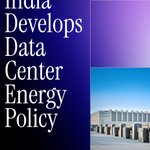
India is preparing a dedicated national policy for data centres to address growing concerns over electricity consumption and prevent rising power costs for consumers. The initiative comes as investment in AI and cloud infrastructure expands, highlighting the need to balance digital infrastructure growth with energy security, water availability, and environmental considerations. To learn more about AI infrastructure, energy policy, and India’s digital economy, visit our website using the link in our bio.

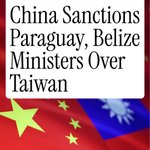
China has imposed sanctions on Paraguay’s communications minister and Belize’s foreign minister over their countries’ continued diplomatic relations with Taiwan. The measures include travel restrictions and bans on cooperation with Chinese entities, reflecting Beijing’s broader efforts to limit Taiwan’s international diplomatic recognition. To learn more about China-Taiwan relations, diplomatic sanctions, and global geopolitical trends, visit our website using the link in our bio.

The United States has reportedly reversed its earlier restrictions on American AI developers sharing advanced models with the UK’s AI Security Institute for pre-release safety testing. The shift could allow companies such as OpenAI and Anthropic to resume closer cooperation with British authorities on evaluating AI capabilities and potential security risks, reflecting a more flexible approach to international AI oversight. To learn more about AI governance, technology regulation, and U.S.-UK AI cooperation, visit our website using the link in our bio.

The European Commission has selected 46 new strategic critical mineral projects across 16 EU countries, offering faster permitting and support in securing financing for an estimated €21.1 billion in investment. The initiative aims to expand domestic mining, processing, and recycling capacity while reducing reliance on China for materials essential to defense, aerospace, batteries, and clean energy. To learn more about critical minerals, European industrial policy, and global supply chain resilience, visit our website using the link in our bio.

RTX’s Raytheon has secured a multi-year U.S. military contract worth up to $6.3 billion to produce and maintain Standard Missile-3 Block IB interceptors used by the U.S. Navy. The agreement supports the Pentagon’s efforts to replenish missile defense stockpiles and expand domestic weapons production capacity amid growing demand for air and missile defense systems. To learn more about defense procurement, missile defense technology, and U.S. defense industrial policy, visit our website using the link in our bio.

Power Shift: Victoria Barton has built a career at the intersection of public affairs, homeland security, disaster response, and government through senior roles spanning DHS, FEMA, defense, housing, and the private sector. In her new role as Principal Deputy Assistant Secretary for Public Affairs at the Department of Homeland Security, she returns to DHS after leading external affairs at FEMA, where her portfolio included public affairs, congressional affairs, and intergovernmental engagement. Her experience spans strategic communications, disaster policy, congressional relations, emergency management, and federal stakeholder engagement, positioning her to help shape communications around some of the department’s most consequential priorities. For more info on strengthening your market awareness with intelligence like this, visit our website using the link in our bio.

The U.S. Navy and defense technology company Anduril are committing up to $6.6 billion to expand production of critical components for Virginia-class nuclear-powered submarines, including a new advanced shipyard in Maryland. The project is part of a broader U.S. effort to increase defense manufacturing capacity, strengthen the submarine industrial base, and accelerate production amid rising global security demands. To learn more about defense industrial policy, naval modernization, and U.S. manufacturing trends, visit our website using the link in our bio.

The UK’s Trade Remedies Authority has proposed new anti-dumping duties on imports of Chinese rutile titanium dioxide after finding that low-priced imports pose an imminent threat to domestic producers. The recommendation reflects Britain’s broader effort to protect strategic industries from unfair trade practices while balancing its economic relationship with China. To learn more about UK-China trade policy, industrial competitiveness, and global trade trends, visit our website using the link in our bio.

President Donald Trump has appointed Director of National Intelligence Jay Clayton to lead a new federal AI task force aimed at coordinating U.S. policy and maintaining American leadership in advanced artificial intelligence. The initiative follows a voluntary AI accord with technology companies and will bring together government officials, industry, infrastructure providers, and public-interest groups to address innovation and oversight. To learn more about AI policy, technology governance, and U.S. innovation strategy, visit our website using the link in our bio.

India is stepping up efforts to build domestic capacity in import-dependent sectors, with rare-earth permanent magnets emerging as a key strategic priority. The push is part of a broader effort to reduce vulnerabilities to external supply shocks while maintaining integration with global markets, alongside measures to expand domestic energy exploration and critical manufacturing capabilities. To learn more about critical minerals, supply chain resilience, and India’s industrial policy, visit our website using the link in our bio.

China has suspended October exports of refined fuel products beyond Hong Kong and Macau as Beijing prioritizes domestic supply security, tightening availability across Asian markets. The move is adding pressure to already constrained gasoline, diesel, and jet fuel supplies, pushing up refining margins and increasing concerns for major regional importers including Singapore, Malaysia, and Australia. To learn more about energy policy, fuel markets, and global supply chain trends, visit our website using the link in our bio.

California has enacted the first U.S. state law specifically setting rules for how lawyers and arbitrators can use generative AI, including requirements to personally verify AI-generated citations and correct false or hallucinated material. The law also restricts the use of confidential information in certain AI systems and prevents attorneys and arbitrators from delegating core legal or decision-making responsibilities to AI. To learn more about AI regulation, legal technology, and digital governance trends, visit our website using the link in our bio.

Power Shift: Chelsea Dietlin has built a career at the intersection of strategic communications, military public affairs, and national security through a decade of service in the U.S. Navy. In her new role on the communications team at Anduril Industries, she brings experience communicating complex defense priorities and engaging media and public audiences to one of the most prominent companies in defense technology. Her experience spans military communications, media relations, public engagement, and high-profile national security initiatives, positioning her to help communicate the technologies reshaping the future of defense. For more info on strengthening your market awareness with intelligence like this, visit our website using the link in our bio.

The Pentagon is investing $65 million in Hertha Metals as part of a $133.65 million funding round to expand U.S. production of high-purity iron used in rare-earth permanent magnets. The investment will support a new domestic facility as Washington works to strengthen critical-material supply chains and reduce reliance on foreign sources for components essential to defense, aerospace, data centers, and advanced manufacturing. To learn more about critical minerals, defense supply chains, and U.S. industrial policy, visit our website using the link in our bio.
