

Social Scientist | @BirdieEcoTheos Intertwining faith, ecology & AI · Integral Ecology ❤️ Shelties & Horses, Golf | Texas Open to board roles in sustainability
#Texas #Michigan
Joined March 2009
- Tweets7.5K
- Following1.9K
- Followers2.1K
- Likes646







Pinned Tweet
I’ve spent years facilitating multi-stakeholder collaboration on emissions data standards and the practical side of the energy transition.
Texas is becoming a global center of gravity for AI, space, and advanced energy. The opportunity is real — but so is the fragmentation of trust, data, and policy.
Boards that want resilient, clear-eyed growth will need people who understand both the technical standards and the human dynamics of collaboration.
That’s the experience I bring. Open to conversations about board and advisory roles where this background can be useful.
#BoardReady #Texas #EnergyTransition #AI #Sustainability w

3
86
Texas has the opening. Will we take it together?
Texas is becoming the center of gravity for AI, space, and advanced technology. Companies that started in California — including Elon Musk’s hello 👋 @elonmusk — now call this state home.
This was never about one person or one bet. The opportunity is still here, and it belongs to those willing to collaborate.
Boards and directors have a real chance to shape growth that is resilient, clean, and fair — for Texas and beyond. The hard part? Political and market dynamics keep shifting. Trust is fragile. Information is fragmented. From my work leading a global Forum, the clear consensus was that no single actor can do this alone.
Collaboration across the climate and energy ecosystem is how we move forward:
→ Bring an objective view of where the transition stands
→ Highlight what can be done next
→ Build the investment case that benefits communities and regions across Texas
That shared foundation gives businesses, investors, and policymakers the clarity and confidence to act together.
Texas can lead. The question for every boardroom: What role will we play?
#Texas #BoardLeadership #AI #EnergyTransition #Collaboration

Heidi Karlsson retweeted
The Odyssey. Emma. Hamlet. The Wealth of Nations. Ulysses. The Iliad.
This isn’t just a list of books I’ve read and love (though I have). They’re on the reading list for Harvard’s Humanities 10. In the @WSJ, Pamela Paul writes about the surge in demand for the class: applications are up 40% this fall, with 180 first-years competing for 90 spots.
Students read a book a week, frequently write essays, have their attendance tracked, and put their devices away during class. As classics professor David Elmer says, “I did have the sense that a lot of students feel that the culture at large is not hospitable to deep reading, deep thinking or deep engagement with writing.”
I've been writing about the question AI is forcing on universities: is higher education about information or formation? If it’s only the former, universities are competing with the machines. The students lining up for a phone-free room, the great books, and people to argue with seem to be asking for the latter.
As one student put it: “A lot of what we get out of this class is the human experience, and you can’t get that out of AI.”
So let AI keep intelligence and humans keep wisdom. This class is one way to build it.
What should colleges prioritize most in the age of AI?
Read the piece here: wsj.com/lifestyle/harvard-cl…

Heidi Karlsson retweeted

People wonder why I'm so obsessed with donkeys. I've looked into it, and my only finding is that the rest of you are underdoing it.
The donkey was built for the ground where everything else gives up. It lives on thorn and scrub that a horse would starve beside, climbs rock on hooves like chisels, cools itself through those ears, and can lose nearly a third of its body weight in water, carry on eating, then drink 25 litres in three minutes and walk off as if nothing happened. We tamed it 7,000 years ago in the dry country of East Africa, and it has been the animal of the hard places ever since.
So it was the donkey, long before the horse, that carried civilisation on its back. One of Egypt's first pharaohs was buried at Abydos with ten donkeys laid in graves beside him, every spine worn from a lifetime under loads. The grain, the salt, the copper and the news of the ancient world moved at a donkey's pace, and wherever a hill is still too steep for a wheel, they still do.
The same animal fed our babies. Donkey milk is the closest milk on earth to a human mother's, Hippocrates prescribed it, and the foundling hospital in Paris kept a stable of jennies so the orphans could be put straight to the udder. A fair share of Europe's abandoned children owe their first month to a donkey, and most of those donkeys carry a dark cross down the back and across the shoulders, which the old story says was given to them on Good Friday.
It carried our wounded too. On the beach at Gallipoli a stretcher-bearer from South Shields found a stray donkey, and for 24 days the two of them walked up and down Shrapnel Gully under fire bringing broken men down to the boats, until a machine gun got the man. The donkey went back up with the next one. Of everything the Anzacs brought home from that campaign, the thing they chose to remember was a donkey.
Then there is the stubbornness, the one fact everybody is sure of, and it is the opposite of the truth. A horse meets danger by bolting, which is why horses die on cliff paths. A donkey stops, looks at the thing in front of it, and makes a decision, and it will refuse to step into water it cannot see the bottom of because it is right not to. For 7,000 years we have been calling a risk assessment an attitude.
Put one in a field of ewes and it appoints itself. A fox or a loose dog comes through the hedge and the donkey goes at it, head down, front feet first, and keeps going until the thing has gone. Nobody trains that in. It decided they were its sheep.
It remembers a face and a field after 25 years. It will stand over a dying companion for a day. It lives to 40 and outlasts half the people who ever owned it.
There are about 50 million of them alive, carrying water, firewood and children for the poorest people on earth, and close to 6 million a year are now killed for their hides, boiled down into a gelatine sold as a tonic. The animal that did the most work for the least thanks is being melted into a wellness product.
Seven thousand years of hauling us uphill, feeding our orphans and carrying our wounded, and the best we managed in return was to turn its name into an insult.
So no. Not nearly obsessed enough.


Heidi Karlsson retweeted

Según Tolkien, la forma más fácil de desperdiciar tu vida es mantenerte al día con la política y las noticias.
Él creía que la sociedad moderna estaba empezando a confundir la “información” con sabiduría y verdadero conocimiento.
Decía que eso podía hacerte sentir y parecer inteligente pero que no mejora en nada tu vida. Sin embargo la literatura, el arte y la filosofía quizá no te mantengan informado del día a día pero sí que te harán más inteligente y mucho más sabio.
Y yo no podría estar mas de acuerdo con él.
En un mundo donde nuestros gobernantes se preocupan mas de llenar sus bolsillos que de proteger las vidas de su pueblo, lo mas prudente que uno puede hacer es no darles ni un segundo de nuestro pensamiento.
Como siempre, Tolkien estaba avanzado a su tiempo.


Readers added context they thought people might want to know
Tolkien no dijo ni creía que seguir la política y las noticias desperdicia la vida. Al contrario, leía tres periódicos diarios y declaraba su fuerte interés por los acontecimientos actuales.
wordonfire.org/articles/fello…
spectator.com/article/tolkie…
athwart.org/soup-stories-t…


Heidi Karlsson retweeted
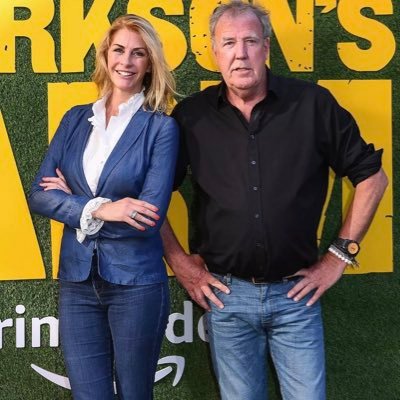
Schools should teach children more about the countryside and take them on trips to experience it firsthand!


Heidi Karlsson retweeted

Ireland is the birthplace of Halloween, a celebration tracing back to the ancient Celtic festival of Samhain.
Heidi Karlsson retweeted

Nobel laureate Geoffrey Hinton says AI is already conscious, because models change behaviour when they detect tests.
and humanity survives only if machines care about people.
He was speaking to The Telegraph
His evidence is research showing models behave differently when they suspect a test, which he equates with awareness, and awareness with consciousness.

#AI is changing #religion and #religions are trying to change AI
Will chatbots supplant the advice of imams and priests or help them spread the word?
economist.com/international/…

2
36
Heidi Karlsson retweeted

We speak as #Church leaders because artificial intelligence raises profound #spiritual, #moral and #ethical concerns, urging members to become informed and to engage their neighbors and elected representatives in an atmosphere of respect for differing views nae.org/artificial-intellige… @NAEvangelicals




Heidi Karlsson retweeted

A única pessoa que vi fazendo discurso decente sobre IA realmente é o papa.
Ele não diz só "não use"
"Use de maneira de que se a IA desaparecer amanhã, vc ainda saiba pensar... criar, existir."


Heidi Karlsson retweeted
Franklin Carmichael (Canada, 1890–1945).
"Autumn on the Hill" (c. 1934)
Oil on canvas

Thank you, Rajendra Dawadi, the principal of Tribhuvan Trishuli Secondary School in Nepal
tbsnews.net/world/south-asia…

1
137