




Zem retweeted

Gemini models score higher on robotics than GPT and Claude models, given the same general AI capability.

Does Epoch’s Capabilities Index (E-CI) track robotics?
With @robocurve, I piloted a small R-CI to check this. Using tasks like “Stack Bowls”, “Cap Pen”... with robot arms.
Relative to ECI, Gemini models outperform RCI—before Astra!
But one eval tracks RCI better… 🧵/3

Zem retweeted

how do you fine-tune a decision model on your own data?
in these two notebooks, you'll learn:
• how to prepare the training data
• how to fine-tune our d1-3B decision model
• using @UnslothAI and @huggingface TRL
all within 30 minutes on a free-tier GPU.
unsloth: github.com/Liquid4All/cookbo…
TRL: github.com/Liquid4All/cookbo…
ps: how adorable are these halloween kitties? 👻

Zem retweeted

Greg Isenberg 在旧金山待了48小时,写了 21 条观察
1、卖数据很赚钱:听到很多数据中介把公司数据卖给实验室、一周赚 200 万美元左右的故事。他分不清这是刚开始还是泡沫,正在研究还剩哪些细分领域。
2、一个灵魂拷问:饭桌上有人问“下个月出新模型,你的公司会变好还是变差”,一半的人答不上来。他认为这是现在评估 AI 创业公司最好的问题。
3、只看收入不看留存:现在大家说的门槛是 12 个月做到 10 亿美元收入(新的独角兽标准),但很少有人谈留存。他预测会出现很多收入很大、留存很差的 AI 公司。
4、很明显我们正在经历计算机的一次重新发明。模型是 CPU,harness 是操作系统,skills 和插件是应用。用这个框架更容易看出哪里还有空白。
5、我们可能离这样一个 agent 只有 12 个月:它看你工作一周,然后不用任何指令就能接手你的活。屏幕录制 + agent 记忆 + 本地模型,这个组合现在就已经能做到了。(可怕)
6、Agent harness 感觉像是新一代的 GPT 套壳,但是好的那种,尤其是垂直领域的。他聊到的最好的团队都把模型当成可替换的零件。比如创始人演示他怎么把不同模型分配给不同任务:一个负责审美和视觉,一个便宜的跑日常杂活,另一个专门处理文本。
7、逆向工程和克隆的事情多到他从没见过。人们在反编译软件,然后用 agent 重建它。有人给他看了一套大概 10 个应用,每个对标的原版都值 50 亿美元以上,全是他开源克隆出来的他和所有人都还在想:当软件变得这么容易复制,到底意味着什么。
8、猜价值会转移到数据上。如果软件可以快速重建,那一家老 SaaS 公司里值得花钱买的,就是里面积累多年的客户数据和工作流。有些 SaaS 公司其实是暗藏的数据公司。
9、感觉相当一部分老软件撑不到 agent 时代,尤其是那些围绕“让人点来点去很多页面”设计的。
10、他聊到的每家公司都想把内部数据汇到一个地方,然后通过 MCP 开放给 agent。然后他们一看数据就发现:一团糟。同一个客户有五个版本,一堆老 Slack 频道,没人能搜到的 PDF。把这些清理干净,感觉是个很大的咨询机会!
11、做积木的公司会赢:很多创始人在做agent用的基础组件,比如 API、数据层和工具。有些公司几乎没有界面,因为主要用户是agent。
12、实验室不缺训练数据,但很难拿到 agent 在企业内部出错的真实案例。谁手里有这些日志,谁就有值钱的东西。
13、一个做大型消费产品的人说,下一场仗是记忆。记住你最多的那个模型会赢,最聪明的模型没有大家想的那么重要。
14、Astra 是第一个让人相信 AI 能做 CAD 的模型,大家开始想“vibe 制造”是什么样子。一位机器人创始人说:现在 AI 最难的问题是部署问题,不是研究问题。他们的机器人自己干活,卡住了就呼叫人类,而每一次呼叫都变成训练数据。
15、网络安全公司正在迎来高光时刻,现在做这个真的很酷,尤其是那些做事后清理的。每一个能访问你系统的 agent 都是你公司的一扇新门,而且很多门就那么敞着。
16、死了比活着值钱:倒闭公司 5 年的 Slack、邮件和代码可以拿去授权收钱。他不意外创始人会把这一点算进关停时机。
17、人们开始聊“agent 互联网”怎么变现。感觉还非常早,但当互联网最活跃的用户变成 agent,你应该做什么样的创业公司?
18、agent 保险要来了。一旦智能体犯了昂贵的错,保险公司会要求先审计再承保。
19、好几个人说他们最想招的人,是有品味又会写 evals 的人。模型越来越会出点子了,难的是判断哪些点子是好的。
20、新的创业轨迹:拿 VC 的钱 → 用投资人的钱把自己做成网红 → 公司失败 → 创始人转成全职网红,再用自有资金孵化别的产品。
21、流量极难拿:创始人们在赞助公交车、疯狂买广告牌、请知名 DJ 办派对,就为了被看见。有点互联网泡沫时代那味儿了。真正稀缺的是注意力!那个靠分享 Wispr Flow 的 UGC 策略走红的增长负责人就是个好例子。这就是所有人都想要的秘方,全世界大概只有 50 个人知道怎么在这个时代高效地把这类生意做大。
每次去旧金山,回来总能受到不少刺激。能在这样一个创业的黄金时刻,经历这么精彩的一趟旅程,他觉得自己太幸运了。很多时候,甚至有种不真实的感觉。
写的真好!分享给大家!
(他说是跟一群亿万富翁、数据实验室的人、AI 创始人和高管的交流)

I spent 48 hours in SF hanging out with billionaires, data labs and AI founders and execs running $1B to $100B companies.
My observations:
1. Sooo MANY stories of data brokers making like $2M a WEEK selling company data to labs. I can't tell if it's the beginning or a bubble, and I kept wondering which niches are left. Digging into it actively.
2. At dinner, someone asked the table, "If a new model drops next month, does your company get better or worse?" HALF the table went quiet! I think that's the best question to ask about any AI startup right now.
3. The bar people talk about now is hitting $1B in revenue in 12 months (I guess that's the new unicorn?). What I didn't hear much about is retention. AI revenue can come in fast and leave fast, and I think we're going to see a lot of stories of AI companies with huge revenue and terrible retention.
4. It's pretty clear we're living through the reinvention of the computer. The model is the CPU, the harness is the operating system, and skills and plugins are the apps. Thinking about it that way makes it easier to see where the whitespace is.
5. We're maybe 12 months from an agent that can watch you work for a week and then do your job without any instructions. The screen recording plus agent memory plus local model combination makes this possible right now.
6. Agent harnesses feel like the new GPT wrappers, in a good way, especially vertical ones. The best teams I talked to treat the model as swappable. One founder walked me through routing different models to different jobs: one for taste and visuals, a cheaper one for the everyday stuff, another for text.
They use prompts they can move across models over fine-tuning, and A/B test the output on what users actually do with it: do they edit it, export it, share it? A vertical harness is basically four things: the connectors for that industry's data, evals written by people who know the work, rules for what the agent can and can't touch, and a clean screen for a human to review. The model is maybe 20% of it.
7. There's a lot of reverse engineering going on/cloning going on more than I've ever seen. People are decompiling software and rebuilding it with agents, and someone showed a suite of like 10 apps that are worth $5B+ each all that he cloned open source. Me and everyone are still thinking through what it means when software gets this easy to copy.
8. My guess is the value moves to data. If the software can be rebuilt quickly, what's worth paying for in a legacy SaaS company is the years of customer data and workflows inside it. Some SaaS companies are secretly data companies.
Gets me thinking about how do you truly value data for this saas companies? Like if we were buying these dying saas companies at 2x ARR before (as example), maybe there is a better metric. Idk, just thinking out loud here.
9. It feels like a good chunk of legacy software won't make it to the agentic era, especially anything built around people clicking through a lot of screens.
10. Every company I talked to wants to pipe its internal data into one place and expose it to agents through MCP. Then they look at the data and realize it's a mess: five versions of the same customer, old Slack channels, PDFs nobody can search. Cleaning that up feels like a big consulting opportunity!
11. A lot of founders are building the basic building blocks for agents: APIs, data layers and tools. Some of the companies I saw barely have a UI because the main user is an agent. I really believe the startups that build primitives to this agentic era will do extremely well. Building blocks is the best way to think about it.
12. Labs can get plenty of training data, but it's harder to get real examples of agents failing inside companies. Whoever has those logs has something valuable.
13. Someone running a big consumer company told me the next fight is over memory. The model that remembers the most about you wins, and the smartest model matters less than people think.
14. Physical AI came up a lot. Astra I think was the first model that got people into AI can actually do CAD, and I think a lot of people are thinking what does vibe manufacturing really look like. The line I keep thinking about came from a robotics founder: the hardest problems in AI are deployment problems now, not research problems. Their robots work on their own, call a human when they get stuck, and every one of those calls becomes training data.
15. Cybersecurity companies are having a moment and are actually cool companies to build now, especially the ones that clean up after a breach. Every agent with access to your systems is a new door into your company, and a lot of those doors were left open.
16. Some startups are worth more dead than alive now. A shutdown company with 5 years of Slack, email and code can get paid for licensing all of it. I wouldn't be surprised if founders start factoring that into when they shut down.
17. People are starting to talk about monetizing the agent web. It feels really early, but when the most popular user of the internet is an agent, what startups should you be building?
18. I think agent insurance is coming. Once an agent makes an expensive mistake, insurers will want audits before they cover anyone.
19. Several people said the hire they want most is someone with taste who can write evals. The models are getting good at generating ideas, so the hard part is judging which ones are good.
20. New trend I observed: startup raises VC, uses venture dollars to become a creator, startup fails, founder falls back on being a full-time creator and incubates other products bootstrapped.
21. Getting SIGNIFICANT distribution is HARD right now. Founders are sponsoring buses, buying billboards like crazy and throwing parties with famous DJs to get noticed. Kinda feels dotcom era in that sense.
Attention is what's scarce! The growth guy going viral sharing his UGC strategy from Wispr Flow is a good example. It's the sauce everyone wants, and I truly believe there are probably only 50 people on the planet who know how to scale these types of businesses efficiently in this era.
Always good to get that dose of SF. I felt sooo lucky to have such an incredible trip during such an incredible time in building businesses. Surreal in so many ways.
Happy to be home and locked in.
Until next time!


Zem retweeted

Jev 在 computer-use 上的收益今天也 claim 到了。pi + Qwen 3.8 27B + DiffusionGemma as Jev 相比 Opus 5.5 on Claude Code 上少了非常 drama 的轮次,短了超过一半的思考时间。这里我还没有优化 Qwen 3.8 27B 的本地推理效率。
做完之后发现,高效 computer-use 的精髓就是 planner-executor 模式,而不是单纯的 ReAct。Jev 在这个里面可以为 executor 部分提供高速智能,在此之前是不行的。
所以我们可以得到如下经验:
所有之前 planner-executor 模式可以做的业务都可以用 Jev 赋能一次。
所有之前使用单纯 ReAct 做的业务,都可以考虑是否能用 Jev-enabled planner-executor 模式提升用户体验。
我 home lab 内的 computer-use 服务正式开启 unlimited token 时代了!


Zem retweeted

Google releases EmbeddingGemma 2, a new open model that runs locally on 0.5GB RAM.
The 740M parameter Apache 2.0 model combines a 270M text model with vision (170M) + audio (300M).
Run & train the model via Unsloth.
GGUF: huggingface.co/unsloth/embed…
Guide: unsloth.ai/docs/models/embed…


Zem retweeted

Meta、微软收紧员工内部使用 Claude
据 The Information 10 月 5 日报道,Meta 和微软都在减少员工内部使用 Anthropic 的 Claude,转向自家模型和工具。
Meta 这边,内部数据显示,使用 Claude Code 的员工从年初约 6 万人降到最近约 3 万人。一部分原因是春季裁员,Meta 当时 7.8 万人的团队砍掉了约 10%。更大的原因是 Meta 在推自家的 Muse Spark 系列模型和编程工具:对标 Claude Code 的 Muse Code 有超过 6000 名员工在用,8 月起已开始找外部客户测试;另一款只在内部使用的 MetaCode 用户超过 3 万。
微软这边,原本预计今年内部在 Anthropic 上至少花 10 亿美元,这个数字已被砍掉三分之一以上。管理层要求员工少用 Claude,改用微软自己的工具,工程师被引导转向 GitHub Copilot 的命令行版本。
微软还整体收紧了员工的 AI 用量。云和 AI 部门有 6 万多人,此前每人每月可以在 AI 模型上花 10 万美元,最近多数情况下降到约 1 万美元。这个额度管的是所有 AI 模型,不单是 Claude。报道说,部分工程师对此有怨言,觉得不能再随意用模型了。
需要分开看的是,微软企业客户通过微软平台购买 Anthropic 服务的支出仍在增长。这次收缩的是两家公司自己员工的用量。
背景是 AI 编程工具的账单越来越大。工程师一天让 AI 写几小时代码,消耗的 Token(模型处理文本的计量单位)很容易折算成上千美元,大公司开始算账,也开始拿自研模型替代。
9 月 The Information 还报道过,Nvidia、Palantir 和 Booz Allen Hamilton 收紧了对 Anthropic 和 OpenAI 部分先进模型的使用,原因是担心模型厂商留存或学习企业内部数据。

🚨BREAKING: Microsoft and META are aggressively cutting employee use of Claude ahead of Anthropic's IPO
Microsoft has cut internal claude spend by more than 33%, nuked per-employee token budget from $100k/month to $10k/month, and forced Copilot to auto-route to cheaper models
META used Claude code to build Muse, then cut active users from 60,000 to 30,000 (50% decline) after launch, and replaced it with Muse Code
Palantir and Nvidia are also scaling back claude over soaring prices and data privacy fears
it’s OVER…


Zem retweeted
OpenAI 推出 Decisions API:给 AI 出选择题,150 毫秒就可给出结果
OpenAI 在今天的开发者大会上发布了 Decisions API。开发者写好一个问题和几个备选答案,再把内容发过去,模型直接从选项里挑一个返回,不生成多余的内容。目前是有限预览,只对部分 API 客户开放,OpenAI 说未来几天会全面放开。
它用的是 GPT-6 家族里最小、最便宜的 Luna 的特化版本。按 OpenAI 的说法,一次判断大约 150 毫秒,同样的任务走普通 Luna 接口要 1.6 秒左右,快了十倍。
这类活儿以前有两种做法。一种是让大模型自由回答,再从一堆文字里解析结果,慢,还偶尔答非所问。另一种是专门训练一个分类器,得先攒标注数据,类别一变就要重训。Decisions API 把答案限定在你给的选项里,不可能跑出范围,换选项也只是改一下请求。
典型用法:客服工单进来,连同“账单组、技术组、售后组”几个候选一起发过去,马上知道该派给谁;内容审核时判断一张图能不能放行;AI 智能体每走一步,决定下一步调哪个工具。输入支持文字和图片。
不过社交媒体都在调侃 Decisions API 是在山寨 Jev。Jev 是创业公司 TypeSafe(创始人之一 Diogo Almeida)九月中旬发布的“决策模型”。普通聊天模型是一个字一个字往外生成,Jev 不生成文字,一次性给所有选项打分,直接返回答案和概率。TypeSafe 管它叫“System 1 模型”,借用心理学里“快思考”的说法:不推理,不解释,凭直觉秒答。
Jev 上线后在开发者圈很快传开。演示里有人一小时内就搭出能玩 Minecraft、Subway Surfers 的机器人,只要列出可选动作,不用训练。不过这些演示都跑在模拟器里,真实硬件上还没验证。它的价格也极低:输入每百万 token 0.042 美元,输出免费,处理一百万张三道判断题的工单大约 19 美元。
但细节上还是有差异: Jev 只收文本,Decisions API 能看图。Jev 每个答案都附带校准过的概率,方便设阈值,比如“低于 0.7 就转人工”,OpenAI 这边也会返回置信度。

Zem retweeted

We can measure what part of the shelf gets customer attention without any additional hardware. Just your normal CCTV cameras and a digital twin made with the phone in your pocket.
@CactusXR will absolutely revolutionize how well stores can do their merchandising.
Zem retweeted

TypeSafe 创始人 Diogo Almeida 公开了一份 Coding Agent 设计草案,希望社区直接拿去实验。他直说团队大概率没时间自己把这些想法都做出来。
这份草案最核心的改动是上下文。现在的 Coding Agent 通常会一直带着之前的聊天、工具结果和代码状态,太长了再压缩或重启。
TypeSafe 想让 Agent 每轮重新判断:哪些内容保留全文,哪些只留摘要,哪些直接丢掉。已有 KV Cache 也不会直接放弃,而是比较继续复用和重新构造上下文哪个更划算。
Almeida 认为,现有 Agent 很多别扭的设计都是被 KV Cache 反绑住了。比如先把任务切给便宜模型,再切回强模型,强模型可能还得重新处理一遍长上下文,路由反而更贵;工具定义长期塞在系统提示词里,也会一直占空间。
如果上下文可以动态重组,模型路由、Sub-agent、MCP 和 AGENTS.md 也能跟着按需加载。简单任务交给便宜模型,需要哪个工具再加载哪个,子 Agent 只拿和自己任务相关的状态。TypeSafe 暂时把这种思路叫「Meta-attention」。

sharing some notes on typesafe 🤝 coding agents:
docs.google.com/document/d/1…
we likely will never have time (ever again) to play ourselves, but hope the that the community goes WILD (and makes me look like a naive idiot)



之前还坑了cursor,现在不坑药企我是不信的。。

Anthropic 悄悄建了一个生物实验室
据路透社独家报道,Anthropic 已在旧金山湾区建成了一间湿实验室(wet lab,即可以进行真实生化实验的物理实验室),正式把 AI 的触角从软件延伸到药物研发。
Anthropic 生命科学负责人 Eric Kauderer-Abrams 在采访中证实了这件事。他的说法是:要做生物学研究,最终的检验标准仍然是真实的实验室工作,光靠计算机模拟不够。一部分实验自己做,一部分和外部合作伙伴做——这和大多数生物技术公司的做法一样。
这不是心血来潮。过去几个月,Anthropic 动作密集:花约 4 亿美元股票收购了一家叫 Coefficient Bio 的初创公司,用于构建药物研发工具;把诺华 CEO Vas Narasimhan 拉进了董事会;发布了名为 Claude Science 的软件;6 月在旧金山公开宣布要启动药物研发项目。LinkedIn 上也在招采购运营负责人、蛋白质和核酸表征方面的专家,招聘帖里写的目标是"把生命科学的进展速度提高一个数量级"。Kauderer-Abrams 说,生命科学已经是 Anthropic 在人力和资源投入上最大的方向之一。
Anthropic 瞄准的是传统药企觉得"不可成药"(undruggable)的领域——那些因为靶点太难、商业回报不高而被忽视的罕见病。他们认为 AI 可以加速发现双特异性甚至三特异性抗体这类复杂分子,这类药物可以同时攻击多个靶点,设计难度极高,但 AI 擅长处理这种复杂度。CEO Dario Amodei 对此有切身之痛——他的父亲因一种疾病去世,而治愈方法在几年后才出现。
不过,Anthropic 目前画了一条明确的线:只做临床前研究,不做临床试验,不跟药企抢生意。这也是为了缓解一个现实的信任问题——那些使用 Claude 的大药企(基因泰克、百时美施贵宝、诺和诺德都在列)会担心 Anthropic 从它们的数据中学到什么。
值得注意的时间节点:这一切发生在 Anthropic 准备以约 2 万亿美元估值 IPO 的前夕,也正值 AI 安全争议白热化——就在最近两周,Anthropic 自己的研究人员警告 AI 可能导致人类灭绝,公司还发现其系统存在被用于生物武器开发的风险。一边踩油门,一边拉手刹,这种张力是 Anthropic 当下最真实的写照。
作为对比,Google 旗下的 Isomorphic Labs 做 AI 药物发现已经好几年了,原计划 2026 年底进入临床,但之前已经推迟过一次。药物研发的现实就是这样:从发现一个分子到药物上市,通常要好多年,而且大多数药物在临床试验中会失败。Anthropic 的野心很大,但路还很长。

Zem retweeted

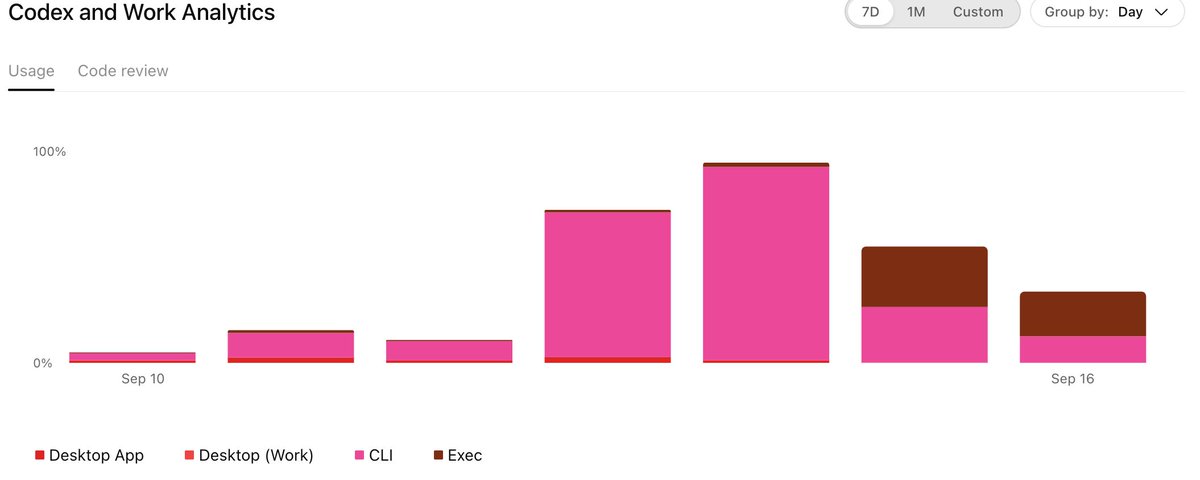
Codex users: a retired feature was silently burning my usage limit, even after I turned it off. It's probably a bug.
Here's how I found it, and how to check if it's burning yours.
FYI @thsottiaux @pvncher
Zem retweeted

TypeSafe AI 在9月15日发布的一款新型 AI 模型——JEV,其称之为首个System One Model。
架构上放弃了自回归逐 token 生成,采用单次并行前向传播,所有问题一起评估。
采用 RLCD 方式训练,专门优化决策概率的校准。
JEV 完全不生成文本、代码或解释,输出形式只有三种原语:
○ Choice:从给定选项中选一个
○ Score:按标准打分
○ Noul:判断某陈述为真的概率
主要应用于软件内部需要快速、可信任的结构化判断的场景。
声称的优势:
◼︎端到端延迟 70–500ms,比前沿 LLM 快 40–200 倍
◼︎成本低 40–400 倍,输入每百万 token 只要 $0.042,输出完全免费
◼︎可以保证 0% 幻觉和类型错误


Zem retweeted

发这个不是为了装逼,是因为前几天偶然看到了 Aider 之前写的几篇关于如何让大模型输出正确和高效的 diff 格式的文章,感慨万千。想起了 cursor 当年也写过一系列的文章讲自己如何调教大模型,让大模型可以正确地编辑文件,甚至 Anthropic 在 2024 年还把 str_replace_editor 工具专门训练进了 Claude ,更甚至的是还有新成立的公司专门训练 edit 模型来解决这一难题,可见这件事情在当时的确是难倒了很多人,不管是 agent 团队还是大模型公司,一群人绞尽脑汁解决同一个问题的盛状至今记忆犹新

Zem retweeted

长文吐槽为什么Gooogle/Android做不好折叠屏。
我也是多年的Android开发者了,曾经短暂的在谷歌工作过,好巧不巧所在的组就是负责折叠屏的System API,所以这一块我还是比较有发言权。
看到苹果折叠屏完成度这么高,确实有点不吐不快。
我总结了下大概有四个最大的问题:
1. Google对硬件完全没有掌控权
谷歌对比苹果最大的劣势就是对硬件没有掌控权,这导致系统API和硬件是割裂的。
三星早早在Google没想过的时候就已经在研究折叠屏了。导致的结果就是三星自己已经魔改了很多AOSP的代码来适配他们的折叠屏,而这些代码又由于很多因素并不可能反馈给AOSP进主分支。
这也就意味着Android系统更新永远比硬件慢一拍。有多慢呢?至少是一到两年。
所以三星不想和谷歌合作这个API,国内厂商更需要速度。导致的结果就是每个Android OEM都有自己的一套适配方案。那开发者必然就不会为每一个厂商做适配。做过适配的就应该知道如果把App修改到完美适配有多复杂,多少工作量。所以很多App大概也就是保证折叠屏下是一个能看的程度就可以了。
类似的问题在Android也算是屡见不鲜了,比如消息推送,在2026年的今天,国产Android仍然没有统一的消息推送渠道。每个开发者只能尽可能覆盖各个厂商。
2. 谷歌内部混乱
谷歌这家公司大家了解的都知道,有时候组和组的沟通那可能比你和另一个公司沟通都难。
折叠屏当年也算是一个很高的优先级,甚至是整个PA的OKR,这也就是为什么你能看到谷歌在某一个时期非常重视宣传折叠屏并给出了整套的开发者工具。但是后来Pixel从AOSP分叉,再加上全球裁员,ChatGPT的冲击等等。导致谷歌内部优先级都管理不好,折叠屏这种“小众”需求也不一定有那么高的优先级了。即便有,加上公司内部组沟通的问题,Pixel组想做的东西AOSP组不一定能支持。AOSP组一方面想支持Pixel另一方面又要考虑其他OEM,做出来的API就肯定不如iOS那么高度集成。
举个大家能看到的例子:众所周知苹果的端上大模型也是谷歌做的。但是iOS的LLM API完成度要远高于Android。就算今天,structured output的API仍在Alpha,而苹果年初就已经有整个LLM Session/ToolCall/Structure output的API了。
甚至我个人猜测,做API的组可能和Deepmind的合作密切程度不如苹果和GDM更深入。
3. 国产厂商不敢尝试
国产Android大家也都知道了。做东西经常畏首畏尾。销量不好的东西立马砍掉,头部公司(多数指苹果)不做的东西能不做就不做。
即便能找来优秀的设计师,软硬件工程师。仍要无脑抄袭苹果。阔折叠这种形态Oppo Find N2就探索过了,甚至刘作虎本人在发布会预言:“如果苹果有一天做折叠屏,我相信也是这个尺寸”。甚至现在我们看到他都已经预言成功了。
但是结果呢?从此以后再也没人尝试了,反而今年大家听说苹果要出阔折叠了。各家胆子又大起来了,立马出了自己的阔折叠手机。
4. 苹果独特的生态位
苹果生态位对比Android太特殊了。苹果出新功能,比如灵动岛。大家只会抢着去适配。如果你不适配,用户只会骂你App垃圾。
但是Android折叠屏呢? 你不适配大概率用户还是会自适应,或者骂两句三星不行,或者OV不行,适配做的不好。
开发者不适配,用户就不爱买,用户不爱买,市场份额就越来越小,市场份额小,开发者就更没有动机去适配。
每一个Android上的独特功能都几乎必然会经历这个死亡螺旋。
唯一破解的方案就是等苹果出个类似的功能,然后大家抢着适配,祈祷公司能看到 哦,原来Android也有早就有类似的功能,那我们趁机也适配一下吧。而实际其实也不一定能发生,因为适配了就会发现,别人iOS大概率只做一套。Android需要华为小米Oppo,Vivo,三星,Pixel都做一套。结果就是那就谁都别做了,或者只做华为。
综上,我真心希望在我有生之年,Android也能不靠苹果来打破这个死亡螺旋。不过就目前来看,在我可见的未来,应该很难看到了。
----- 发布自 iPhone
Zem retweeted

DeepSeek 开源了一些新的代码仓库,方便更容易地部署 V4.1 Flash 以及后续的开源模型:
github.com/deepseek-ai/deeps…
github.com/deepseek-ai/DeepS…
github.com/deepseek-ai/DeepJ…
