

Allison Hansen (PI); Associate Professor, University of California, Riverside; Entomology; insect symbiosis, evolutionary genomics. comments are my own.
Riverside, CA
Joined January 2018
- Tweets589
- Following329
- Followers588
- Likes1.2K






Hansen Lab retweeted

Immune activation by a phloem-colonizing plant pathogen drives citrus Huanglongbing disease development: Cell Host & Microbe cell.com/cell-host-microbe/f… Glad to share our recent progress on citrus HLB. Kudos to the co-first authors Xianen, Wenxiu, Wenting, and Yu and other colleagues in my lab. It is truly a team work by collaboration with Allison K. Hanse at UCR, Ning Zhang at JMU, and Madhurababu Kunta at TAMUK.

Hansen Lab retweeted

NEW PAPER! What explains associations with defensive symbionts? In @Ecology_Letters we show symbiont occurrences align with sharing the same parasitoids, but not plants, highlighting enemies as key selective agents shaping symbioses in nature🦠
doi.org/10.1111/ele.70082

Hansen Lab retweeted

Vince and I are currently recruiting grad students for a variety of projects. Please pass on this flier to anyone you think would be interested!

Hansen Lab retweeted
Cool paper on convergent losses of a symbiont in gall forming insects! Nice work by @HansenLab1 Patrick Degnan et al. 🦠🌺

The galls are so nutritious that psyllids that transitioned to galling have lost their nutritional symbionts ! 🤯academic.oup.com/mbe/article…

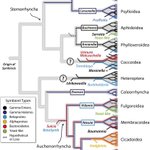
Fun collaboration with Diana Percy and Patrick Degnan showing rapid loss (<1M) of nutritional symbionts in Hawaiian psyllids is associated with galling behavior. All psyllids (free-living, open gall, closed gall) radiated on the same host plant species over ~5MY.
The galls are so nutritious that psyllids that transitioned to galling have lost their nutritional symbionts ! 🤯academic.oup.com/mbe/article…
Hansen Lab retweeted
Excited to learn our non-transgenic canker-resistant citrus generated by crispr genome editing exempted by EPA, by APHIS, for use by growers! They are the 1st to receive EPA exemption for gene-edited plants! ThanksNIFA funding!Thanks@usda_nifa @EPA@USDA_APHIS


Super cool study culturing an important secondary symbiont of aphids by @gpmaeda

Hansen Lab retweeted

Beautiful (both visually and scientifically) research by @thyreodon testing the role of chance in shaping animal-microbe symbioses.

Study of #SquashBug colonization by #bacterial #symbionts shows that heterogeneity & strain diversity in symbiotic microbial communities, within- & between-host, can be explained by stochastic colonization @thyreodon @NicoleGerardo @nicvega1 #PLOSBiology plos.io/4dceo21

Hansen Lab retweeted
Please share!
Two NSF postdocs available starting this summer to research the evolution of insect microbe interactions in sunny Southern California.
Competitive salary and benefits. See link for more details and contact information
**RNA evolution
drive.google.com/file/d/1euu…
Please share!
Two NSF postdocs available starting this summer to research the evolution of insect microbe interactions in sunny Southern California.
Competitive salary and benefits. See link for more details and contact information
**RNA evolution
drive.google.com/file/d/1euu…
Hansen Lab retweeted

We at #IUMicro are looking to bring in leaders in the field of #microbiomes and #hostmicrobe interaction. Are you an established investigator looking to move to a collaborative, supportive environment? Check us out! #ASMicrobe indiana.peopleadmin.com/post…
Hansen Lab retweeted

Engineered gut symbiont inhibits microsporidian parasite and improves honey bee survival | PNAS pnas.org/doi/10.1073/pnas.22…


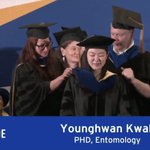
Congrats to @kwak_younghwan our labs newly minted PhD. She will start a postdoc with Gordon Bennett soon continuing on the evolution of insect symbiosis. Good luck!!

Hansen Lab retweeted
Excellent opportunity to do cool research.

A postdoc position is open in my lab! We are using ecological principles to investigate coexistence in aquatic microbial communities. See the posting for more information and to apply: jobs.boisestate.edu/en-us/jo…. Please share!
Hansen Lab retweeted
New paper alert! Symbionts have allowed insects to colonise novel feeding niches, but how has this influenced diversification? In @NatureEcoEvo we show that symbionts are associated with extreme highs and lows of insect diversification.
More below:
nature.com/articles/s41559-0…

Exciting news! Our undergrad Jacob and former grad Dohyup published a paper on comparative transcriptomics of obligate insect-microbe mutualisms. Discover the findings on key aphid homologs crucial for nutritional mutualism and lineage-specific genes at nature.com/articles/s41598-0….