








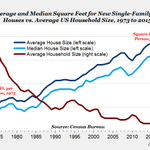

Yes. England universalized through strong state eugenics, particularly executing criminals. Gave birth to modernity. Most universalization processes are about inviting the left tail rather than culling it though.
xitter.cf/dystopiangf/status/211…

Has anything become more beautiful as a consequence of becoming more universal (i.e. more broadly accessible and legible)? It seems like there is a sweet spot - e.g., making the Bible more accessible to illiterate peasants resulted in stained glass, which is arguably a more beautiful representation than words on a page - but beyond a certain scope, things seem to degenerate and become ugly. An airport terminal optimized for use by all humans on Earth is sterile & purposefully forgettable (i.e., less beautiful). The universal language on the internet is brainrot; the universal sound is some swampy local minimum between reggaeton & drill
adults without trampolines: ngmi
xitter.cf/sailaunderscore/status…

The recent "safety" breakthrough is basically a vibe that monosemanticity of neurons is good, but it seems to me that all it means is you only need to wiggle one neuron to send an AI off the rails.
xitter.cf/Sauers_/status/2111552…


My personal intuition is that superposition / polysemanticity is far closer to being safe (albeit in general not interpretable), so recent results should be terrifying to safetyists. This tracks all of our personal experience in life, like rationalists being so easy to oneshot and send off the rails with a single argument leading to a single interpretable prior getting flipped.


they never tell this part of the story (about Miss Storey), but every case of true love lost results in a boy locking in like this
xitter.cf/Giuliano_Mana/status/2…

People don't understand how insanely high IQ Newton was. This is a man who had no background in math or algebra until he was ~20. In <3 years, Newton got himself to the frontier, then invented calculus, thought of the inverse square law, and the theory of colors & light. He was so intellectually superior he withdrew from the scientific community because he had no peers. Only when Halley was trying to calculate planets' motion by means of an inverse square law, he remembered he knew this old, extremely intelligent professor; he might be able to help him. When the problem was taken to Newton, he said "it's such and such." How do you know, asked Halley. "I proved it a couple of years ago." That's what led to The Principia; it was the exposition of what Newton had uncovered in his younger years and was lying around as a pile of private papers.
alexander retweeted

Dusting off this tweet from April because this gap in shared understanding of LLM capability is *widening*. It's now less "two groups of people speaking past each other" and more a sharp funnel.
- Napkin math somewhere around 6B people (~75% of the population) have barely come in contact with LLMs at all.
- Around 1-2B (~20%) are casual and infrequent users of free-tier ChatGPT-like products. This group sees derpy chatbots and treats them a bit like a better Google search, a writing aid, or etc. Maybe an agent tries to book you a flight. I have non-tech friends who (reasonably, imo) say they have not much use for it at all. Even many professionals outside of math&code are in this tier. For example, execs and many other functions spend a lot of their time talking to other people, so while they understand what is happening intellectually, it is still second-hand and a bit abstract.
- Now we get to professional use of frontier-grade LLMs in math&code. Somewhere around 20M people (0.2%) see first-hand that large, complex projects that used to take them weeks/months can now be completed by agents with a prompt. Building apps, copying apps, translating apps, decompiling apps from binaries... This has all happened very quickly and recently - less than 1 year ago, I was writing code manually by hand, typing memorized computer code commands into a code editor character by character, occasionally pressing Tab to autocomplete a little chunk of code.
- And finally we get to the ~5,000 people (~0.00006%) with access to frontier-grade systems internally. The external world has seen the preview. It looks like swarms of thousands of agents collaborating over weeks on software mega projects: minting zero days, running cyber attacks and defenses at machine speeds, discovering new science, advancing the frontier of mathematics. Things that would have taken top professionals in the industry years of work. Meanwhile, human review and comprehension are starting to fall behind. For example, people are still involved in the "archeology" of the OpenAI-HF incident from many months ago. Mathematicians may be poring over the 722 manuscripts on frontier mathematics for a while.
The funnel is driven by a combination of factors:
1. The impact scales with ambition, problem size, and horizon. A question with a paragraph answer barely stresses the system. You need a reservoir of big, difficult problems that you really care about. This aspect drives the consumer / professional dimension of the funnel.
2. The jaggedness of the system (which I have written about a lot separately). Capability peaks in domains that are digital, verifiable and economically valuable. This is because LLM capability emerges from reinforcement learning on verifiable rewards on a curated environment mixture driven by revenue potential. This aspect primarily drives the area (e.g. math&code) dimension of the funnel.
3. Access. Free-tier, paid-tier, internal.
So this is the weirdness of the moment. The general public has mostly not interacted with these systems. When they have, it looks like a derpy chatbot. The majority of professionals still see only a modest uplift. And a small sliver of professionals are experiencing the vertigo of the curve going vertical. And it is all happening at the same time.

Judging by my tl there is a growing gap in understanding of AI capability.
The first issue I think is around recency and tier of use. I think a lot of people tried the free tier of ChatGPT somewhere last year and allowed it to inform their views on AI a little too much. This is a group of reactions laughing at various quirks of the models, hallucinations, etc. Yes I also saw the viral videos of OpenAI's Advanced Voice mode fumbling simple queries like "should I drive or walk to the carwash". The thing is that these free and old/deprecated models don't reflect the capability in the latest round of state of the art agentic models of this year, especially OpenAI Codex and Claude Code.
But that brings me to the second issue. Even if people paid $200/month to use the state of the art models, a lot of the capabilities are relatively "peaky" in highly technical areas. Typical queries around search, writing, advice, etc. are *not* the domain that has made the most noticeable and dramatic strides in capability. Partly, this is due to the technical details of reinforcement learning and its use of verifiable rewards. But partly, it's also because these use cases are not sufficiently prioritized by the companies in their hillclimbing because they don't lead to as much $$$ value. The goldmines are elsewhere, and the focus comes along.
So that brings me to the second group of people, who *both* 1) pay for and use the state of the art frontier agentic models (OpenAI Codex / Claude Code) and 2) do so professionally in technical domains like programming, math and research. This group of people is subject to the highest amount of "AI Psychosis" because the recent improvements in these domains as of this year have been nothing short of staggering. When you hand a computer terminal to one of these models, you can now watch them melt programming problems that you'd normally expect to take days/weeks of work. It's this second group of people that assigns a much greater gravity to the capabilities, their slope, and various cyber-related repercussions.
TLDR the people in these two groups are speaking past each other. It really is simultaneously the case that OpenAI's free and I think slightly orphaned (?) "Advanced Voice Mode" will fumble the dumbest questions in your Instagram's reels and *at the same time*, OpenAI's highest-tier and paid Codex model will go off for 1 hour to coherently restructure an entire code base, or find and exploit vulnerabilities in computer systems. This part really works and has made dramatic strides because 2 properties: 1) these domains offer explicit reward functions that are verifiable meaning they are easily amenable to reinforcement learning training (e.g. unit tests passed yes or no, in contrast to writing, which is much harder to explicitly judge), but also 2) they are a lot more valuable in b2b settings, meaning that the biggest fraction of the team is focused on improving them. So here we are.
Strongly endorse this view. A huge security premium is going to be baked into large swaths of the world's energy supply in the coming years and people who can minimize it / avoid it will have huge competitive advantage.
xitter.cf/CJHandmer/status/21092…

Spicy take incoming. 🔥🔥
The combined bomber offensive in WW2 finally crippled the Axis powers by destroying their fuel supply chain. Then it took the industrial might of the entire US to build tens of thousands of bombers.
Now anyone between you and the Middle East can burn down a refinery, tank farm, pipeline, or tanker, with an easily assembled robotic flying bomb that costs less than my AI subscriptions.
@PeterZeihan predicted "the tanker war" would happen in the Indian Ocean but it doesn't matter where. There's only one country that could plausibly enforce global peace on shipping lanes and only one industrial power that is self sufficient on oil supply, and it's the same country.
Trump asks Iran and Zelensky to please stop blowing shit up for five minutes, but the primary victims of this phase of the kinetic conflict are China and Europe, both places that have spent decade(s) ignoring and/or undermining the Pax Americana and, in Europe's case, going out of their way to destroy their own economies.
China wants to be a big boy on the global stage? Let them spend their own blood and treasure pacifying the Middle East.
Europe wants to stick it to Trump? It's easier to tell the yanks to get fucked if you don't rely on them for literally every aspect of your industrial infrastructure and economic stability.
I've been in rooms with senior energy ministers from Europe and China. The Chinese are rational and pragmatic, the Europeans are functionally comatose, but neither party has a better plan than getting into a bidding war to buy whatever LNG the US can spare, forever.
It is blindingly obvious to me that the least unstable future equilibrium is one where oil users localize supply using solar synthetic fuel tech, essentially a silico-industrial form of farm-to-table agriculture. Short supply chains, locally secured.
It is equally obvious to me that a generation of people who grew up in the "developed" world are going to endure a decade or more of severe hardship before they, collectively, accept the L and move to the next step. Most people would rather watch their neighbor freeze than admit they were wrong.
I do not understand the mentality where these observations make AI seem less likely to replace rather than more.
xitter.cf/Cristina_AC_X/status/2…

I recommend the trope of 20yo AI enthusiasts who think AI is the future of work and will replace human labor, to spend a couple of years in a traditional Fortune 500 company.
Feel in person what it’s like to receive an invitation to a meeting about an email about a ticket about a spreadsheet about a SELECT * query.
Watch 20 people debate for a month a 10 digit number that is off by one decimal.
See how access to any minor piece of data requires a workflow of permissions from five people.
Observe how any deployment requires planning at least two quarters in advance.
Pay attention to how nobody, even at the highest levels, cares one bit about productivity, let alone innovation, because the only thing they care about is their paycheck.
Then tell me AI is going to replace all human labor.
don't get caught unaware friends
xitter.cf/drakefjustin/status/21…

Today I call upon the blockchain industry to calmly begin planning for "bunker mode". My personal recommendation is to set in motion a controlled mass migration of assets to fresh addresses, i.e. addresses whose pubkeys remain hidden behind a hash.
Holders, starting with large and sophisticated ones, should consider moving the bulk of their funds to addresses that have never signed a transaction. And when they do sign one, they should also move remaining funds to a new address (possibly generated from the same seed phrase).
Don't rush. While I believe there is cause for action a rushed migration would do more harm than good. Don't panic either. Moving assets to protected addresses is a simple, preventative step which does not require new cryptography or new wallets.
IMO it is now reasonable to brace for the possibility that ECDSA breaks before qday, in the worst case in months not years. By "break" I mean fast private key recovery (e.g. in one week) on available hardware (e.g. a large GPU cluster).
Recent days have been humbling for human mathematical intuition. Long-held, unquestioned hypotheses have fallen. This includes the n log(n) bound for integer multiplication and the 3SUM conjecture. In hindsight, May's unexpected disproof of the Erdős unit distance conjecture was our warning shot.
Yesterday's OpenAI drop made it clear that mathematical superintelligence is upon us. They say there are weeks where decades happen. We are about to live through weeks where centuries of mathematical progress happen. Could our magic 64-byte ECDSA signatures be too good to be true? Was it just security through obscurity all this time?
Elliptic curves feel especially vulnerable to superintelligence. Curves carry rich structure, with room for fancy tricks like Schoof, Frobenius, pairings. (By contrast, hashes are designed to minimise algebraic structure.)
Separately, as Ewin Tang can attest, an efficient quantum algorithm sometimes foreshadows an efficient classical one. We should be open to the possibility of a classical counterpart to Shor that breaks elliptic curves and RSA at once.
Also noteworthy is the striking under-representation of cryptographic breakthroughs among the 722 mathematical results OpenAI published. I've witnessed first-hand the US government censoring academic quantum cryptanalysis results. Backroom interventionism is my base case.
I urge large, sophisticated actors to lead by example. Project11's "risq list" (bitcoin-risq-list.projecteleven[.]com) is a great tracker of exposed BTC pubkeys. Binance, Bitbank, Robinhood, Bitfinex, and Tether have an opportunity to harden their cold storage. Next month I'll address institutions in London in a live Q&A (forum.ethereuminstitutional[.]org/london-2026).
Again, please do not rush. Wallets holding under 50 BTC enjoy partial cover from "Satoshi's shield", i.e. his 20K exposed addresses that hold 50 BTC each. Load-bearing signers like oracles and L2 security councils should consider rotating ECDSA pubkeys with every signed message and/or multi-signing with a hash-based schemes like SPHINCS.
Exiting bunker mode safely will require post-AI cryptography. My inclination is to go all-in on hash-based cryptography and avoid structured mathematical assumptions entirely, whether from curves, lattices, or isogenies. A single battle-tested hash (e.g. from the SHA or BLAKE families) yields plausible post-AI security.
The Ethereum roadmap on strawmap[.]org fully embraces hash-based cryptography with end-to-end formal verification as a response to the quantum threat. Those timelines must now be revisited and accelerated in light of mathematical superintelligence. I'll be pushing for maximum defensive acceleration.
alexander retweeted

If I had known families can be like this—not even to have it but to simply know it exists and thus is possible in the real world—I don’t think the antinatalists would have been able to have a hold on me up to the end of my 20s.
I think people also vastly underestimate the power of words and just how much they can heal. I remember an outburst by a conservative man at ARC 2025 where he gave a short passionate romantic speech in private about how it’s a joy to treat women—and now singular; his wife—well. And he mentioned many beautiful examples of what he meant by that. He says he would never say it this vividly or at all publicly, but if you think like this, you should. If you have a vision of just how high it’s realistic to aim, or to wait and search for, so much unnecessary heartbreak and worse could be avoided.


alexander retweeted

if you think AI consciousness debatehas reached an annoying level right now you're in for something else. it's going to be the only thing on anybody's mind starting shortly
alexander retweeted

12 months of progress on the jagged frontier:
1) AI got spikier, not rounder.
2) Maths, fluid reasoning, expert work: past human level.
3) There is almost no middle ground. Once a capability crosses human level, it often quickly becomes 100x+ cheaper than a human.
4) Cost keeps decreasing after capability increases stop. Language and knowledge look saturated but price keeps falling.
5) The gaps are not a budget issue. Human-level memory, self-monitoring and long-run planning are not for sale at any price.
AI is now a superhuman specialist that is sub-human at running itself.


The actual point of this is to counteract "idle hands are the devil's playground" kind of thing. They would need a team of therapists and sedatives without such a hobby.
xitter.cf/clemm1928/status/21065…

Many married American women have small businesses where they do every job at a Chinese trinket factory when they could make thrice as much as waitresses for their time. This job is supposed to be automated. xitter.cf/katafyp/status/2106278…
Asked Claude for a mix of sapio + hot. Apparently there is a magazine called this already. Not beating the stuck on interpolation within the training set allegations, Claude.
Sapiotic (say-pee-AH-tik), a blend of sapio (wise) + hot, a looser, more casual option. "He explained quantum entanglement in a leather jacket. Extremely sapiotic."


There is an incredibly important cultural moment buried under this.
In the 1950s and 1960s, technical people were working closely with creatives. Everyone was fascinated by tech, TVs spread like wildfire, space, new frontiers. Walt Disney worked closely with Wernher von Braun. Shows like the Jetsons imagined the future.
But then JFK was shot and a lot more died with him. Technical people came to be seen as the guys unable to win in Vietnam, or the guys bulldozing your neighborhood for a highway expansion. Reactionaries instituted what Fukuyama called the "VETOcracy" and the culture shifted orientation from leaving your mark by building to leaving your mark by preventing progress. California highspeed rail is the joke, but that is just the whole society in microcosm.
One of the more hopeful promises of AI is that the depressed loser crowd might get eliminated from the creative process. We can sideline Ehrlich, emos, sex cult doomers and Marxists as Hollywood fails to compete with GPUs for future attention.
xitter.cf/majamediaco/status/210…

Text with intermittent face is the best way to start. The English perfected this reading novels privately then meeting in the pub/etc to discuss them 300 years ago. Peak form to get the deepest bonds
xitter.cf/eroticacid/status/2102…
