
Red Team Lead - Any sufficiently advanced persistent threat is indistinguishable from magic.
Canada
Joined November 2010
- Tweets8.7K
- Following1.6K
- Followers455
- Likes24.6K



Patrick Davidson Tremblay retweeted

Whoever created this, huge respect.
webhacklist.com/

Patrick Davidson Tremblay retweeted

IDA Pro into an AI-Reverse engineering workstation:
- Instant function explanations + security analysis
- Semantic knowledge graph of the entire binary
- Autonomous ReAct agent, Extended thinking levels
- Full MCP tool integration
- Smart rename suggestions
- Interactive Q&A with tool-calling
- RAG over your own docs
- Multi-provider LLM support (including local models)
Fully open source for IDA Pro 9.0+
- github.com/symgraph/IDAssist

AI reverse-engineer games and binaries through Ghidra with 200+ tools.
Ghidra MCP gives AI agents deep access to Ghidra’s capabilities for game binaries and complex software binary analysis.
- github.com/bethington/ghidra…

Patrick Davidson Tremblay retweeted

Decision models in llama.cpp are now available
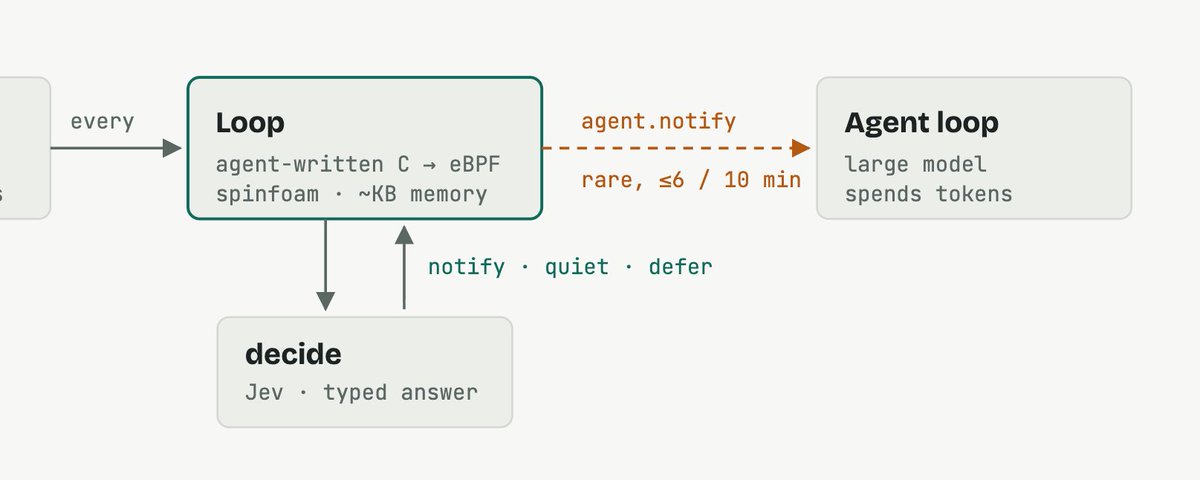
The `/v1/systemone` endpoint is available in the latest llama builds. Use it to do Jev-style inference locally, efficiently and privately. Multiple open models are supported with more to come.
huggingface.co/blog/ggml-org…


Patrick Davidson Tremblay retweeted

Introducing JEV-27B-VL.
We believe it is the world’s first open-weight, near-SOTA multimodal decision model — built with AutoTrust AI’s Blocks of Experts (BoE) recipe.
It does not just describe what it sees. It turns visual state into calibrated action probabilities, then selects what to do next.
In this demo, it sees Mario’s position, movement, obstacles, and timing — then chooses whether to run, jump, or do both.
See → decide → act.
Patrick Davidson Tremblay retweeted

Found a useful dataset for security researchers.
Real audit findings with descriptions, severity, PoCs and remediation.
Take one vuln class → study 50 findings → extract recurring mistakes → build your own hunting checklist.
huggingface.co/datasets/Zaev…

Patrick Davidson Tremblay retweeted

JGD: an autonomous agent that mines Java deserialization gadget chains github.com/lupingQAQ/JGD

Patrick Davidson Tremblay retweeted

DEFCON: New Red Team Tactic doctoreww.github.io/EvilFont…
Patrick Davidson Tremblay retweeted

Artificial Intelligence in Cybersecurity, Part 26:
Web App Hacking with Hermes
hackers-arise.com/artificial…

Patrick Davidson Tremblay retweeted

Entropia: a compiled language built specifically for Windows x64 position-independent shellcode and Cobalt Strike BOFs.
It supports native Win32/SDK headers, inline asm, shellcode & BOF compilation, a local BOF runner, VS Code debugging with F5/F9, and an integrated opsec stack with polymorphism, string obfuscation, direct/indirect syscalls, hashed imports, stack spoofing and sleep masks.
Basically, it brings the whole source → shellcode/BOF → OPSEC pipeline into a single compiler.
Github:- github.com/entropykit/entrop…

Patrick Davidson Tremblay retweeted

Playing around with Jev to see how it performs with offsec.
Its speed and insane low cost certainly opens up novel concepts, like this POC doing real-time scoring of command opsec in Mythic, and identifying the expression type.
It's not great at cyber yet, but exciting to see!
Patrick Davidson Tremblay retweeted

Agentic SOCのソリューションベンダー、Vega Securityが公開しているDetections Skills集
detectionskills.io/

Patrick Davidson Tremblay retweeted

Call stack spoofing started in the game hacking community on UnknownCheats in 2018. A single JMP [RBX] gadget to spoof a return address.
Eight years later it defeats every layer of EDR call-stack-based detection and is CET shadow stack compatible.
The evolution:
@namazso (2018) – original x64 return address spoofing from the game hacking scene. The foundation everything else built on.
@waldoirc YouMayPasser (2022) – first major extension of namazso’s work, bypassing PE-sieve and Moneta using Gargoyle-style ROP with sleep encryption.
@KlezVirus SilentMoonwalk (2022) – desynchronized stack unwinding using real .pdata RUNTIME_FUNCTION entries to construct synthetic frames. Moonwalk++ (2025) combined stack spoofing with memory self-encryption.
@0xmaz LACUNA Chain (2026) – Ghost Frames defeating userland hooks, kernel callbacks, and ETW-Ti stack collection simultaneously. Zero .pdata modification.
BingusLdr (2026) – CET compatible stack spoofing. The shadow stack problem every previous technique ignored, solved.
Commercial C2 frameworks like Havoc Pro from @infinitycurve have already started integrating CET compatible stack spoofing to bypass top tier EDRs. But vendors like @elasticseclabs are catching on, publishing research on detecting shadow stack mismatches and synthetic frame anomalies.
The arms race continues. From game cheats to defeating enterprise EDRs. The tradecraft is the same. The targets changed.
If you build detections for call stack anomalies, this is the history you need to understand.
unknowncheats.me/forum/anti-…
arashparsa.com/bypassing-pes…
github.com/waldo-irc/YouMayP…
klezvirus.github.io/posts/St…
klezvirus.github.io/posts/Mo…
github.com/klezVirus/SilentM…
github.com/klezVirus/Moonwal…
0xmaz.me/posts/LACUNA-Chain-…
bigbingus.com/posts/bingusld…
@namazso @waldoirc @KlezVirus @0xmaz
#DetectionEngineering #WindowsInternals #InfoSec


Patrick Davidson Tremblay retweeted

Static Devirtualization of Themida software protection
back.engineering/blog/09/05/…
#infosec

Patrick Davidson Tremblay retweeted
Cloudflare Drop just launched, temporary static site hosting (expires after 60 minutes) without an account, just drop your assets and go.
Red Teamers... GO GO GO GO!!! cloudflare.com/drop/
Example: drop-4638acd5-ef1.aback-arch…

Patrick Davidson Tremblay retweeted

Stanford researchers did it again.
They just built the agent-native version of Git.
When an agent works on a longer task, the run builds up a lot of state.
This includes files edited/created, a dev server, a database, installed packages, KV cache, etc.
Say the agent is at step 10 and makes a mistake, maybe it misreads a traceback and rewrites a file that was actually fine.
The tests start failing, and the run goes off track, although everything through step eight was correct.
By default, the agent just tries to fix it, which creates more edits and tool calls. This burns more tokens and grows the context.
The other options are a person stepping in to redirect it or restarting the whole run from step one.
That's wasteful, because it pays for every model/tool call again and re-prefills the context. Moreover, since an agent's run is non-deterministic, it doesn't reproduce the same early steps anyway.
The reason it's hard to just jump back exactly to a previous correct step and resume from there is that the trajectory is only a message log.
It records what the agent said and which tools it called, but not the live state underneath.
That state includes things like memory, open file handles, child processes, installed packages, /tmp, and KV cache. None of that is in the log.
Git can version the files, but it doesn't snapshot the running process or the KV cache. Checking out step eight moves the files back, but the process is still sitting in step-ten memory with a cold cache.
Shepherd is a runtime layer by Stanford that records the run as a trace of typed events rather than a flat log.
Each agent-environment interaction becomes a commit, similar to Git, but it tracks the live run.
Its commit includes the agent process and the filesystem together, copy-on-write, so a branch carries the actual state and not just the files.
Going back to a previous step is then a single call that forks from that commit and continues from the exact state.
The copy-on-write fork is roughly five times faster than docker commit, and because the prompt prefix through step eight is unchanged, the KV cache is reused over 95% on replay, so early steps aren't reprocessed again.
Once the run can be forked, a meta-agent can sit on top and operate it. It watches the trace and reverts as soon as it looks wrong, before the bad write is committed.
In practice, it's just Python calling fork, replay, and revert on the trace, rather than a separate control plane wired into the harness.
Not everything is reversible though.
Files and sandbox changes undo themselves, but a database write has no automatic undo, so it needs a matching undo step set up in advance.
Something external, like a sent email or a real charge, can't be undone, so the supervisor's job there is to catch it before it fires.
They tested this on a few public benchmarks. On CooperBench, where two agents work on the same codebase, adding a live supervisor took the pair-coding pass rate from 28.8% to 54.7%.
It's still early and labeled alpha. The benefit mostly shows up when a run gets branched a lot over a heavy sandbox state, which is exactly where restarting wastes the most tokens and time.
If Git was made to make file changes reversible, Shepherd is trying to do the same thing for a live agent run.
Shepherd Repo: github.com/shepherd-agents/s…
(don't forget to star it ⭐ )
That said, Shepherd reverts a bad step inside a run. The harness around it, the prompts, tools, and checks the supervisor relies on, still drifts across runs as models and dependencies change.
Akshay wrote about making that harness repair itself, where a failing trace gets diagnosed, the fix is verified against the exact input that failed, and the failure is locked as a regression test so it can't recur.
Read it below.


Patrick Davidson Tremblay retweeted
LLMs can now reverse engineer obfuscated malware. But what happens when malware authors use LLMs to iteratively obfuscate back?
Elastic Security Labs explored the arms race between LLM-driven reverse engineering and LLM-driven obfuscation. Who wins when both sides have the same tools?
This is the question every malware analyst, detection engineer, and red or blue teamer needs to be thinking about right now.
elastic.co/security-labs/llm…
Author: @elasticseclabs
#MalwareAnalysis #ReverseEngineering #InfoSec


Patrick Davidson Tremblay retweeted

Generates realistic voice clones at 150x realtime speed
github.com/ysharma3501/LuxTT…

Patrick Davidson Tremblay retweeted
HDD firmware hacking: dumping/analyzing/modifying the drive firmware and debugging via JTAG (@Grimdoomer)
icode4.coffee/?p=1465
#infosec


Patrick Davidson Tremblay retweeted

I am not a big fan of doing this client-side, for a whole slew of reasons, but this is impressive engineering by the @Zalando team. I like the "lessons learned" they conclude with. engineering.zalando.com/post…
