





HKU School of Biological Sciences retweeted

Hong Kong has lost around 60% of its seagrass over the past two decades. On Lamma Island, @SWIMSHKU researchers are working with the community to restore these vital underwater meadows for marine life, including green sea turtles. tinyurl.com/2s3ehnnk

HKU School of Biological Sciences retweeted
HKU Centennial Distinguished Chinese Scholars Scheme Public Lecture by Prof. DENG Xing Wang, University Endowed Professor and Director of Institute of Advanced Agricultural Sciences at Peking University; Member of the US National Academy of Sciences. shorturl.at/XT1oZ

HKU School of Biological Sciences retweeted
An HKU-led review reveals that slugs, earthworms, beetles, crickets, and crabs are often overlooked as seed dispersers, yet they play a crucial role in helping forests regenerate—particularly in fragmented or degraded ecosystems. tinyurl.com/295m58d2
🤖 Made with AI

HKU School of Biological Sciences retweeted
𝐈𝐧 𝐒𝐞𝐚𝐫𝐜𝐡 𝐨𝐟 𝐋𝐨𝐬𝐭 𝐏𝐚𝐧𝐠𝐨𝐥𝐢𝐧𝐬: Join Prof. Timothy C. Bonebrake as he unpacks the tragic case of 88 smuggled pangolins seized in Hong Kong. @HKUSBS
📅 19 Jul 2026, 11am–12:30pm
📍 HKCEC S428
🔗 tinyurl.com/bde3dvuu

HKU School of Biological Sciences retweeted

A research team led by Professor Chaogu Zheng from @HKUSBS at The University of Hong Kong, in collaboration with scientists from Princeton University and Columbia University, has discovered how sensory-motor circuits — nerve circuits that turn sensory signals into reflex actions — remain reliable even when some genes or neural connections are disrupted.
Using the gentle touch reflex of the nematode Caenorhabditis elegans (C. elegans) as a model, the team found that this essential survival response is not controlled by a single biological component. Instead, it is supported by several overlapping mechanisms, including existing alternative neural pathways and molecular components that enable neurons to send and receive signals. These layers of genetic redundancy help maintain the touch response and improve the animal’s ability to escape from predators.
The study provides new insight into how nervous systems protect essential behaviours. It shows that robust neural circuits can be built through overlapping genes, synapses, and neural pathways, so that the loss of one component does not necessarily stop the behaviour.
“From an evolutionary perspective, the findings suggest that components which appear redundant in a standard laboratory test may still be preserved because they improve survival in real-life situations, such as escaping from predators,” Professor Zheng explained. “In this way, redundancy is not merely a backup system, but part of how neural circuits produce reliable and effective behaviour.”


HKU Biologists Reveal How Neural Circuits Use Backup Mechanisms to Protect Essential Survival Reflexes
pnas.org/doi/10.1073/pnas.25…
#HKU #hkuscience #hkusbs

HKU School of Biological Sciences retweeted
HKU biologists from @HKUSBS studied C. elegans and found that essential reflexes are protected by built-in backup systems — a basic principle that helps keep key behaviours reliable. tinyurl.com/bp5tvmnf
🤖 Made with AI

HKU School of Biological Sciences retweeted
HKU ecologists reveal Hong Kong as a “biodiversity ark” for the critically endangered Yellow-crested Cockatoo — home to about 10% of the remaining global population. tinyurl.com/safvc7fz
🤖 Made with AI

HKU School of Biological Sciences retweeted
A new genomic study by researchers from the HKU School of Biological Sciences (SBS) has found that Hong Kong’s introduced population of yellow-crested cockatoos retains unexpectedly high genetic diversity and could serve as a genetic reservoir for this critically endangered species!
Hong Kong is home to around 200 Yellow-crested Cockatoos—about 10% of the remaining global population. Although this urban population is small and isolated, it has so far avoided the severe genetic decline often expected in such cases. Some individuals may even carry genetic lineages that have disappeared from parts of the species’ native range in Indonesia.
“Hong Kong’s population presents a natural, 60-year test case for the genetic impacts of interbreeding Yellow-crested Cockatoos subspecies,” says Dr Astrid Andersson of HKU SBS, lead author of the study. “Instead of dismissing urban, introduced populations as ecologically redundant, we should view them as a potential ‘Biodiversity Ark’ that can actively help prevent extinction.”


HKU School of Biological Sciences retweeted

The project has made so much progress in the past year and seagrass meadows are flourishing in HK. In addition to the benefits from enhanced carbon stocks where seagrass is growing, we are also seeing the positive impact of greater biodiversity, more fish, crabs and snails.

HKU School of Biological Sciences retweeted
The HKSRA team conducting seagrass survey around Hong Kong.
📷hongkongseagrass.com
#HKSR #Seagrass #survey

HKU School of Biological Sciences retweeted
The HKSRA team conducting seagrass survey around Hong Kong.
📷hongkongseagrass.com
#HKSR #Seagrass #survey

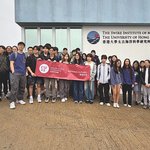
HKU Swire Institute of Marine Science Launches Youth Programme to Cultivate Future Ocean Stewards
biosch.hku.hk/hku-swire-inst…
#hku #hkusciences #hkuswims

HKU School of Biological Sciences retweeted
The HKSRA team conducting seagrass survey around Hong Kong.
📷hongkongseagrass.com
#HKSR #Seagrass #survey

HKU School of Biological Sciences retweeted
The HKSRA team conducting seagrass survey around Hong Kong.
📷hongkongseagrass.com
#HKSR #Seagrass #survey

HKU School of Biological Sciences retweeted
The HKSRA team conducting seagrass survey around Hong Kong.
📷hongkongseagrass.com
#HKSR #Seagrass #survey

HKU School of Biological Sciences retweeted
Congratulations to Professor Thiyagarajan VENGATESEN from HKU School of Biological Sciences and SWIMS for securing HK$4.16 million from the RGC Research Impact Fund. tinyurl.com/23p6cswj

HKU School of Biological Sciences retweeted

New! Led by @AnnaMonkey , Ostracod shell chemistry as proxy for coastal marine conditions of a highly urbanized megacity (Hong Kong SAR) and an agro-centric oceanic province (Jeju Island, Republic of Korea) – a preliminary comparative analysis sciencedirect.com/science/ar…

HKU School of Biological Sciences retweeted
The HKSRA team conducting seagrass survey around Hong Kong.
📷hongkongseagrass.com
#HKSR #Seagrass #survey

How birds achieve sweet success: Evolution finds both repeated and unique solutions as birds adapt to high-sugar diets.
science.org/doi/10.1126/scie…
#hku #hkusciences #hkusbs #evolution #birds
